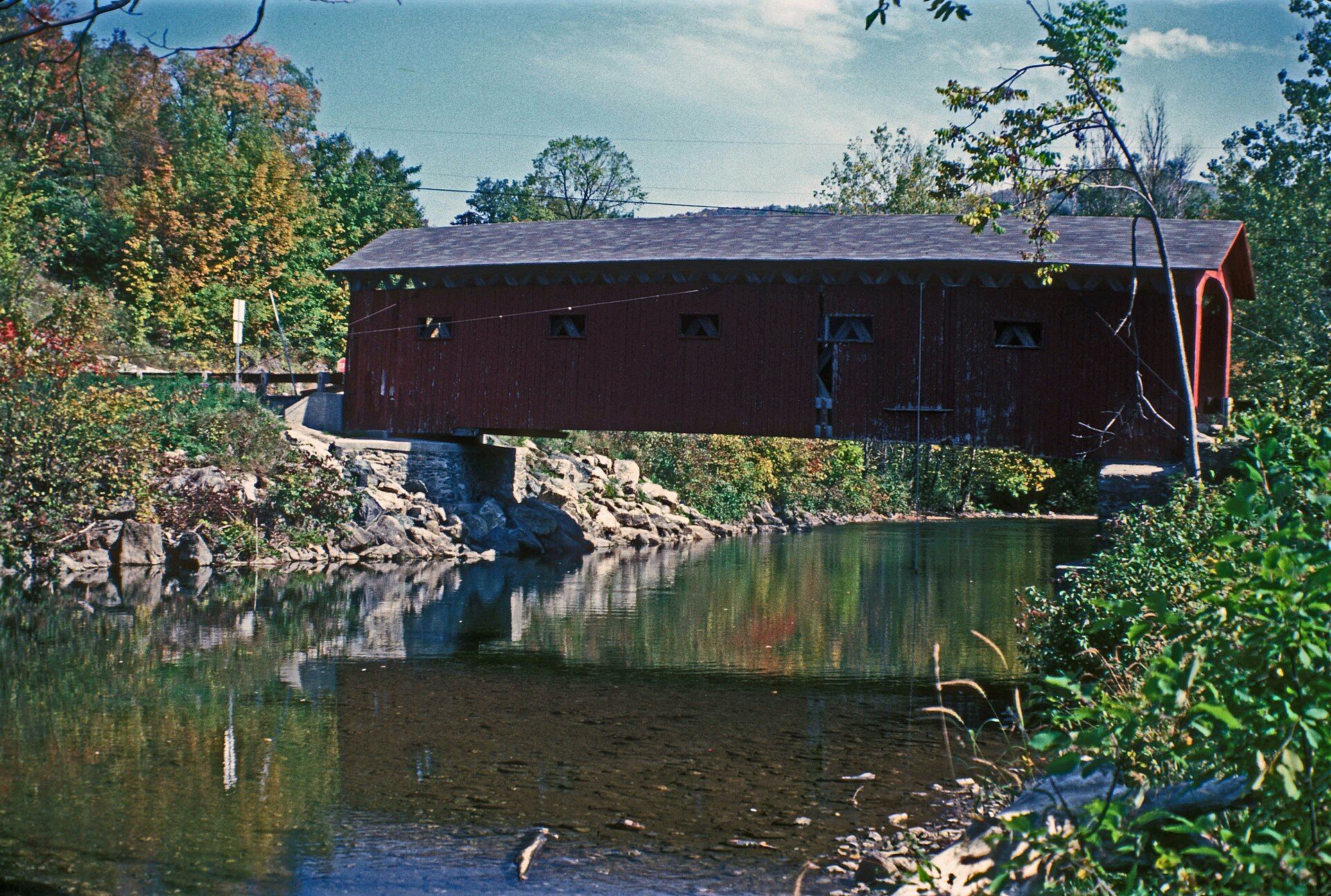
In 1777, Arlington became the first capital of the Vermont Republic. Landmarks include Arlington Green Covered Bridge, Arlington State Forest and Bennington-5 Vermont Representative District, 2002–2012. Arlington is the birthplace of Junius Brutus Stearns, artist.
Every piece is drawn from Arlington's own map data and historic archives, then printed and shipped from the USA when you order. No two towns look alike.
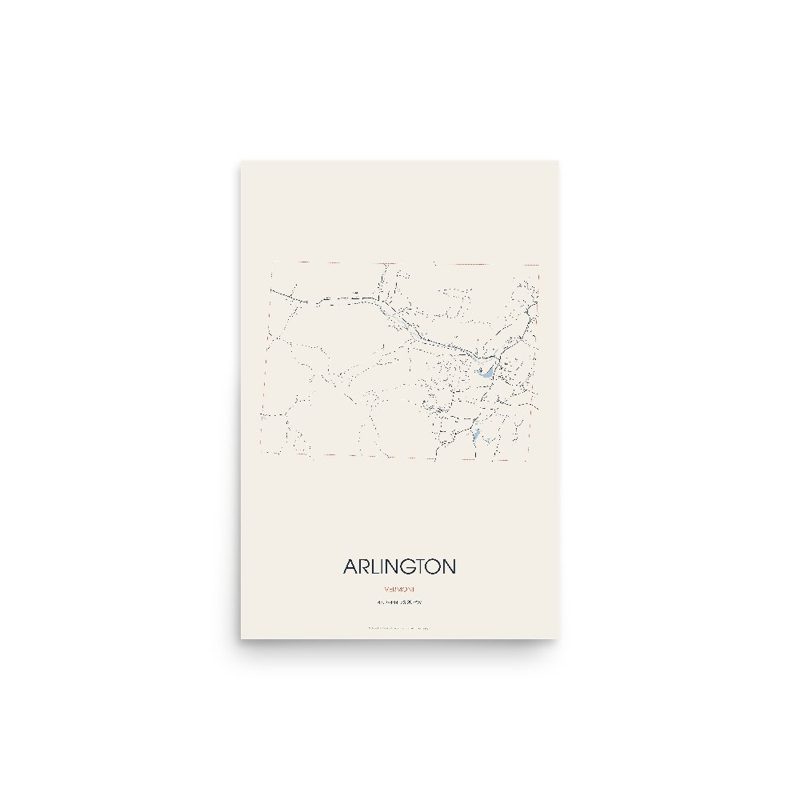
Every road in town, on archival matte paper
The same map, in navy and silver
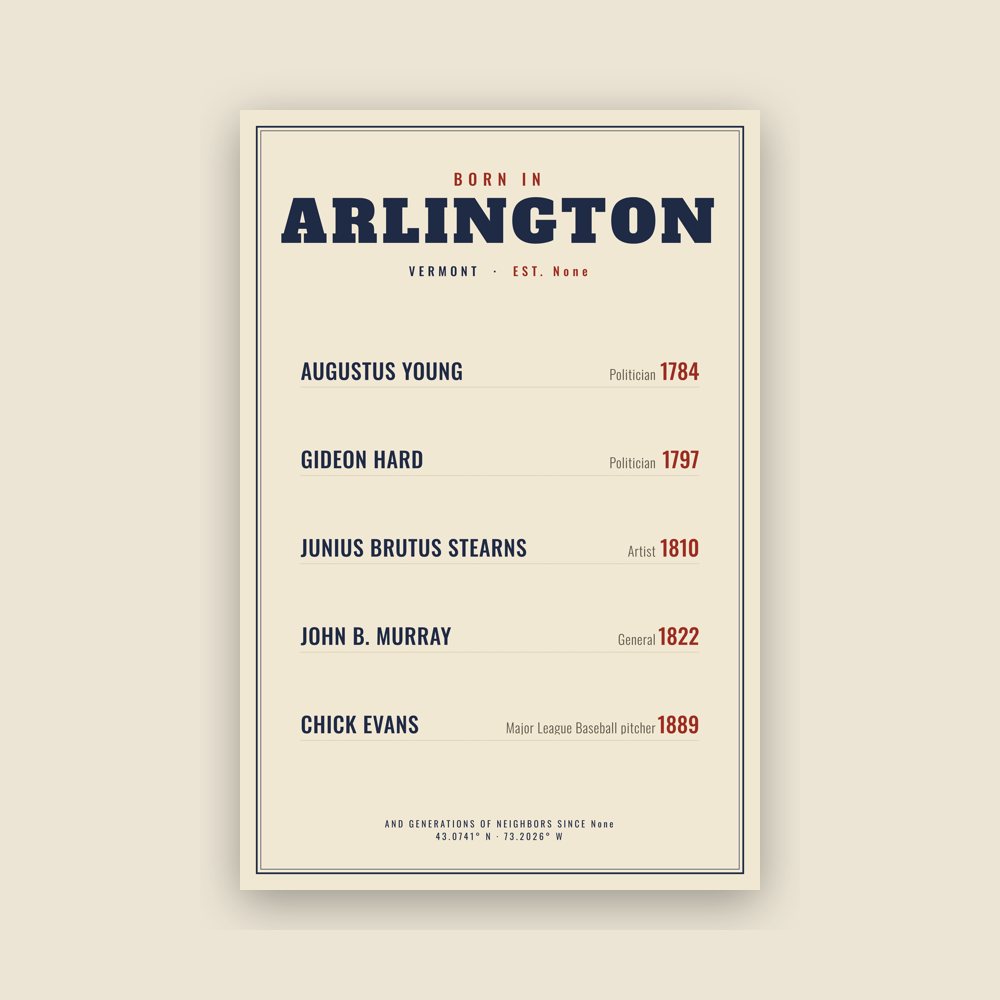
Famous natives, by birth year
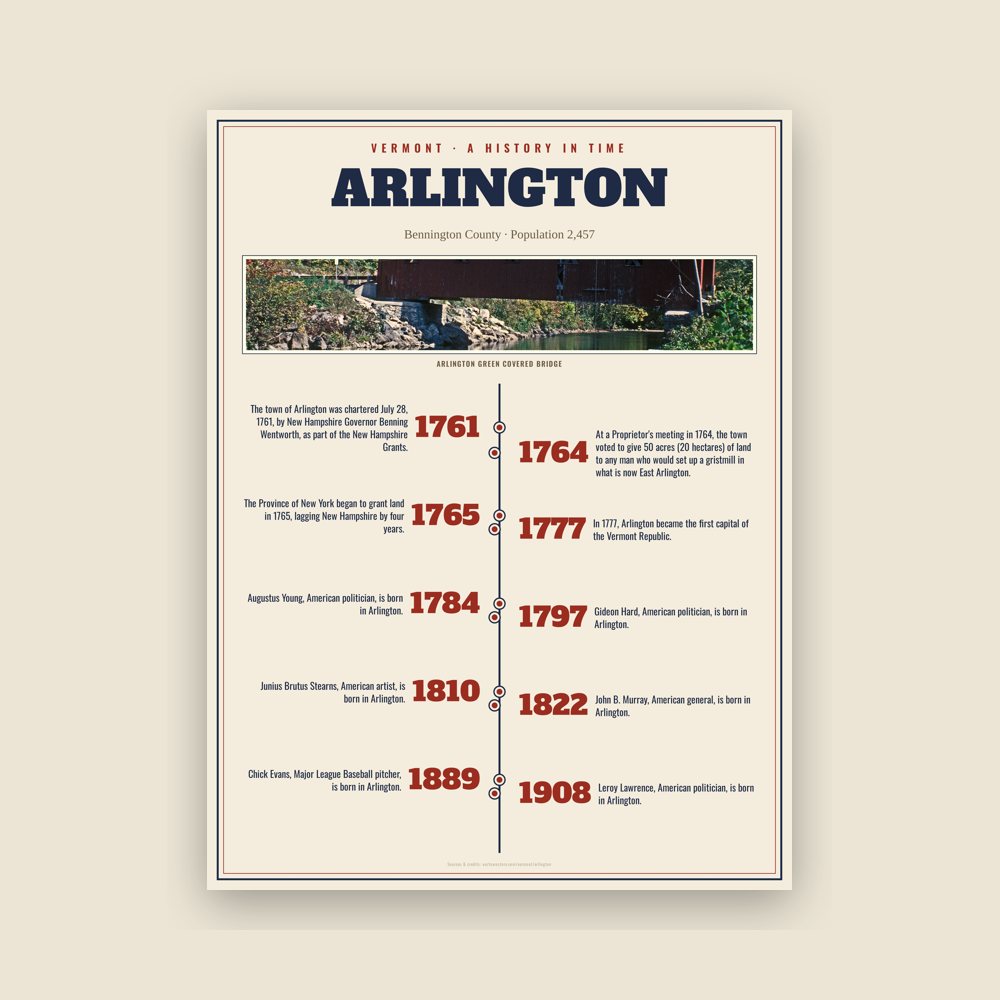
The town's story in dates, from its own records, for home or classroom
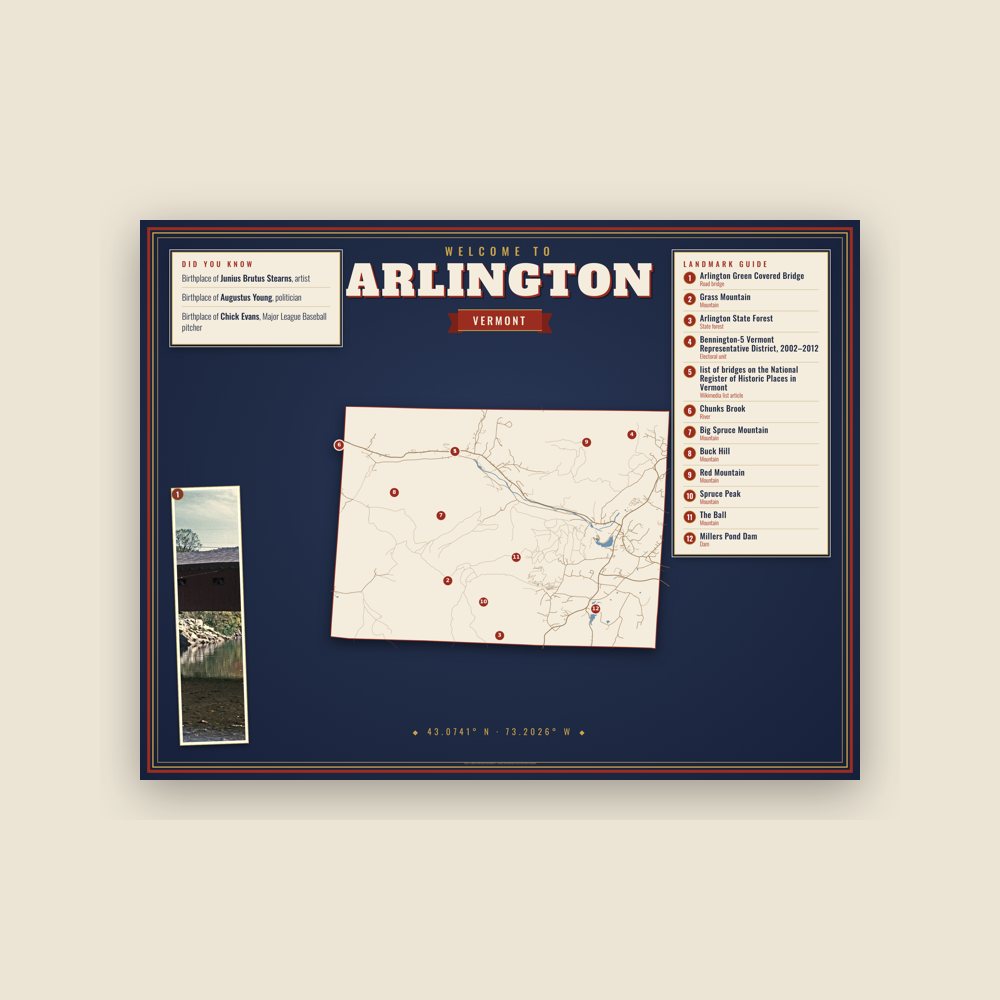
Map of local landmarks, washable fabric
Heavy-blend fleece, street map printed on the back
Soft Bella+Canvas jersey
Glossy ceramic, dishwasher safe
Ceramic keepsake, gold ribbon
Weatherproof, for the front walk
24″×16″, printed coir-look fibers, rubber back
12″×12″ printed wood, ready to hang
Soft-touch, zip cover
Sturdy all-over-print tote
Glossy top, cork back
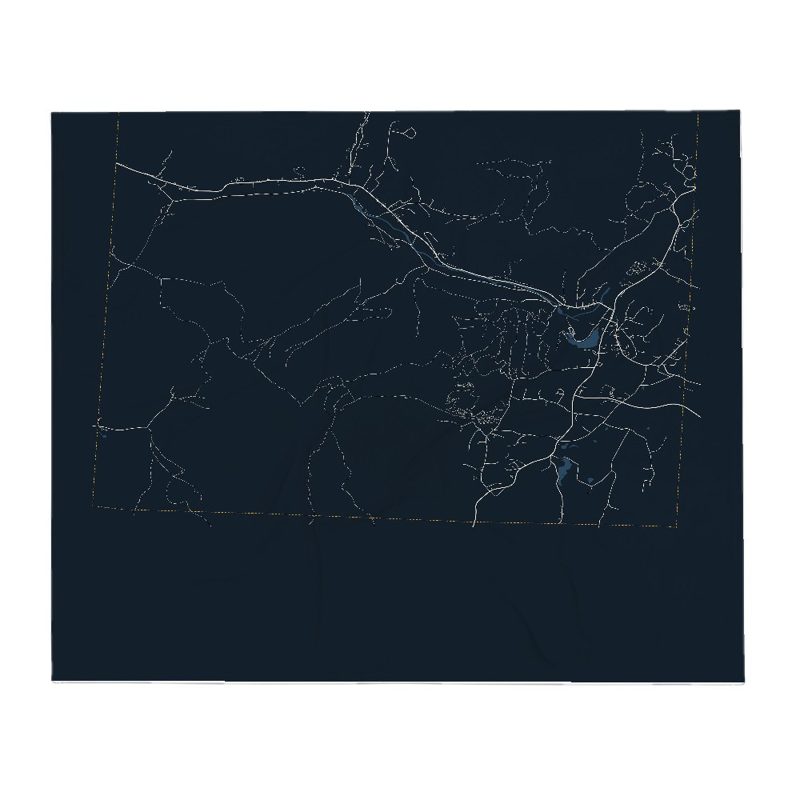
Soft fleece, 50″×60″
20 oz, double-wall stainless
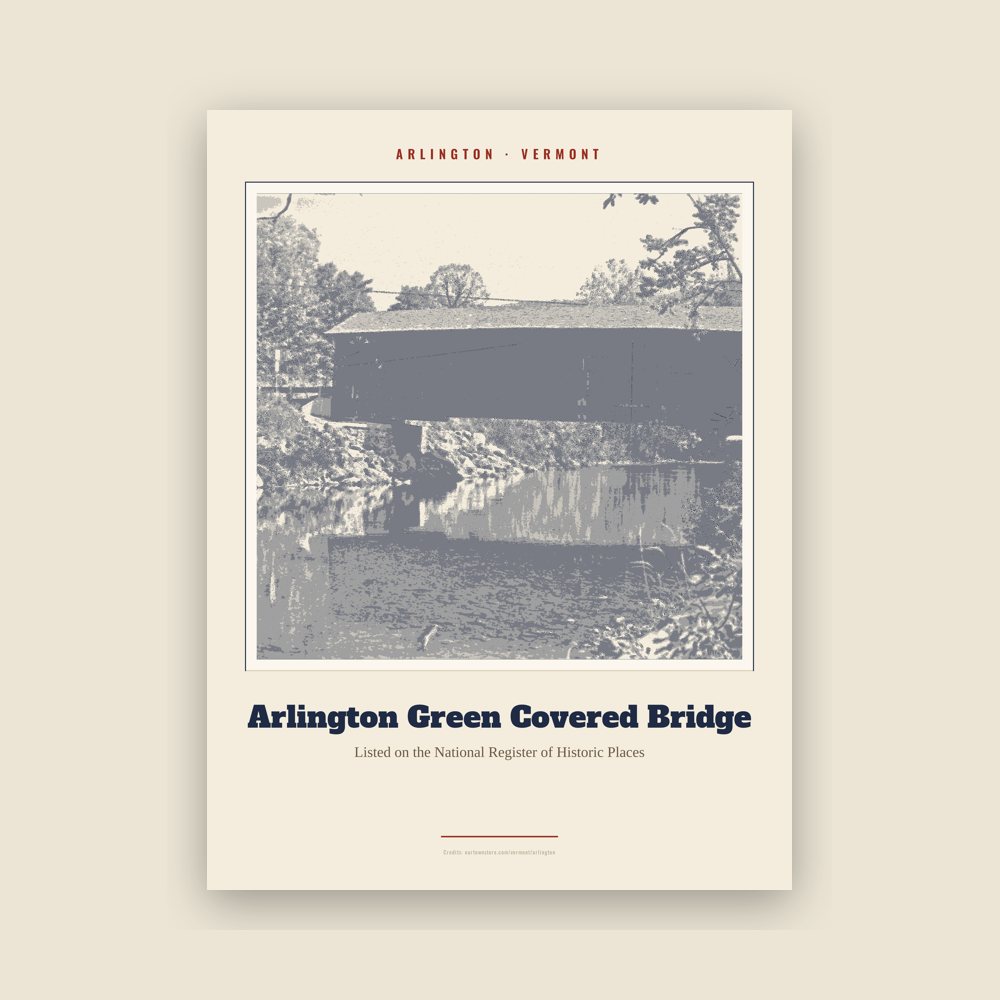
Archival matte print of a local landmark, credited to its photographer
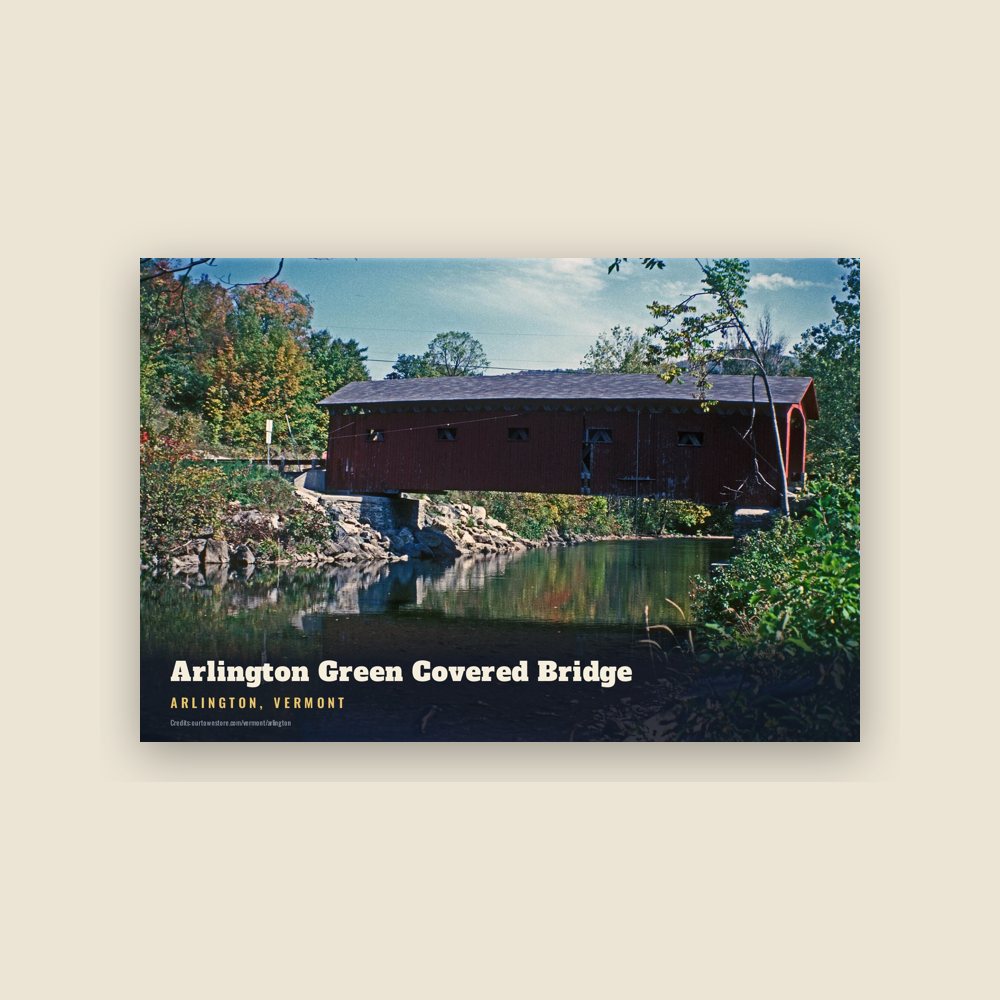
6″×4″ postcard, glossy front
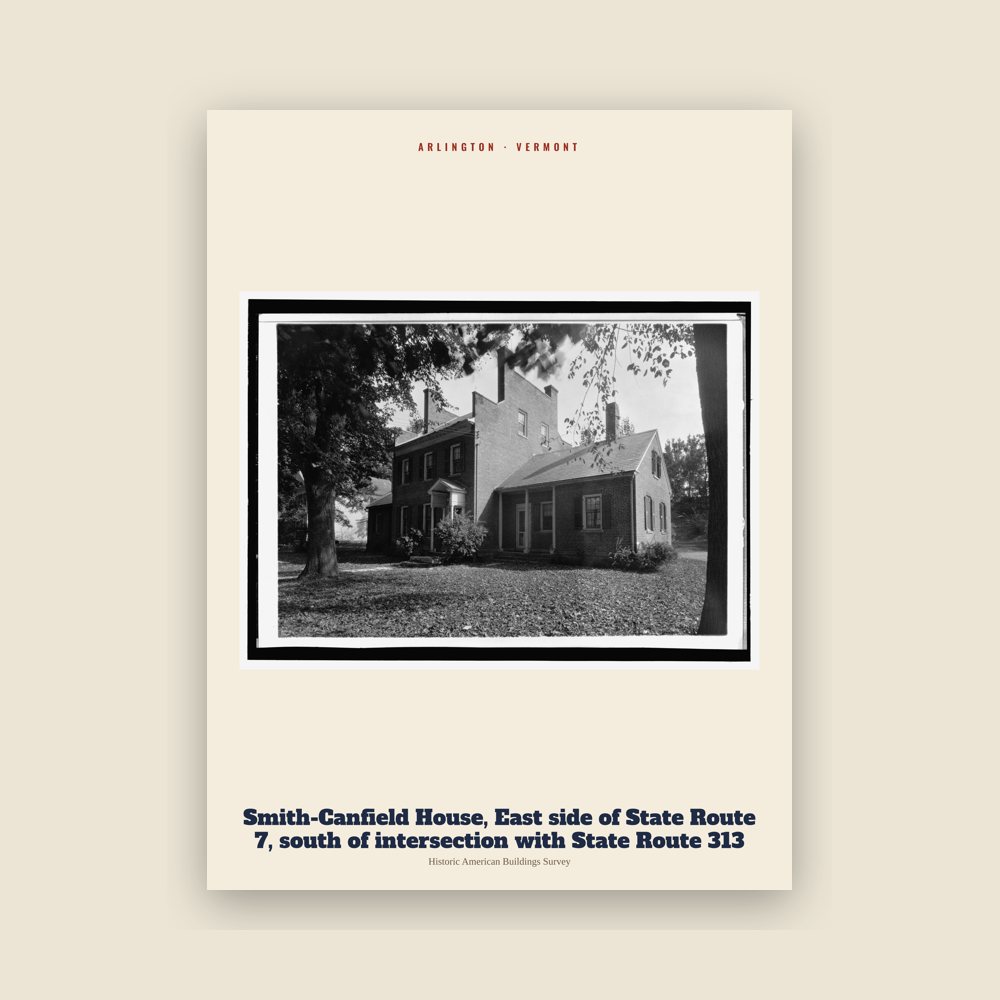
From the Library of Congress collections: a historic survey drawing or photograph of the town
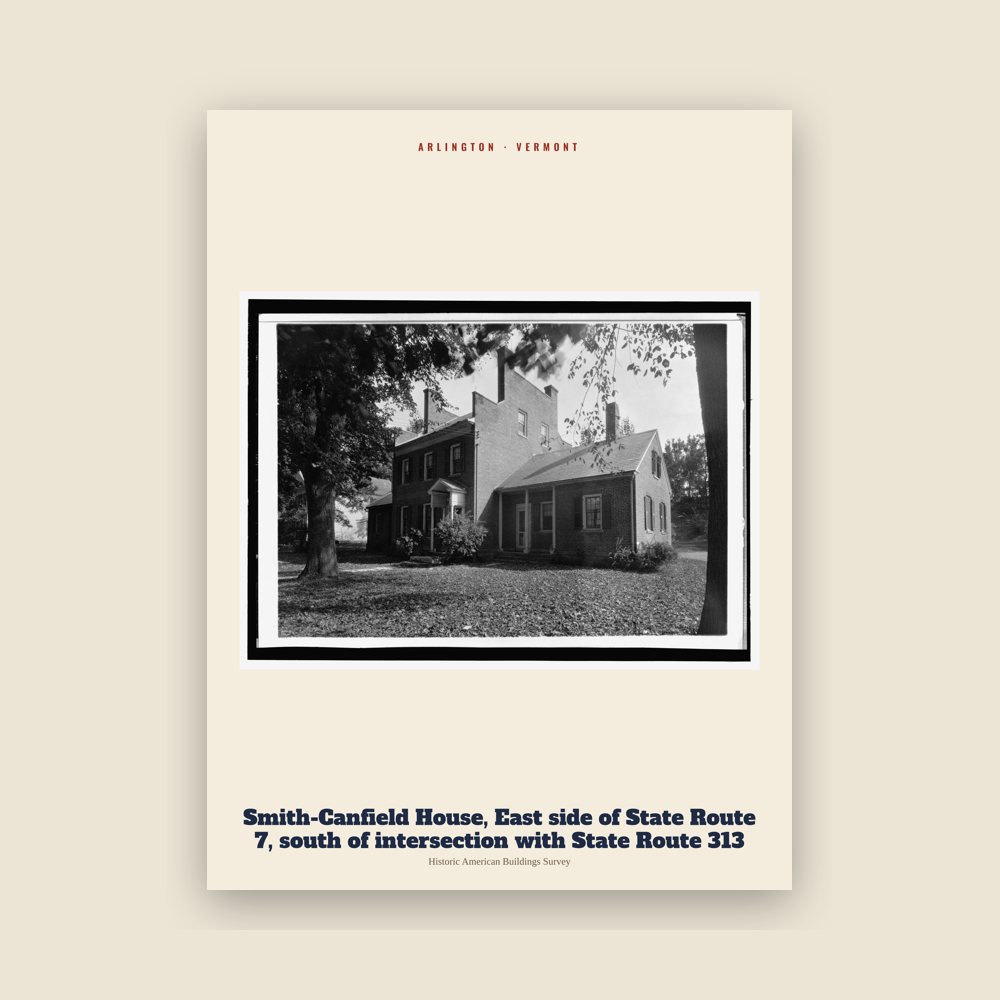
From the Library of Congress collections: a historic survey drawing or photograph of the town
Population 1990: 2,299 → 2000: 2,397 → 2010: 2,317 → 2020: 2,457
From Wikidata (CC0).
The town of Arlington was chartered July 28, 1761, by New Hampshire Governor Benning Wentworth, as part of the New Hampshire Grants. In 1777, Arlington became the first capital of the Vermont Republic.
Among the first settlers in Arlington were Captain Jehiel Hawley and his family, who had settled there by 1764. They were Anglicans and had fled Roxbury, Connecticut, because of the oppressive requirements of the established Congregational church. At a Proprietor's meeting in 1764, the town voted to give 50 acres (20 hectares) of land to any man who would set up a gristmill in what is now East Arlington. This offer was accepted by Remember Baker (first cousin of Ethan Allen), who built a grist and sawmill.
In the years leading up to the American Revolution, both New York and New Hampshire laid claim to lands comprising current-day Vermont. The Province of New York began to grant land in 1765, lagging New Hampshire by four years. Arlington was, for the most part, settled by Anglicans from Roxbury, Newtown, and Milford, Connecticut, with ownership rights derived from the New Hampshire Grants.
When settlers with New York grants arrived, conflicts ensued. Among other things, the residents of Arlington relied on the militancy of Ethan Allen to discourage those touting New York grants. Ethan Allen and his group were known by their friends as the Green Mountain Boys. They were relatively effective in promoting the cause of New Hampshire grantees, although legal ownership was not settled monetarily for many years.
Several members of the Green Mountain Boys lived in Arlington before the American Revolution, including Thomas Chittenden, Seth Warner and Remember Baker, who was the first town clerk. Gideon Hard, a congressman from New York, was born in Arlington. During the American Revolutionary War, the Patriot soldiers of the Green Mountain Boys rallied against Loyalist opposition in the town. British Loyalist citizens in Arlington, united under the leadership of Dr. Samuel Adams, organized an independent military unit, Adams' Rangers, to support the British war effort in the region. In 1777, Adams' men saw action, fighting for British General John Burgoyne at the Battle of Saratoga in the Province of New York and were soundly defeated.
Adapted (trimmed) from the Wikipedia article Arlington, Vermont, revision 1378464200 by its contributors, licensed CC BY-SA 4.0.
We share a part of every Arlington sale with local partners, and we'd love to print from your collection. Old photographs, maps and postcards make the best keepsakes.
Partner with us