Guilford County, North Carolina
Street maps, historic prints and keepsakes for 9 Guilford County towns.
The oldest is Jamestown, established 1816. The largest by population is Burlington (57,303).
| Town | Established | Population |
|---|---|---|
| Burlington | – | 57,303 |
| Gibsonville | 1871 | 8,920 |
| Jamestown | 1816 | 3,668 |
| Oak Ridge | 1998 | 7,474 |
| Pleasant Garden | 1997 | 5,000 |
| Sedalia | – | 676 |
| Stokesdale | 1907 | 5,924 |
| Summerfield | 1996 | 10,951 |
| Whitsett | – | 584 |
About these towns
Burlington: Alamance County was created when Orange County was partitioned in 1849. Early settlers included several groups of Quakers, many of which remain active in the Snow Camp area, German farmers, and Scots-Irish immigrants.
Gibsonville: Joseph Gibson (1785-1857), whose father established farming and gold mining operations in Gibsonville as early as 1775, was a local farmer who provided grading services in 1851 for the newly formed North Carolina Railroad (NCRR) Company.
Jamestown: As early as 1701, the Keyauwee people were living in a village in this region. They enjoyed the area's mild climate, abundant natural resources, and the fertile hunting grounds along the Deep and Uwharrie rivers.
Oak Ridge: The town is home to Oak Ridge Military Academy, a private, co-educational, college-preparatory military boarding school. Founded in 1852, it is the third-oldest military school in the nation still in operation, and it is the official military school of North Carolina, as designated by the state legislature.
Stokesdale: Belews Lake is located nearby, and North Carolina Highway 68 and North Carolina Highway 65 both intersect U.S. Route 158 near the town's center.
Summerfield: The area was settled in about 1769 by Charles Bruce and acquired the name Bruce's Crossroads. In February 1781 patriot forces under General Henry Lee III and British forces under General Banastre Tarleton skirmished at the crossroads during the American Revolutionary War.
Whitsett: The Daniel P. Foust House, Foust-Carpenter and Dean Dick Farms, Holly Gate, Low House, William Rankin and Elizabeth Wharton Smith House, Wadsworth Congregational Church, and Whitsett Historic District are listed on the National Register of Historic Places.
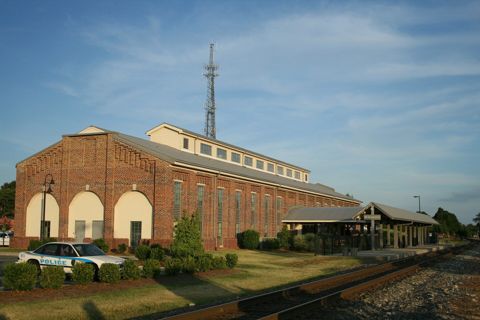 BurlingtonNorth Carolina
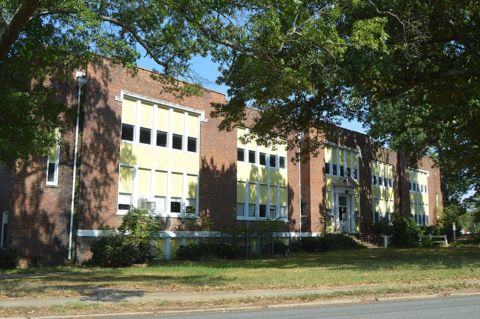 GibsonvilleNorth Carolina · Est. 1871
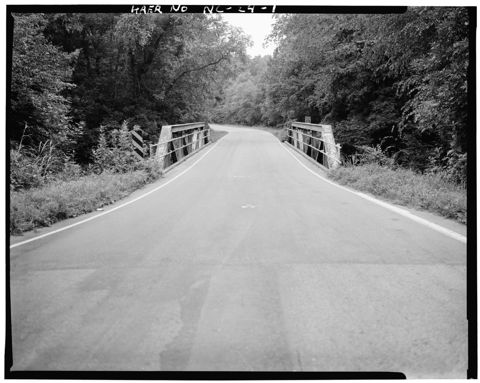 JamestownNorth Carolina · Est. 1816
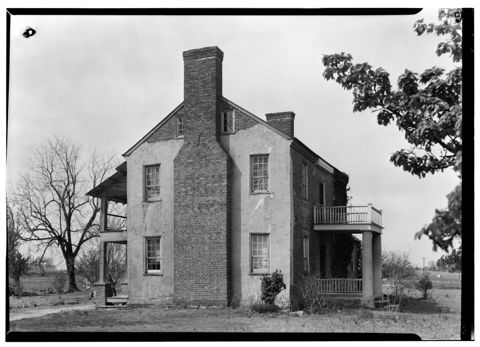 Oak RidgeNorth Carolina · Est. 1998
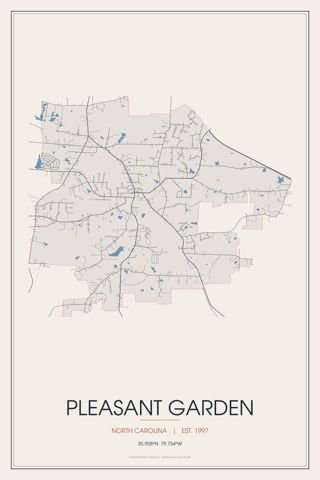 Pleasant GardenNorth Carolina · Est. 1997
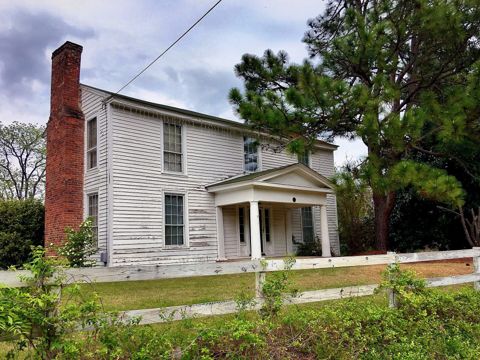 SedaliaNorth Carolina
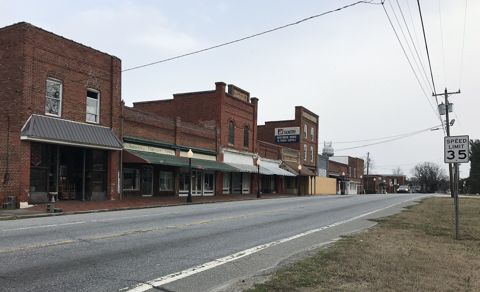 StokesdaleNorth Carolina · Est. 1907
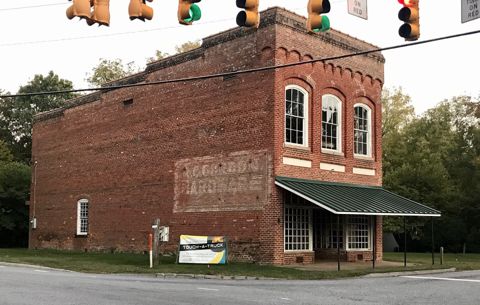 SummerfieldNorth Carolina · Est. 1996
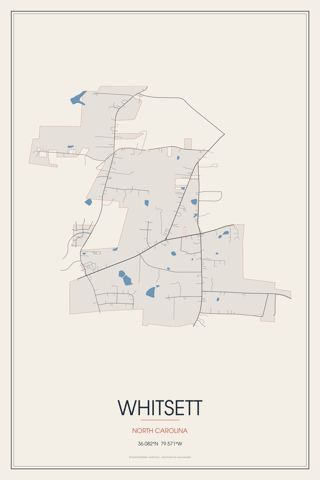 WhitsettNorth Carolina
Founding years, populations and town notes come from each town's Wikipedia and Wikidata entries. All North Carolina towns.