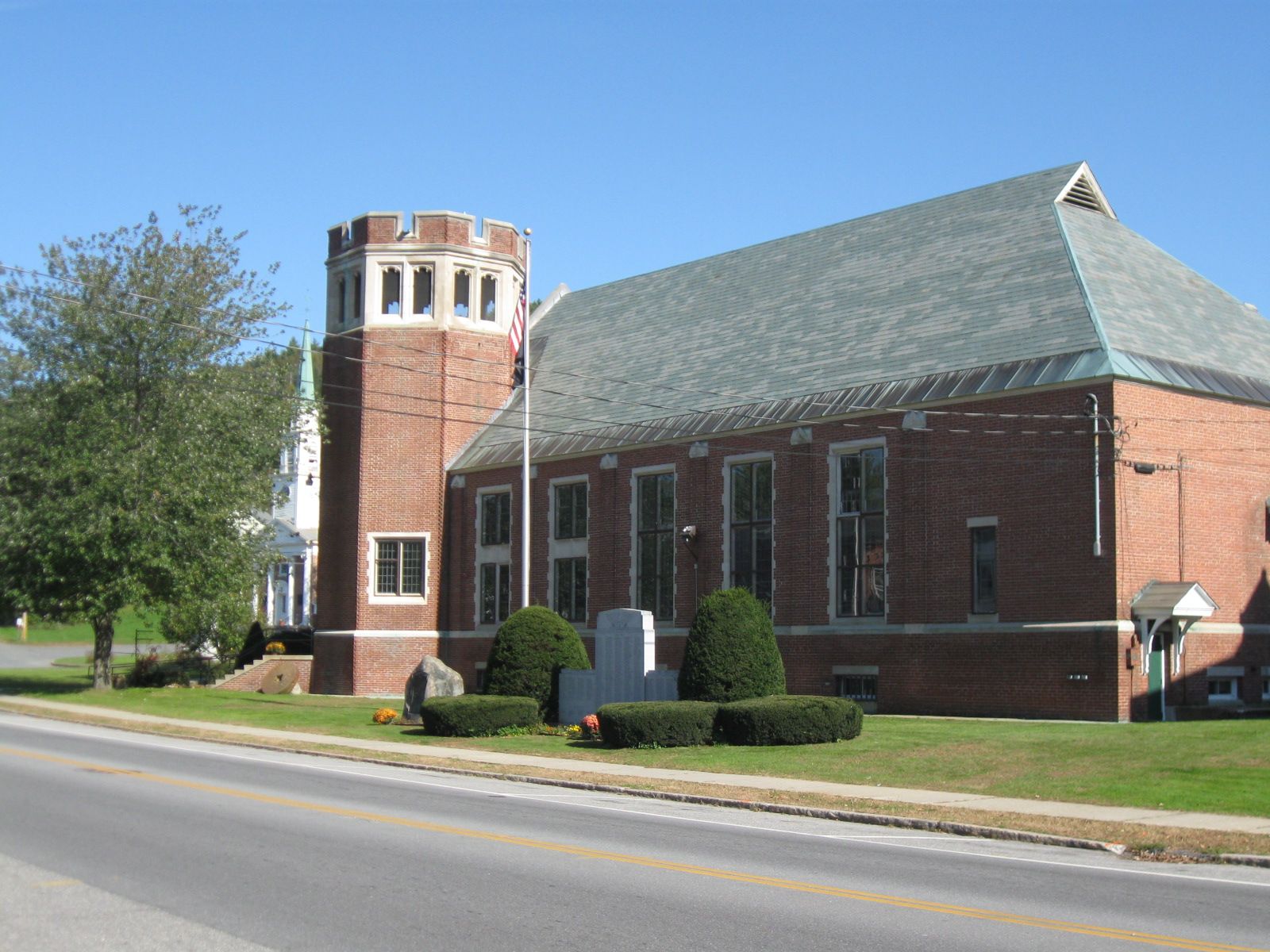
Although it has been an agricultural town, many small industries have been established in Winchester. Landmarks include Conant Public Library, Monadnock Speedway and Winchester Memorial Church. Winchester is the birthplace of Leonard Wood, 5th Chief of Staff of the U.S. Army.
Every piece is drawn from Winchester's own map data and historic archives, then printed and shipped from the USA when you order. No two towns look alike.
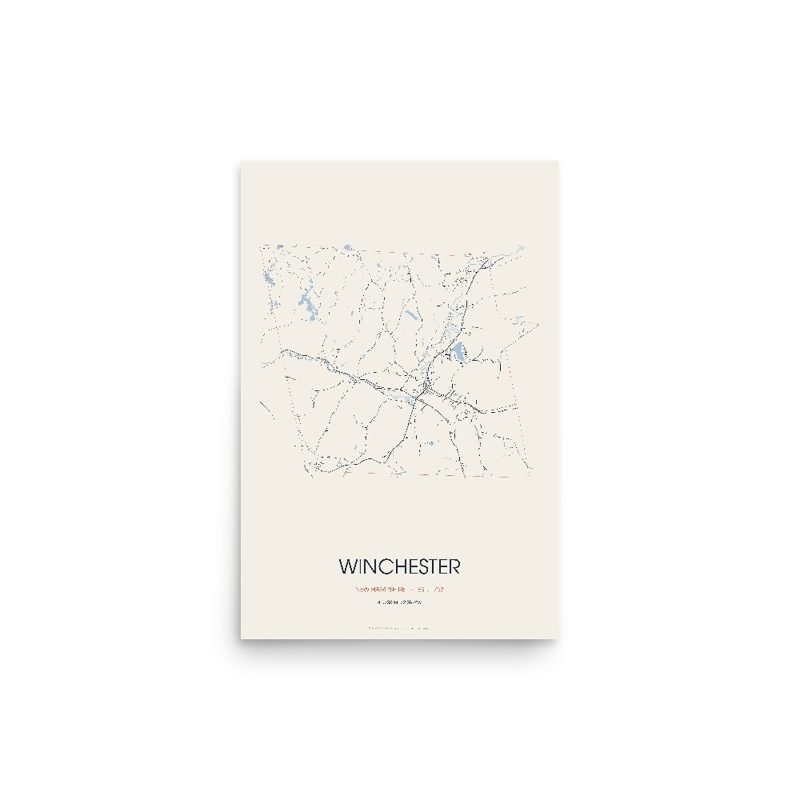
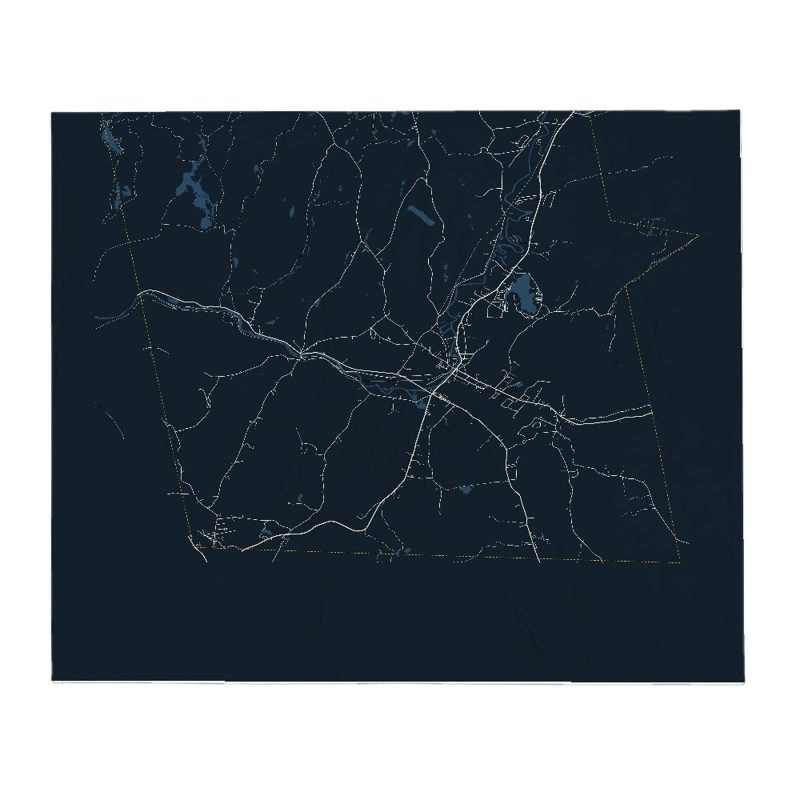
Every road in town, on archival matte paper
The same map, in navy and silver
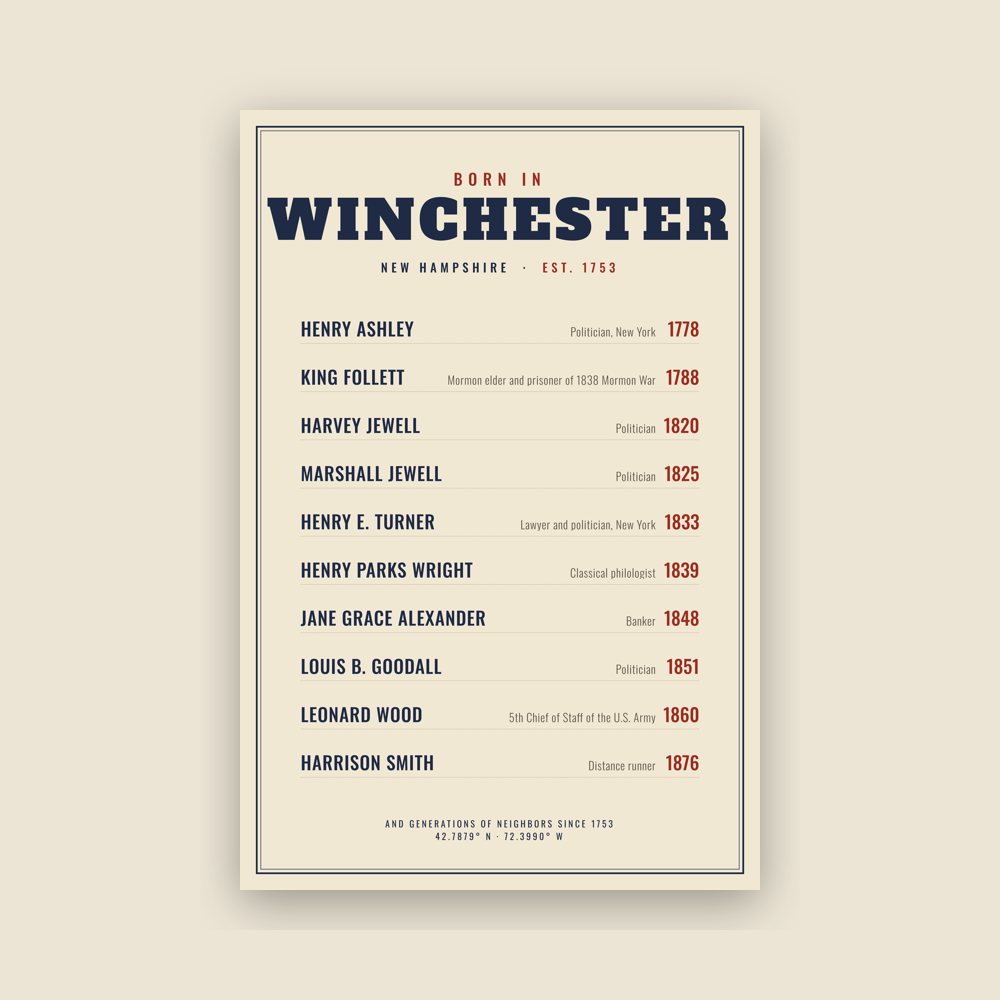
Famous natives, by birth year
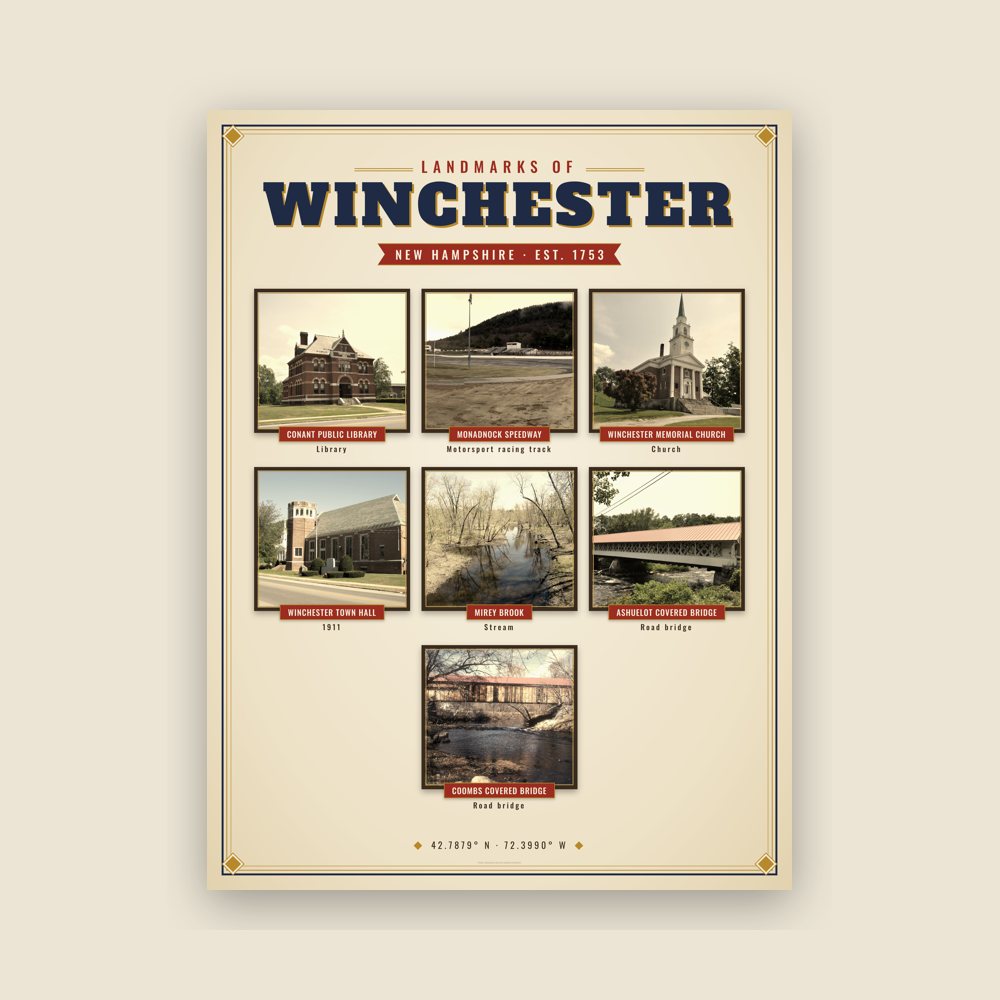
Nine local landmarks, archival matte
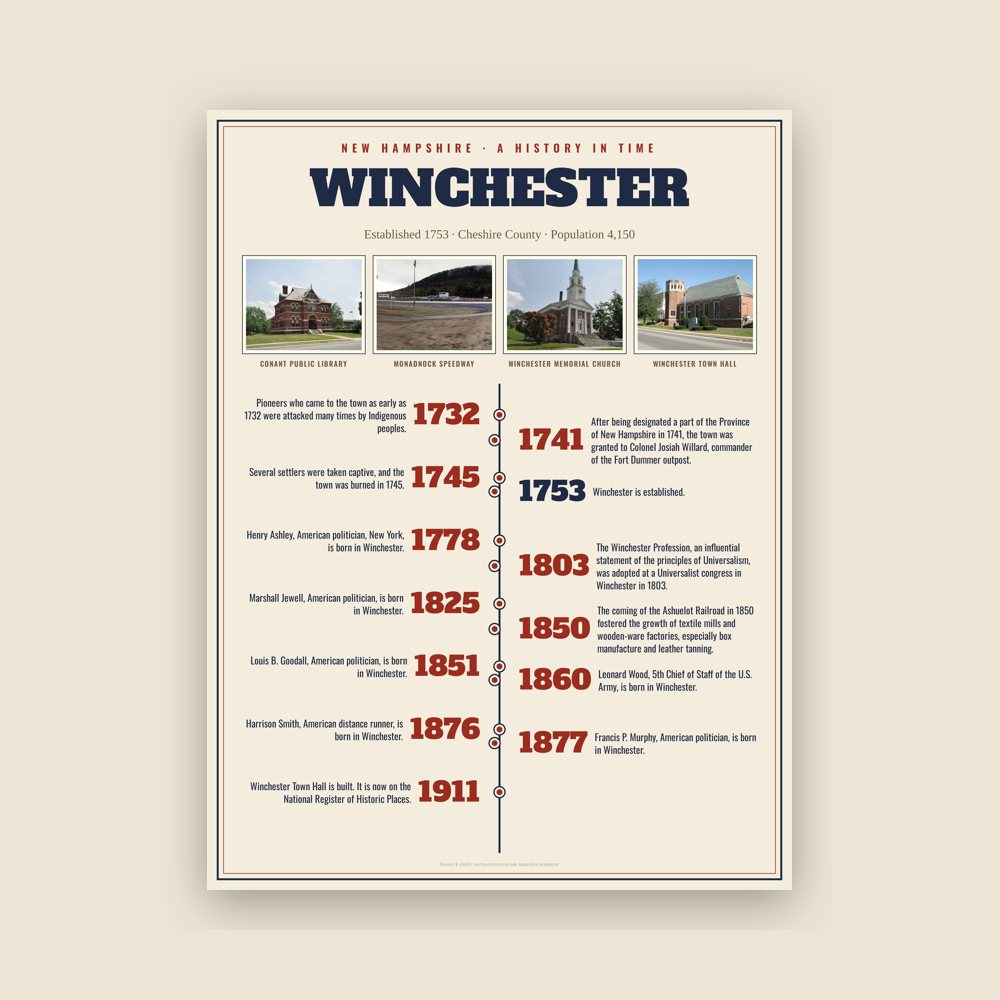
The town's story in dates, from its own records, for home or classroom
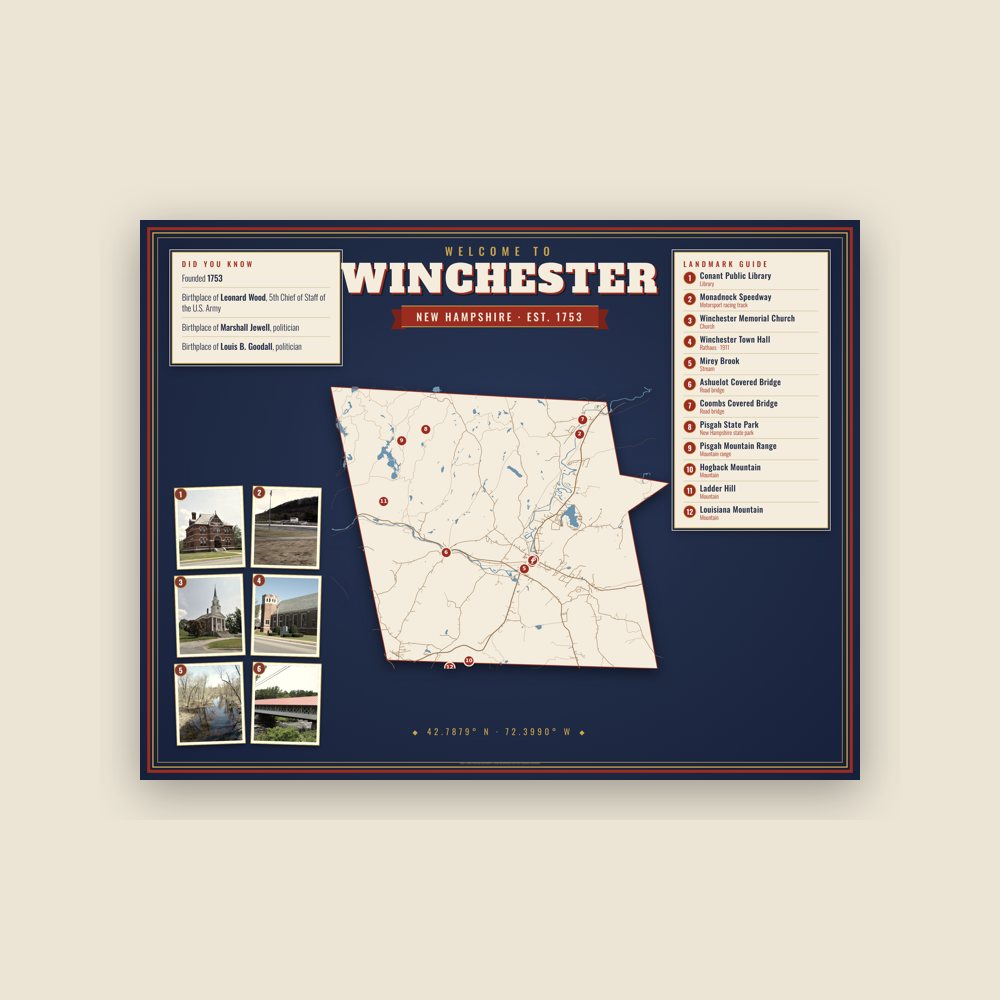
Map of local landmarks, washable fabric
Heavy-blend fleece, street map printed on the back
Soft Bella+Canvas jersey
Glossy ceramic, dishwasher safe
Ceramic keepsake, gold ribbon
Weatherproof, for the front walk
24″×16″, printed coir-look fibers, rubber back
12″×12″ printed wood, ready to hang
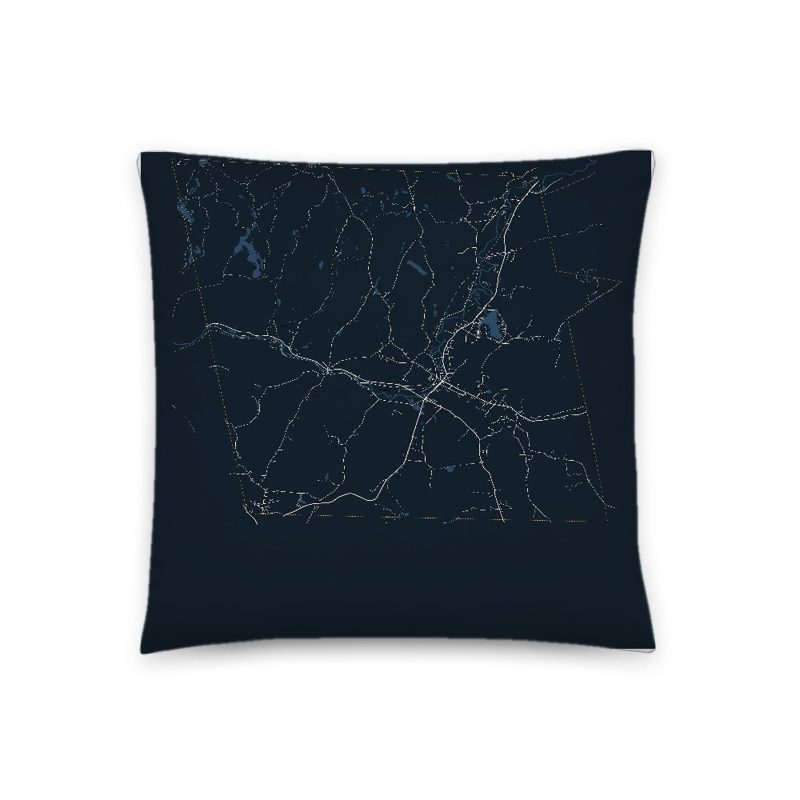
Soft-touch, zip cover
Sturdy all-over-print tote
Glossy top, cork back
Soft fleece, 50″×60″
20 oz, double-wall stainless
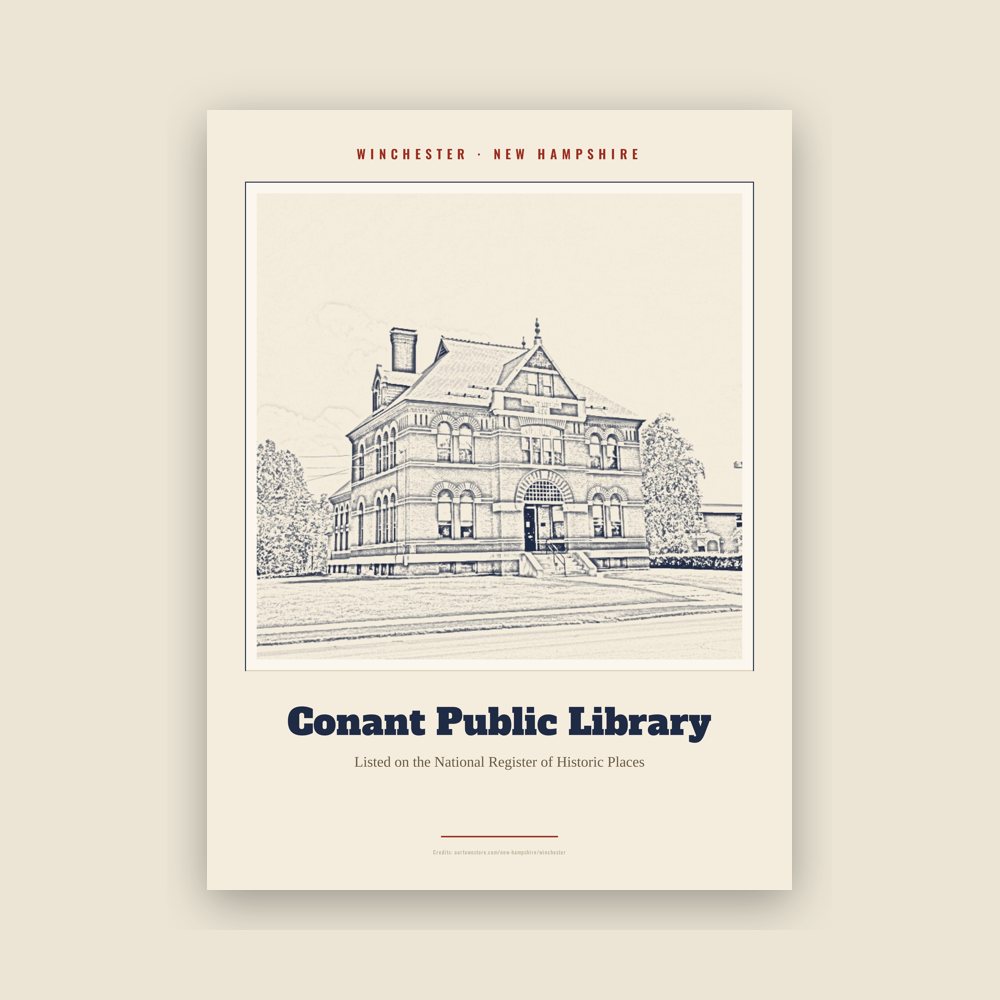
Archival matte print of a local landmark, credited to its photographer

Archival matte print of a local landmark, credited to its photographer
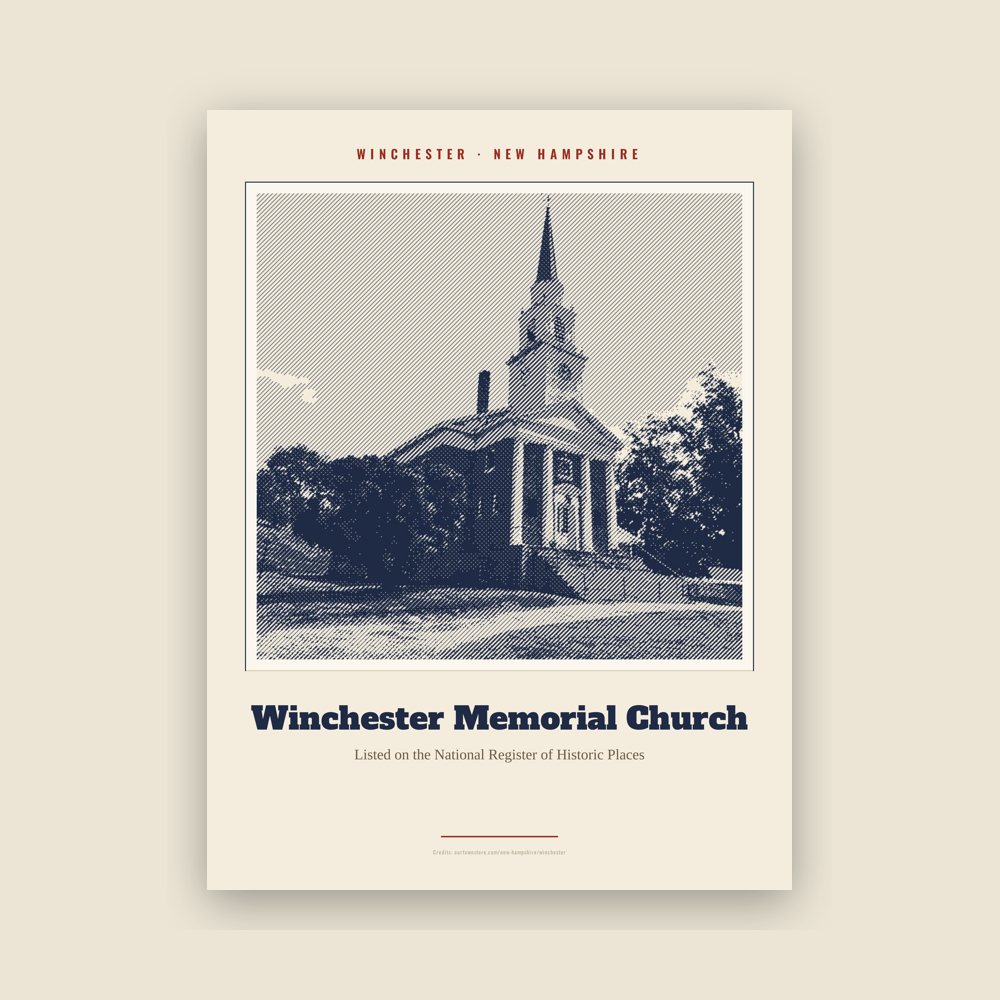
Archival matte print of a local landmark, credited to its photographer
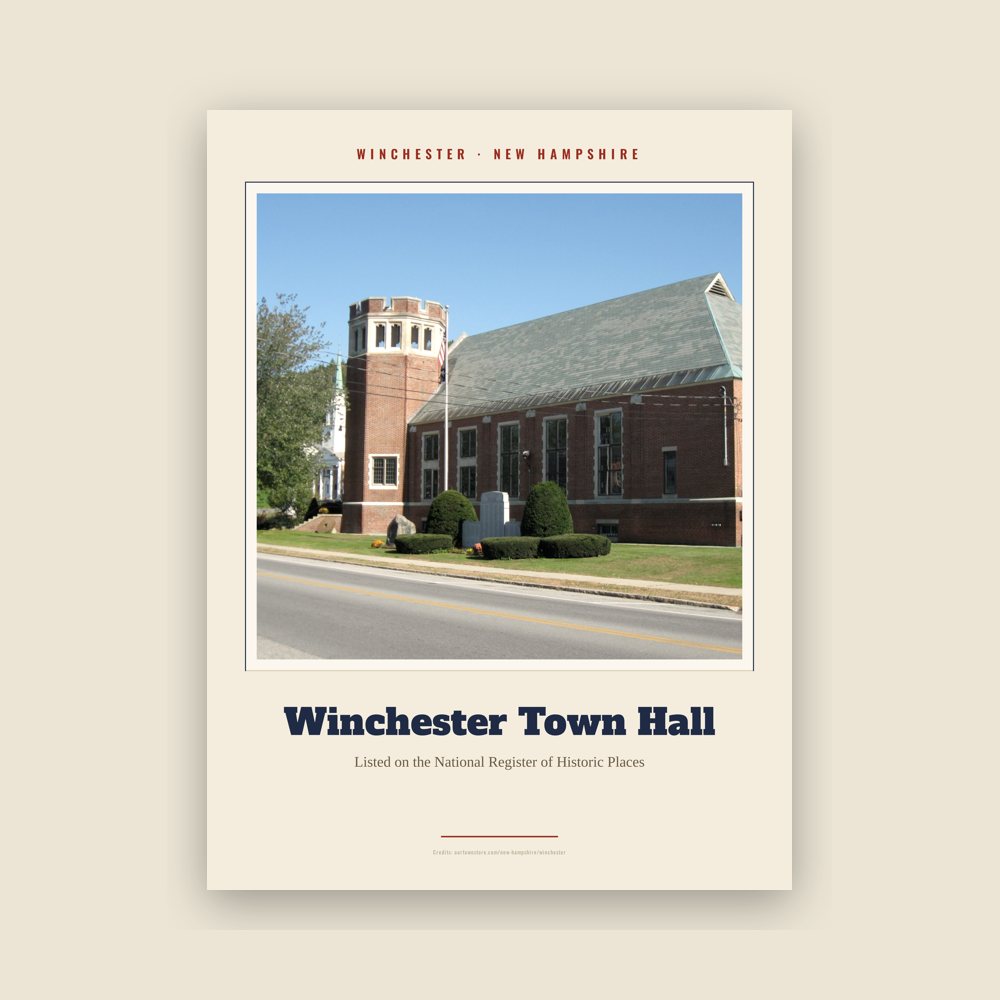
Archival matte print of a local landmark, credited to its photographer

Archival matte print of a local landmark, credited to its photographer

Archival matte print of a local landmark, credited to its photographer
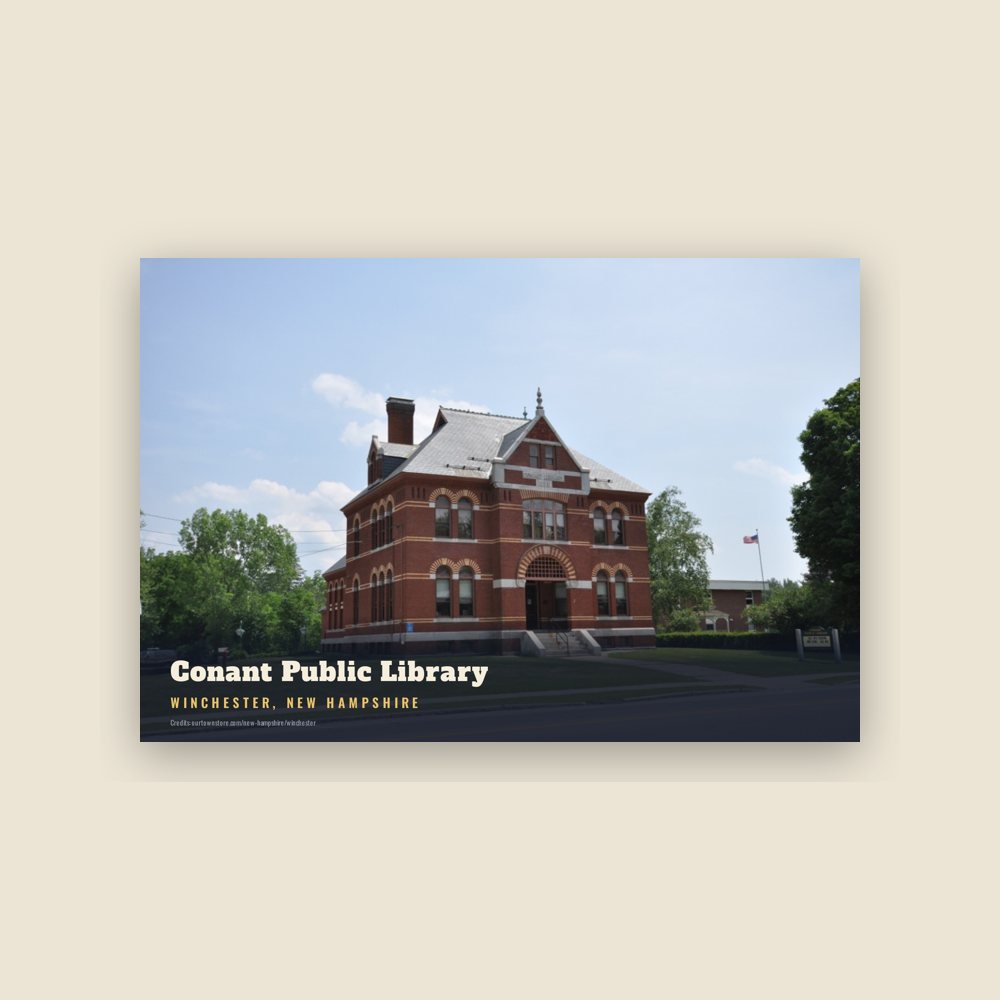
6″×4″ postcard, glossy front
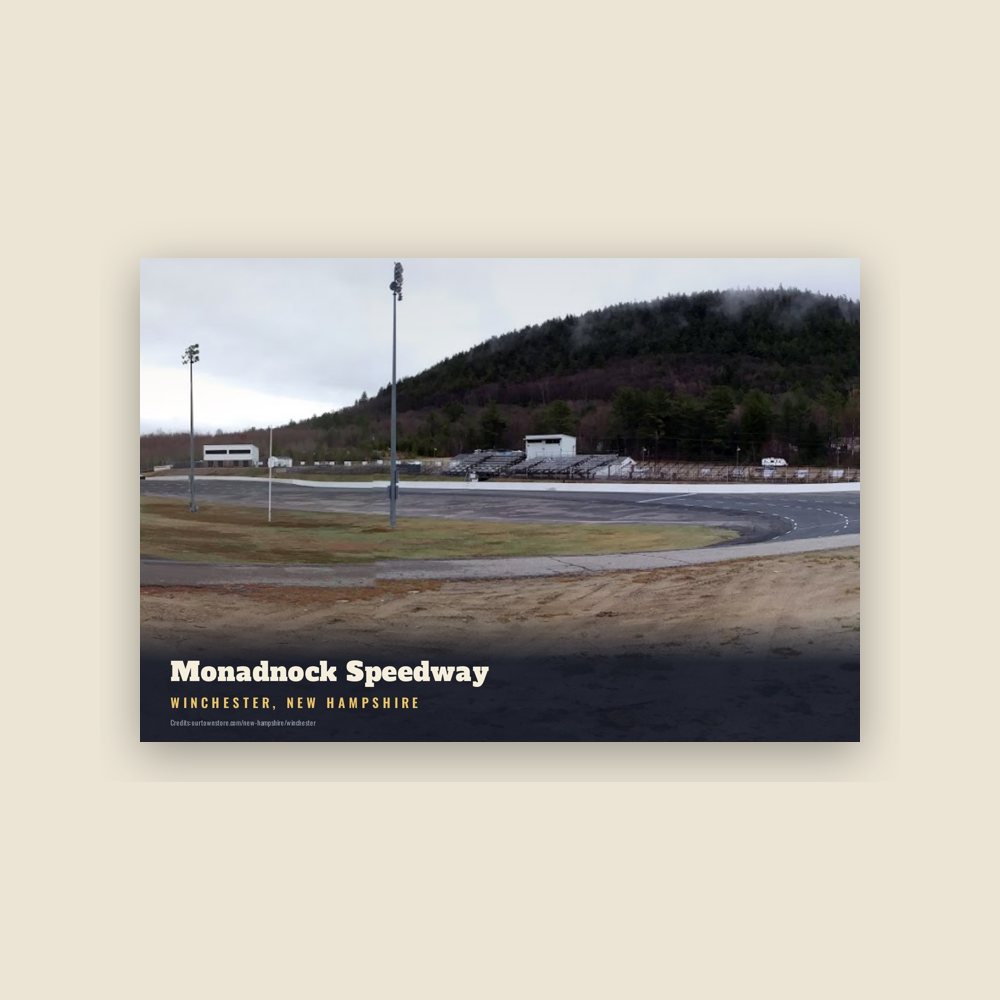
6″×4″ postcard, glossy front
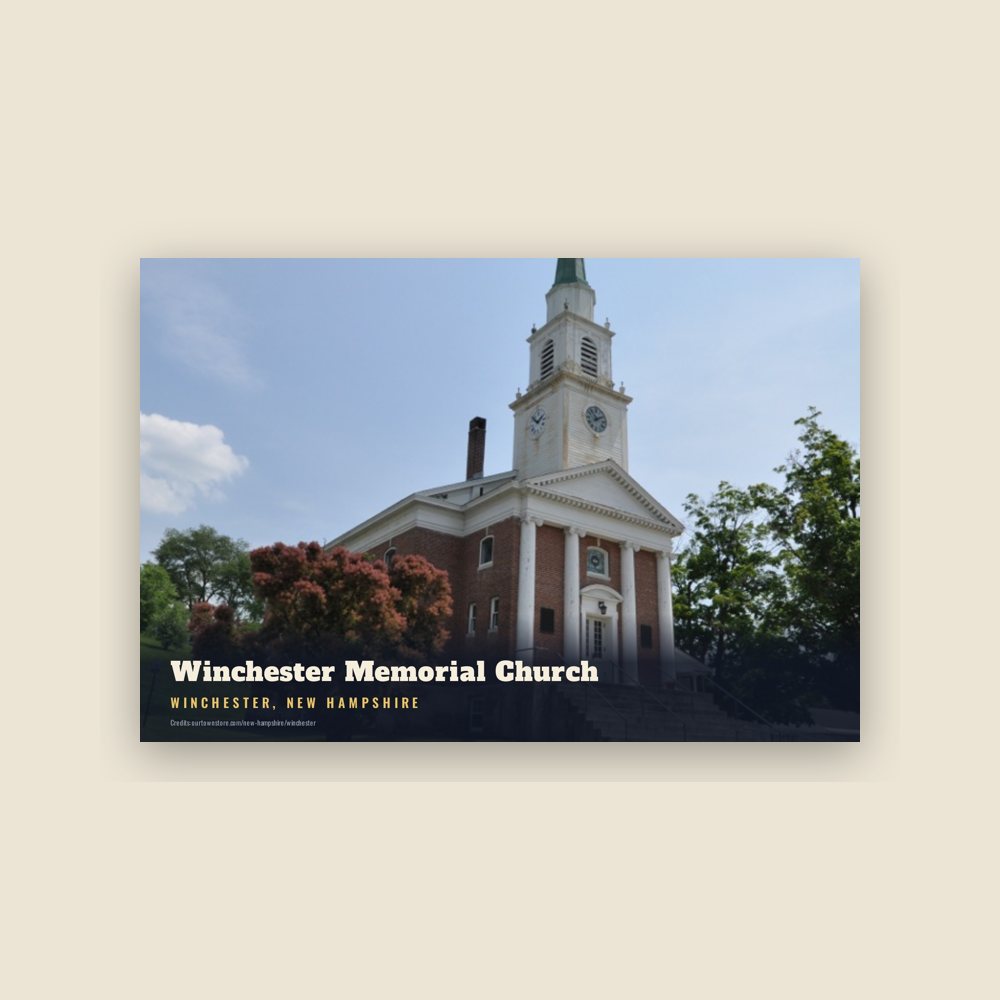
6″×4″ postcard, glossy front
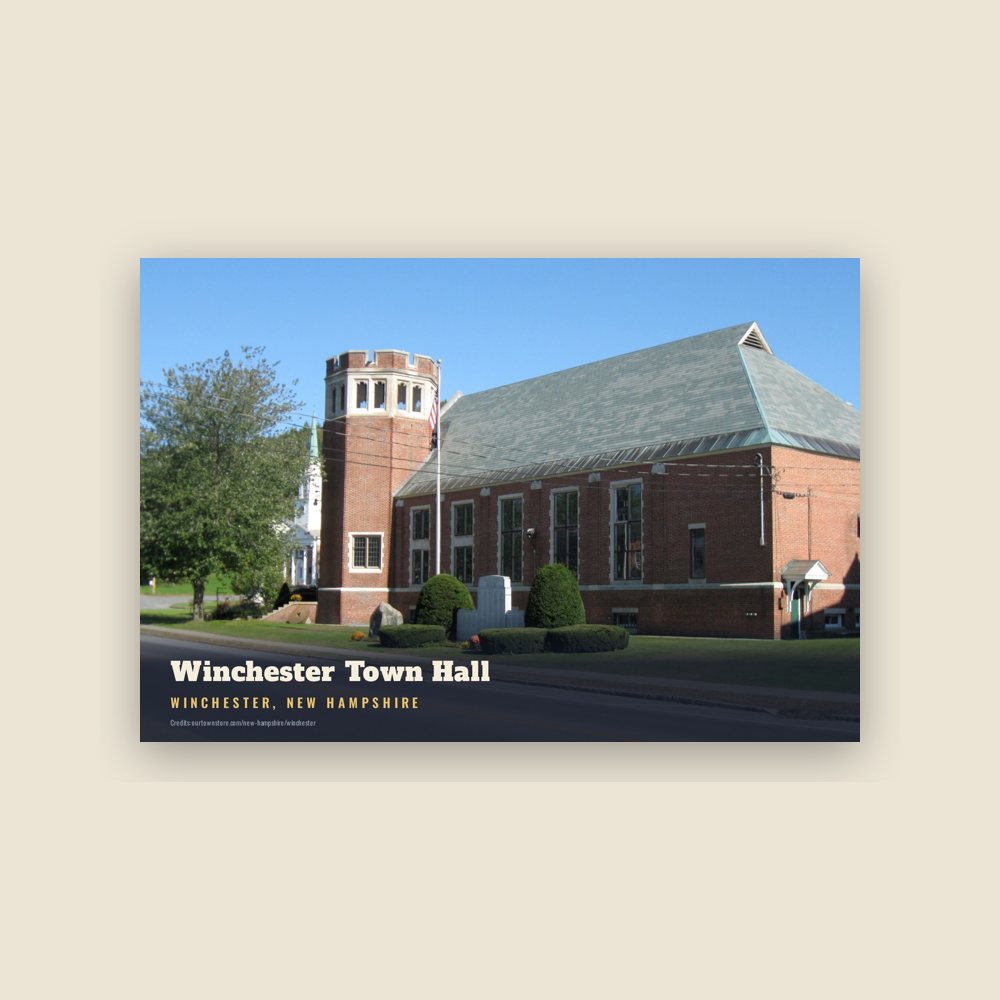
6″×4″ postcard, glossy front
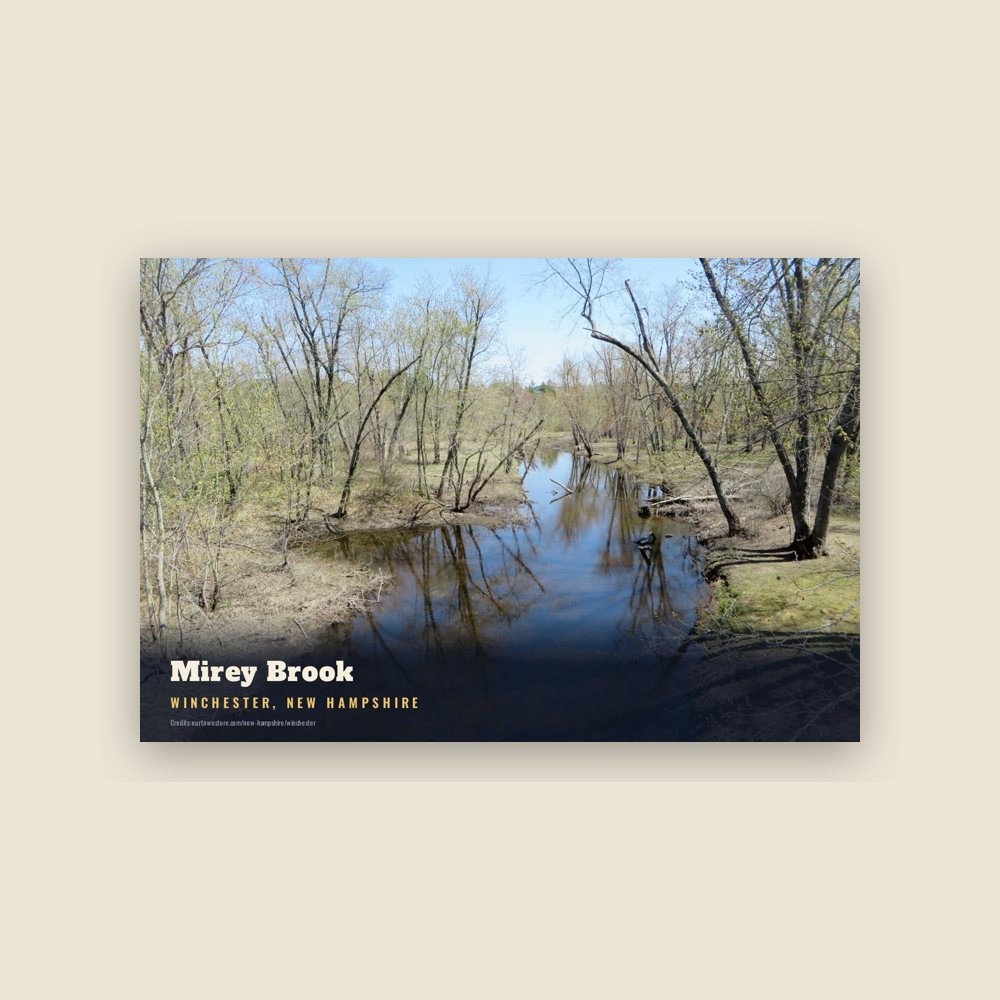
6″×4″ postcard, glossy front
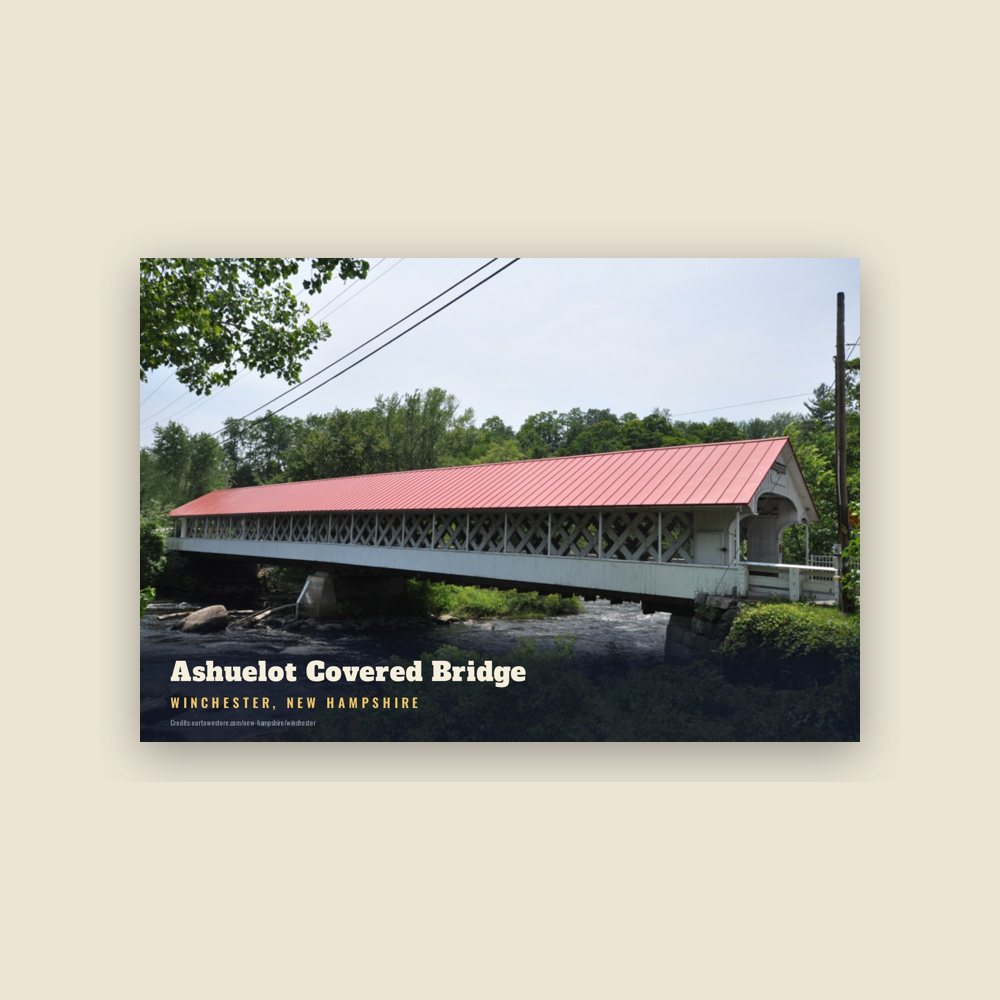
6″×4″ postcard, glossy front
Population 2010: 4,341 → 2020: 4,150
From Wikidata (CC0).
Originally named "Arlington" in honor of Charles Fitzroy, Earl of Arlington, this town was one of those established in 1733 by colonial Governor Jonathan Belcher as protection for the Massachusetts Bay Colony border at the Connecticut River. This was in the area encompassed in the relatively newly acquired Equivalent Lands. After being designated a part of the Province of New Hampshire in 1741, the town was granted to Colonel Josiah Willard, commander of the Fort Dummer outpost. In 1753, it was incorporated by Governor Benning Wentworth as "Winchester", for Charles Paulet, 3rd Duke of Bolton, 8th Marquess of Winchester, and constable of the Tower of London.
Pioneers who came to the town as early as 1732 were attacked many times by Indigenous peoples. Several settlers were taken captive, and the town was burned in 1745. Its church, founded in 1736, is the oldest religious body in Cheshire County. The town has two covered bridges.
The Winchester Profession, an influential statement of the principles of Universalism, was adopted at a Universalist congress in Winchester in 1803.
Although it has been an agricultural town, many small industries have been established in Winchester. In the 1830s, Graves & Company was among the nation's first manufacturers of musical instruments. The coming of the Ashuelot Railroad in 1850 fostered the growth of textile mills and wooden-ware factories, especially box manufacture and leather tanning.
Adapted (trimmed) from the Wikipedia article Winchester, New Hampshire, revision 1379648553 by its contributors, licensed CC BY-SA 4.0.
We share a part of every Winchester sale with local partners, and we'd love to print from your collection. Old photographs, maps and postcards make the best keepsakes.
Partner with us