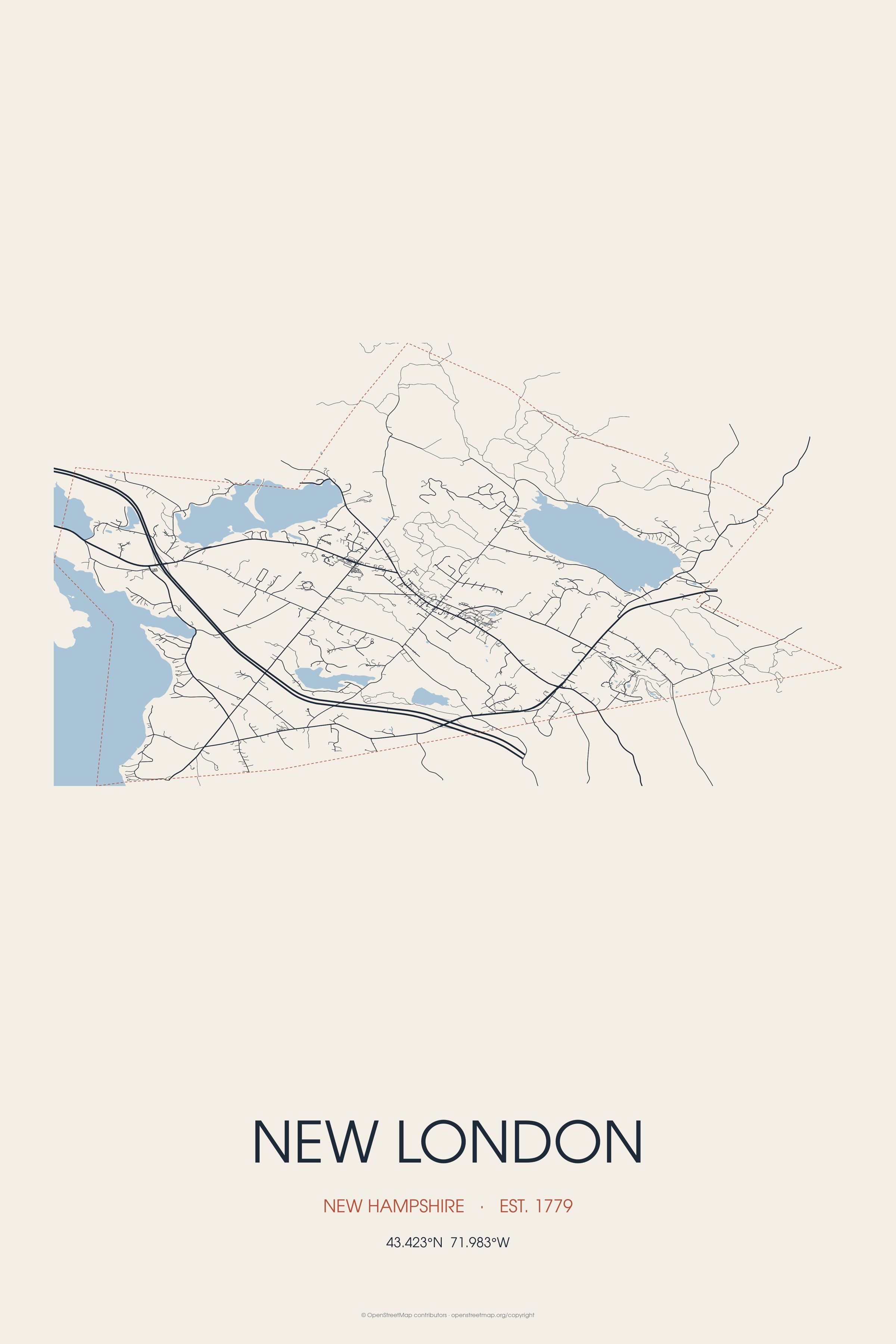
In 1753, the Masonian Proprietors of Portsmouth, New Hampshire, granted the area now called New London as "Heidelberg". Landmarks include Baptist New Meeting House and Dr. Solomon M. Whipple House. New London is the birthplace of Nicholas Fairall, ski jumper.
Every piece is drawn from New London's own map data and historic archives, then printed and shipped from the USA when you order. No two towns look alike.
Every road in town, on archival matte paper

The same map, in navy and silver
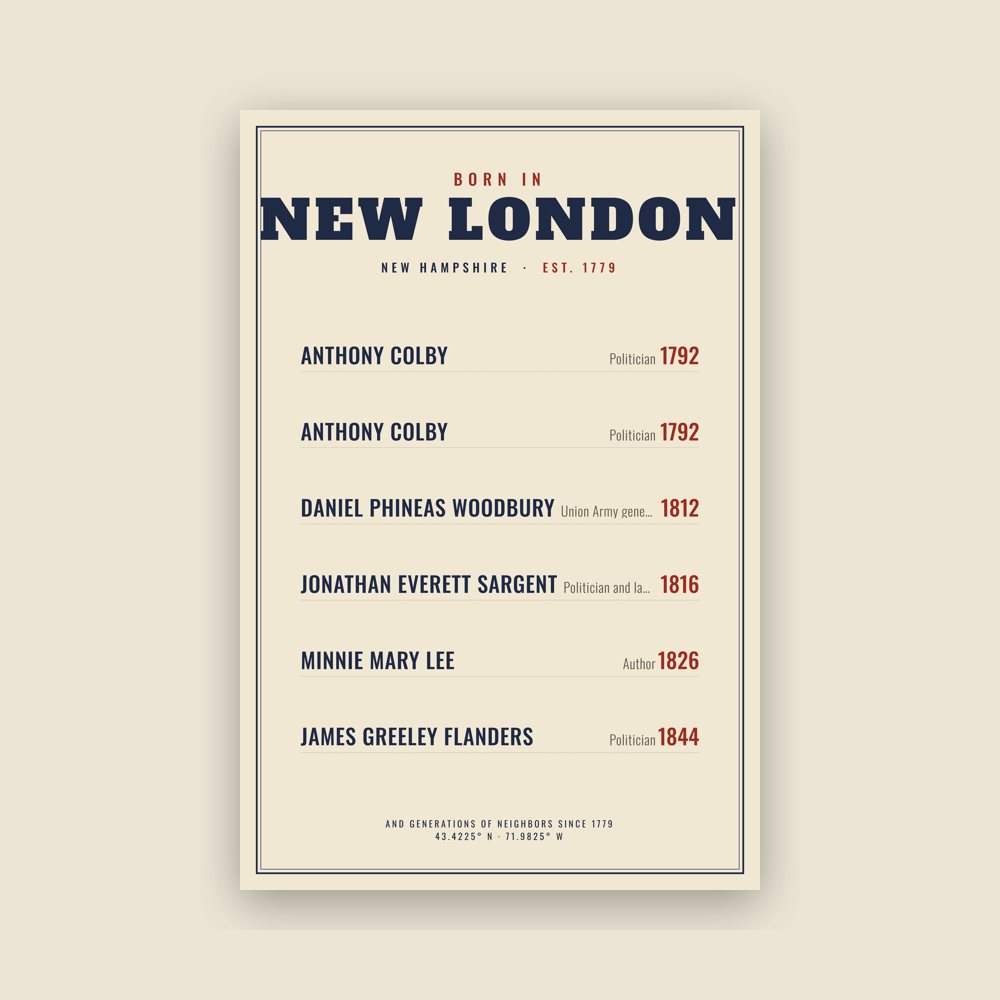
Famous natives, by birth year
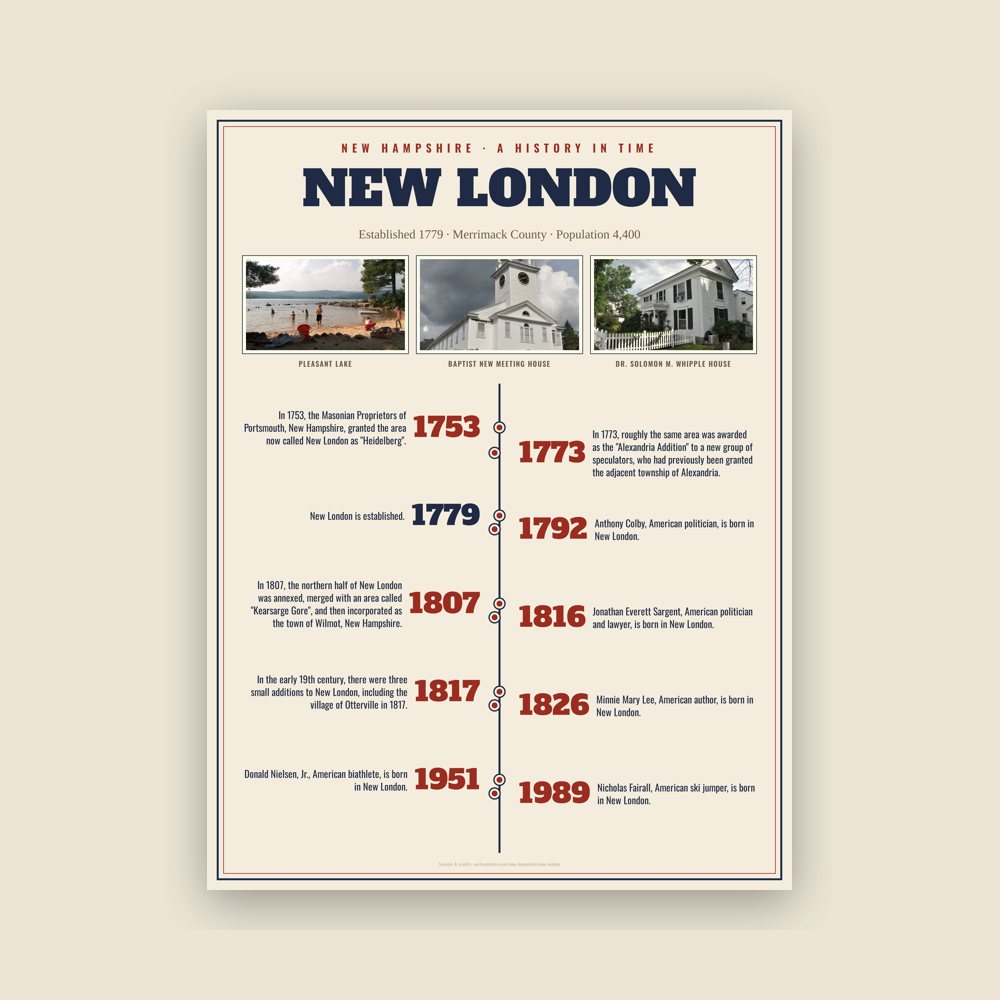
The town's story in dates, from its own records, for home or classroom
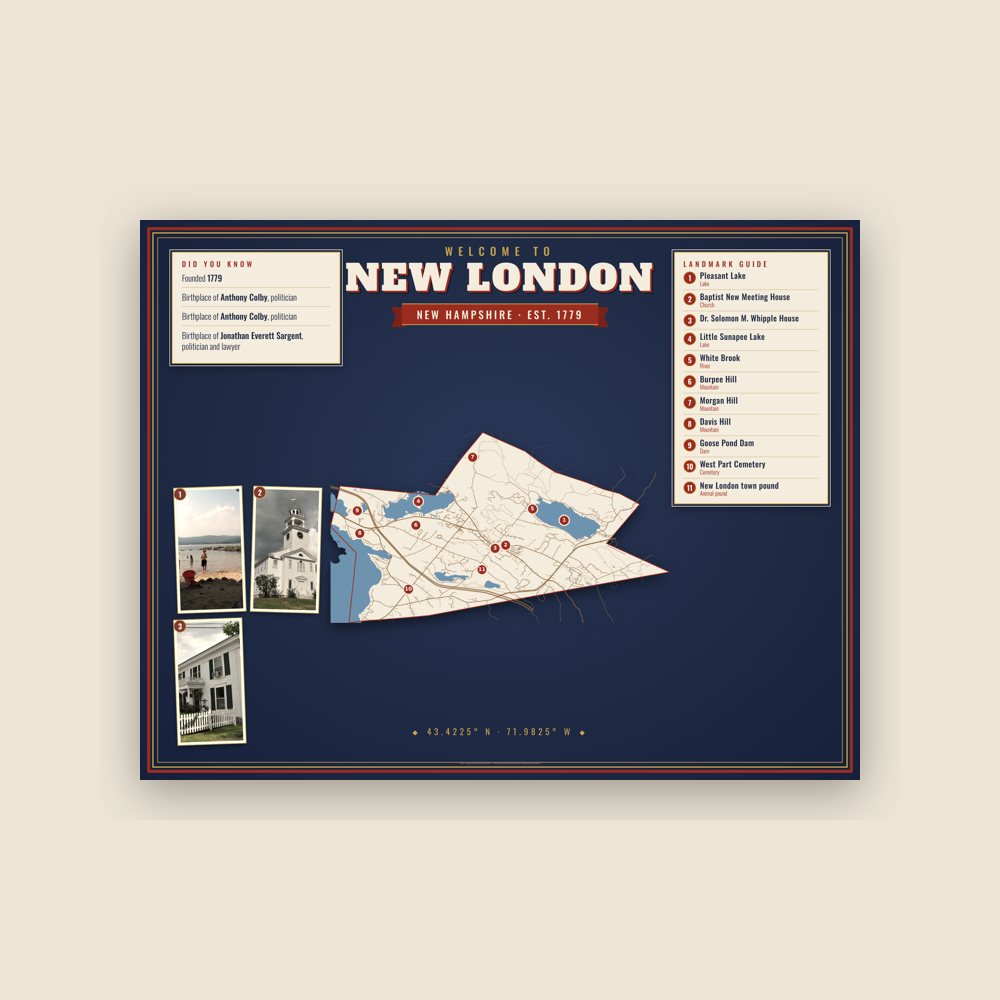
Map of local landmarks, washable fabric
Heavy-blend fleece, street map printed on the back
Soft Bella+Canvas jersey
Glossy ceramic, dishwasher safe
Ceramic keepsake, gold ribbon
Weatherproof, for the front walk
24″×16″, printed coir-look fibers, rubber back
12″×12″ printed wood, ready to hang
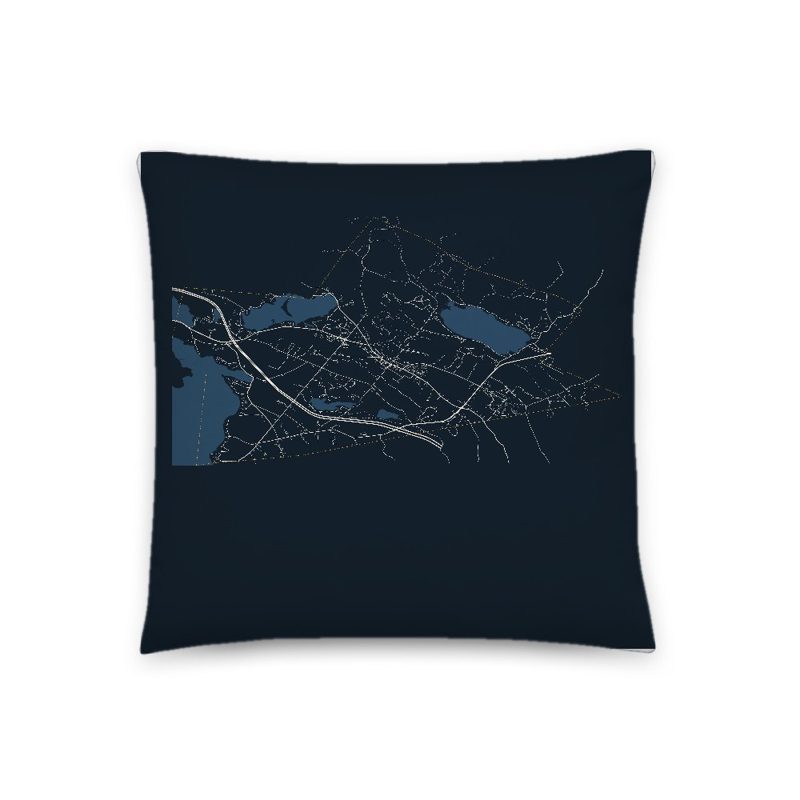
Soft-touch, zip cover
Sturdy all-over-print tote
Glossy top, cork back
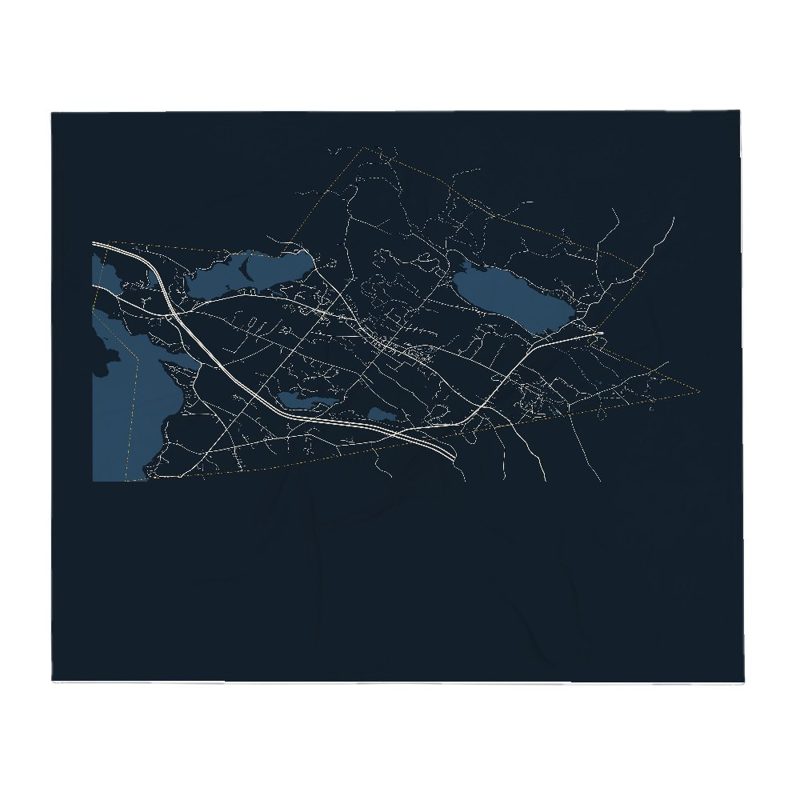
Soft fleece, 50″×60″
20 oz, double-wall stainless

Archival matte print of a local landmark, credited to its photographer
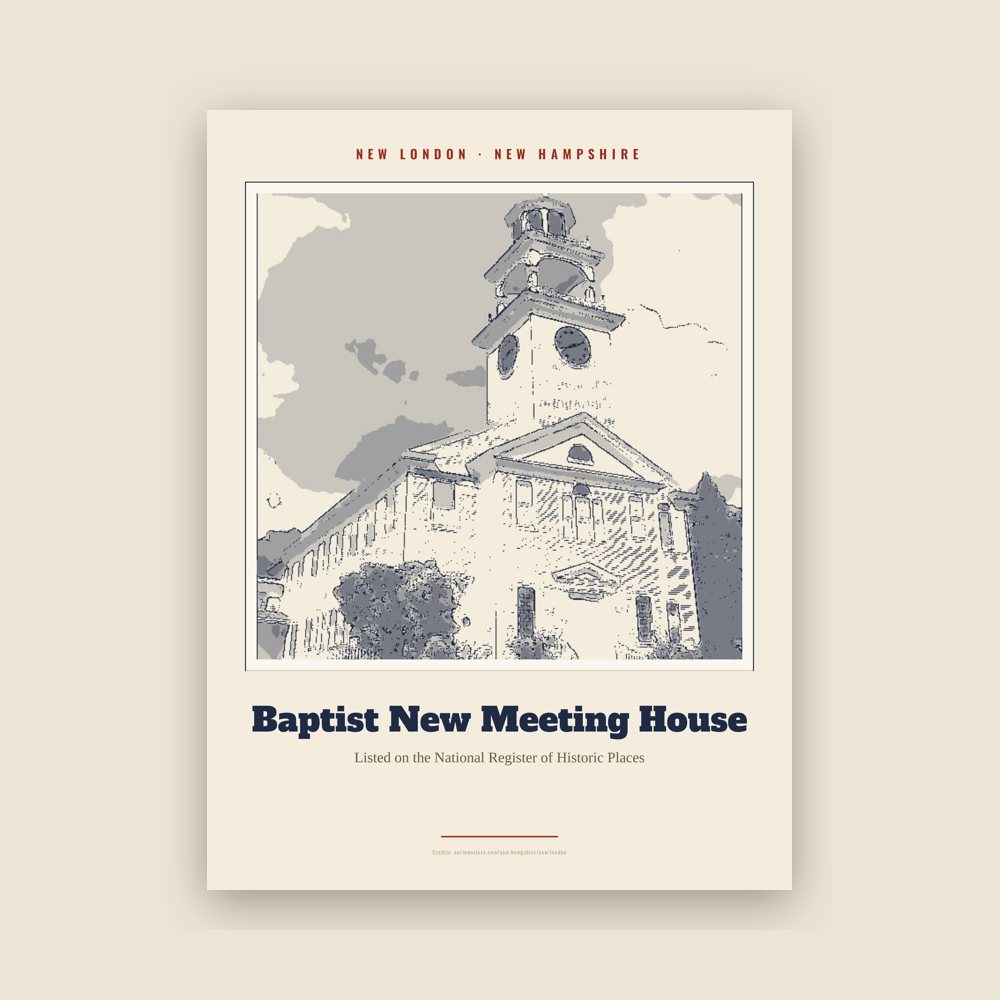
Archival matte print of a local landmark, credited to its photographer
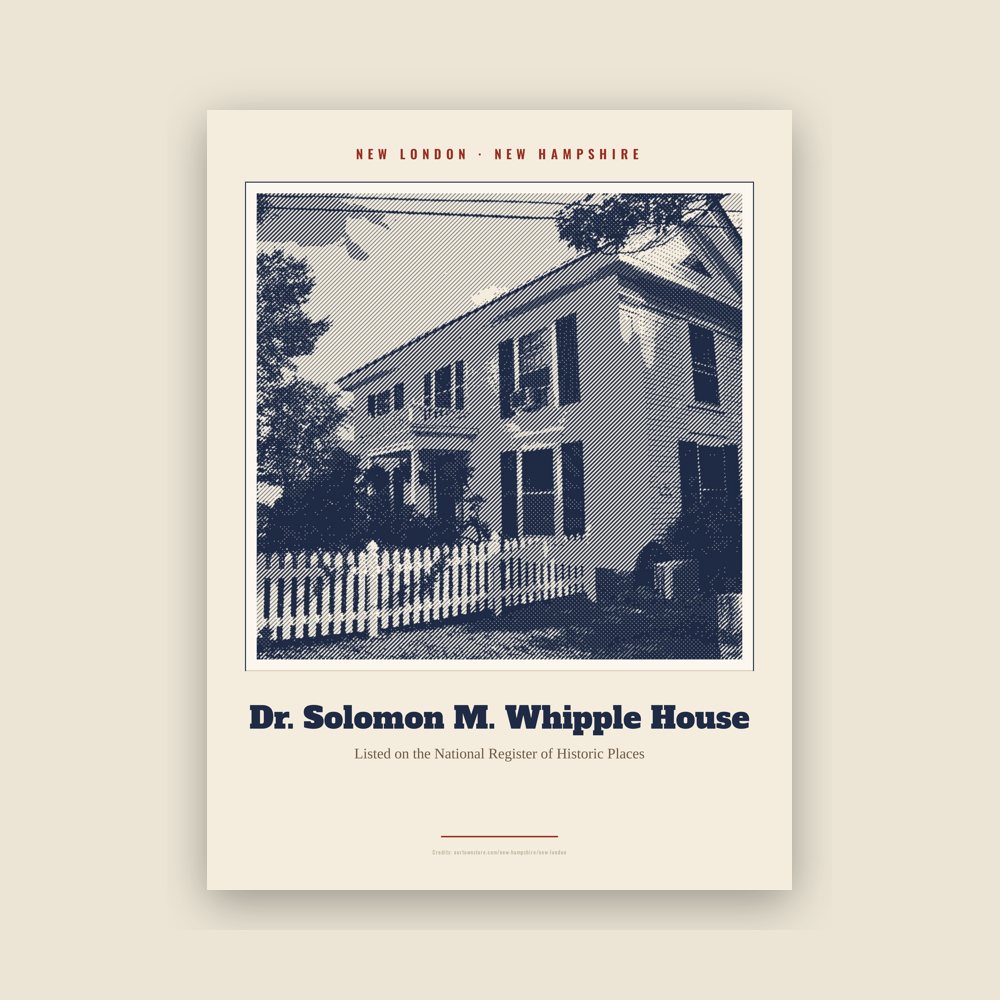
Archival matte print of a local landmark, credited to its photographer

6″×4″ postcard, glossy front
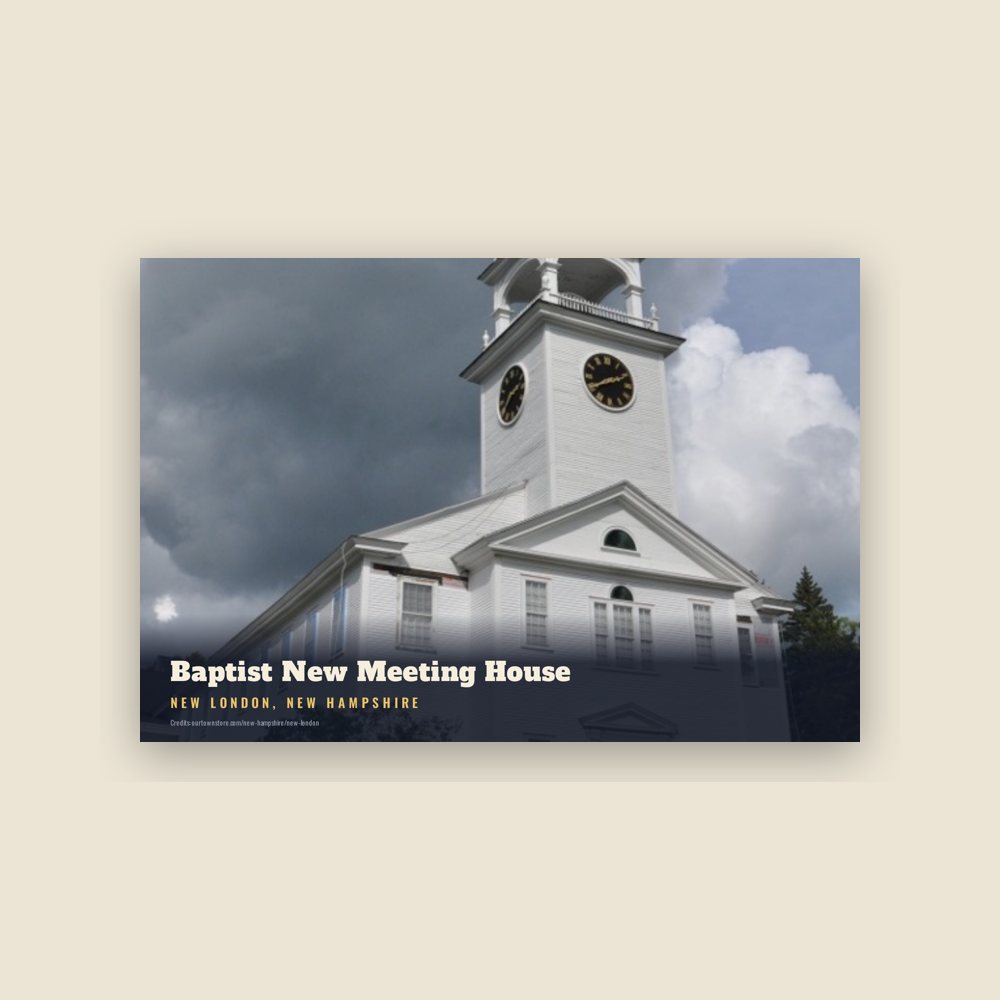
6″×4″ postcard, glossy front
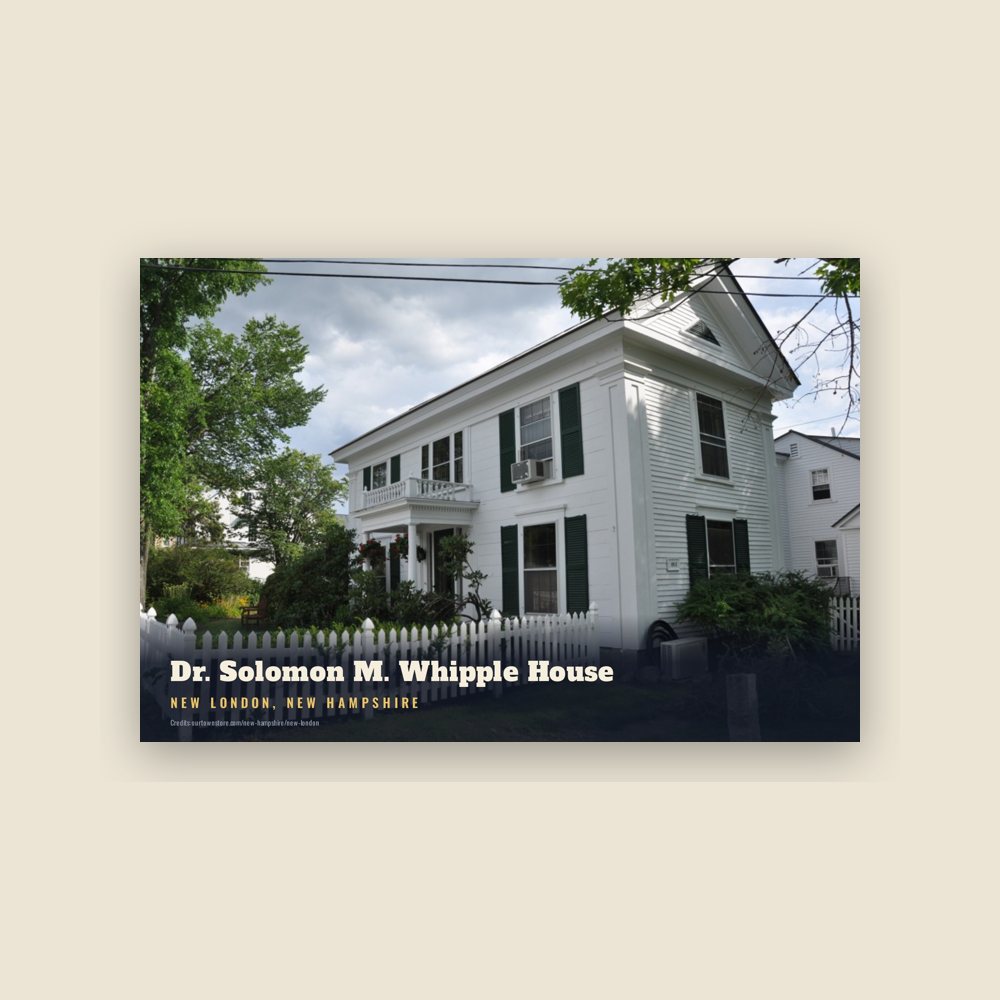
6″×4″ postcard, glossy front
Population 2010: 4,397 → 2020: 4,400
From Wikidata (CC0).
In 1753, the Masonian Proprietors of Portsmouth, New Hampshire, granted the area now called New London as "Heidelberg". Although it appears on some New Hampshire maps, the township was never settled, and the 1753 grant lapsed into default.
In 1773, roughly the same area was awarded as the "Alexandria Addition" to a new group of speculators, who had previously been granted the adjacent township of Alexandria. These proprietors were led by Jonas Minot of Concord, Massachusetts, but the others were Scotch-Irish immigrants living in Londonderry, New Hampshire. None built dwellings in the Alexandria Addition. Instead they recruited settlers to build roads, mills, schools, and a church—all increasing the value of their land holdings. Nearly all of the original settlers came from Massachusetts, either from the Amesbury area of the north shore or from the Attleboro area in the southeast. The township proprietors soon began a long, systematic process of subdividing and selling their properties at great profit.
By 1779, there were sixteen families recorded within the bounds of the Alexandria Addition, and they petitioned the General Court to incorporate as the town of "New London"—officially named after London, England, but perhaps also an acknowledgement of the Londonderry-based proprietors. The first town meeting was held on August 3, 1779.
In 1807, the northern half of New London was annexed, merged with an area called "Kearsarge Gore", and then incorporated as the town of Wilmot, New Hampshire. In the early 19th century, there were three small additions to New London, including the village of Otterville in 1817.
On April 20, 1965, John Sargent, a Korean war veteran, killed his wife and four children by shooting them. He was later charged with the murders, but was found mentally ill and committed to a psychiatric hospital. It is the worst mass shooting in New Hampshire’s history.
Adapted (trimmed) from the Wikipedia article New London, New Hampshire, revision 1380303660 by its contributors, licensed CC BY-SA 4.0.
We share a part of every New London sale with local partners, and we'd love to print from your collection. Old photographs, maps and postcards make the best keepsakes.
Partner with us