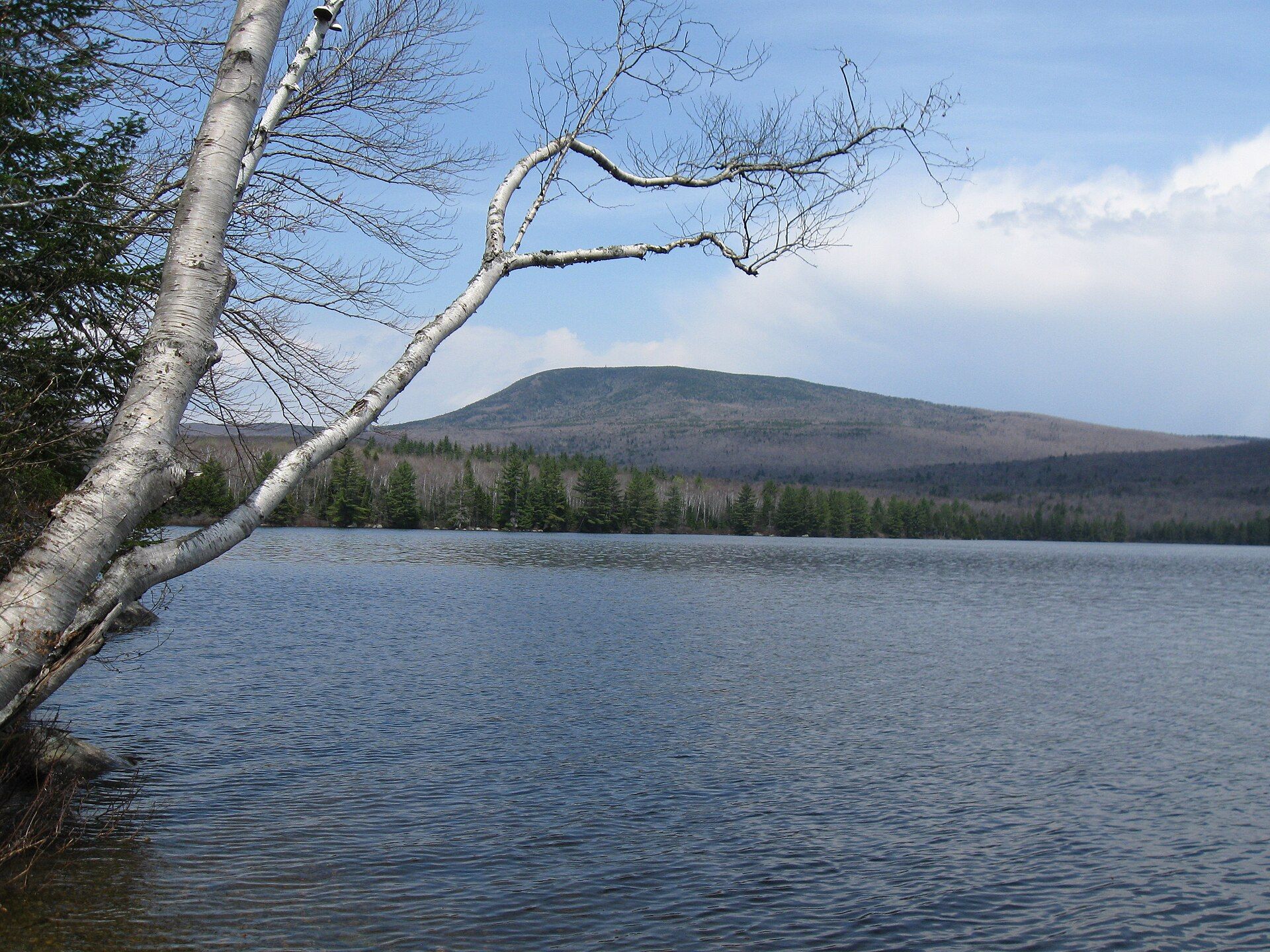
Lyme is home to the Chaffee Natural Conservation Area. Landmarks include Lyme Common Historic District, Moses Kent House and Lyme Center Historic District. Lyme is the birthplace of David Marston Clough, politician.
Every piece is drawn from Lyme's own map data and historic archives, then printed and shipped from the USA when you order. No two towns look alike.
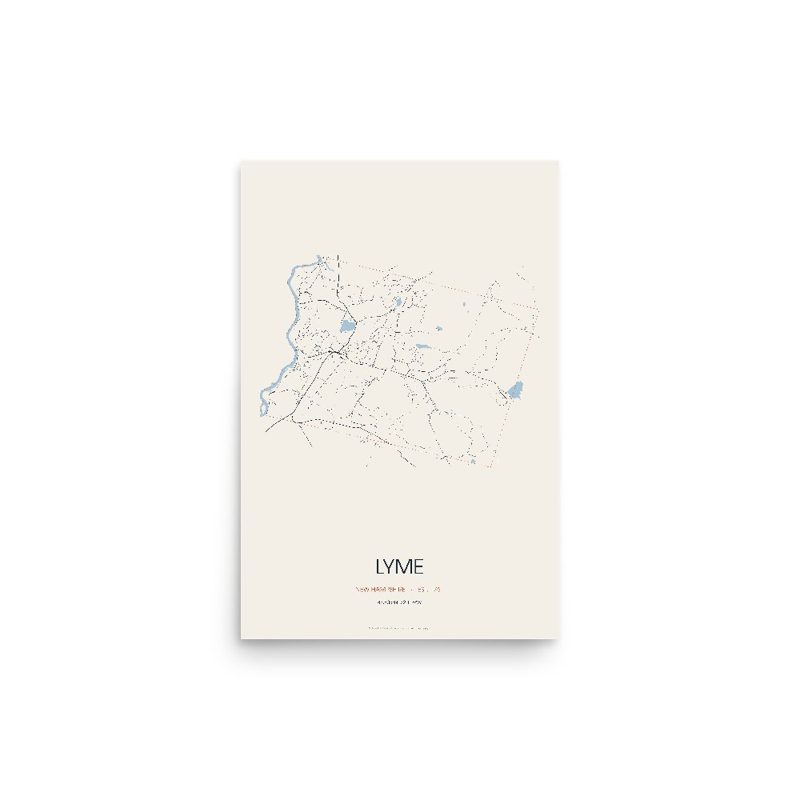
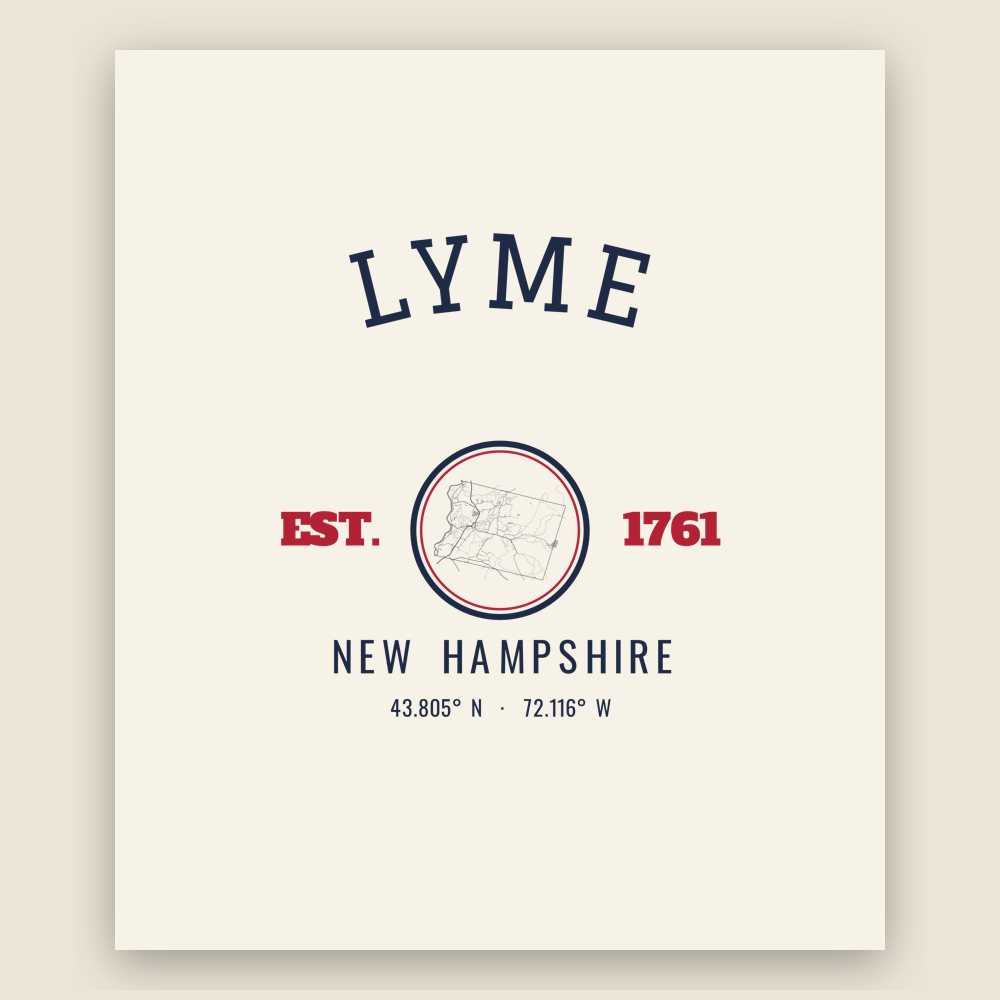
Every road in town, on archival matte paper
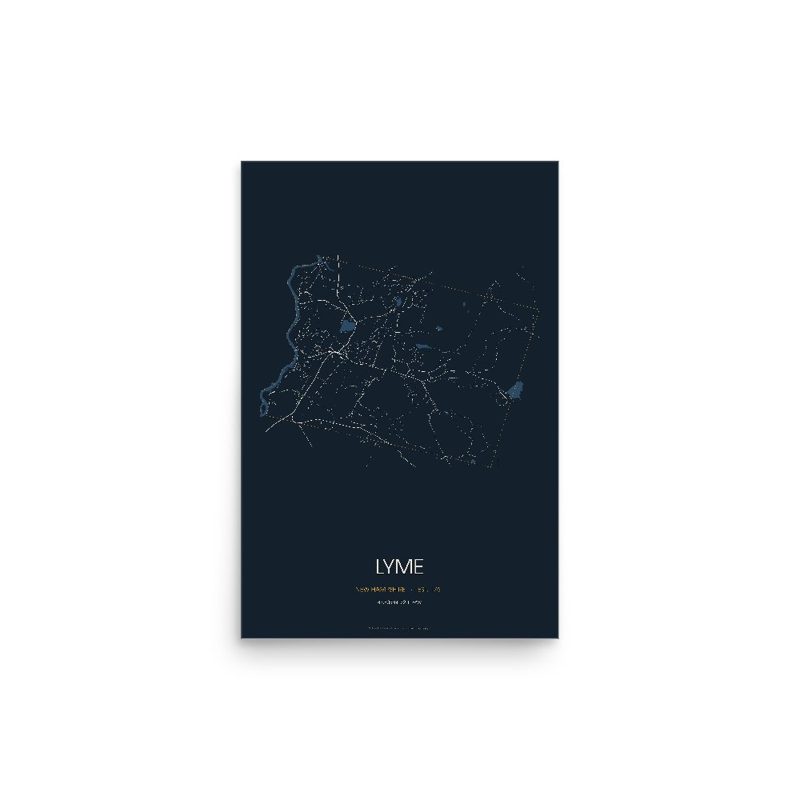
The same map, in navy and silver
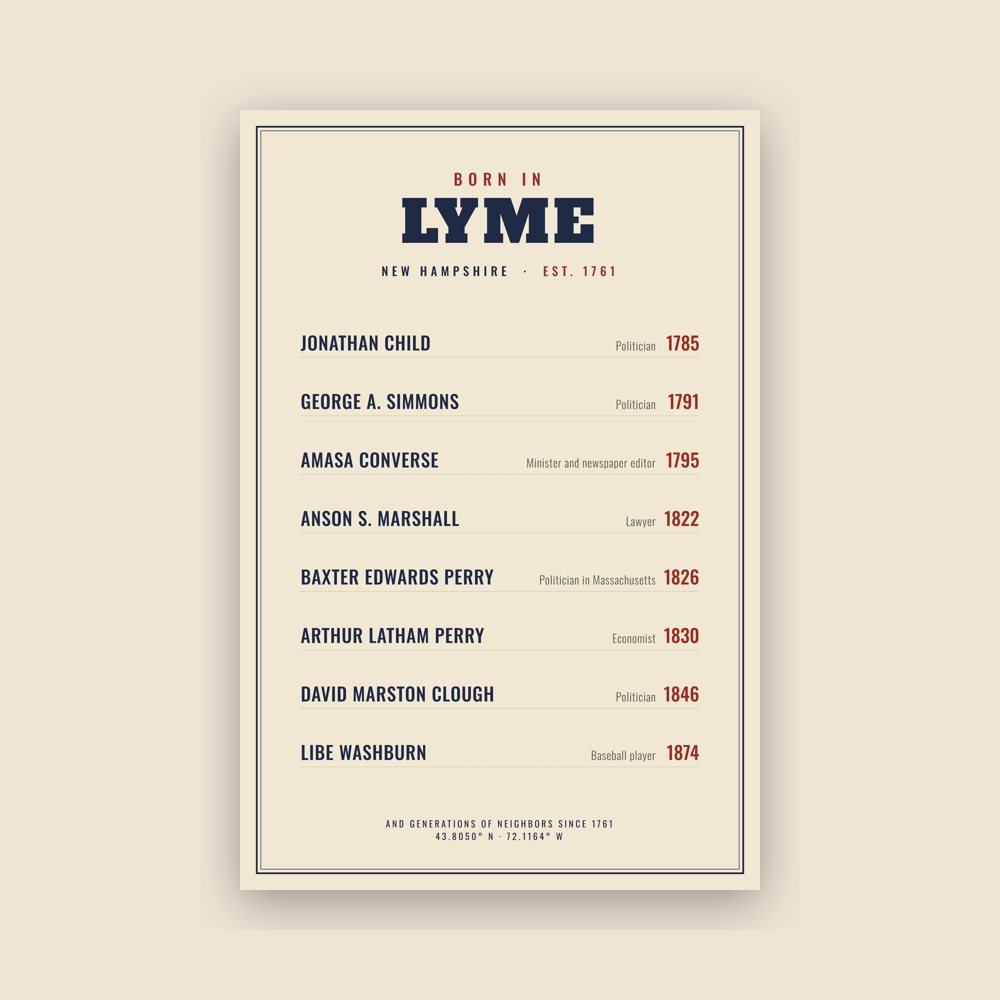
Famous natives, by birth year
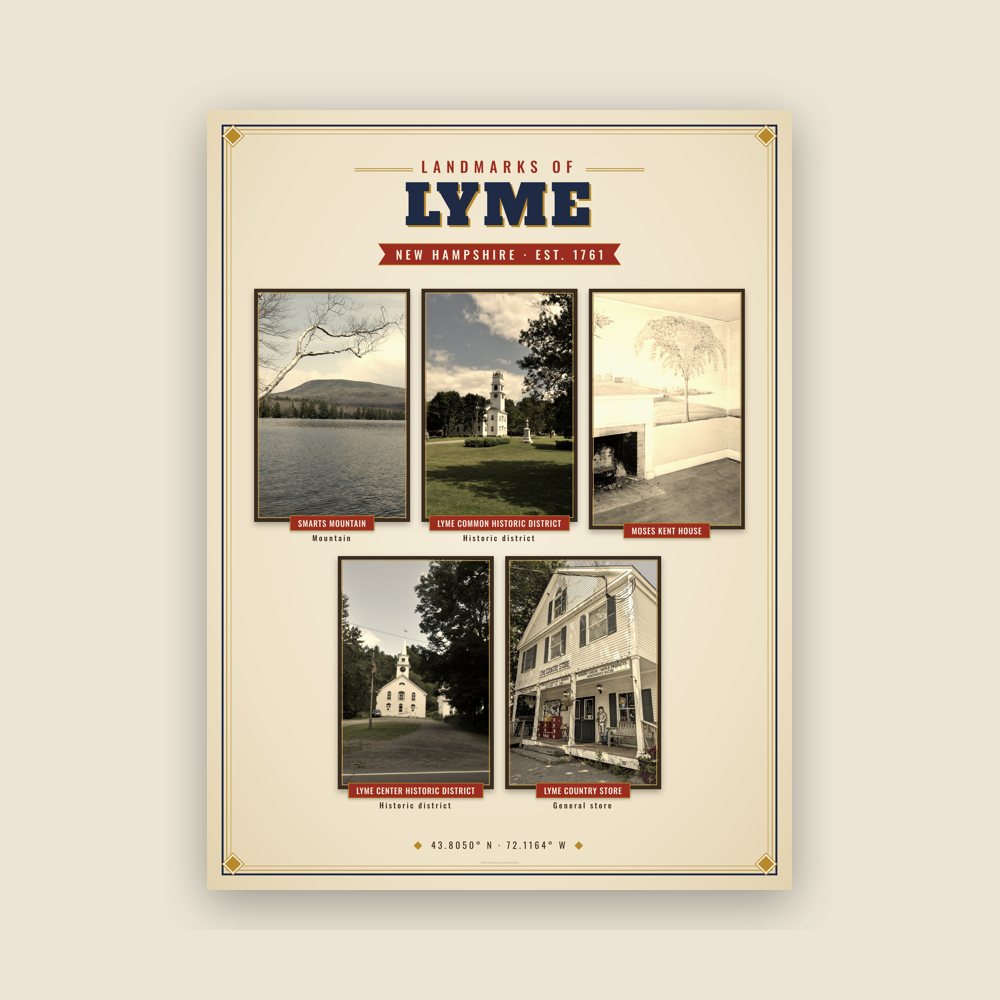
Nine local landmarks, archival matte
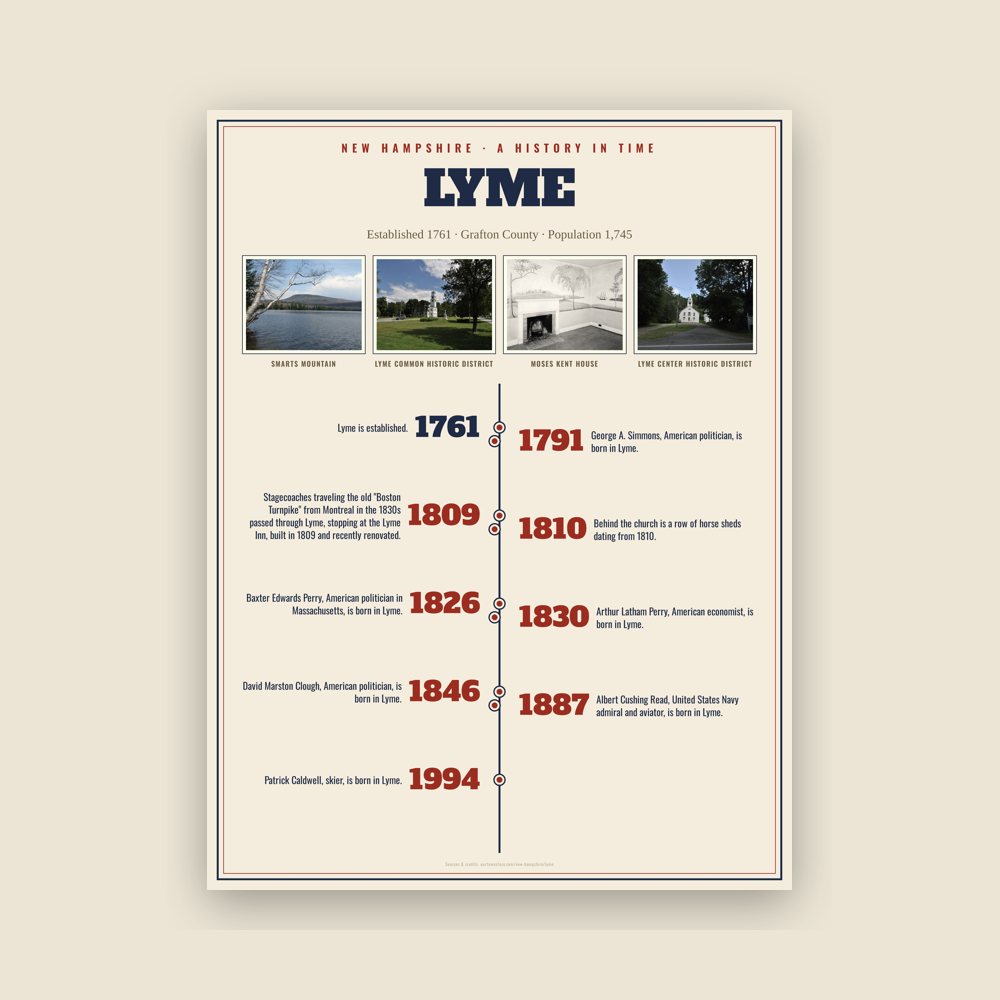
The town's story in dates, from its own records, for home or classroom
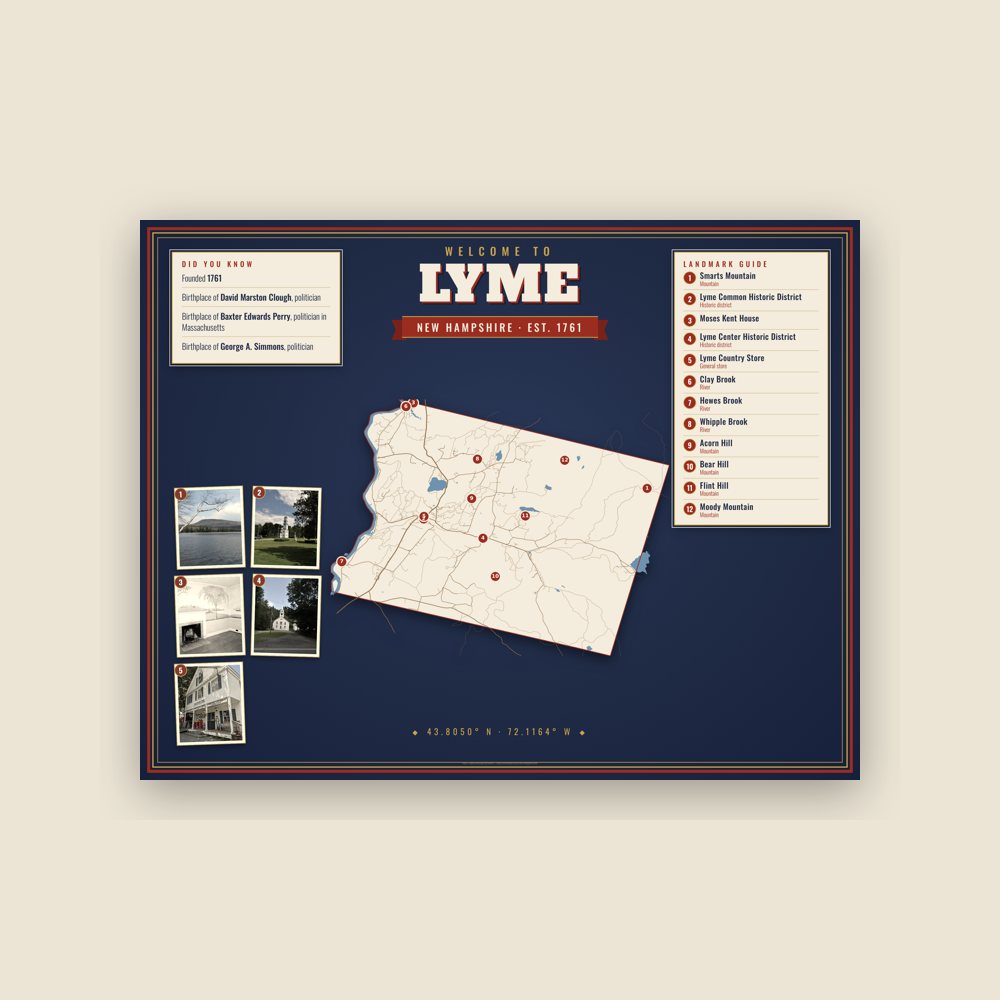
Map of local landmarks, washable fabric
Heavy-blend fleece, street map printed on the back
Soft Bella+Canvas jersey
Glossy ceramic, dishwasher safe
Ceramic keepsake, gold ribbon
Weatherproof, for the front walk
24″×16″, printed coir-look fibers, rubber back
12″×12″ printed wood, ready to hang
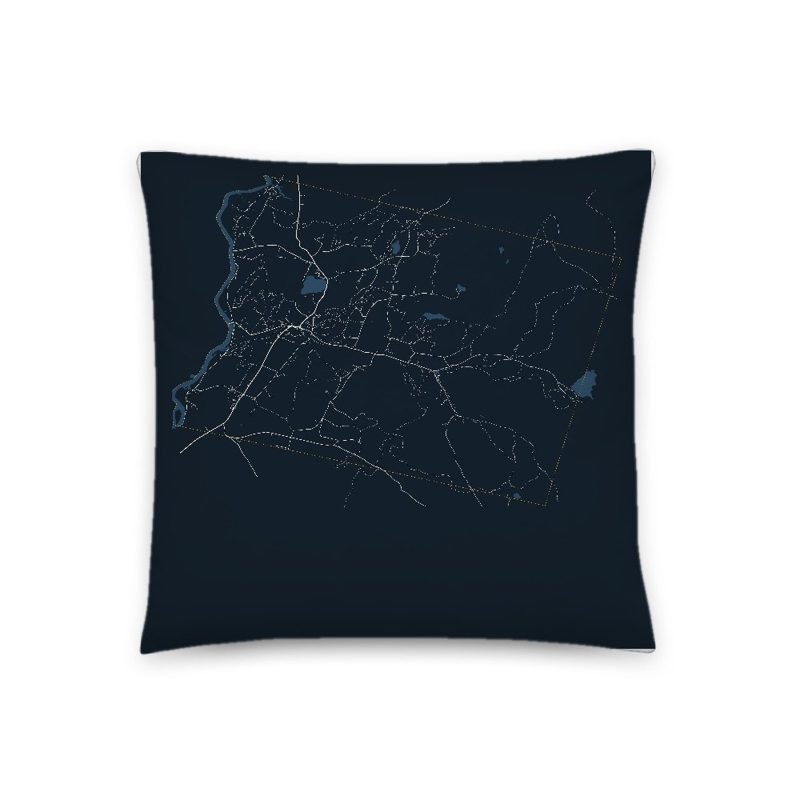
Soft-touch, zip cover
Sturdy all-over-print tote
Glossy top, cork back
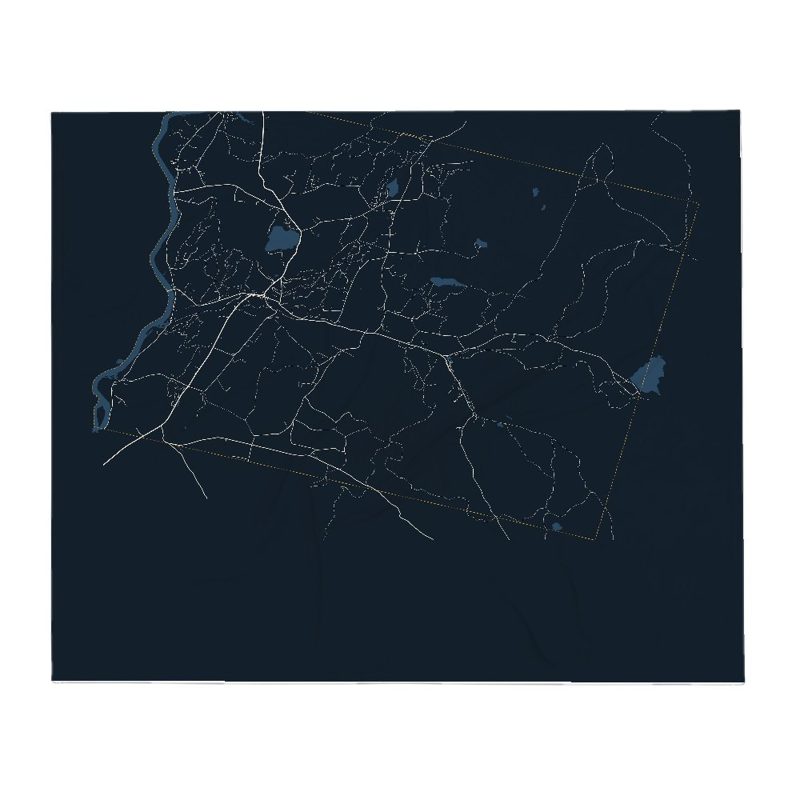
Soft fleece, 50″×60″
20 oz, double-wall stainless
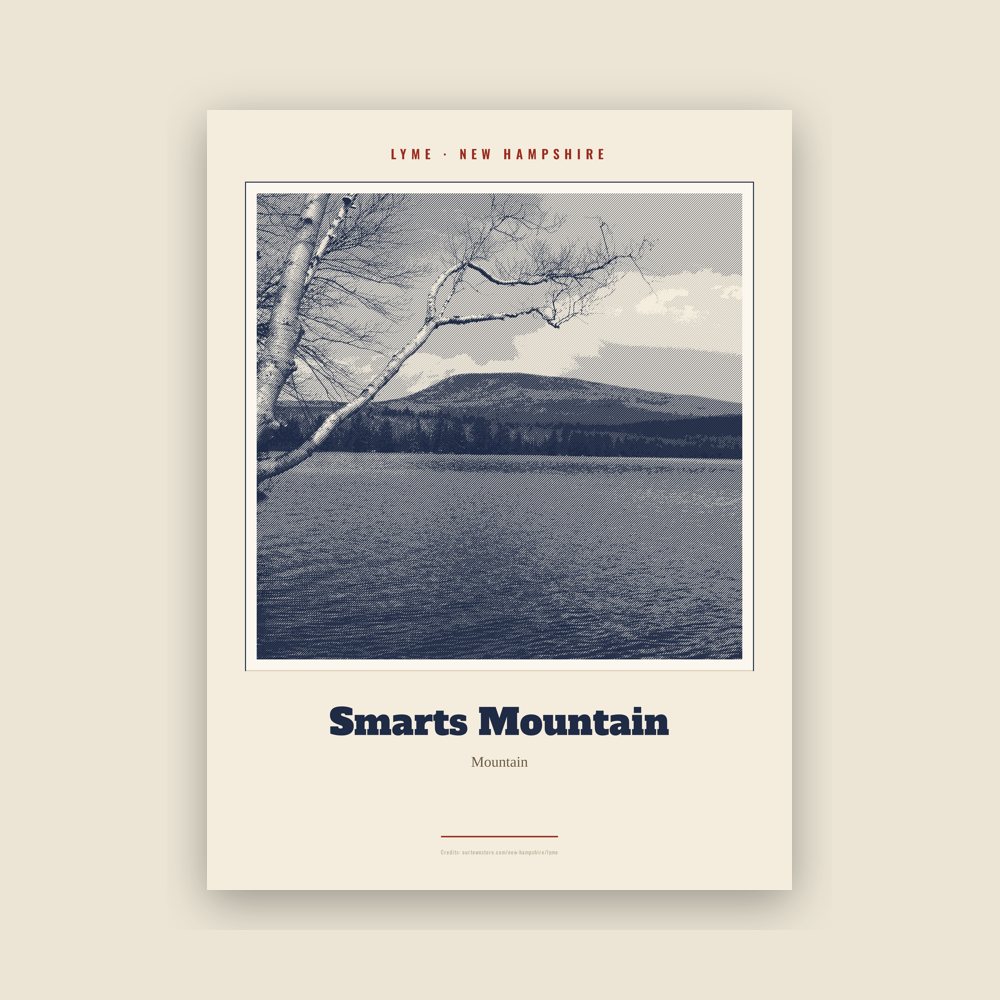
Archival matte print of a local landmark, credited to its photographer
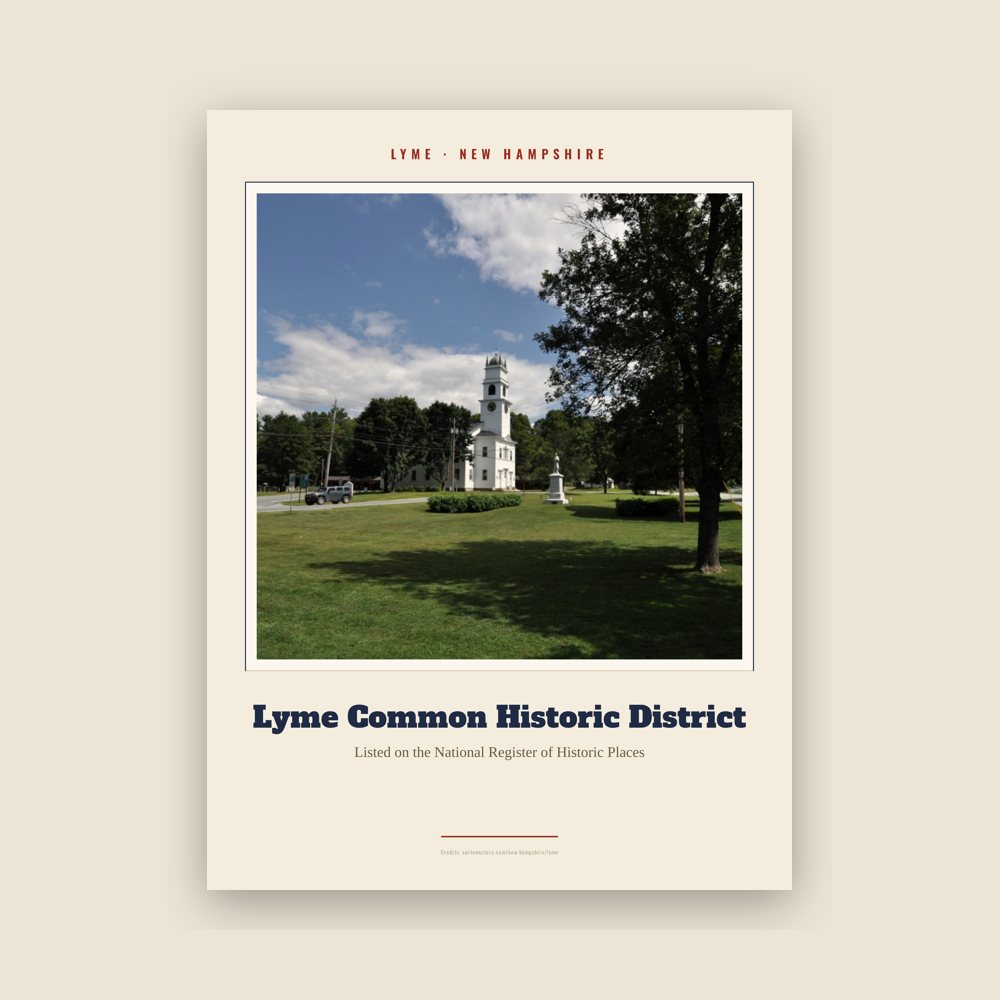
Archival matte print of a local landmark, credited to its photographer
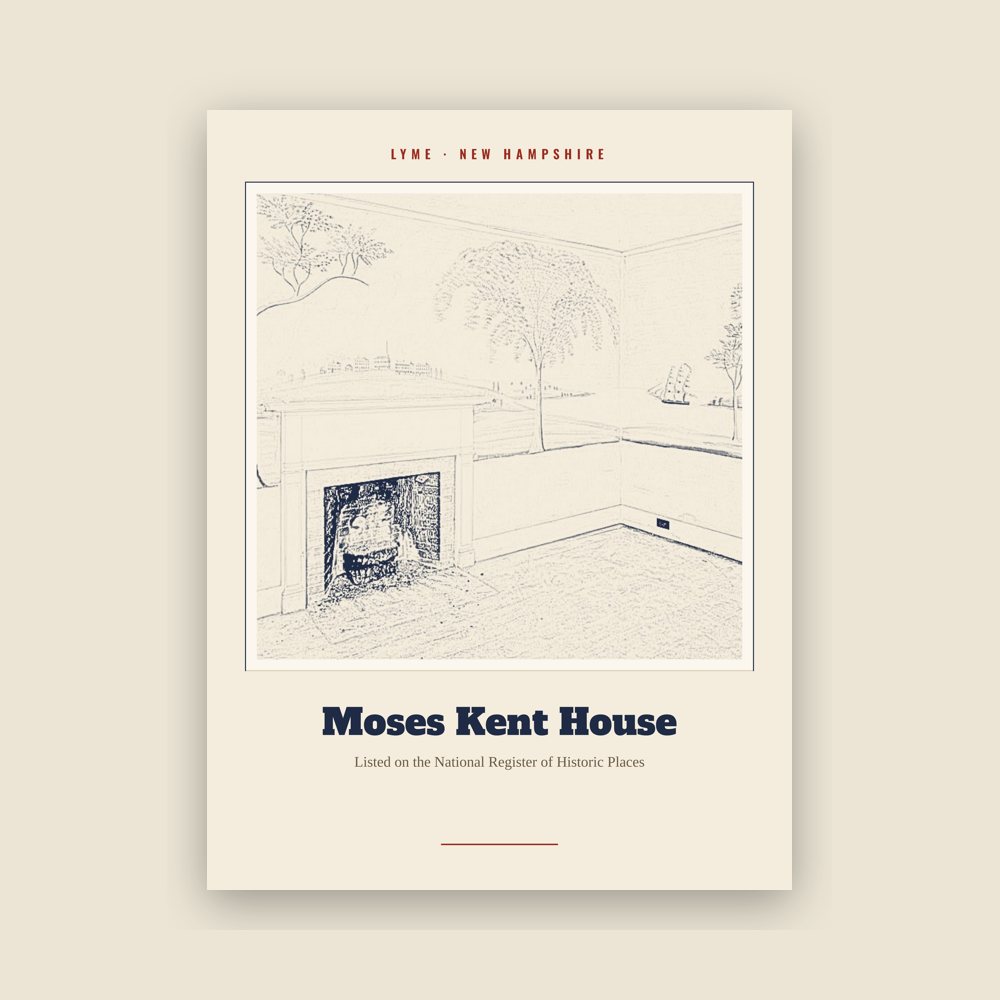
Archival matte print of a local landmark, credited to its photographer
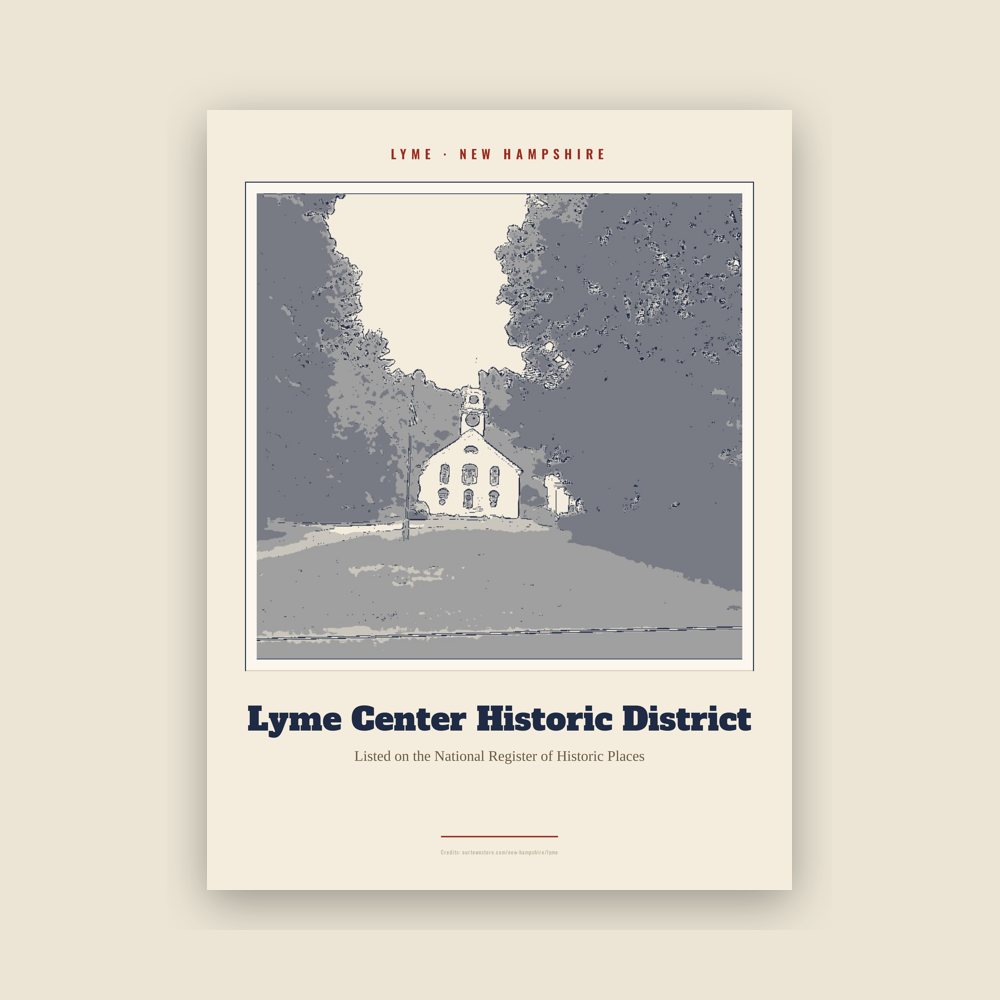
Archival matte print of a local landmark, credited to its photographer
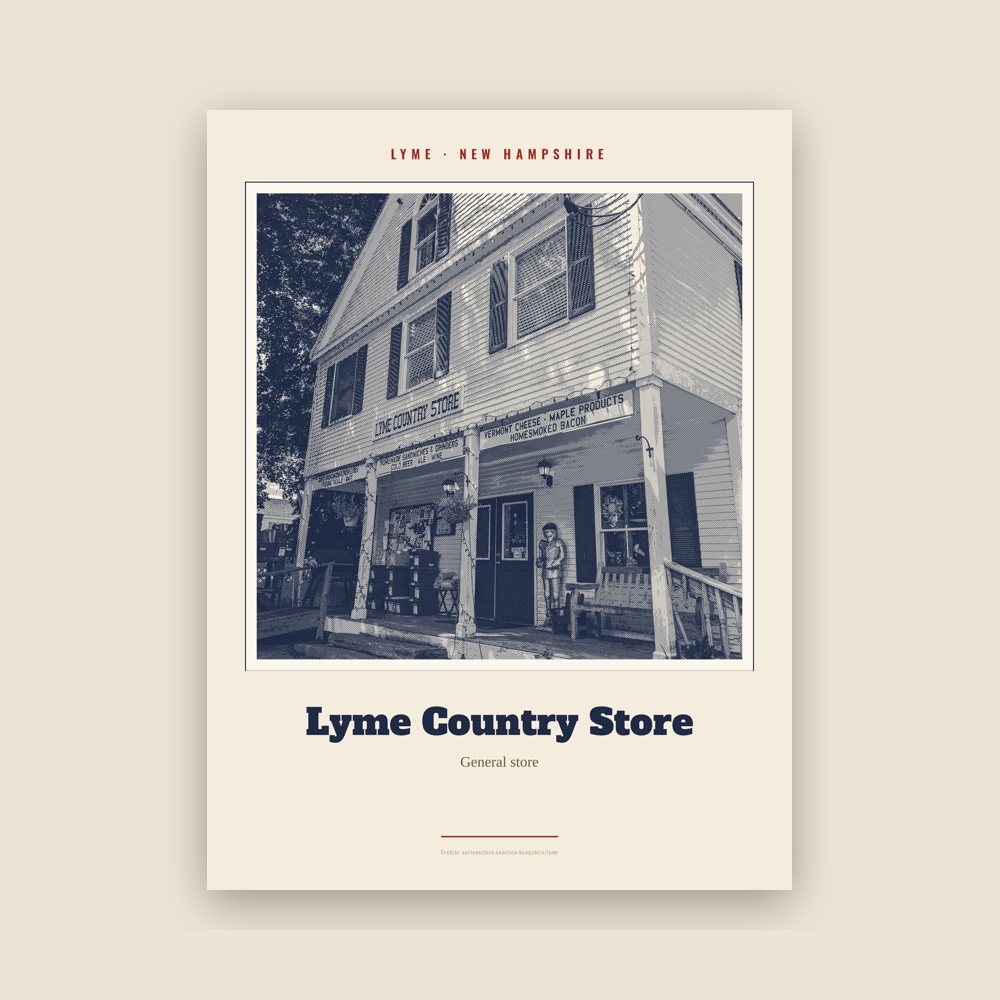
Archival matte print of a local landmark, credited to its photographer
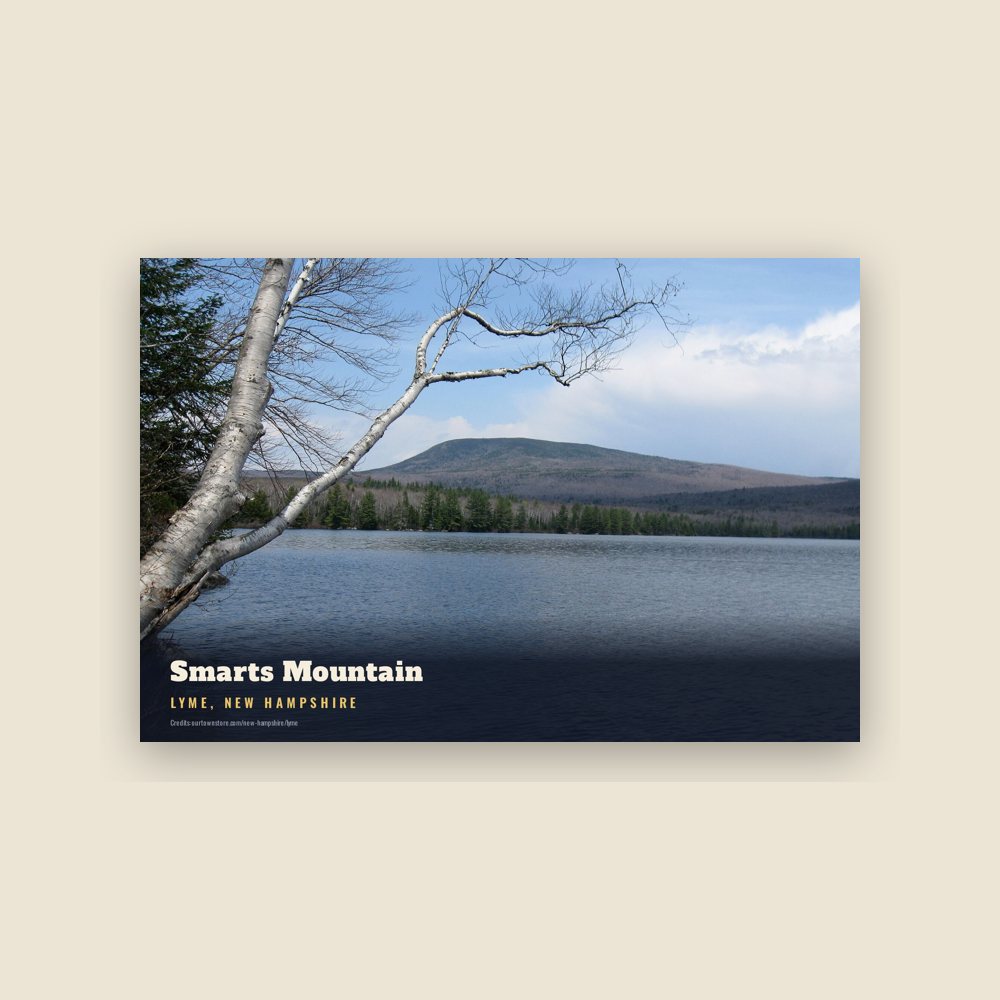
6″×4″ postcard, glossy front
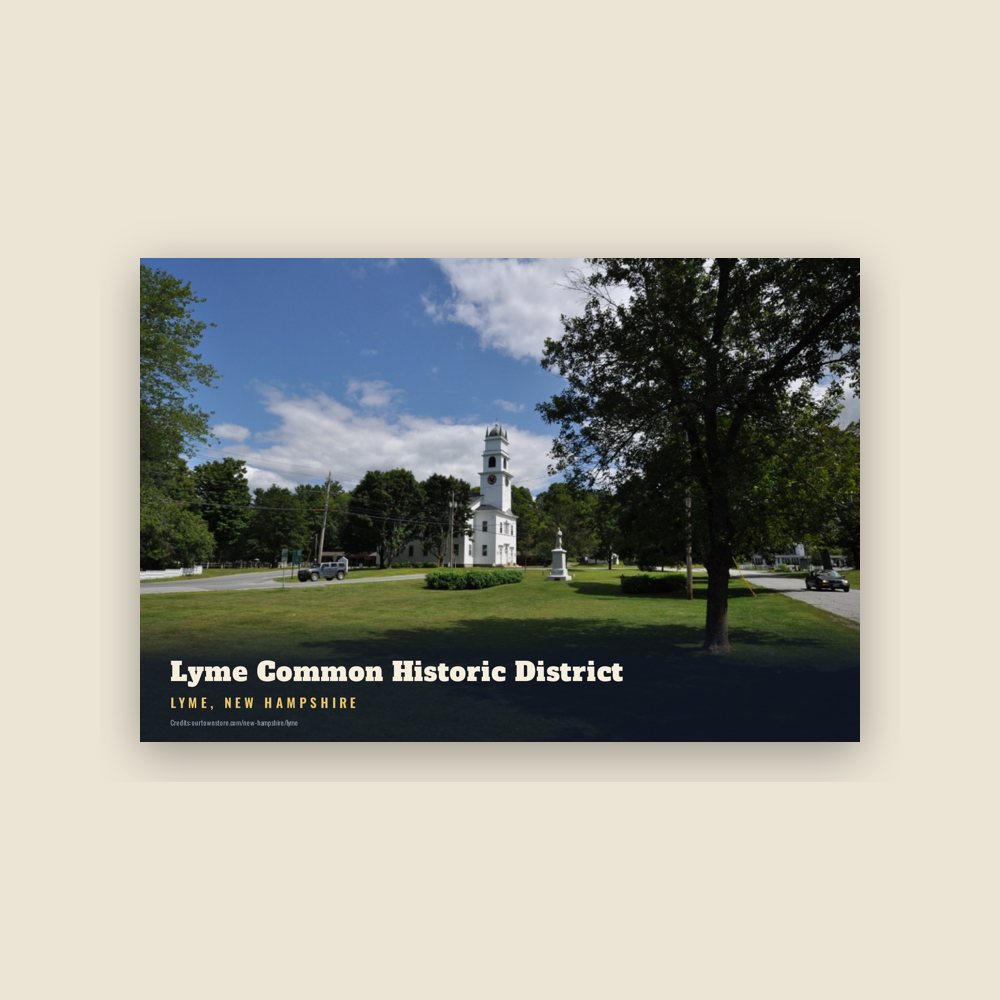
6″×4″ postcard, glossy front
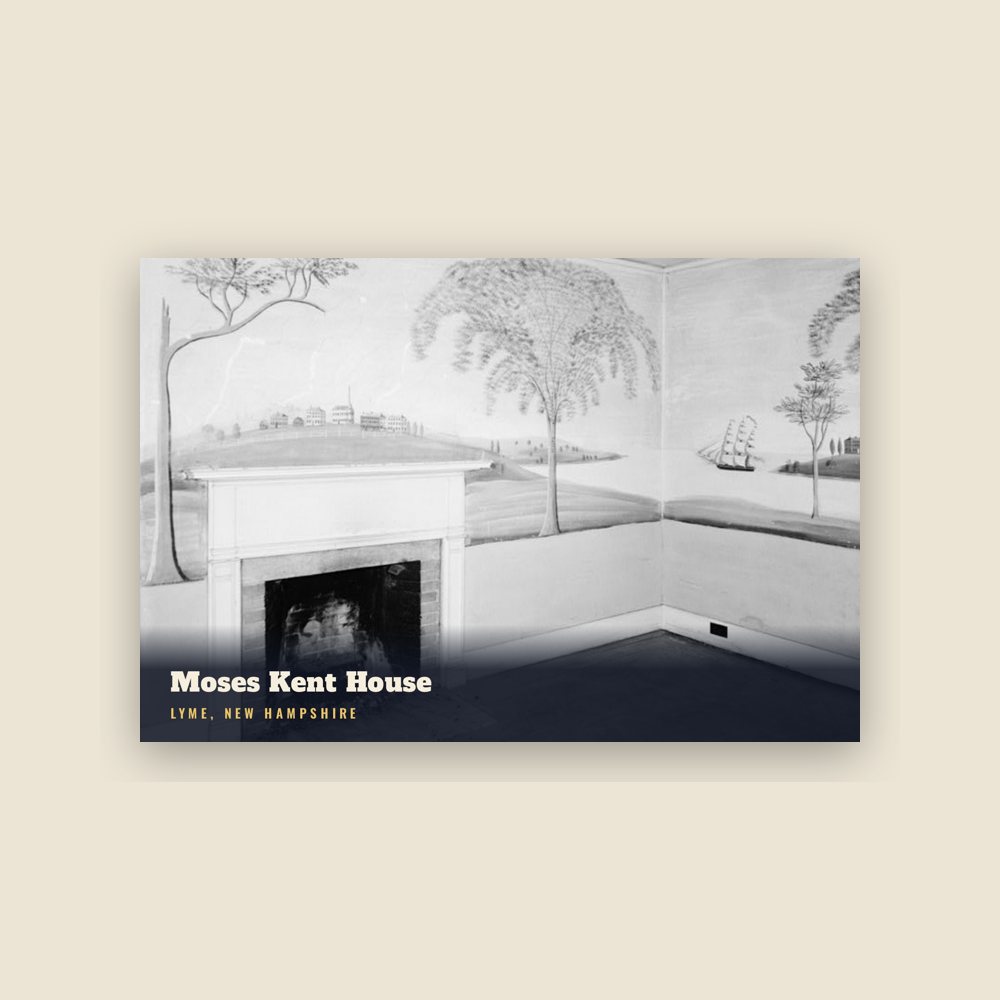
6″×4″ postcard, glossy front
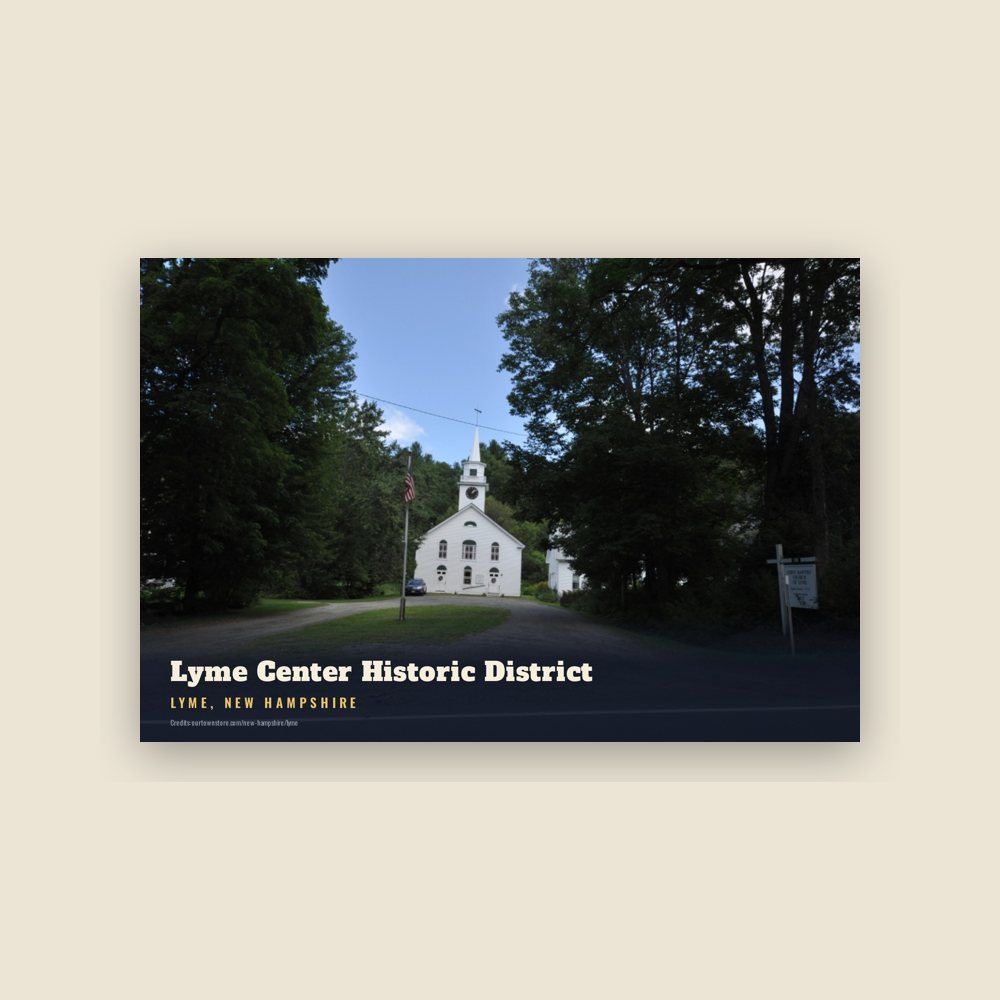
6″×4″ postcard, glossy front
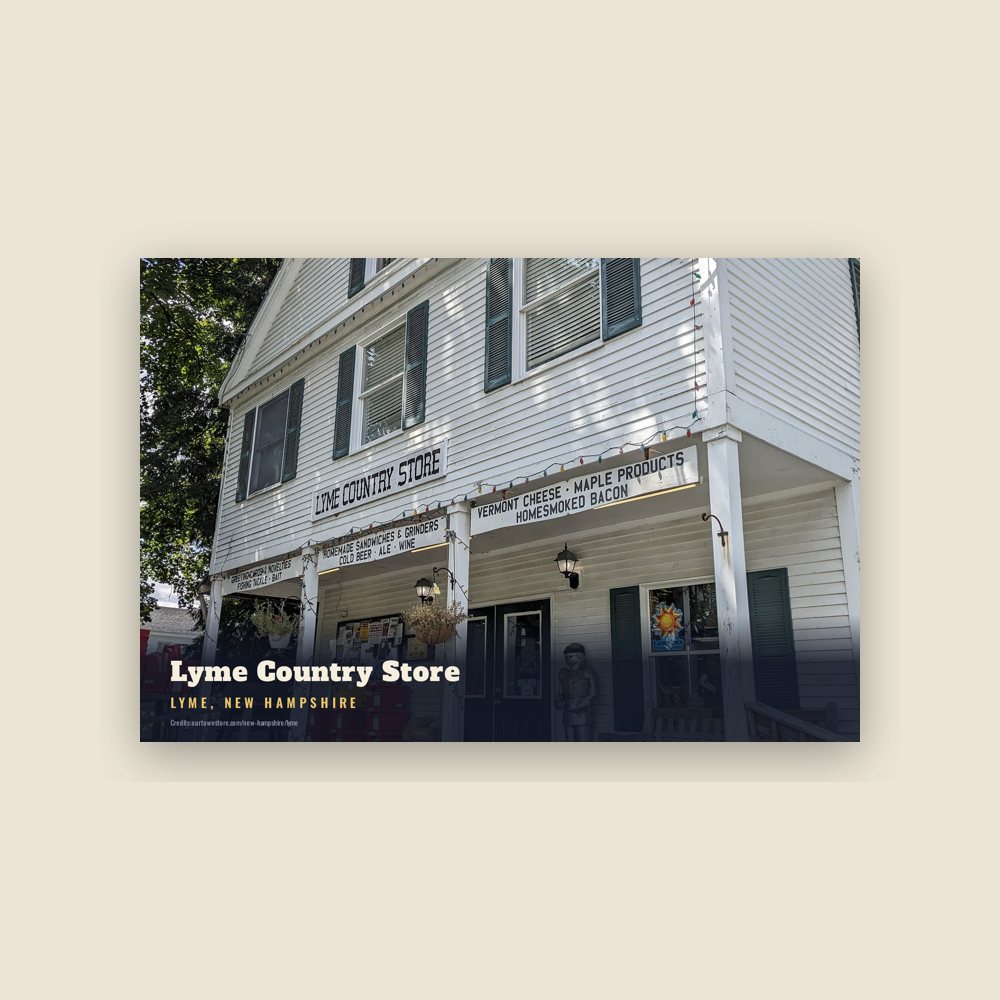
6″×4″ postcard, glossy front
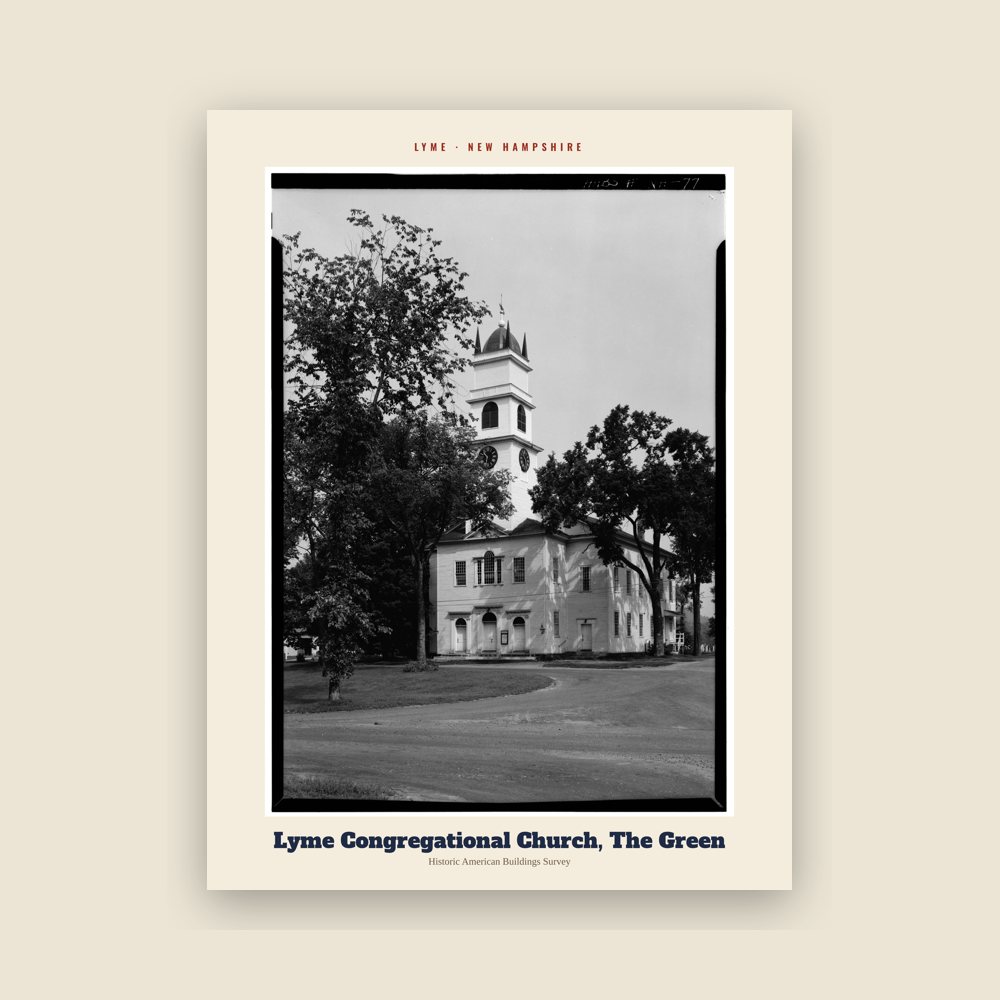
From the Library of Congress collections: a historic survey drawing or photograph of the town
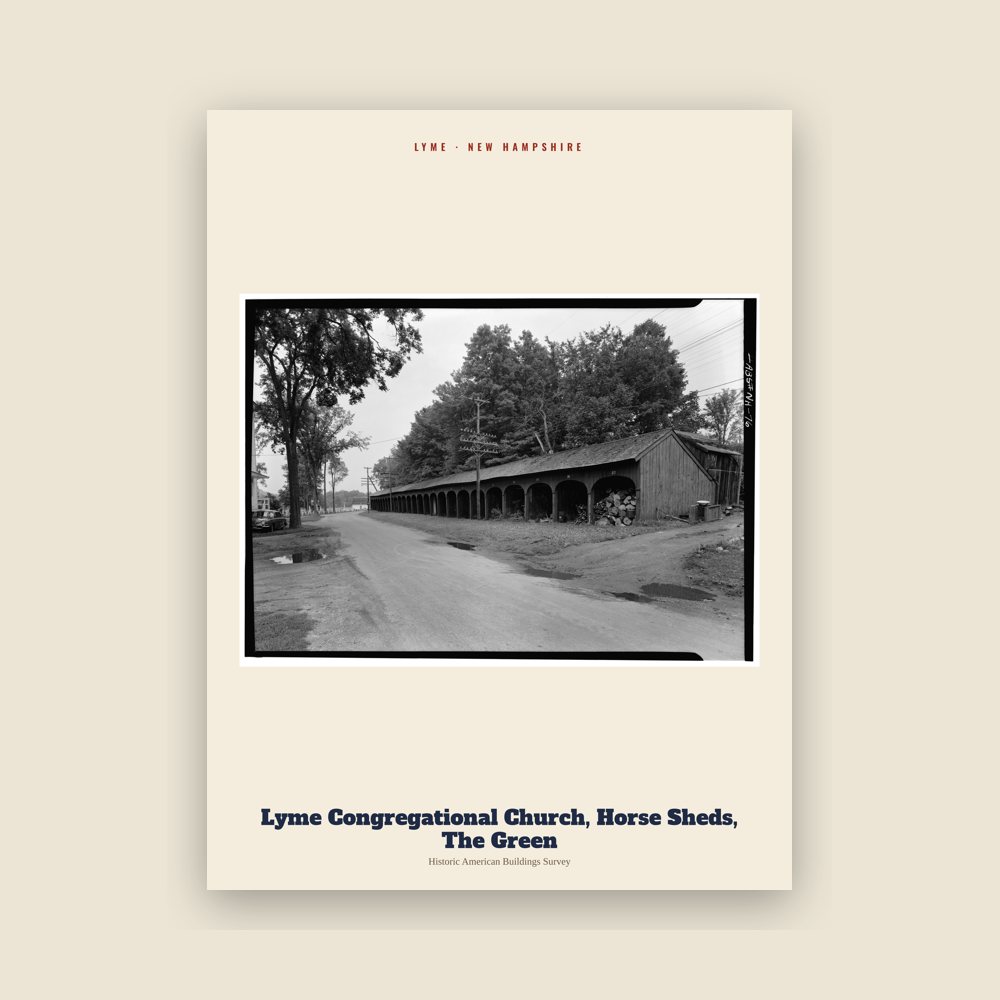
From the Library of Congress collections: a historic survey drawing or photograph of the town
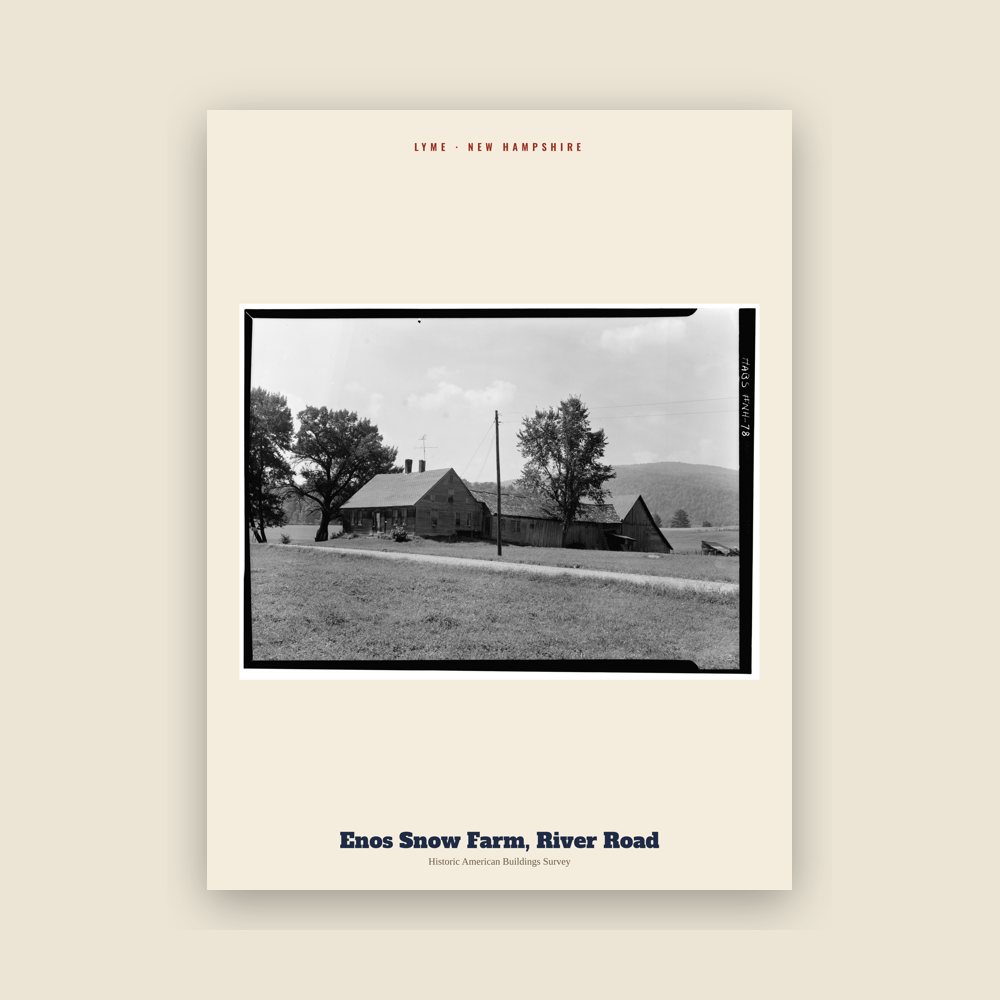
From the Library of Congress collections: a historic survey drawing or photograph of the town
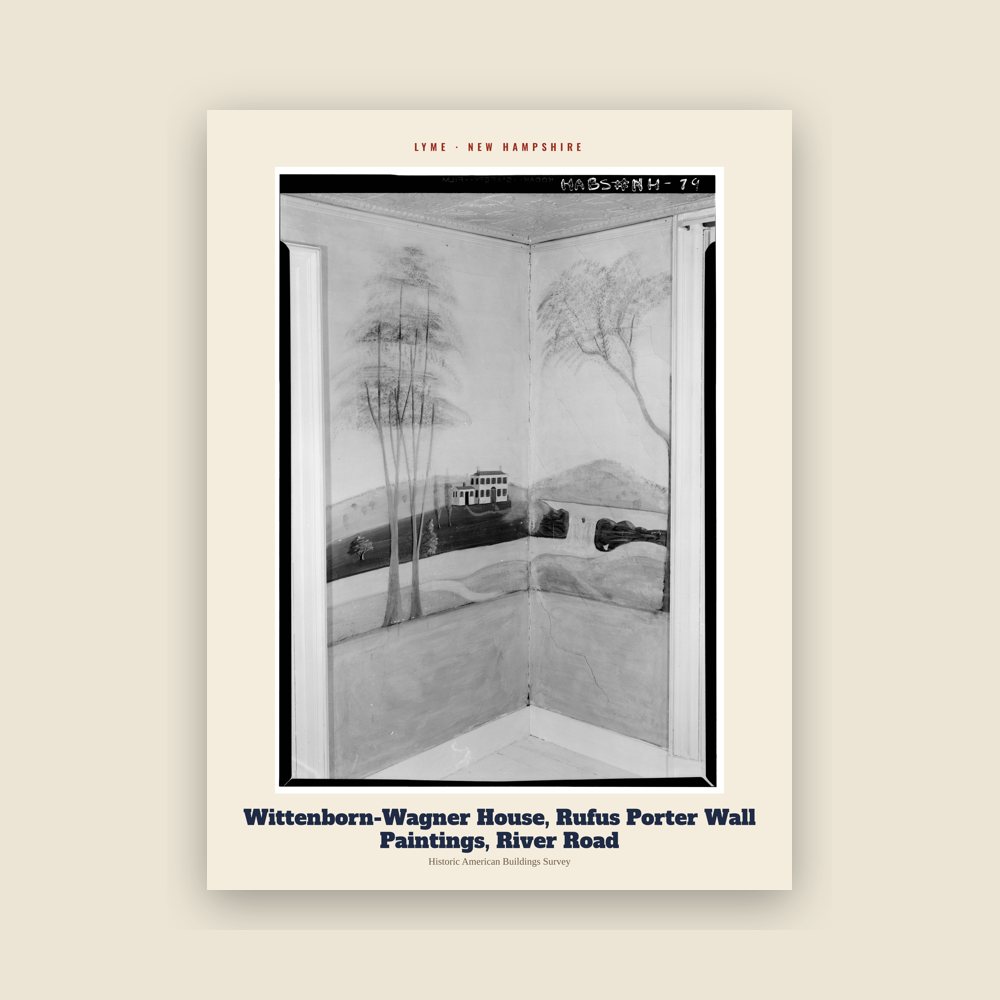
From the Library of Congress collections: a historic survey drawing or photograph of the town
Population 2010: 1,716 → 2020: 1,745
From Wikidata (CC0).
This was once a home to Abenaki Indians, including a band of Sokokis near Post Pond at a place they called Ordanakis. Later, it would be among the many towns granted by colonial Governor Benning Wentworth along the Connecticut River in 1761. Many of the 63 grantees lived in Massachusetts and Connecticut, but virtually none of them ever settled in Lyme, and they instead sold or assigned their grants to others. However, those settlers who did arrive in 1764 were mostly from those states. The town encompasses land that, prior to the Lyme's founding, was called Tinkham town. In the late 1770s, Lyme petitioned (ultimately unsuccessfully) to join Vermont.
The scenic town common is surrounded with houses and public buildings dating from the late 1700s to the early 1900s. Stagecoaches traveling the old "Boston Turnpike" from Montreal in the 1830s passed through Lyme, stopping at the Lyme Inn, built in 1809 and recently renovated. Next door to the inn is the 200-year-old Congregational church. Its original 1815 steeple bell was cast by Paul Revere. It was later replaced with a bell cast by Henry N. Cooper & Co., Boston. A hand-wound clock mechanism from E. Howard & Co. strikes the hour. Behind the church is a row of horse sheds dating from 1810. The row of 27 sheds standing today is the longest line of contiguous horse sheds in New England, and possibly in the United States. Originally each shed had the name of the owner on a sign above the door. The signs are still there, though not necessarily over the original shed.
Adapted (trimmed) from the Wikipedia article Lyme, New Hampshire, revision 1378747378 by its contributors, licensed CC BY-SA 4.0.
We share a part of every Lyme sale with local partners, and we'd love to print from your collection. Old photographs, maps and postcards make the best keepsakes.
Partner with us