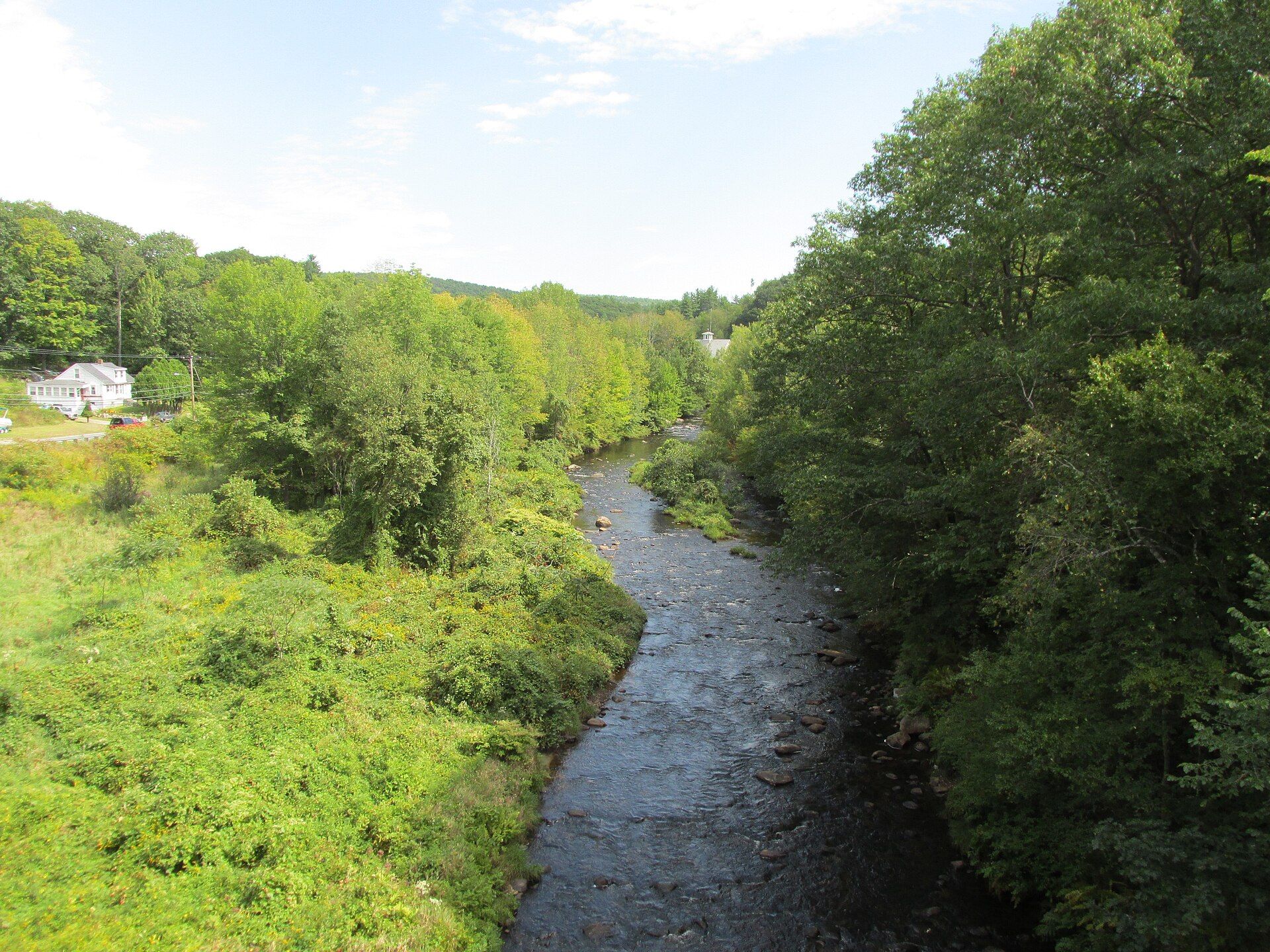
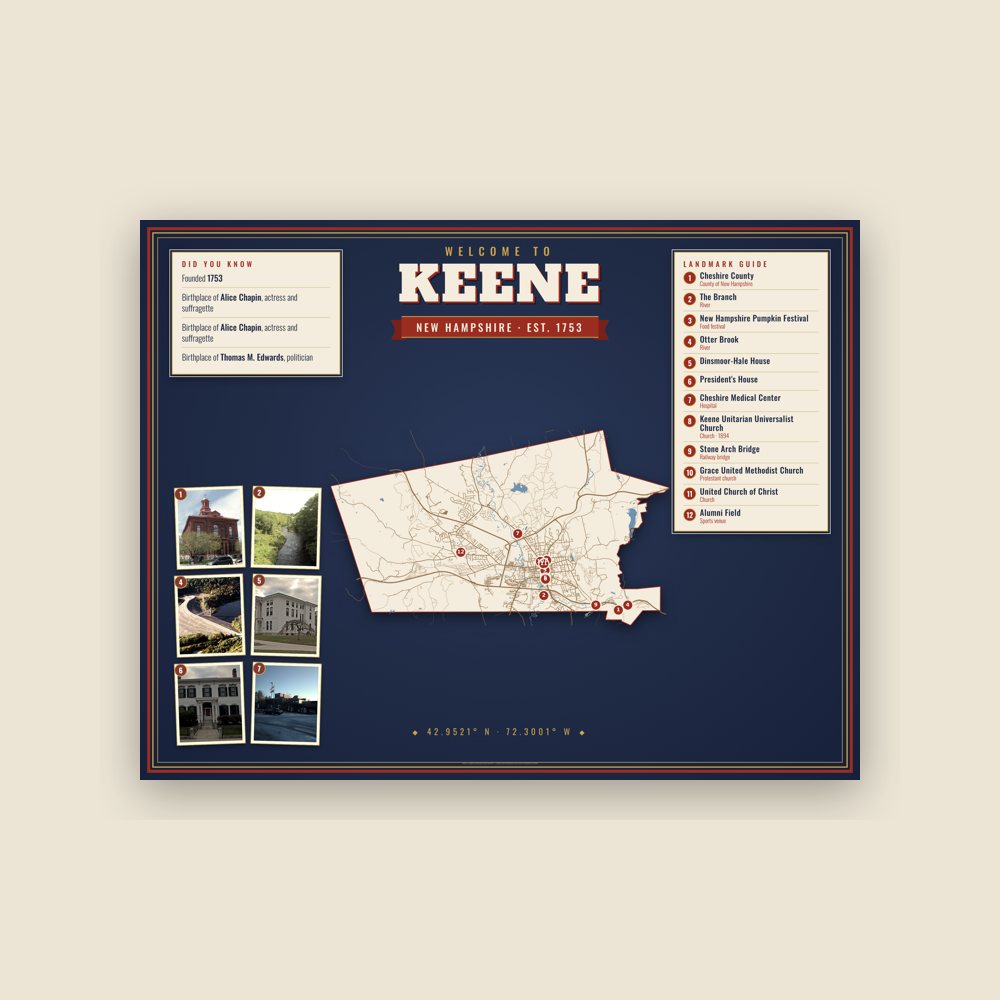
Railroad development in Keene began with unsuccessful proposals in 1829 and 1835, before the Cheshire Railroad was chartered in 1844. Landmarks include Cheshire County, The Branch and New Hampshire Pumpkin Festival. Keene is the birthplace of Heather Wilson, academic administrator.
Every piece is drawn from Keene's own map data and historic archives, then printed and shipped from the USA when you order. No two towns look alike.

Every road in town, on archival matte paper

The same map, in navy and silver
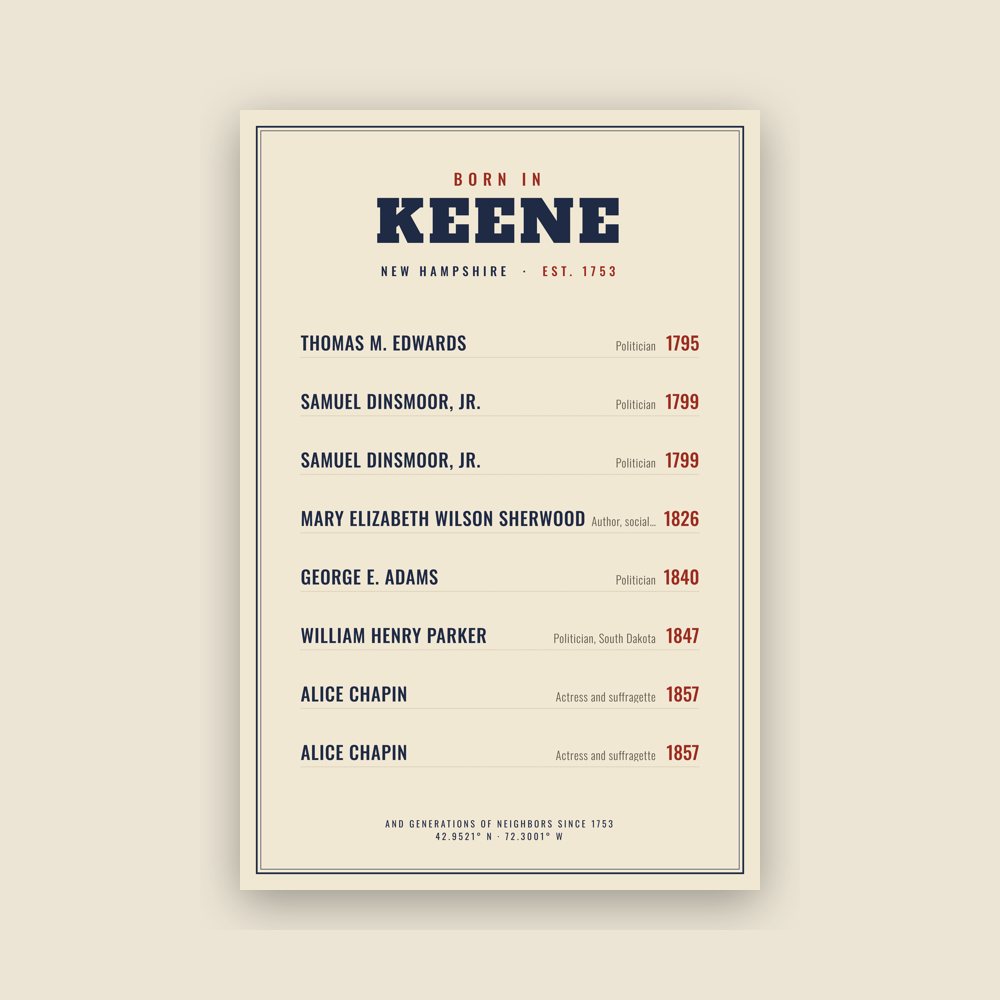
Famous natives, by birth year
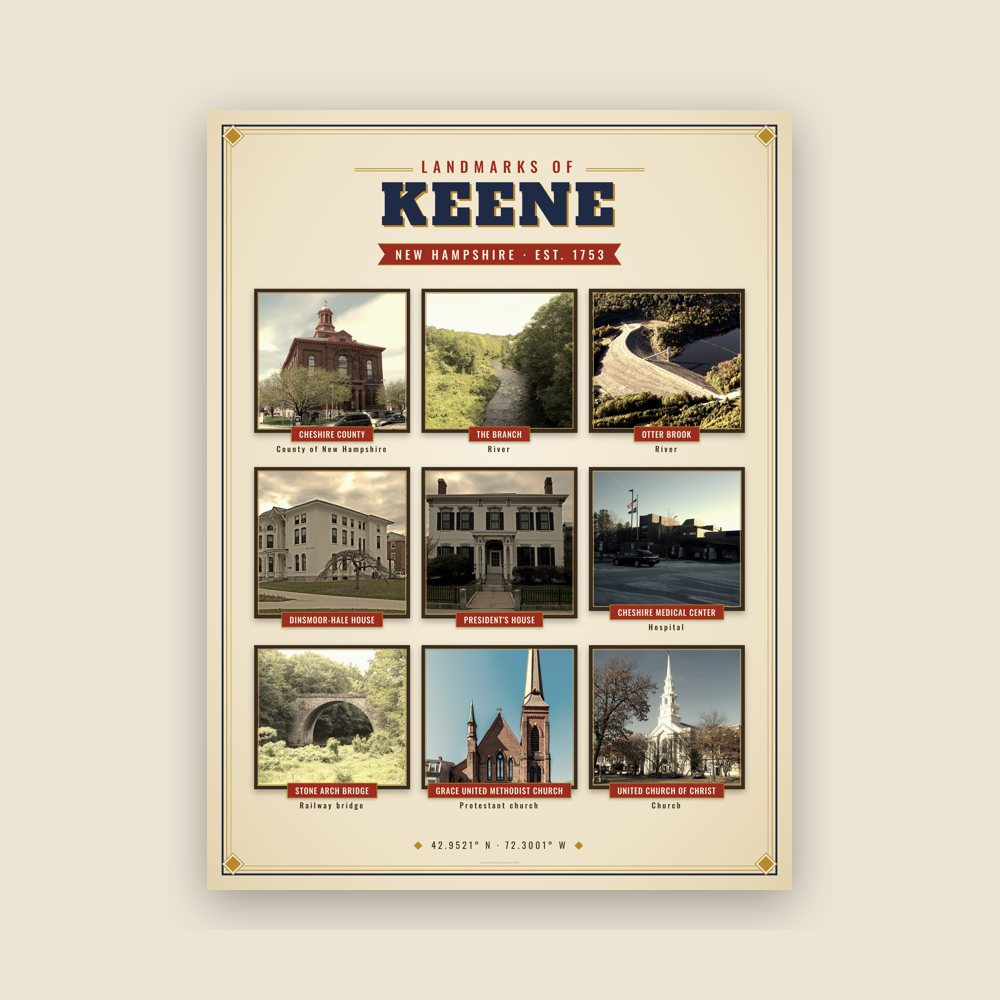
Nine local landmarks, archival matte
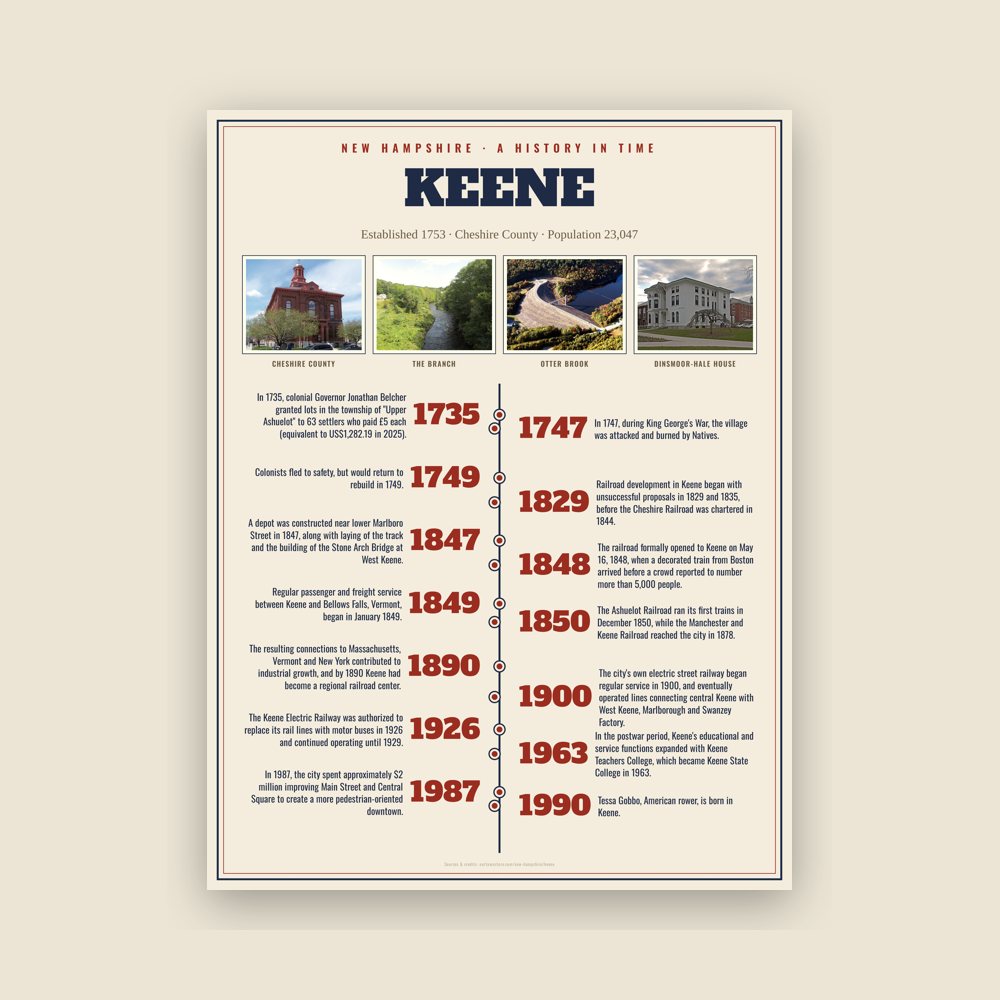
The town's story in dates, from its own records, for home or classroom
Map of local landmarks, washable fabric
Heavy-blend fleece, street map printed on the back
Soft Bella+Canvas jersey
Glossy ceramic, dishwasher safe
Ceramic keepsake, gold ribbon
Weatherproof, for the front walk
24″×16″, printed coir-look fibers, rubber back

12″×12″ printed wood, ready to hang

Soft-touch, zip cover
Sturdy all-over-print tote
Glossy top, cork back
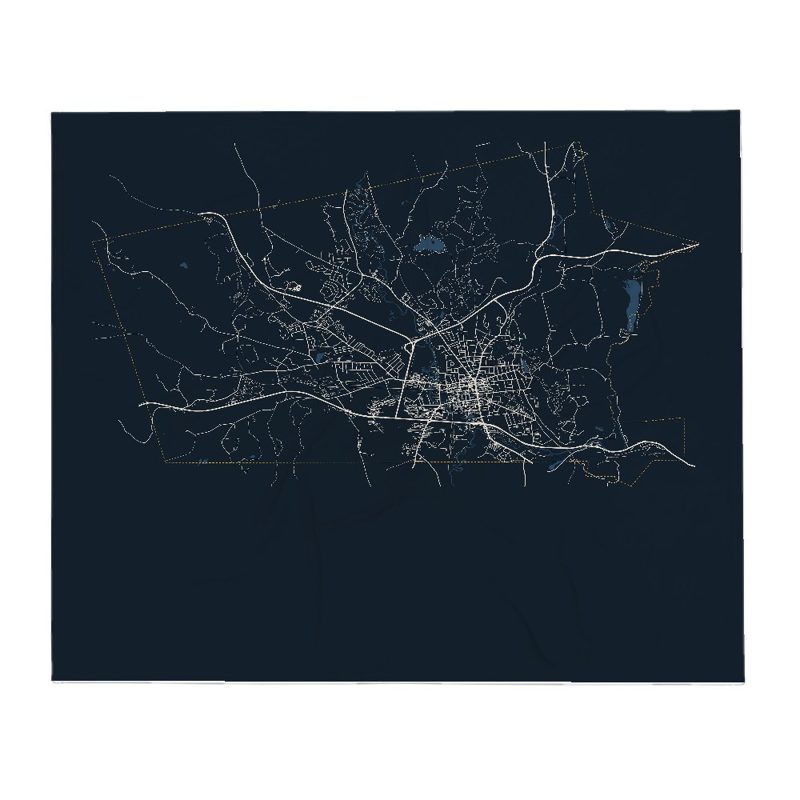
Soft fleece, 50″×60″
20 oz, double-wall stainless
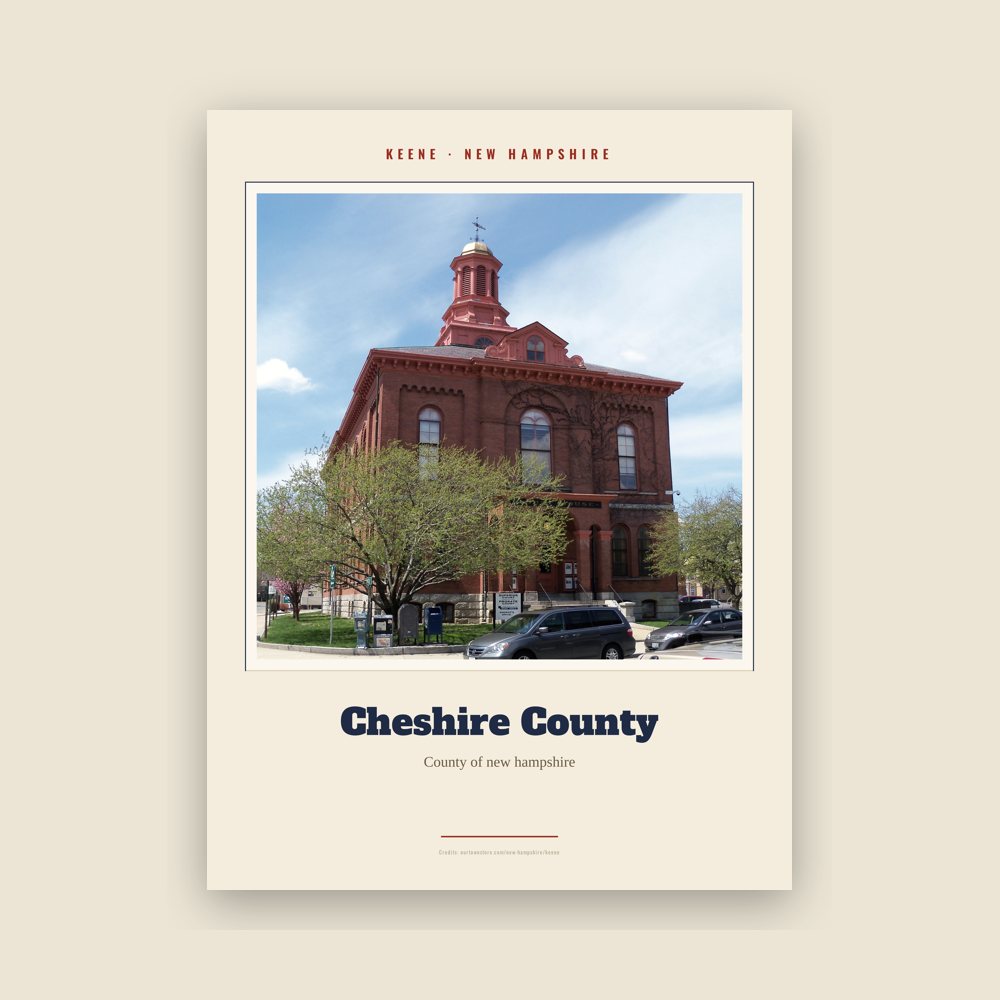
Archival matte print of a local landmark, credited to its photographer

Archival matte print of a local landmark, credited to its photographer

Archival matte print of a local landmark, credited to its photographer

Archival matte print of a local landmark, credited to its photographer
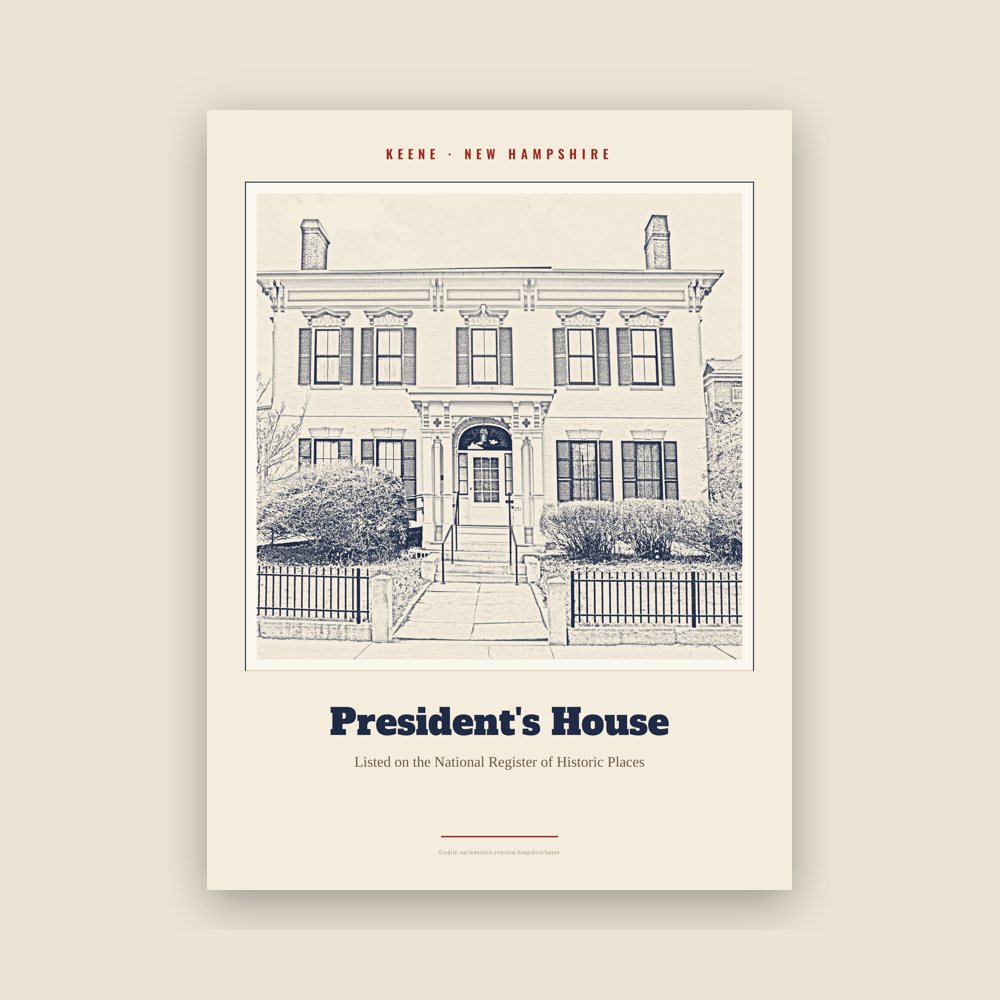
Archival matte print of a local landmark, credited to its photographer
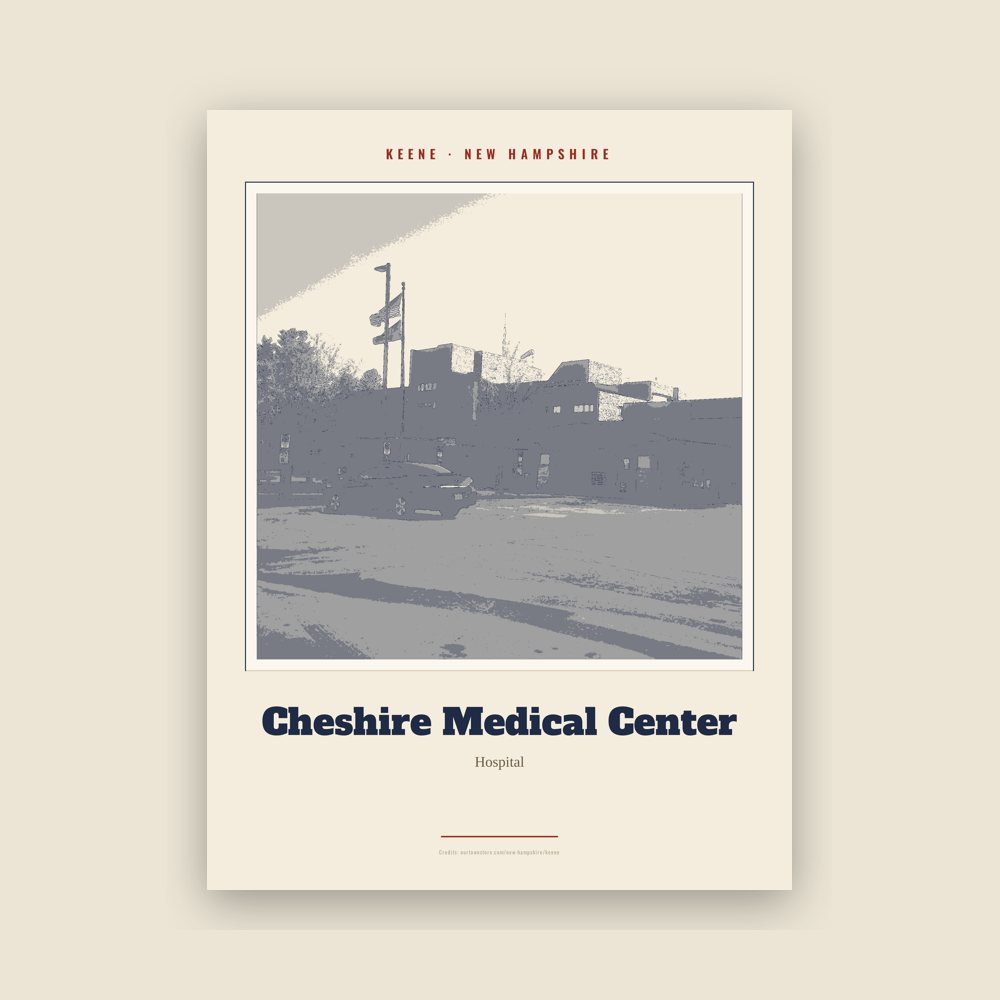
Archival matte print of a local landmark, credited to its photographer
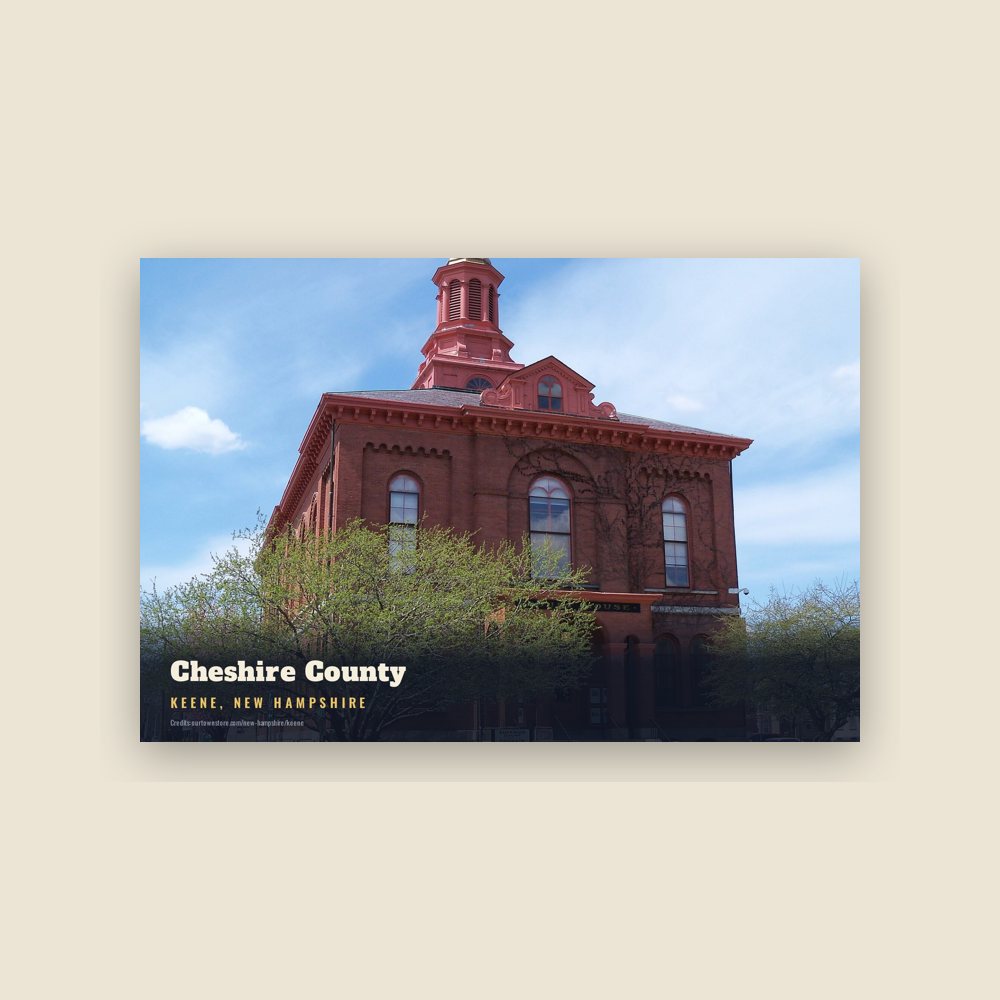
6″×4″ postcard, glossy front

6″×4″ postcard, glossy front

6″×4″ postcard, glossy front
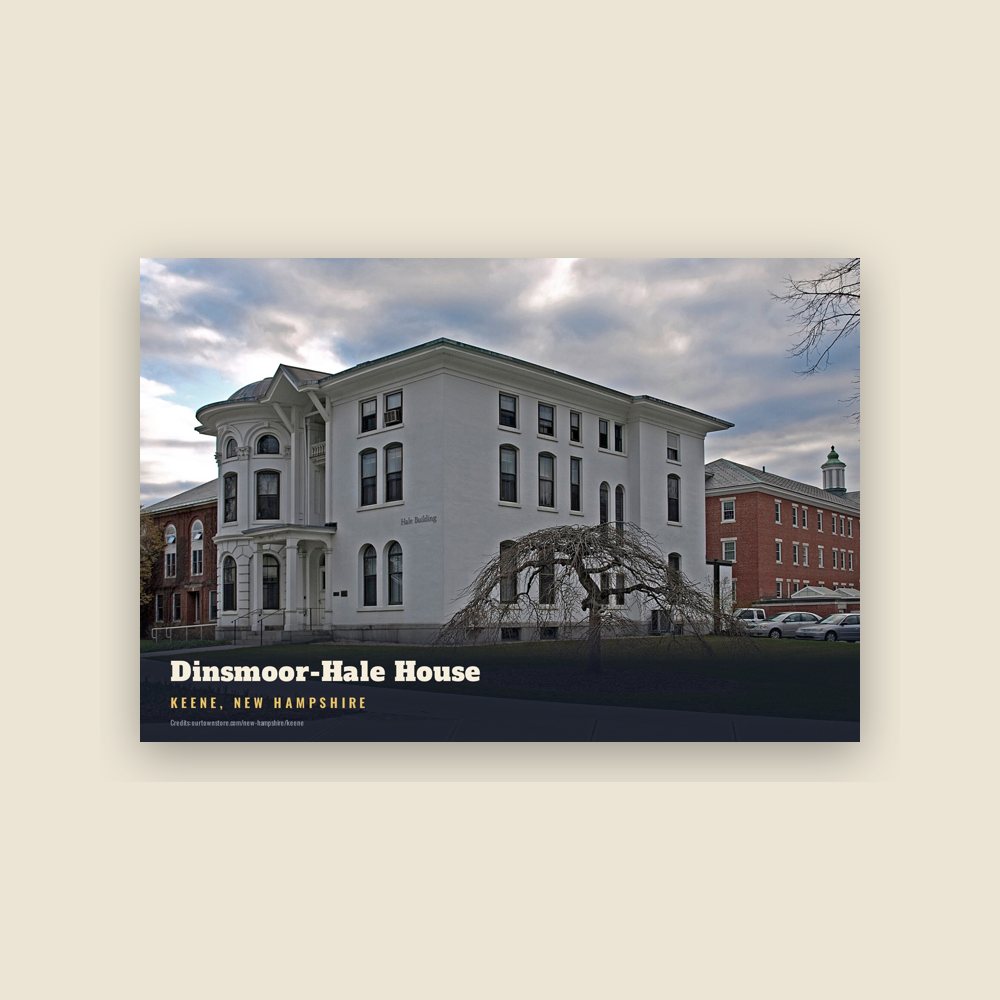
6″×4″ postcard, glossy front
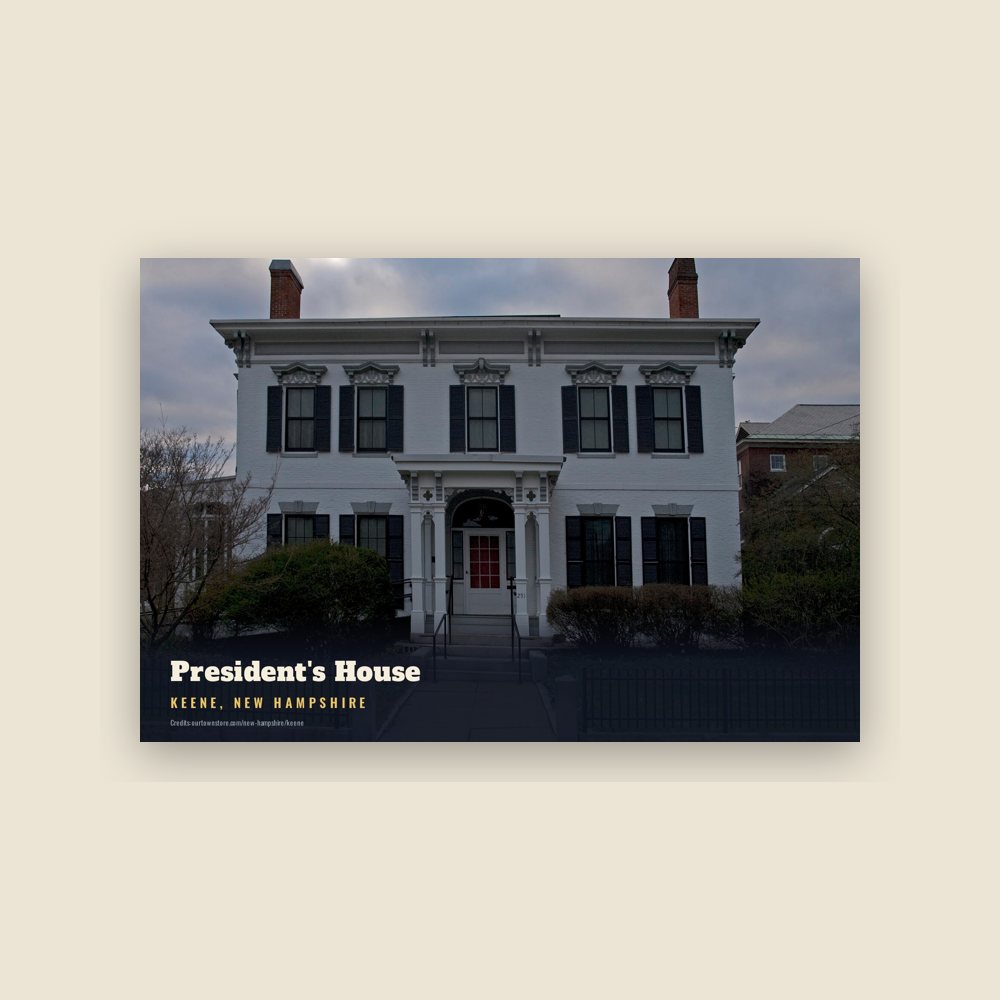
6″×4″ postcard, glossy front

6″×4″ postcard, glossy front
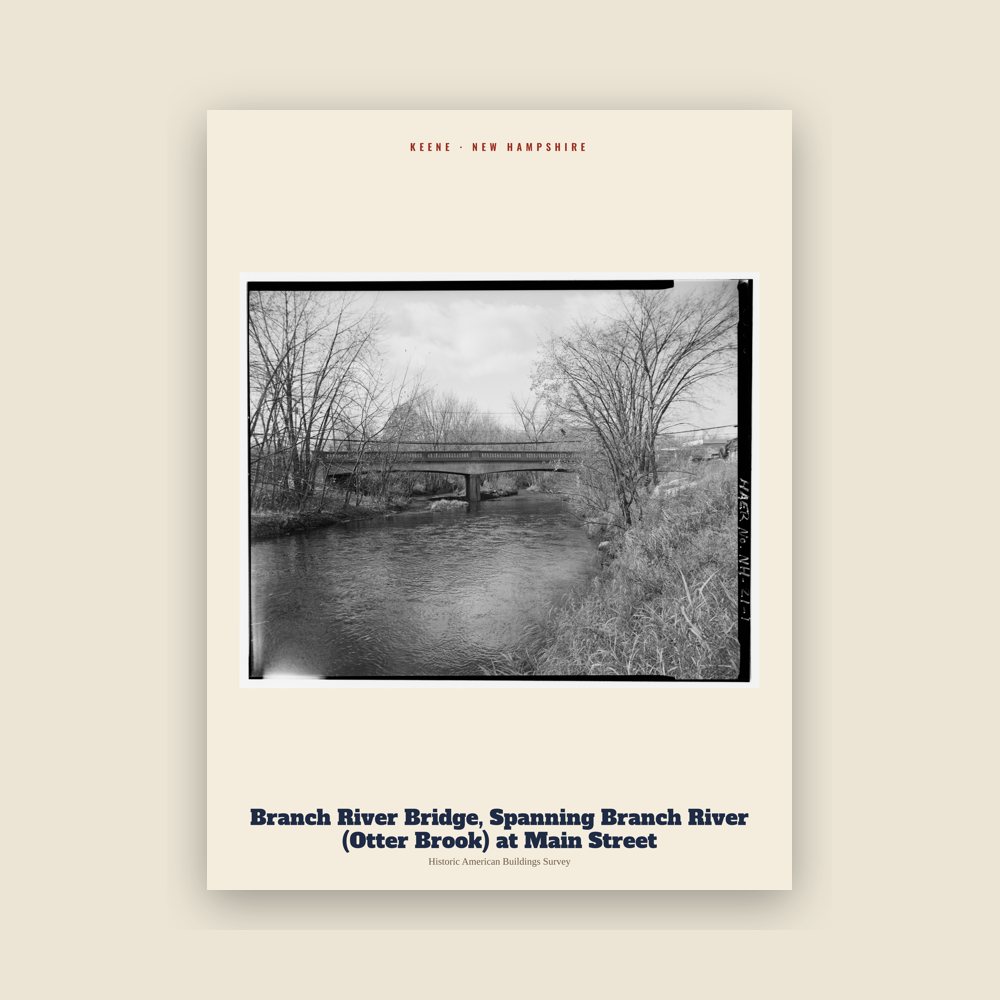
From the Library of Congress collections: a historic survey drawing or photograph of the town
Population 2010: 23,409 → 2020: 23,047
From Wikidata (CC0).
In 1735, colonial Governor Jonathan Belcher granted lots in the township of "Upper Ashuelot" to 63 settlers who paid £5 each (equivalent to US$1,282.19 in 2025). It was settled after 1736 on Equivalent Lands.
In 1747, during King George's War, the village was attacked and burned by Natives. Colonists fled to safety, but would return to rebuild in 1749. It was regranted to its inhabitants in 1753 by Governor Benning Wentworth, who renamed it "Keene" after Sir Benjamin Keene, a principal of the South Sea Trading Company, whose primary business was slave trading.
Railroad development in Keene began with unsuccessful proposals in 1829 and 1835, before the Cheshire Railroad was chartered in 1844. A depot was constructed near lower Marlboro Street in 1847, along with laying of the track and the building of the Stone Arch Bridge at West Keene. The railroad formally opened to Keene on May 16, 1848, when a decorated train from Boston arrived before a crowd reported to number more than 5,000 people. Regular passenger and freight service between Keene and Bellows Falls, Vermont, began in January 1849. The Ashuelot Railroad ran its first trains in December 1850, while the Manchester and Keene Railroad reached the city in 1878. The resulting connections to Massachusetts, Vermont and New York contributed to industrial growth, and by 1890 Keene had become a regional railroad center.
Keene's railroads were subsequently incorporated into larger regional railways. The Cheshire Railroad consolidated with the Fitchburg Railroad in 1890, while the Ashuelot Railroad consolidated with the Connecticut River Railroad that year and was taken over by the Boston and Maine Railroad in 1893.
The city's own electric street railway began regular service in 1900, and eventually operated lines connecting central Keene with West Keene, Marlborough and Swanzey Factory. The Keene Electric Railway was authorized to replace its rail lines with motor buses in 1926 and continued operating until 1929. Passenger rail service declined during the mid-20th century, with the last passenger train departing Keene for Bellows Falls on May 31, 1958, ending 110 years of passenger service in the city.
In 1920, Keene's population stood at 11,210 and increased as the city's industrial economy and economy grew, with the town becoming a regional institutional center of southwestern New Hampshire. During the Great Depression, Keene's banks closed temporarily and federal assistance subsequently supported highway, water, sewer and park-improvement projects in the town. In 1936, there was serious flooding and the 1938 New England hurricane affected the city, damaged homes and factories and destroyed nearly 1,000 elm trees; the resulting flood-control program included Surry Dam, which was completed in 1942.
In the postwar period, Keene's educational and service functions expanded with Keene Teachers College, which became Keene State College in 1963. In 1987, the city spent approximately $2 million improving Main Street and Central Square to create a more pedestrian-oriented downtown.
Beginning in 2000, Keene inventoried nearly 200 historic properties and then set up a municipal heritage and downtown historic-district body to support the restoration and reuse of prominent historic buildings.
In 2011, Massachusetts man Thomas Ball immolated himself on the steps of a courthouse in Keene to protest what he considered the court system's abuse of divorced fathers' rights.
Adapted (trimmed) from the Wikipedia article Keene, New Hampshire, revision 1377161867 by its contributors, licensed CC BY-SA 4.0.
We share a part of every Keene sale with local partners, and we'd love to print from your collection. Old photographs, maps and postcards make the best keepsakes.
Partner with us