Exeter was the county seat until 1997, when county offices were moved to neighboring Brentwood. Landmarks include Exeter station, Front Street Historic District and Exeter Waterfront Commercial Historic District. Exeter is the birthplace of Dan Brown, novelist.
Every piece is drawn from Exeter's own map data and historic archives, then printed and shipped from the USA when you order. No two towns look alike.
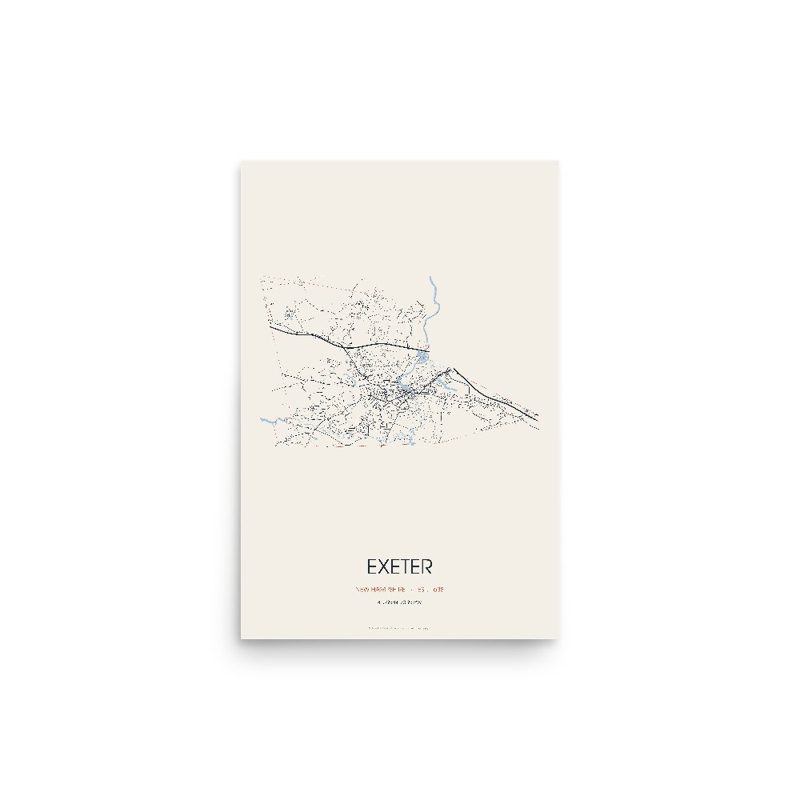
Every road in town, on archival matte paper
The same map, in navy and silver
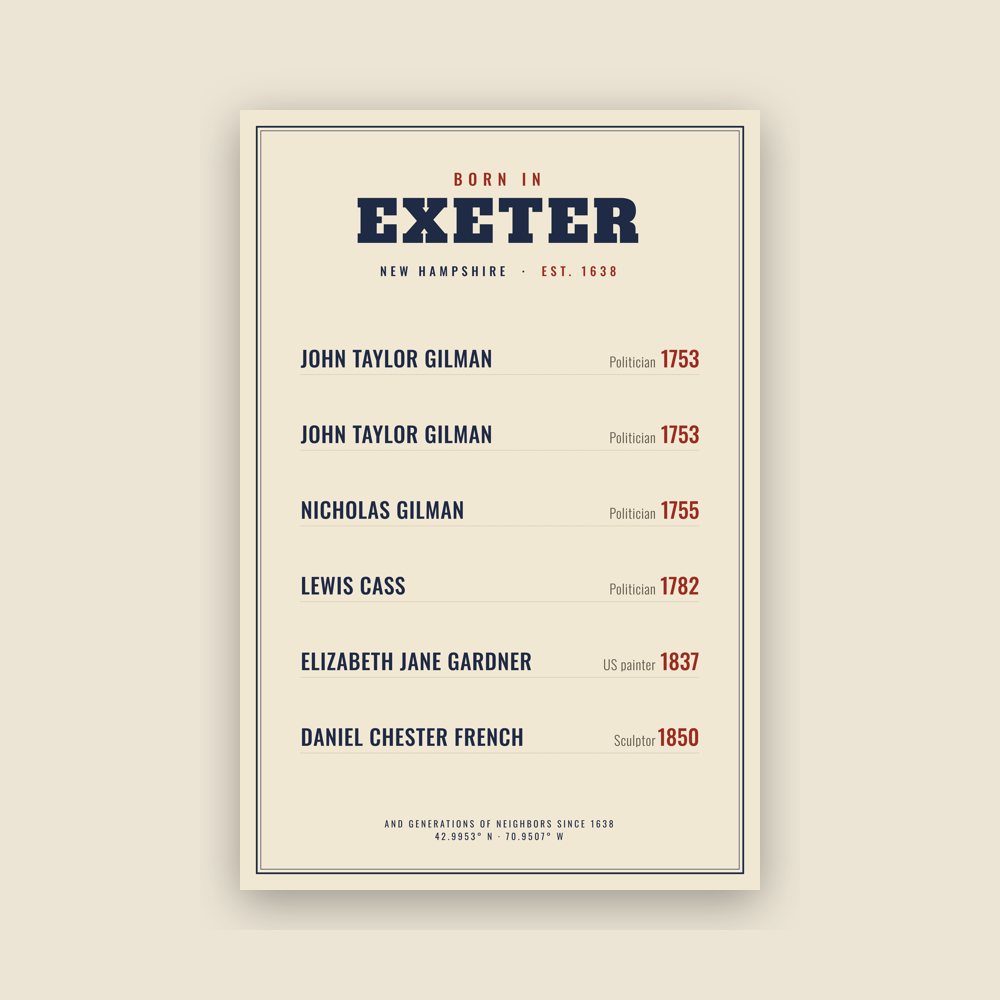
Famous natives, by birth year
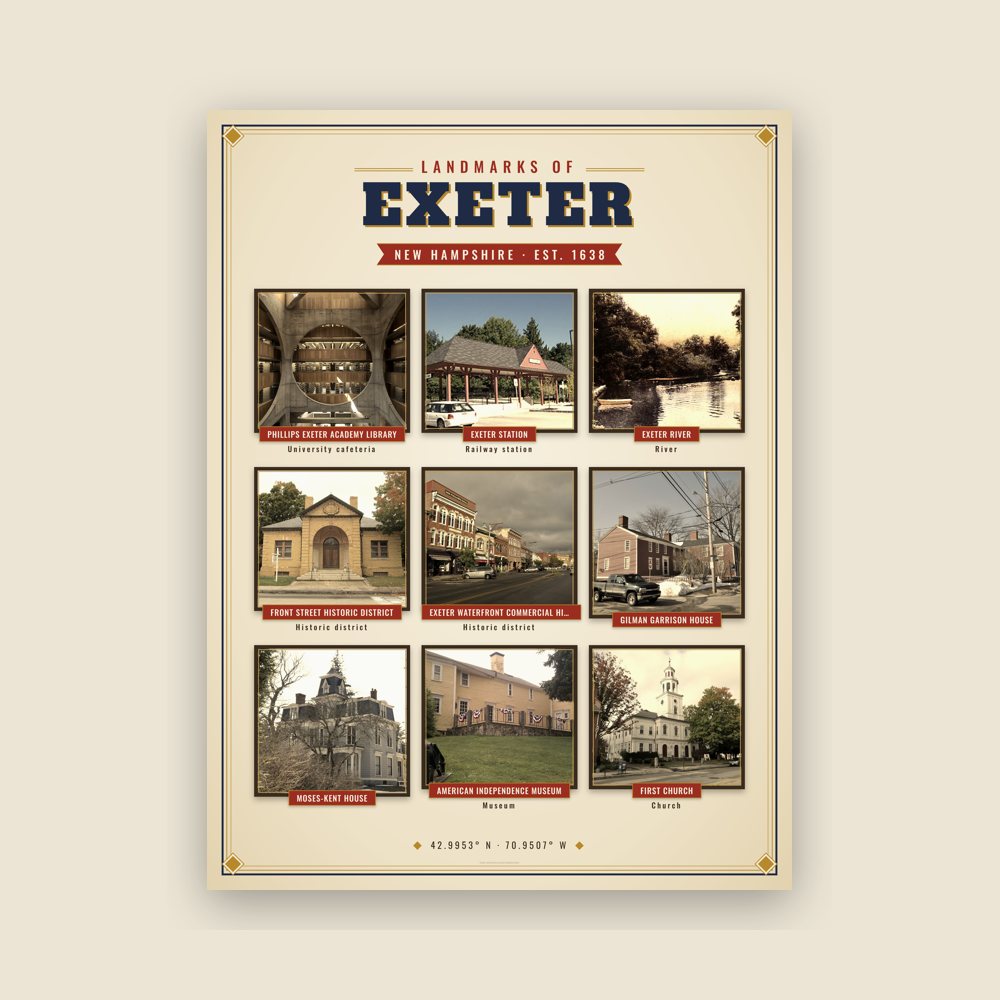
Nine local landmarks, archival matte
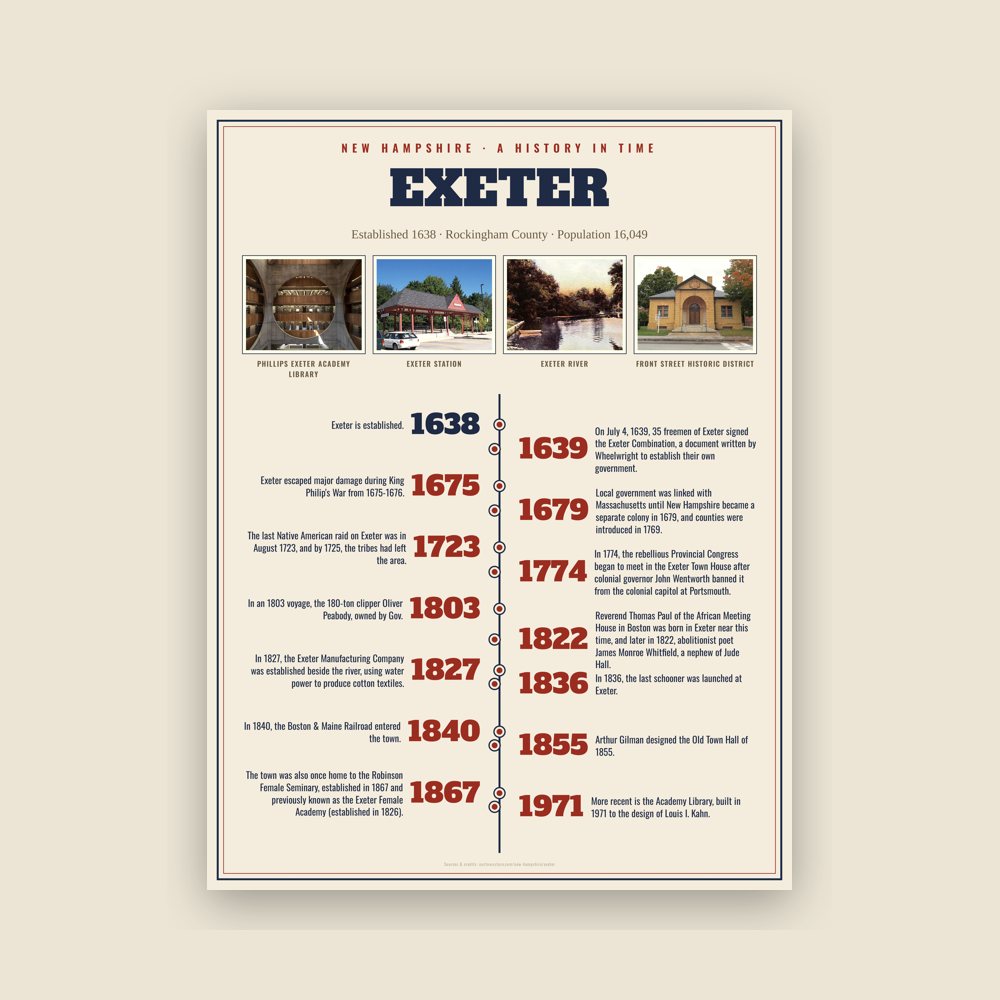
The town's story in dates, from its own records, for home or classroom
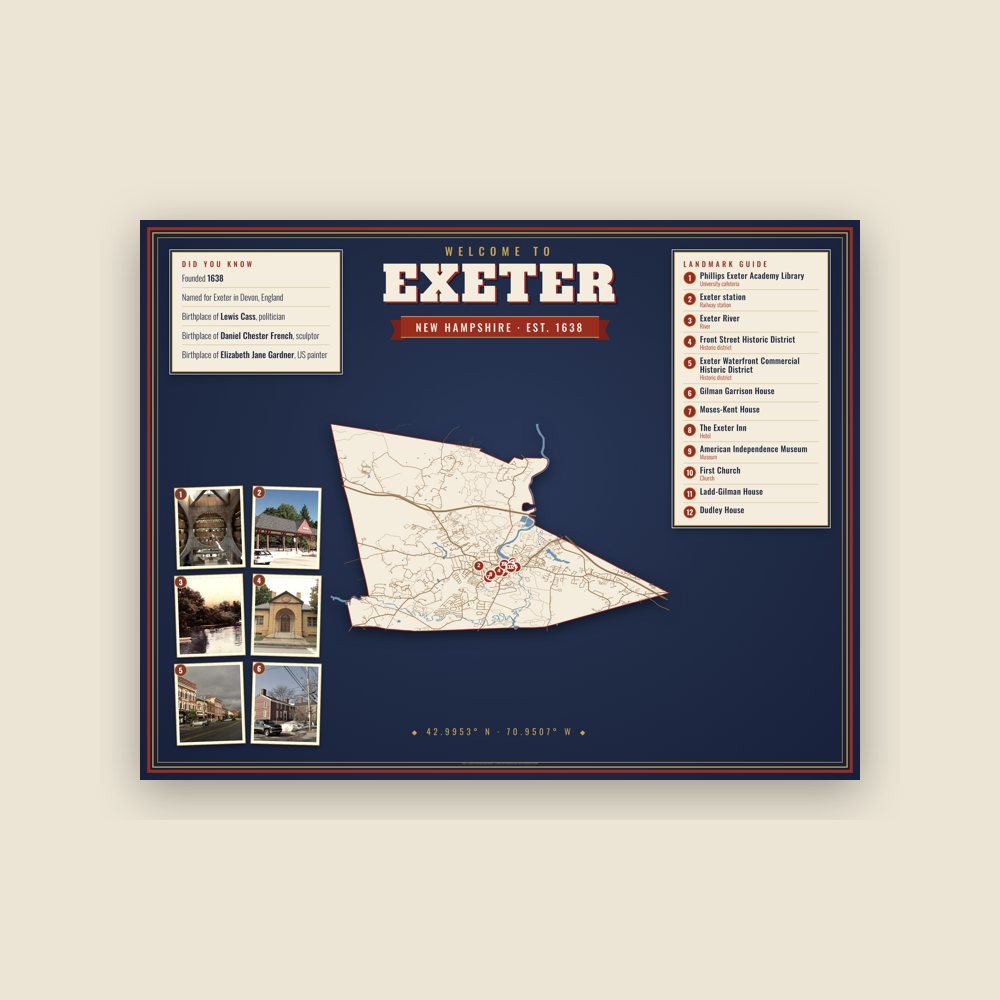
Map of local landmarks, washable fabric
Heavy-blend fleece, street map printed on the back
Soft Bella+Canvas jersey
Glossy ceramic, dishwasher safe
Ceramic keepsake, gold ribbon
Weatherproof, for the front walk
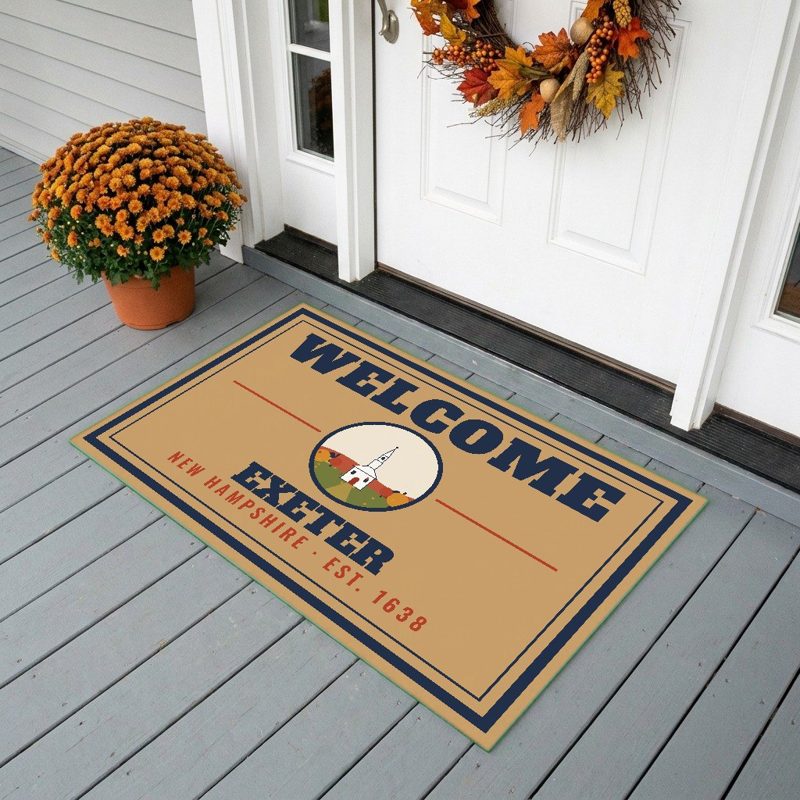
24″×16″, printed coir-look fibers, rubber back
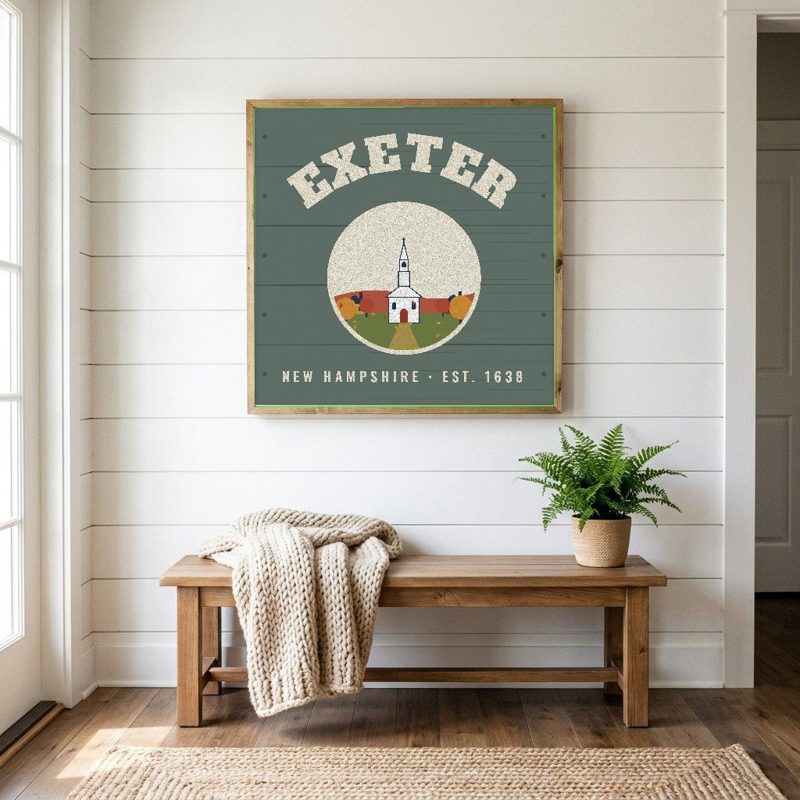
12″×12″ printed wood, ready to hang
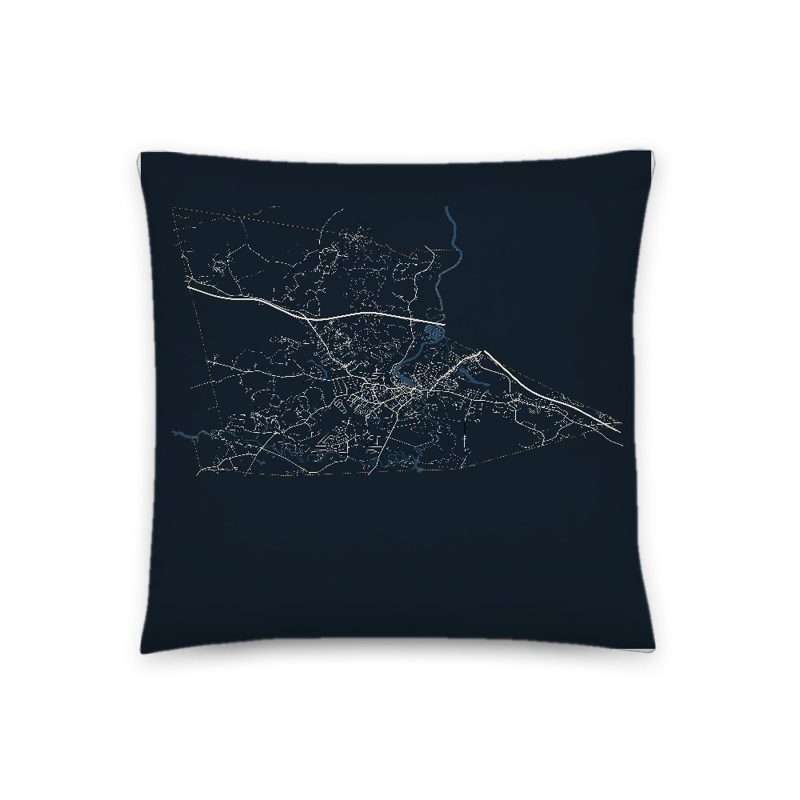
Soft-touch, zip cover
Sturdy all-over-print tote
Glossy top, cork back
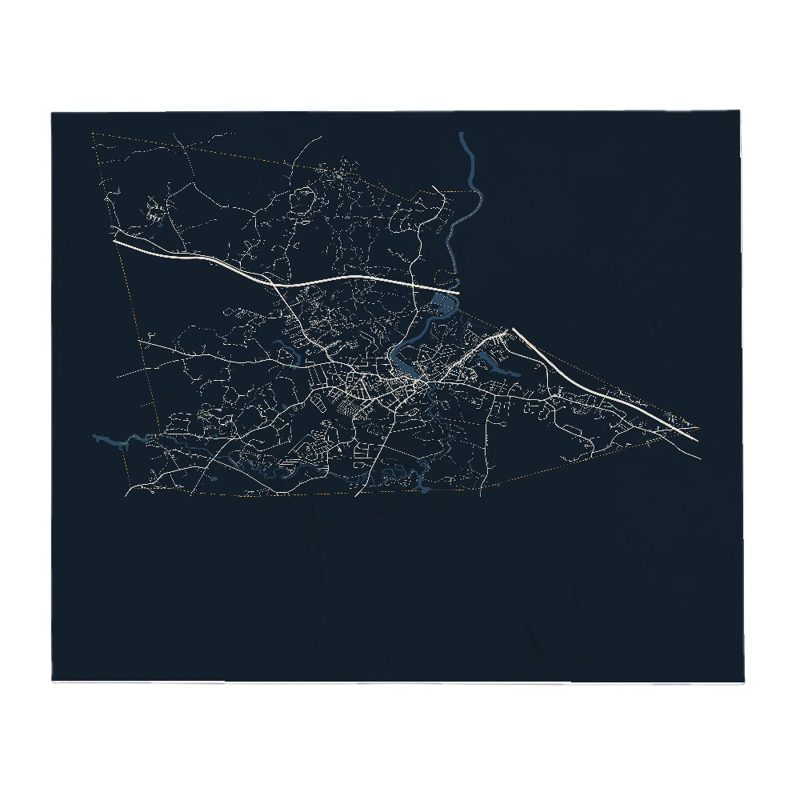
Soft fleece, 50″×60″
20 oz, double-wall stainless

Archival matte print of a local landmark, credited to its photographer
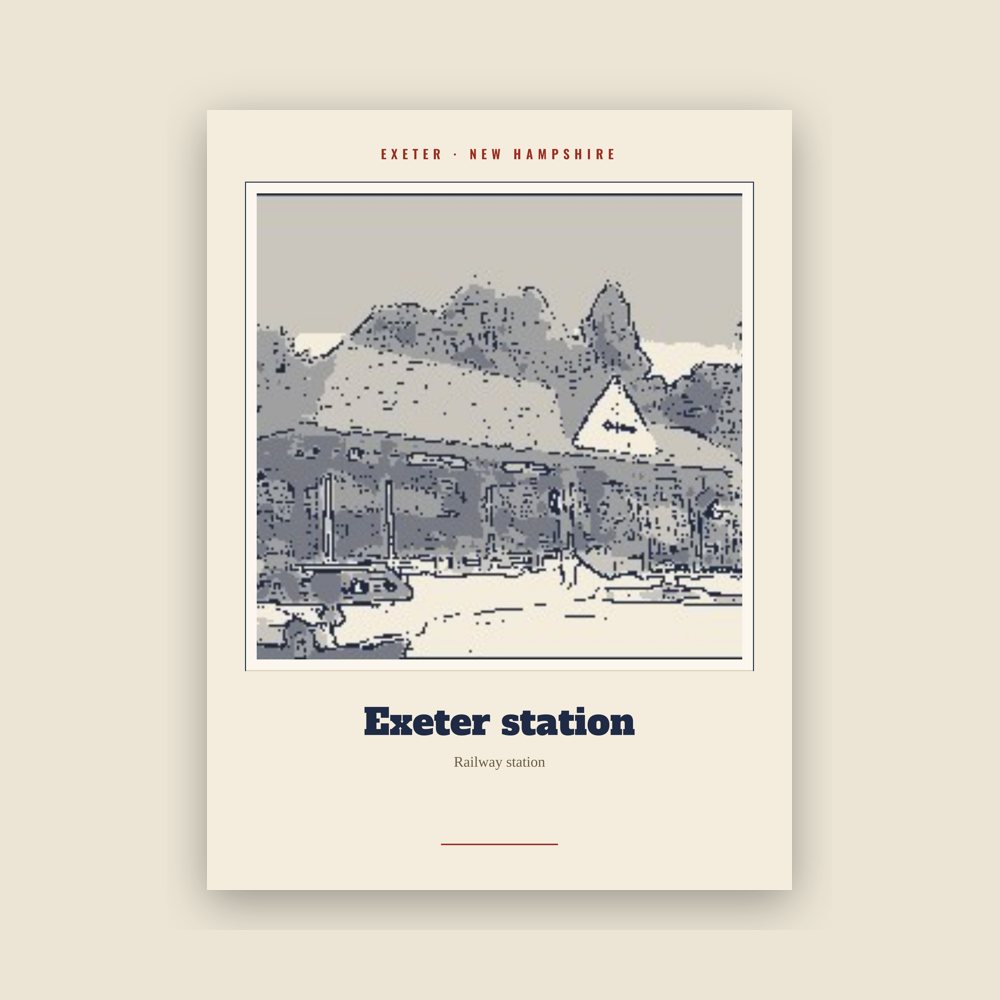
Archival matte print of a local landmark, credited to its photographer
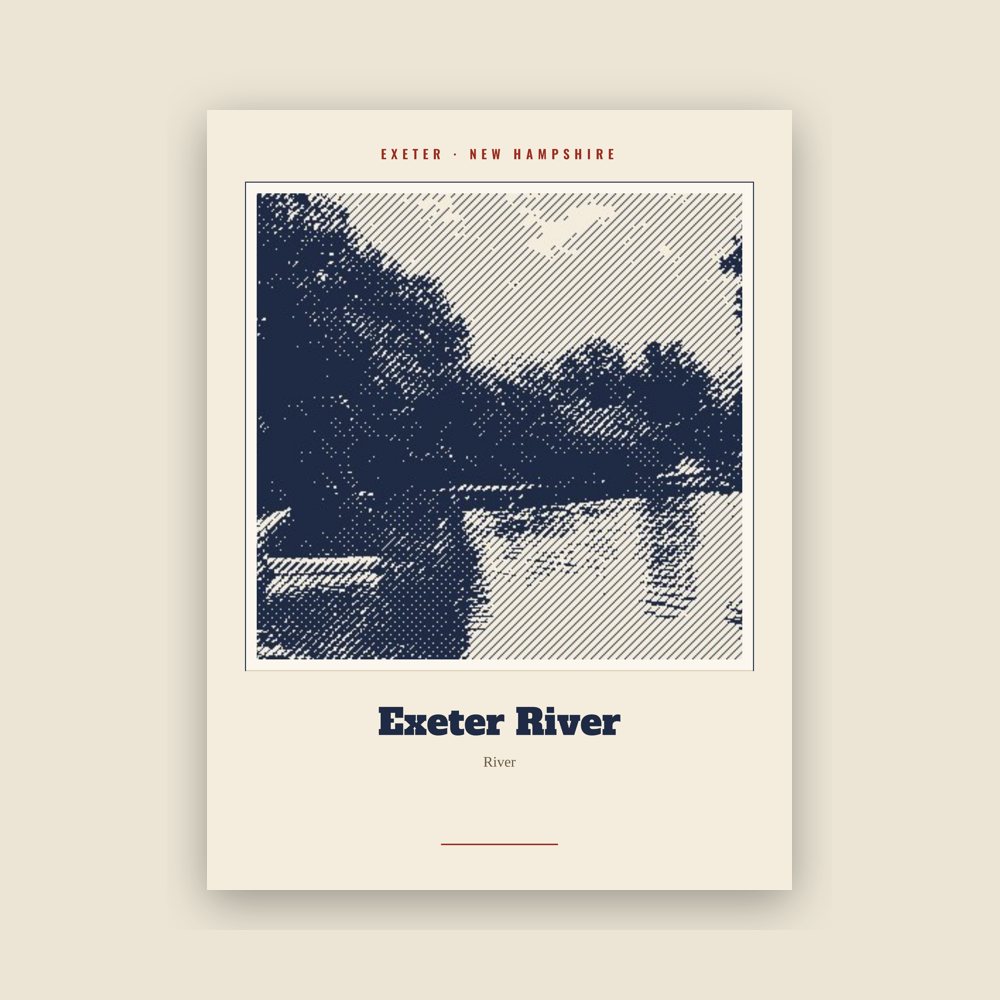
Archival matte print of a local landmark, credited to its photographer
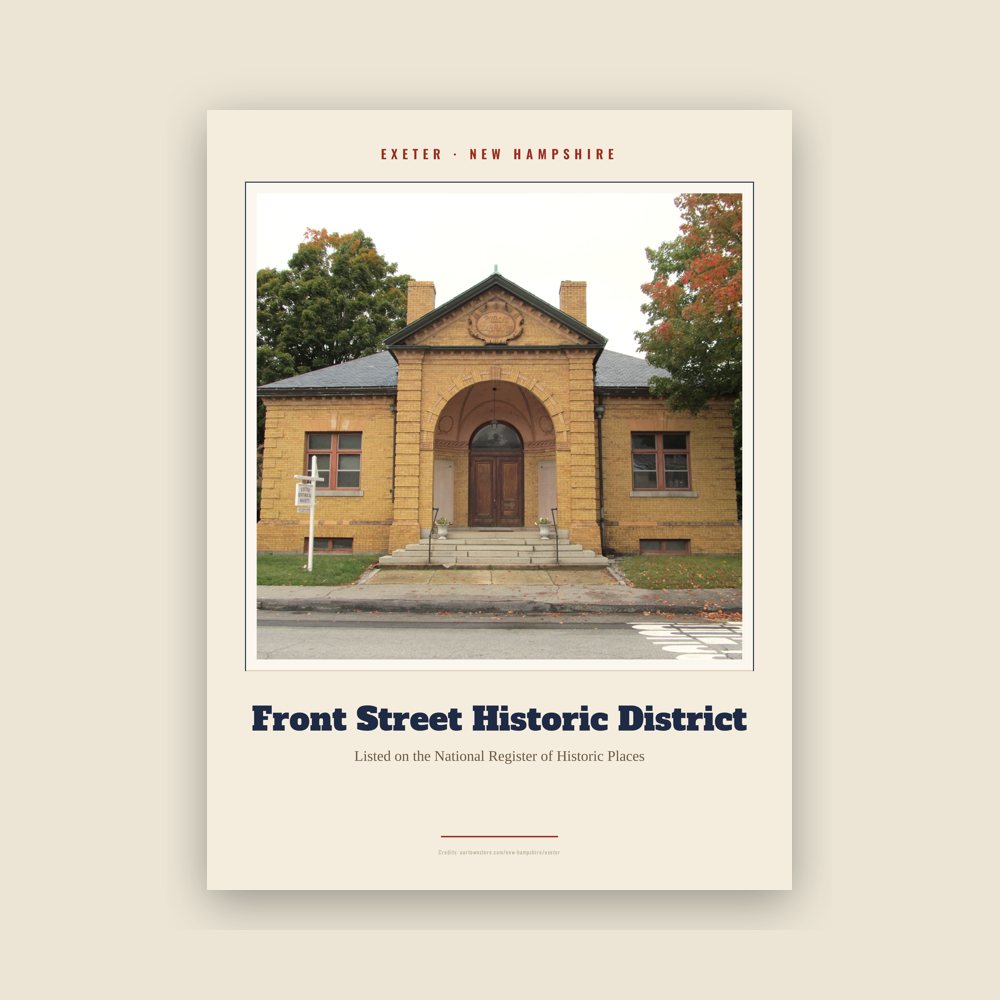
Archival matte print of a local landmark, credited to its photographer
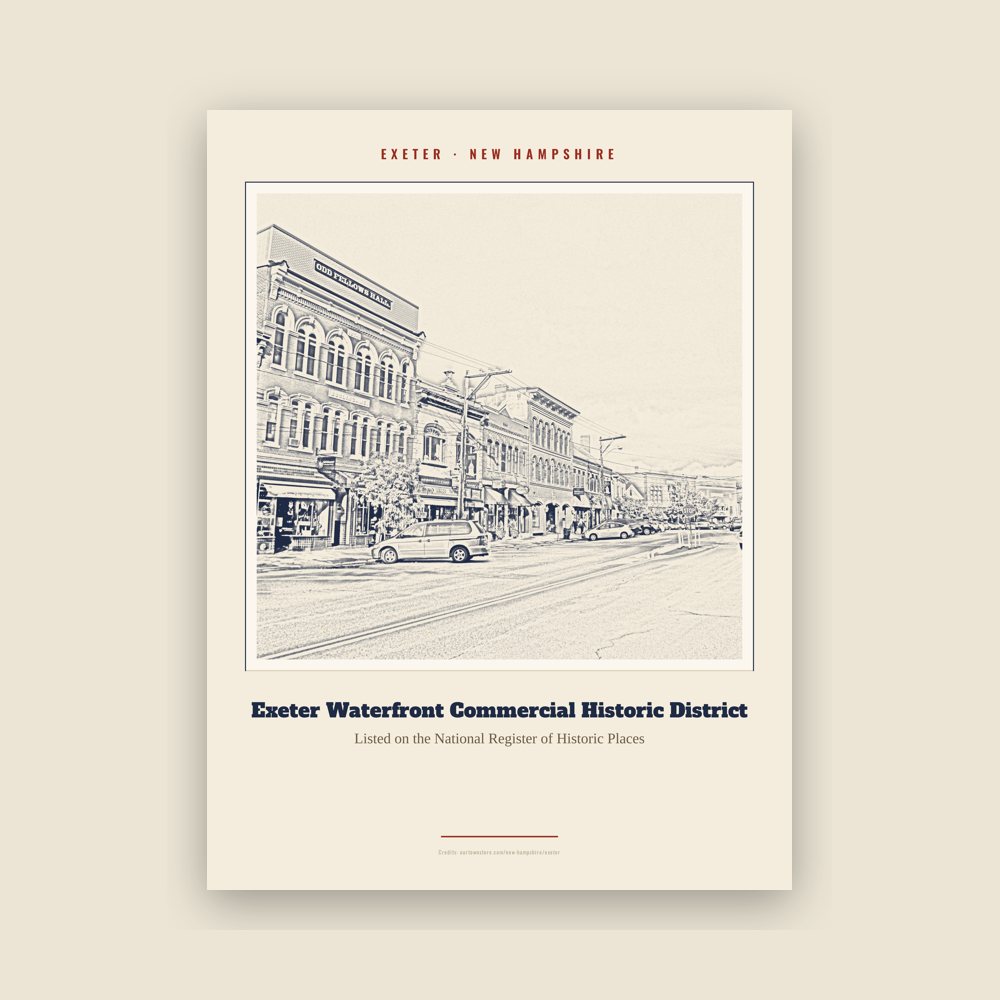
Archival matte print of a local landmark, credited to its photographer
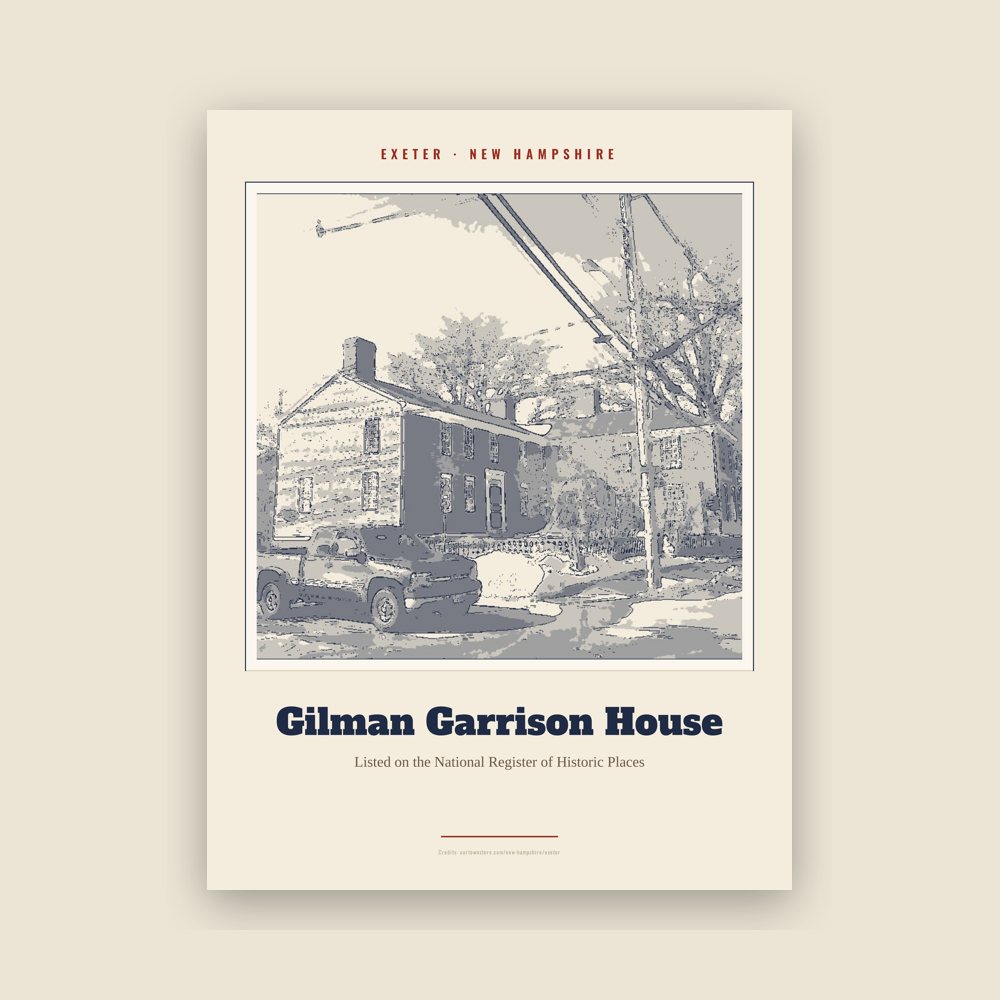
Archival matte print of a local landmark, credited to its photographer

6″×4″ postcard, glossy front
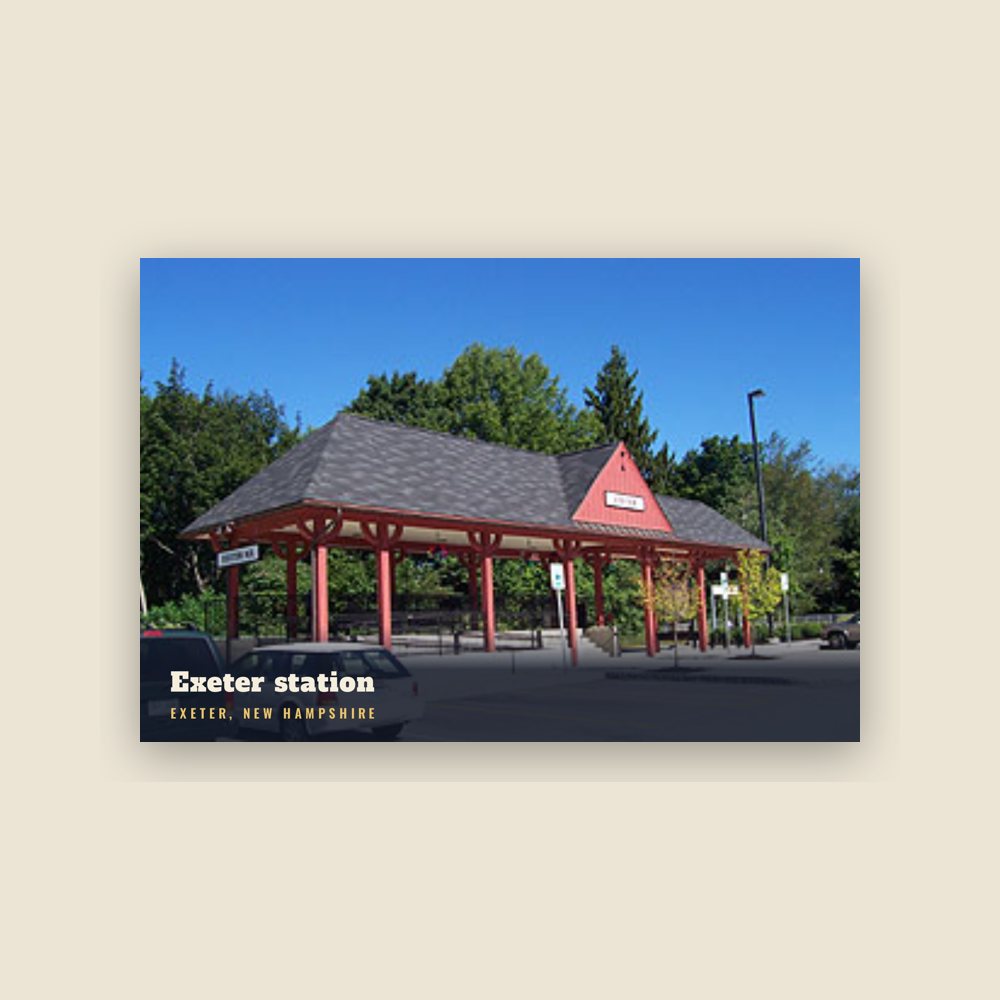
6″×4″ postcard, glossy front
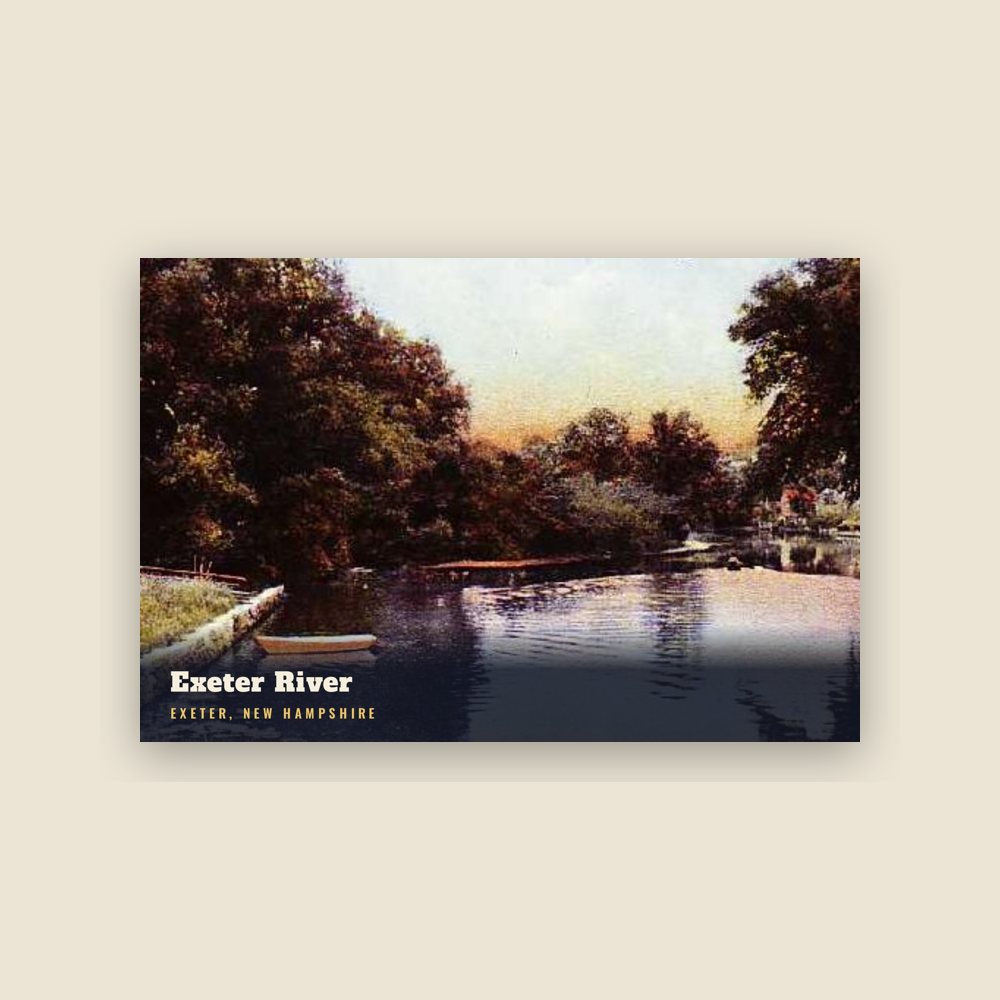
6″×4″ postcard, glossy front
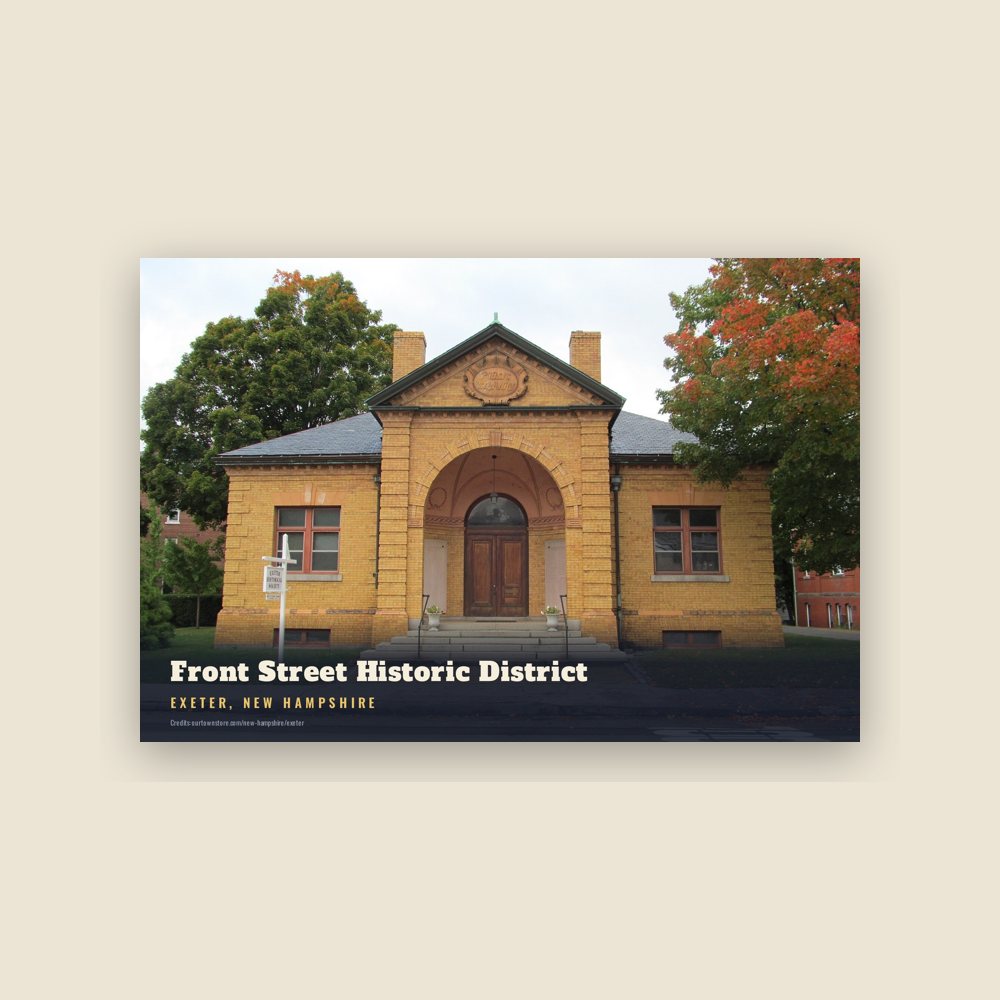
6″×4″ postcard, glossy front
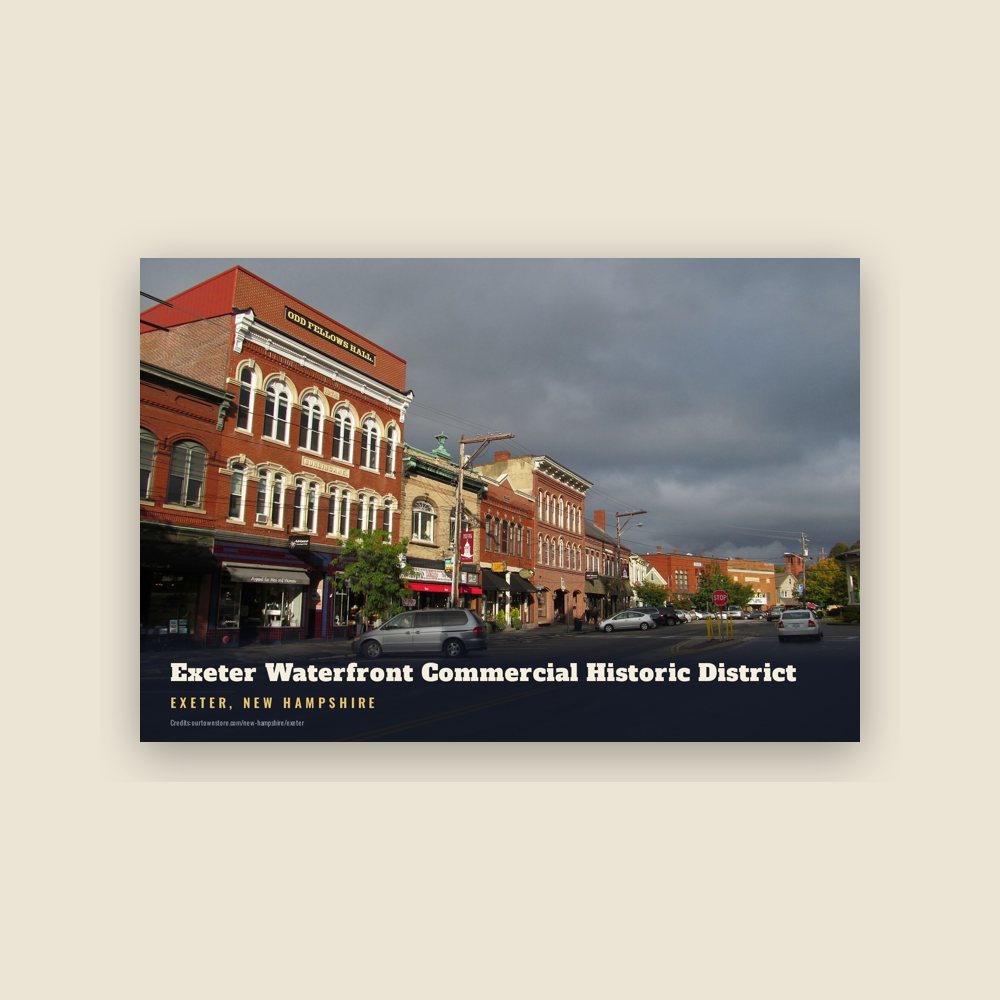
6″×4″ postcard, glossy front
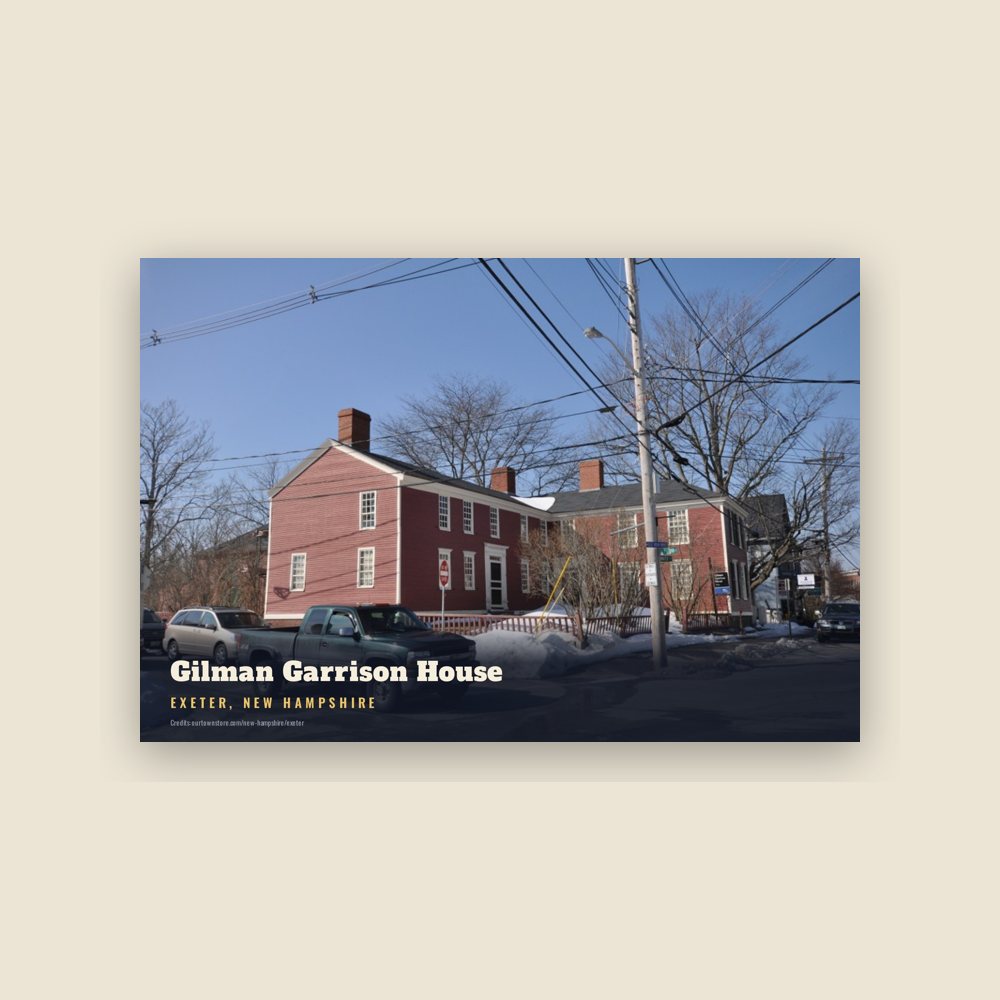
6″×4″ postcard, glossy front
Named for Exeter (city in Devon, England).
Population 2010: 14,306 → 2020: 16,049
From Wikidata (CC0).
For thousands of years prior to European colonization, the area was inhabited by Pennacook Abenaki villagers. The location was originally known as "M'Squamskook", meaning "Falls at the Place of the Salmon" in Abenaki language, and would later become known as "Squamscott".
About 100 Pennacook would return to the Squamscott in the spring to fish, and raise corn, pumpkin, and pigeons, and had relations to other Pennacook at Concord, Sewall's Island, and Manchester. They fished at the falls where the Exeter River becomes the tidal Squamscott, the site around which the future town of Exeter grew. The falls in Brentwood were known to have been a favorite fishing site of the native population.
On April 3, 1638, John Wheelwright, a clergyman exiled from the Puritan theocracy Massachusetts Bay Colony, purchased the land from Wehanownowit, the sagamore. Wheelwright took with him about 175 individuals to found a town he named after Exeter in Devon, England. Local government was linked with Massachusetts until New Hampshire became a separate colony in 1679, and counties were introduced in 1769.
One of the four original townships in the province, Exeter originally included Newmarket, Newfields, Brentwood, Epping, and Fremont. On July 4, 1639, 35 freemen of Exeter signed the Exeter Combination, a document written by Wheelwright to establish their own government. The settlers hunted, planted and fished, raised cattle and swine, or made shakes (shingles) and barrel staves.
Thomas Wilson established the town's first grist mill on the eastern side of the island in the lower falls. This mill was established within the first season of settling in Exeter, and his son Humphrey assumed control of the mill in 1643, when Thomas died.
Exeter escaped major damage during King Philip's War from 1675-1676. However, the town maintained a militia of 60 men and despite that, a Mr. John Robinson was killed by Indians. In 1683, Hampton Councilman Edward Gove staged his rebellion in Exeter. He was arrested and became the only New Hampshire resident to be sentenced to be hanged, drawn, and quartered. During King William's War, the Lamprey River Massacre occurred while Epping was a part of Exeter.
Some early settlers came from Hingham, Massachusetts, including the Gilman, Folsom, and Leavitt families. In 1647, Edward Gilman Jr. established the first sawmill, and by 1651, Gilman had a 50-ton sloop which he used to conduct business in lumber, staves, and masts. Gilman was lost at sea in 1653 while traveling to England to purchase equipment for his mills, but his family later became prominent as lumbermen, shipbuilders, merchants, and statesmen. The Gilman Garrison House and the American Independence Museum were both former homes of the Gilman family. The Gilman family also donated the land on which Phillips Exeter Academy stands, including the academy's original Yard, the oldest part of campus. Members of the Gilman family have played an important role in the United States government, including Founding Father Nicholas Gilman, as well as treasurers, a governor, representatives to the General Assembly and judges to the General Court of New Hampshire.
The Gilman family began trading as far as the West Indies with ships they owned out of Portsmouth. In an 1803 voyage, the 180-ton clipper Oliver Peabody, owned by Gov. John Taylor Gilman, Oliver Peabody, Col. Gilman Leavitt, and others, was boarded by brigs belonging to the Royal Navy under command of Admiral Horatio Nelson. Enforcing a blockade against the French, Nelson offered ship Captain Stephen Gilman of Exeter a glass of wine and paid him for his cargo in Spanish dollars. The trip demonstrates how far afield the merchants of Exeter reached.
The last Native American raid on Exeter was in August 1723, and by 1725, the tribes had left the area. In 1774, the rebellious Provincial Congress began to meet in the Exeter Town House after colonial governor John Wentworth banned it from the colonial capitol at Portsmouth. In July 1775, the Provincial Congress had the provincial records seized from royal officials in Portsmouth and brought to Exeter, as well, so Exeter became New Hampshire's capital, an honor it held for 14 years.
Exeter had a significant African American community, with its first census in 1790 recording 81 free African Americans (in 14 households, 11 of which they owned), and two enslaved African Americans. This was the highest percentage of African Americans in any settlement in the state at 4.7%. Many African Americans, such as Jude Hall (namesake of Jude's Pond on Drinkwater Road), earned their freedom fighting in the Revolutionary War, and many settled near the west bank of the Squamscott River after the war. Jude Hall is buried in the Winter Street cemetery.
Reverend Thomas Paul of the African Meeting House in Boston was born in Exeter near this time, and later in 1822, abolitionist poet James Monroe Whitfield, a nephew of Jude Hall. In the late 1800s, two men had two dry-goods stores on Water Street, John Garrison Cutler and George Harris, who both had very high net worths at the time.
In 1827, the Exeter Manufacturing Company was established beside the river, using water power to produce cotton textiles. Other businesses manufactured shoes, saddles, harnesses, lumber, boxes, bricks, carriages, and bicycles. In 1836, the last schooner was launched at Exeter. In 1840, the Boston & Maine Railroad entered the town.
According to former governor Hugh Gregg, the United States Republican Party was born in Exeter on October 12, 1853, at the Squamscott Hotel at a secret meeting of Amos Tuck with other abolitionists. At this meeting, Tuck proposed forming a new political party to be called Republican. Upon learning of Tuck's meeting, in December 1853, Horace Greeley said, "I think 'Republican' would be the best name, it will sound both Jeffersonian and Madisonian, and for that reason will take well." Abraham Lincoln, the first Republican president, visited Exeter in 1860. His son, Robert Todd Lincoln, was attending Phillips Exeter Academy, the college preparatory school founded in 1781 by John Phillips. The town was also once home to the Robinson Female Seminary, established in 1867 and previously known as the Exeter Female Academy (established in 1826). Its landmark Second Empire schoolhouse, completed in 1869, burned in October 1961.
Joanna Pellerin, president of the Rockingham Land Trust, described the Squamscott River of the 1940s: [The] Squamscott was a place to stay away from. It stank, and was filled with dyes from the mills and sewage dumped from along Water Street.In 1922, it was affected by the 1922 New England Textile Strike, shutting down the mills in the town over an attempted wage cut and hours increase.
In September 1965, Exeter was involved in UFO history when local teenager Norman Muscarello and two Exeter police officers, Eugene Bertrand and David Hunt, witnessed a bright red UFO at close range. Their sighting attracted national publicity and became the focus of a bestselling book, Incident at Exeter, by journalist John G. Fuller. The Air Force eventually admitted that it had been unable to identify the strange object, and it is still considered by many UFO buffs to be one of the most impressive UFO sightings on record.
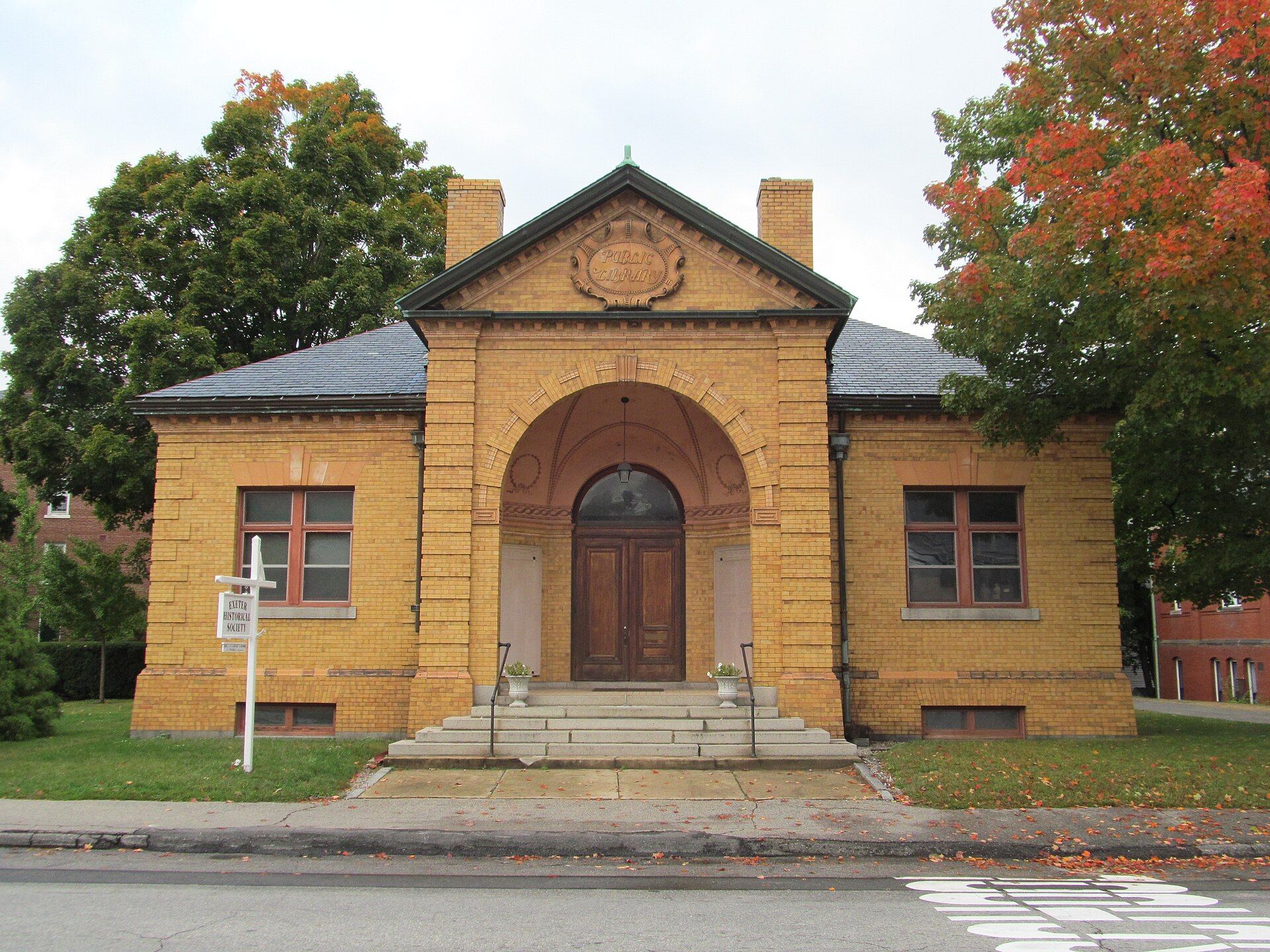
Exeter has a considerable number of architectural structures. Arthur Gilman designed the Old Town Hall of 1855. The Old Public Library of 1894, which now is home to the Exeter Historical Society, was designed by the Boston firm of Rotch & Tilden. Ralph Adams Cram, who trained with Rotch & Tilden, designed both Phillips Church, built in 1897, and Tuck High School, built in 1911. Cram's firm of Cram & Ferguson designed the entire Phillips Exeter Academy campus between 1908 and 1950. More recent is the Academy Library, built in 1971 to the design of Louis I. Kahn. Sculptor Daniel Chester French created the town's war memorial in 1922. Architect Henry Bacon designed in 1916 the Swasey Pavilion at Exeter's town square.
Other features of the town include the Swasey Parkway, which replaced the wharves and warehouses along the Squamscott River, and the Ioka Theatre of 1915 on Water Street. The latter was built by Edward Mayer, an Exeter judge and resident. Mayer's opening feature was The Birth of a Nation, by D. W. Griffith. The theatre's curious name was proposed in a contest by a young woman with an enthusiasm for Scouting. Ioka was a Native American word meaning "playground".
Adapted (trimmed) from the Wikipedia article Exeter, New Hampshire, revision 1378780059 by its contributors, licensed CC BY-SA 4.0.
We share a part of every Exeter sale with local partners, and we'd love to print from your collection. Old photographs, maps and postcards make the best keepsakes.
Partner with us