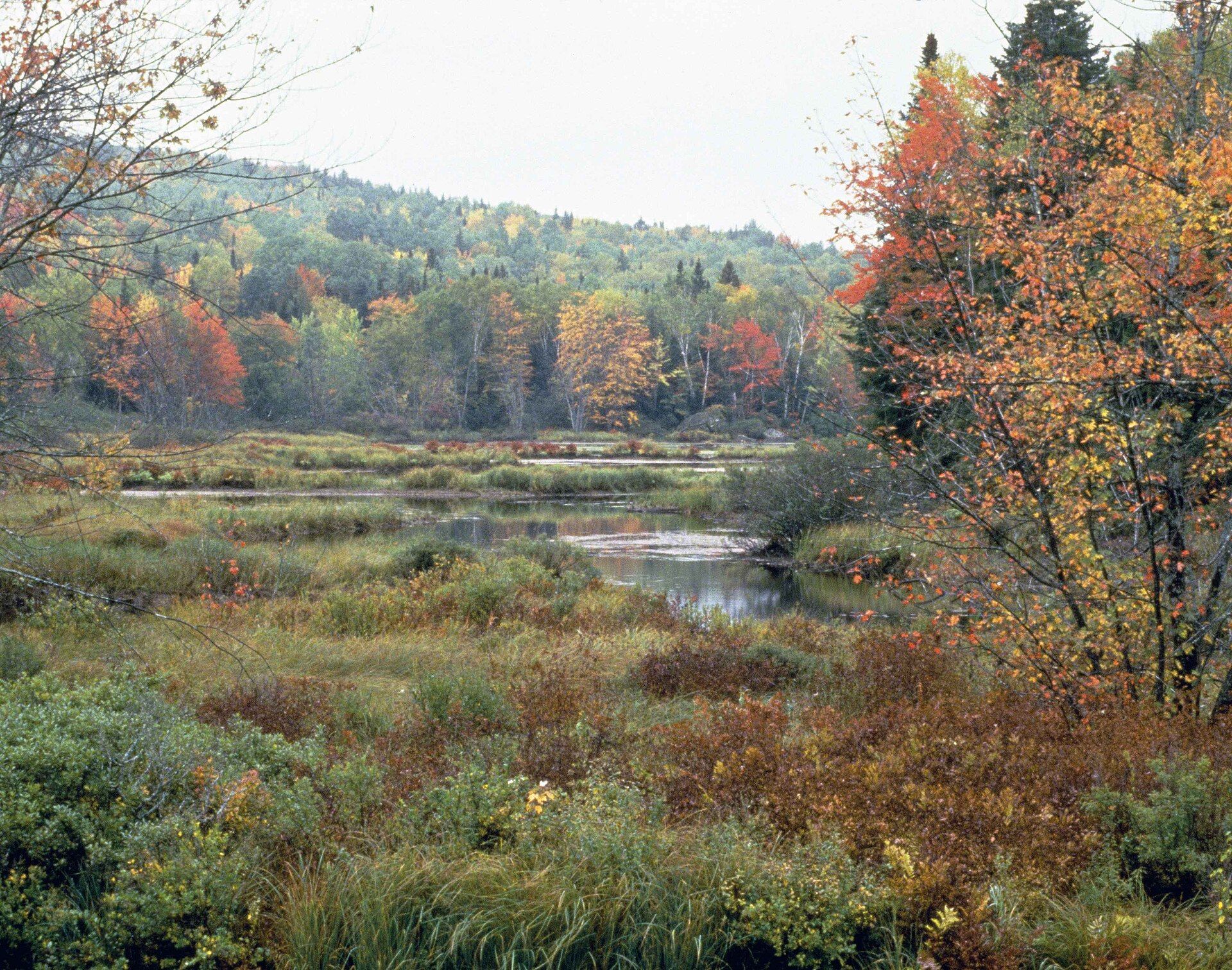
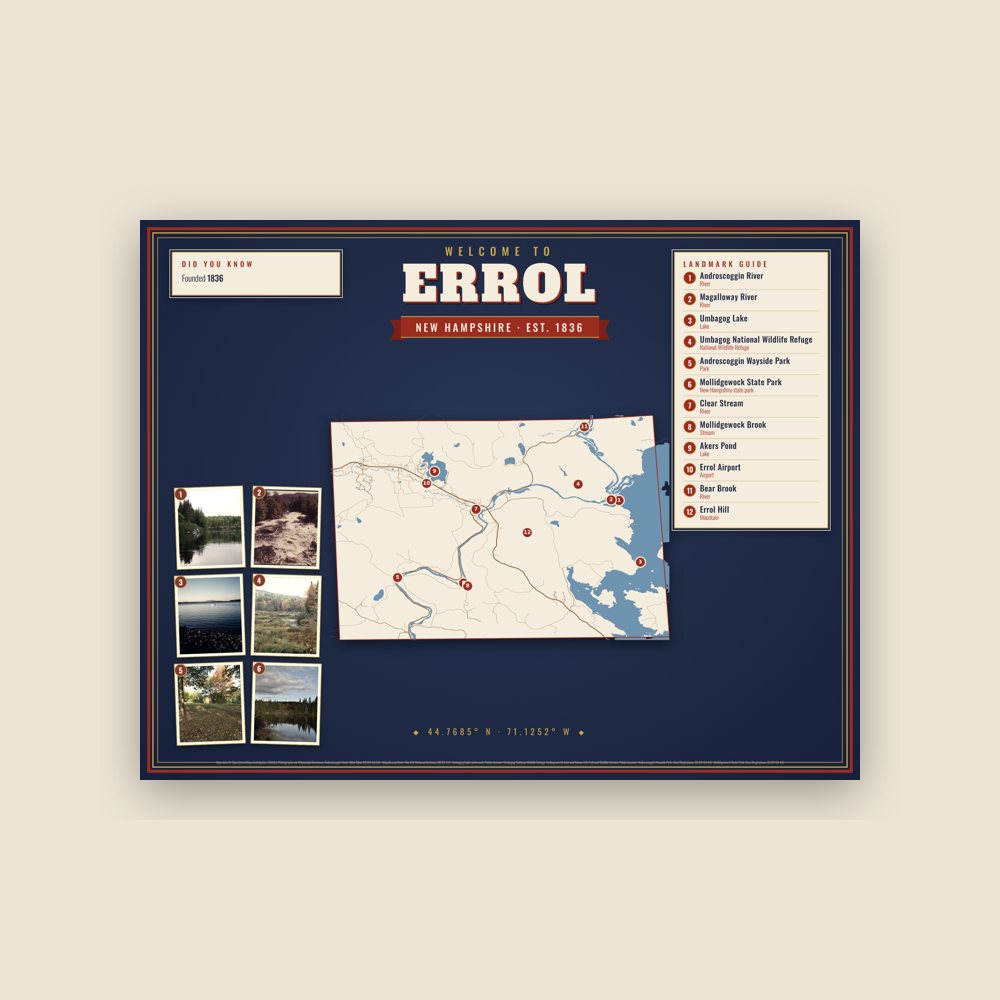
Errol was granted by Governor John Wentworth to Timothy Ruggles and others in 1774, the name taken from Scotland's James Hay, 15th Earl of Erroll. Landmarks include Umbagog National Wildlife Refuge, Androscoggin Wayside Park and Mollidgewock State Park.
Every piece is drawn from Errol's own map data and historic archives, then printed and shipped from the USA when you order. No two towns look alike.
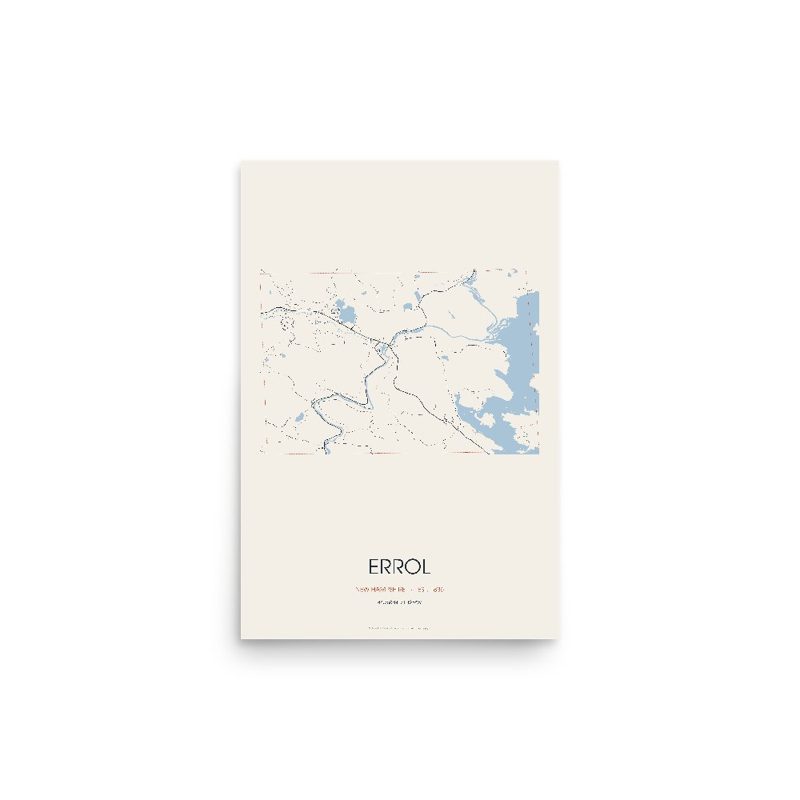
Every road in town, on archival matte paper
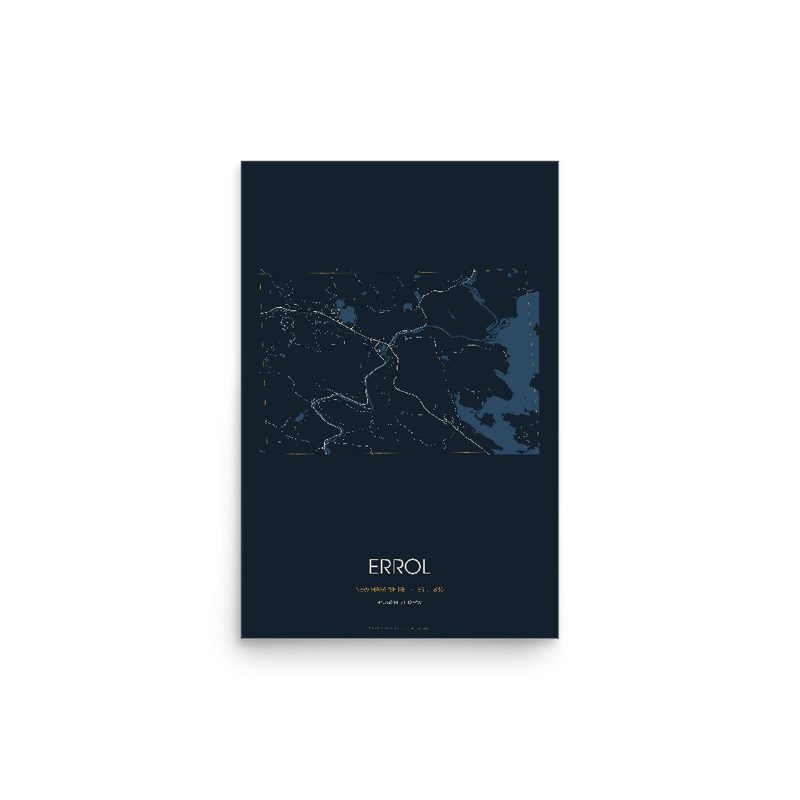
The same map, in navy and silver
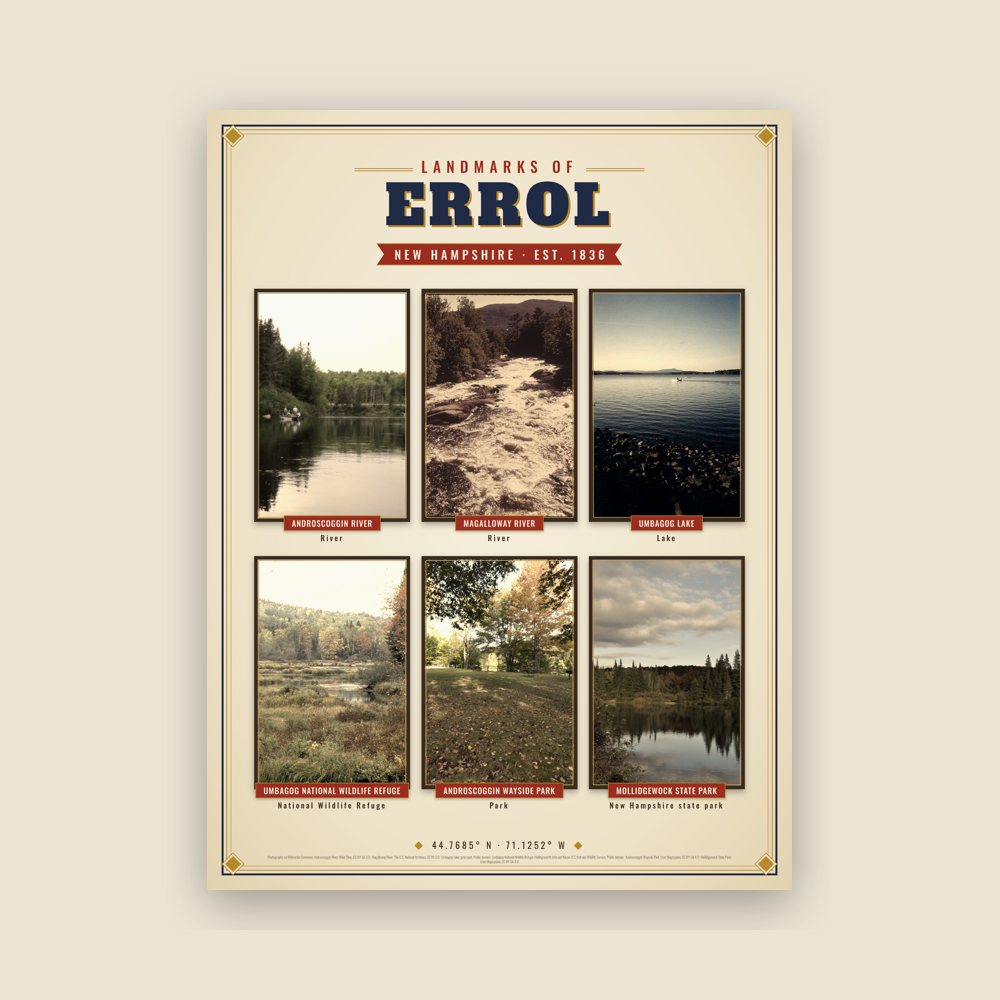
Nine local landmarks, archival matte
Map of local landmarks, washable fabric
Heavy-blend fleece, street map printed on the back
Soft Bella+Canvas jersey
Glossy ceramic, dishwasher safe
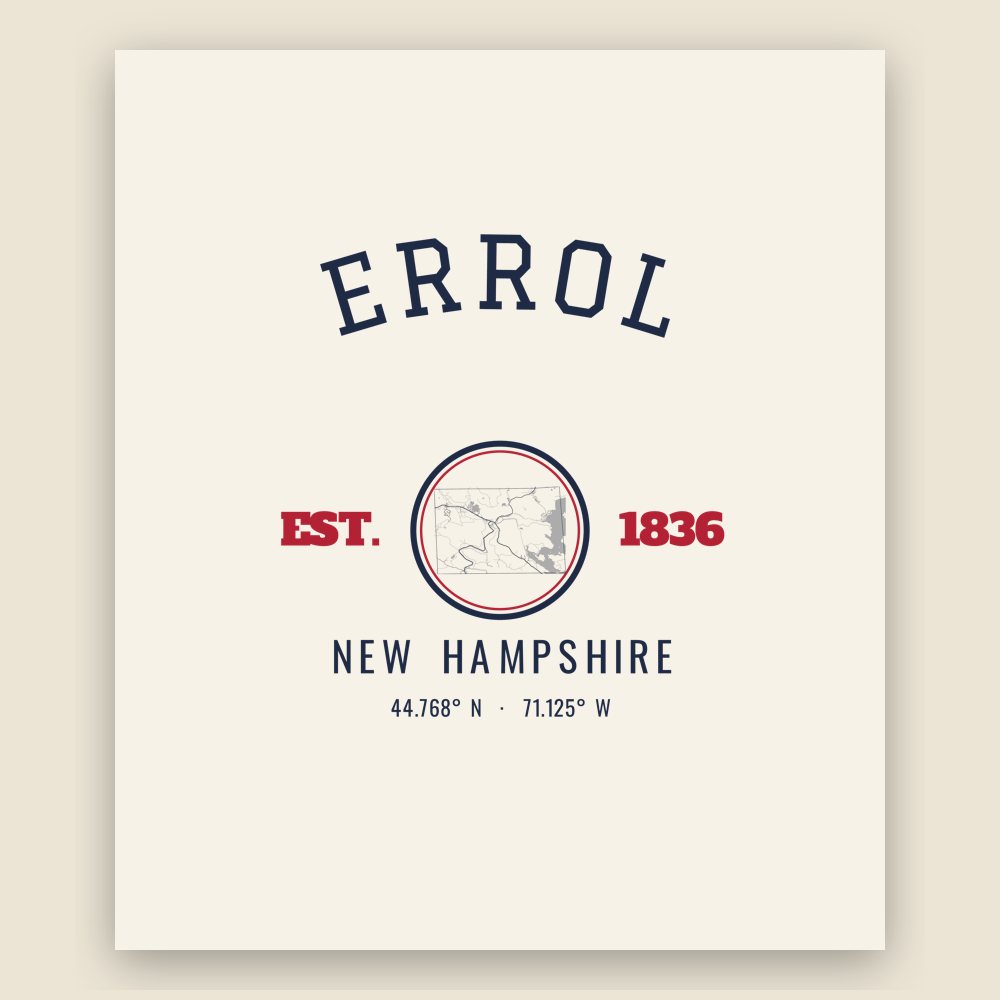
Ceramic keepsake, gold ribbon
Weatherproof, for the front walk
24″×16″, printed coir-look fibers, rubber back
12″×12″ printed wood, ready to hang
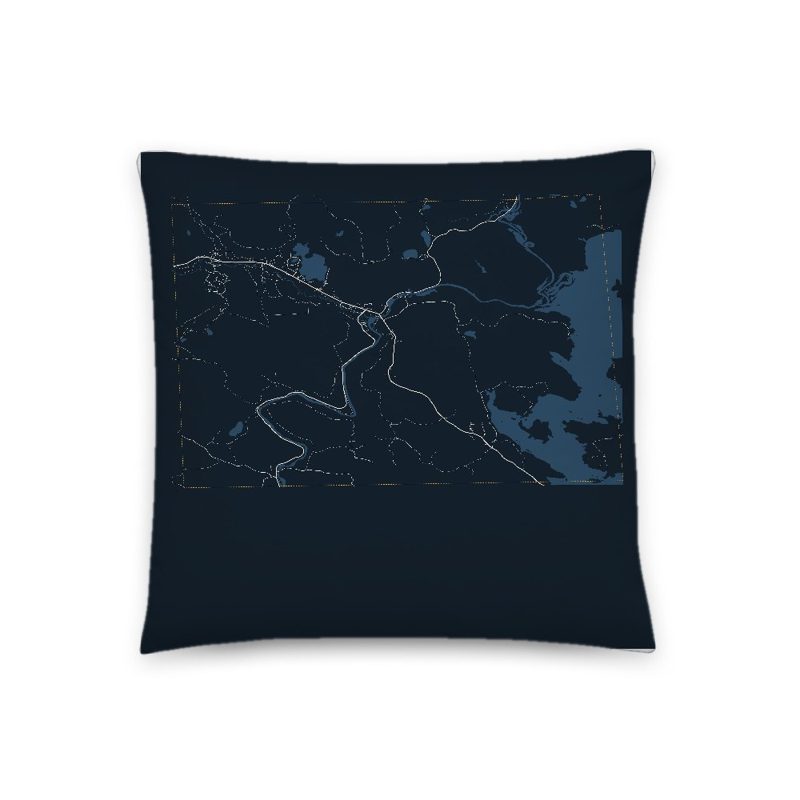
Soft-touch, zip cover
Sturdy all-over-print tote
Glossy top, cork back
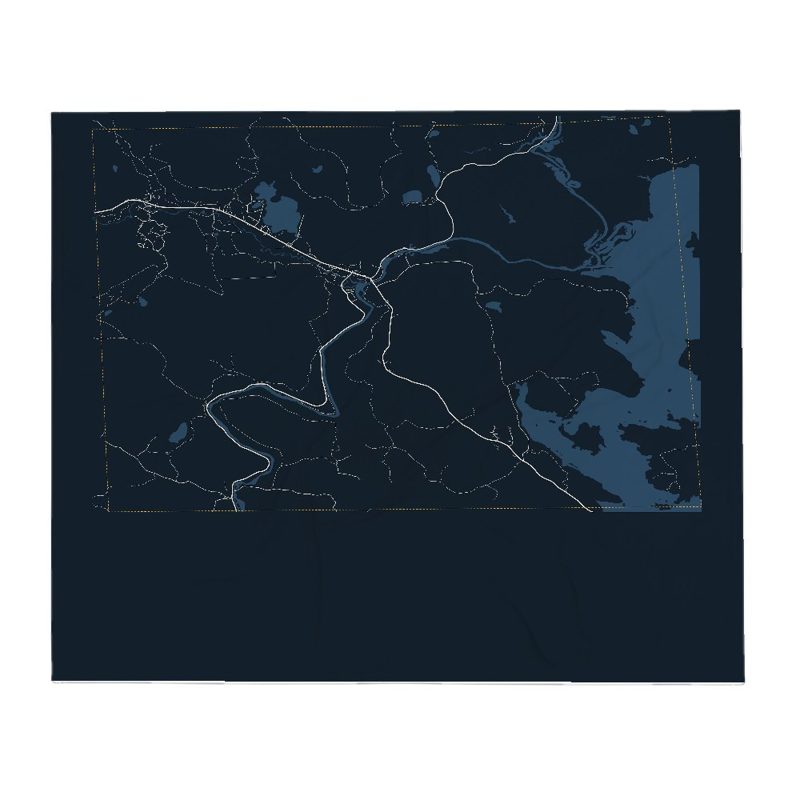
Soft fleece, 50″×60″
20 oz, double-wall stainless
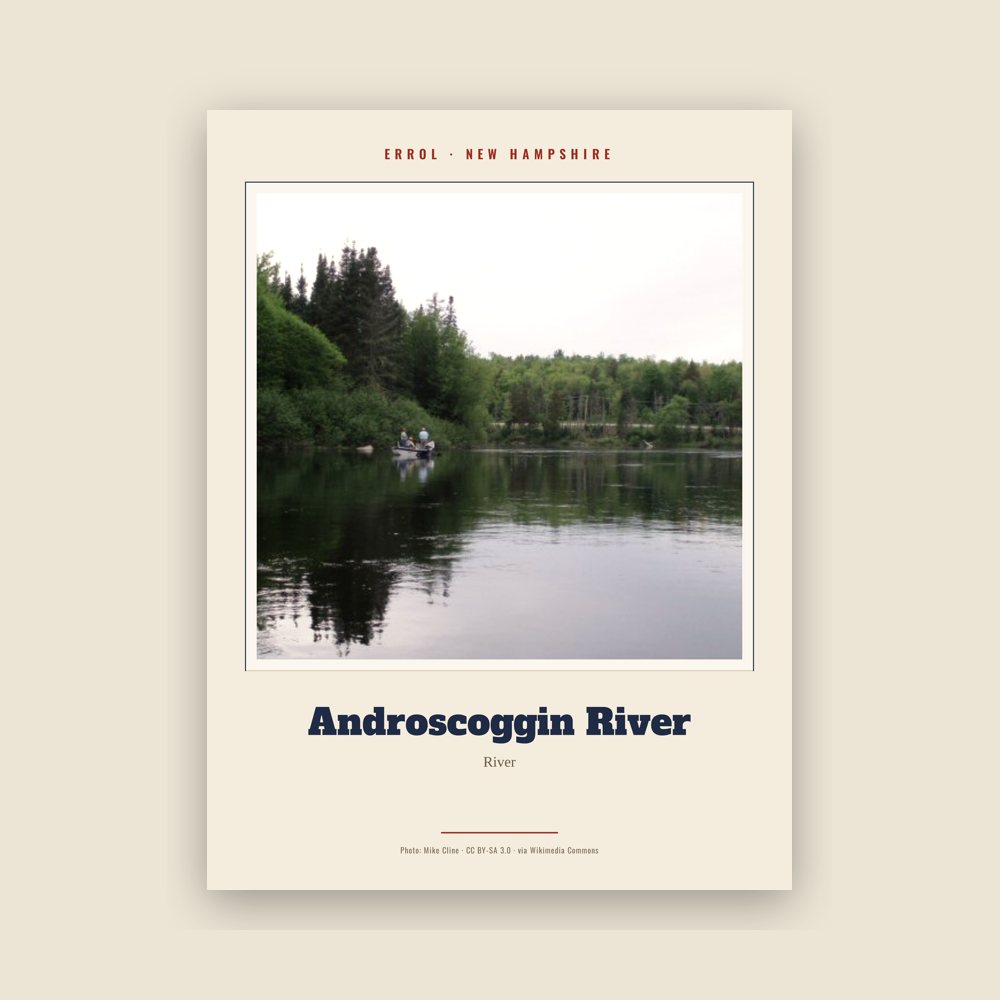
Archival matte print of a local landmark, credited to its photographer
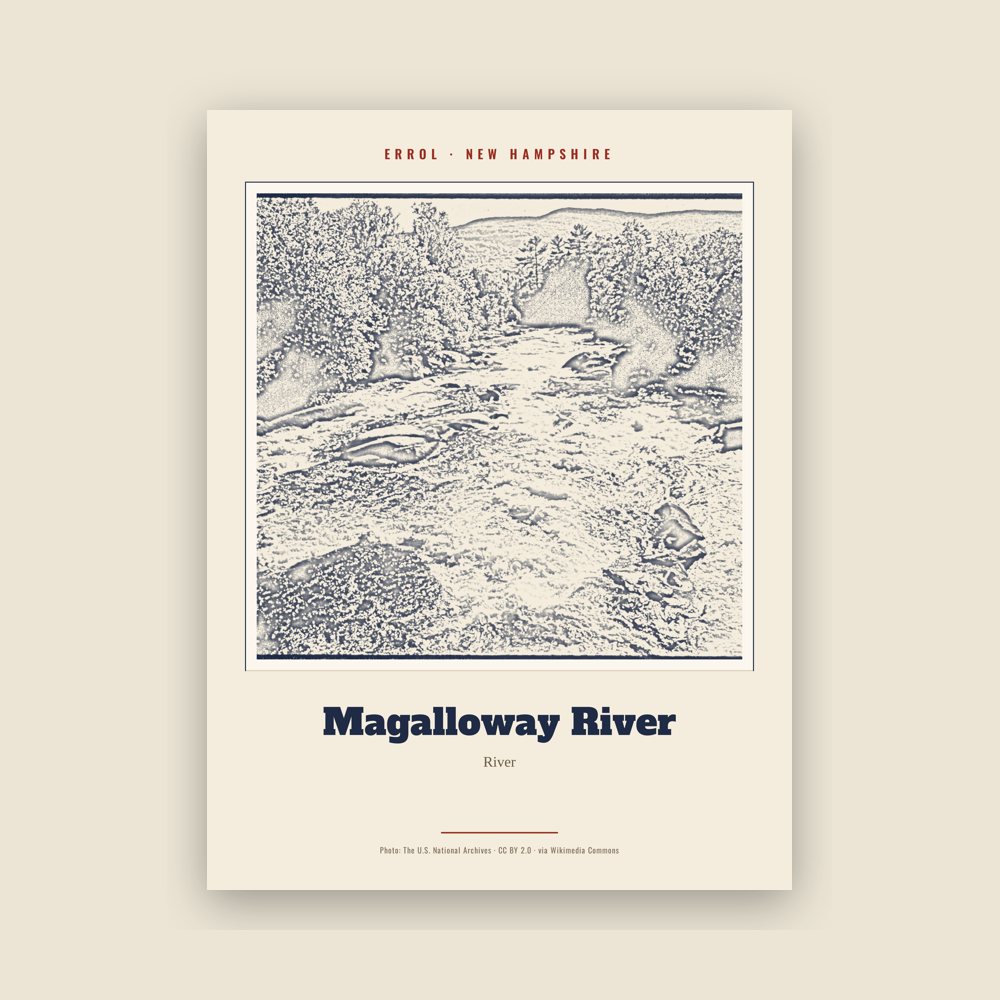
Archival matte print of a local landmark, credited to its photographer
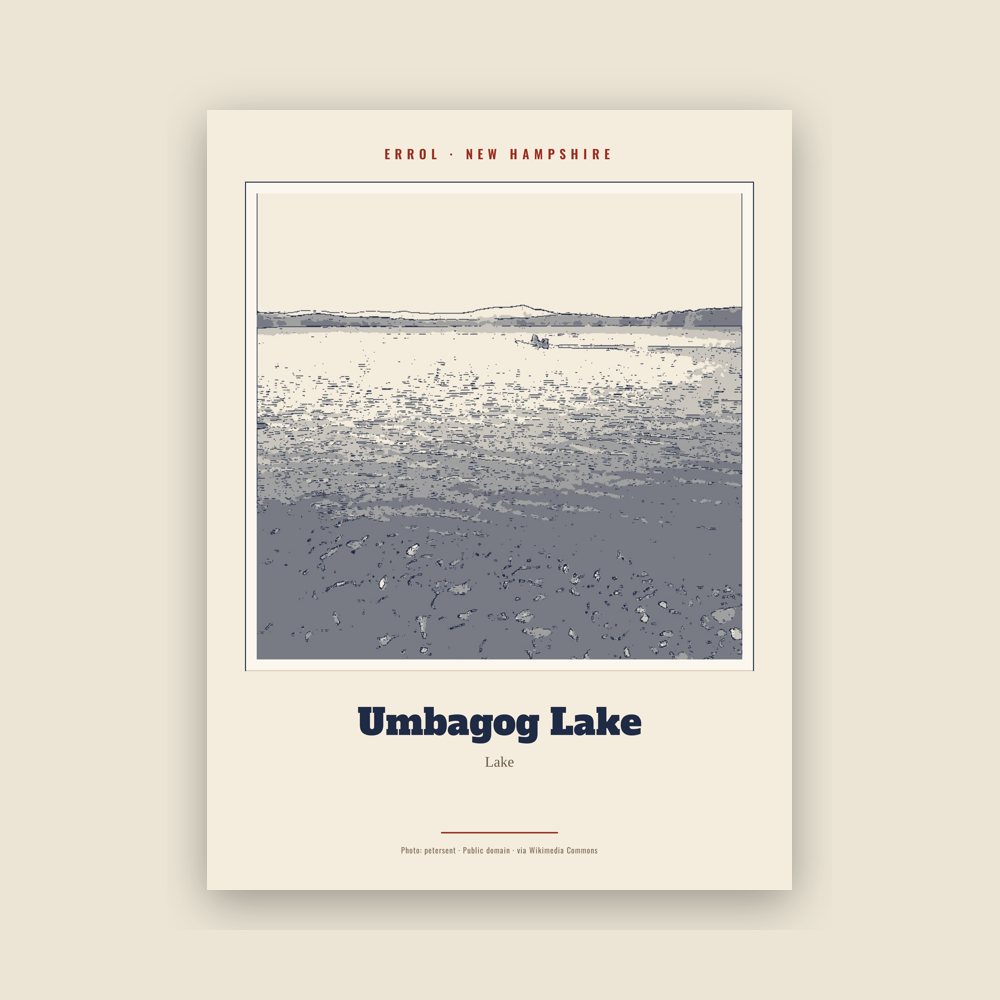
Archival matte print of a local landmark, credited to its photographer
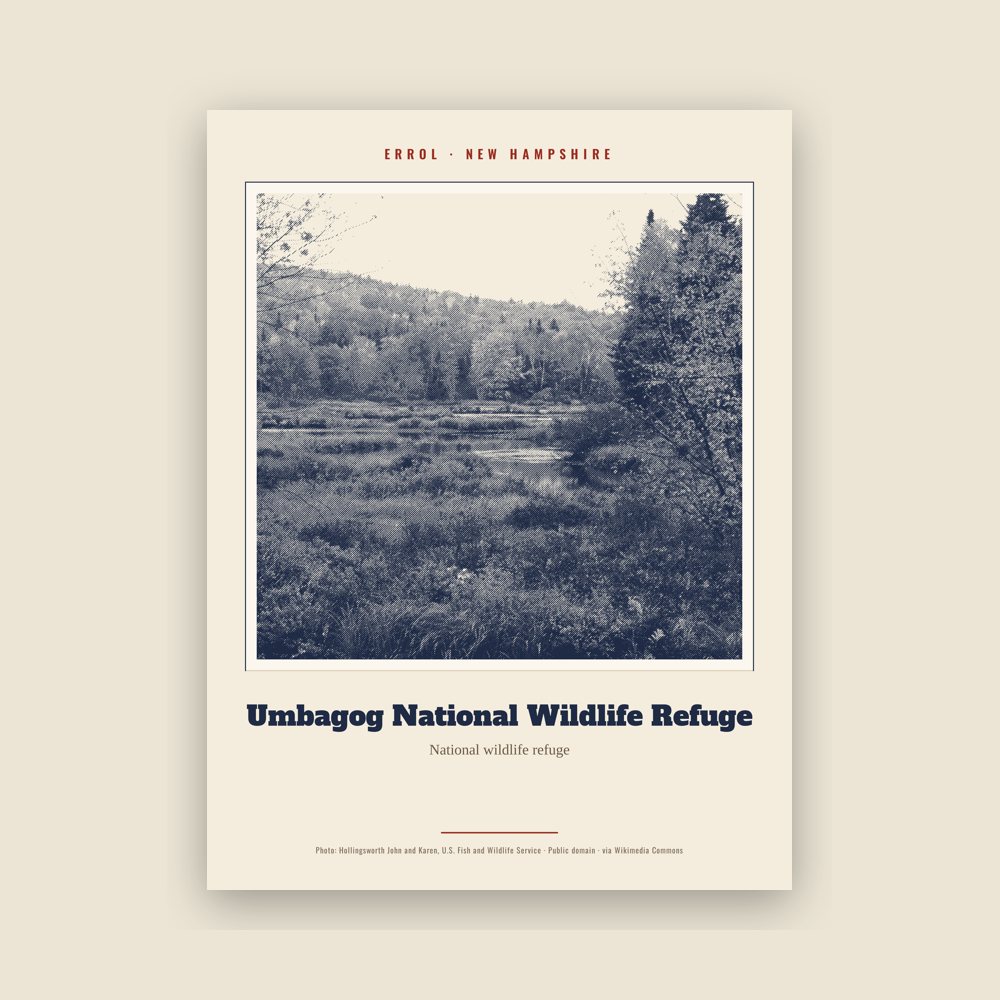
Archival matte print of a local landmark, credited to its photographer
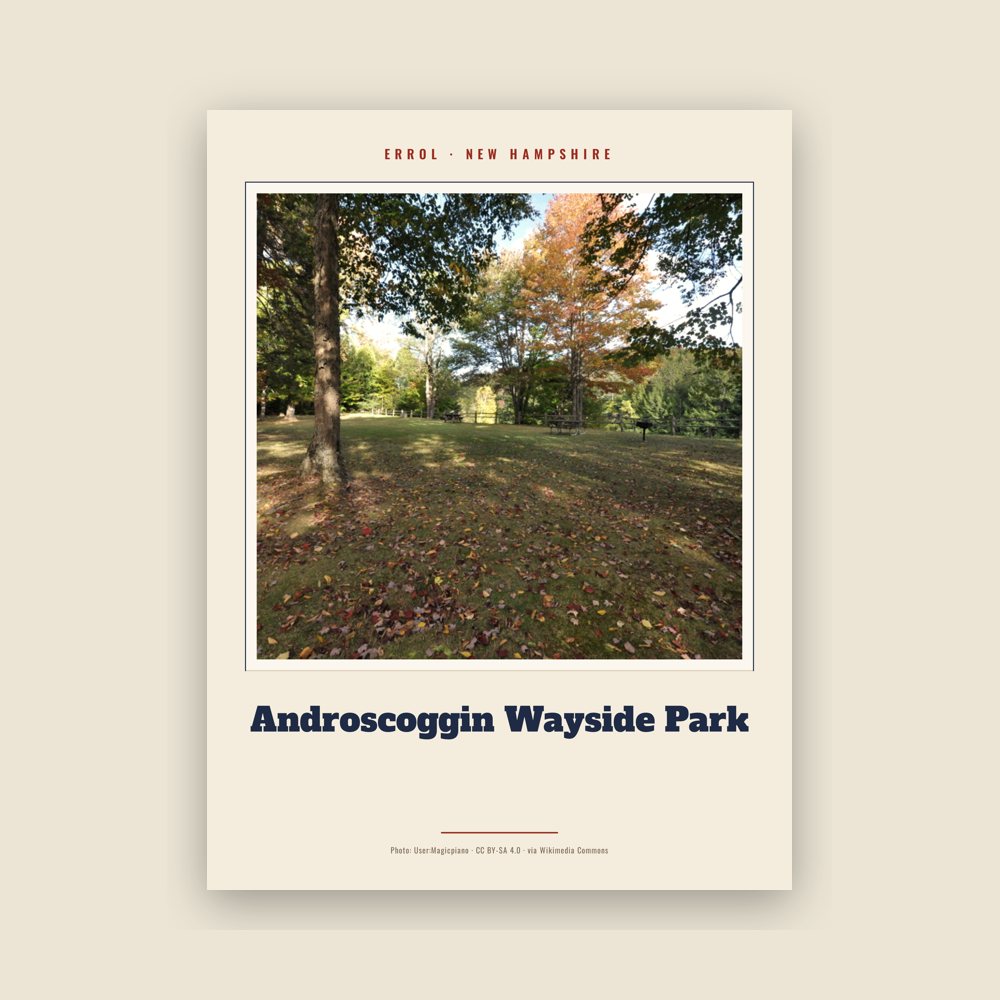
Archival matte print of a local landmark, credited to its photographer
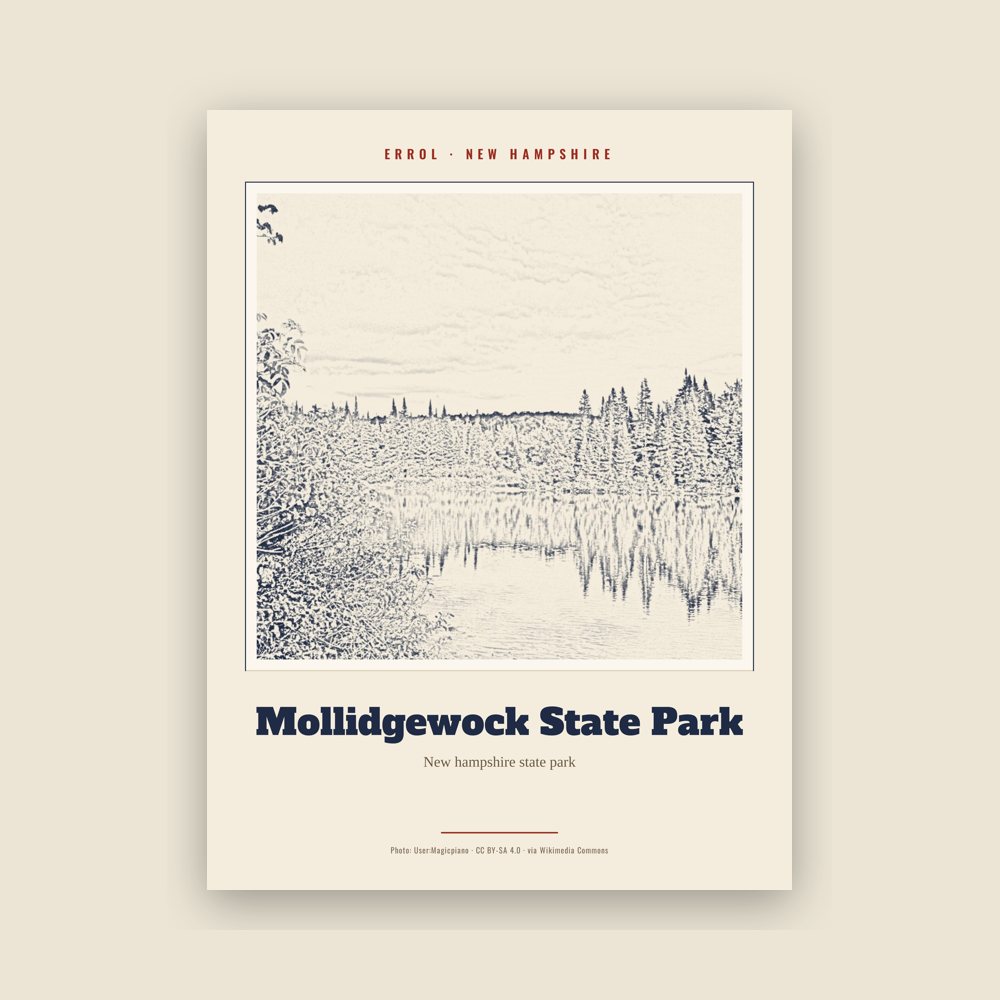
Archival matte print of a local landmark, credited to its photographer
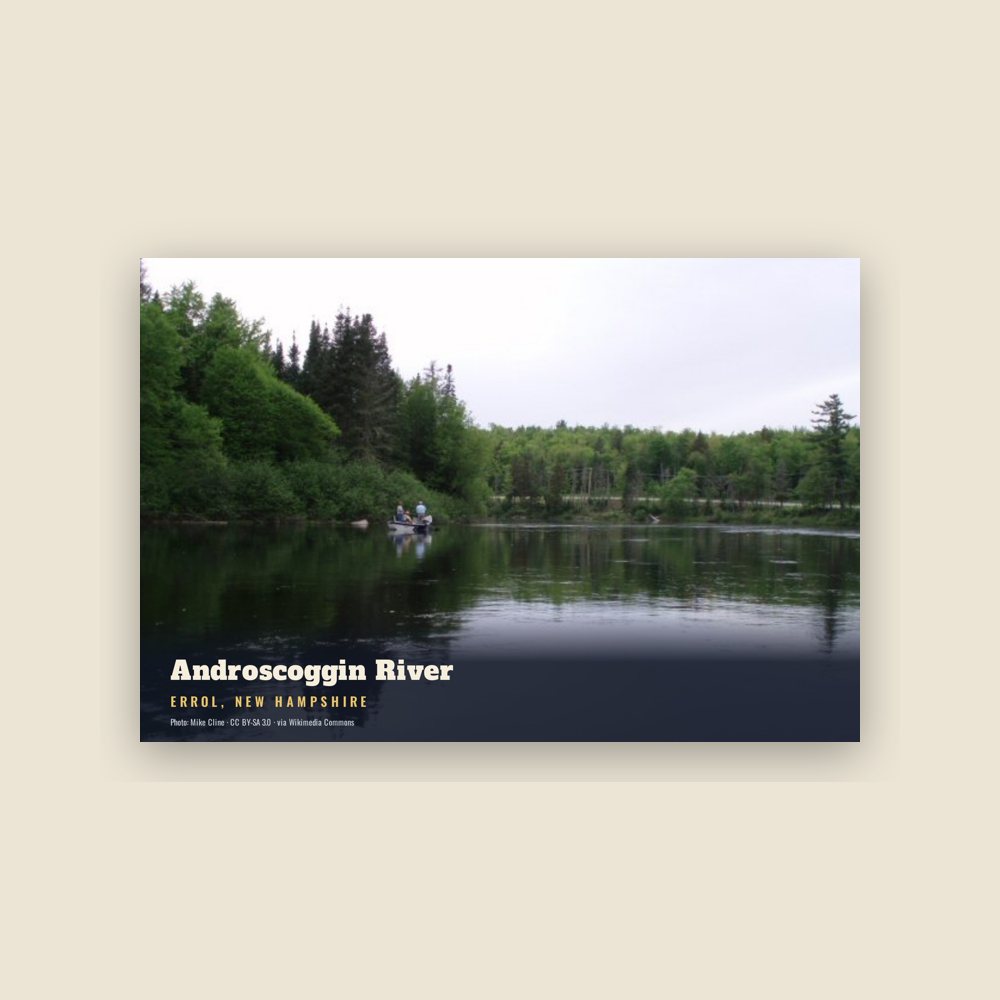
6″×4″ postcard, glossy front
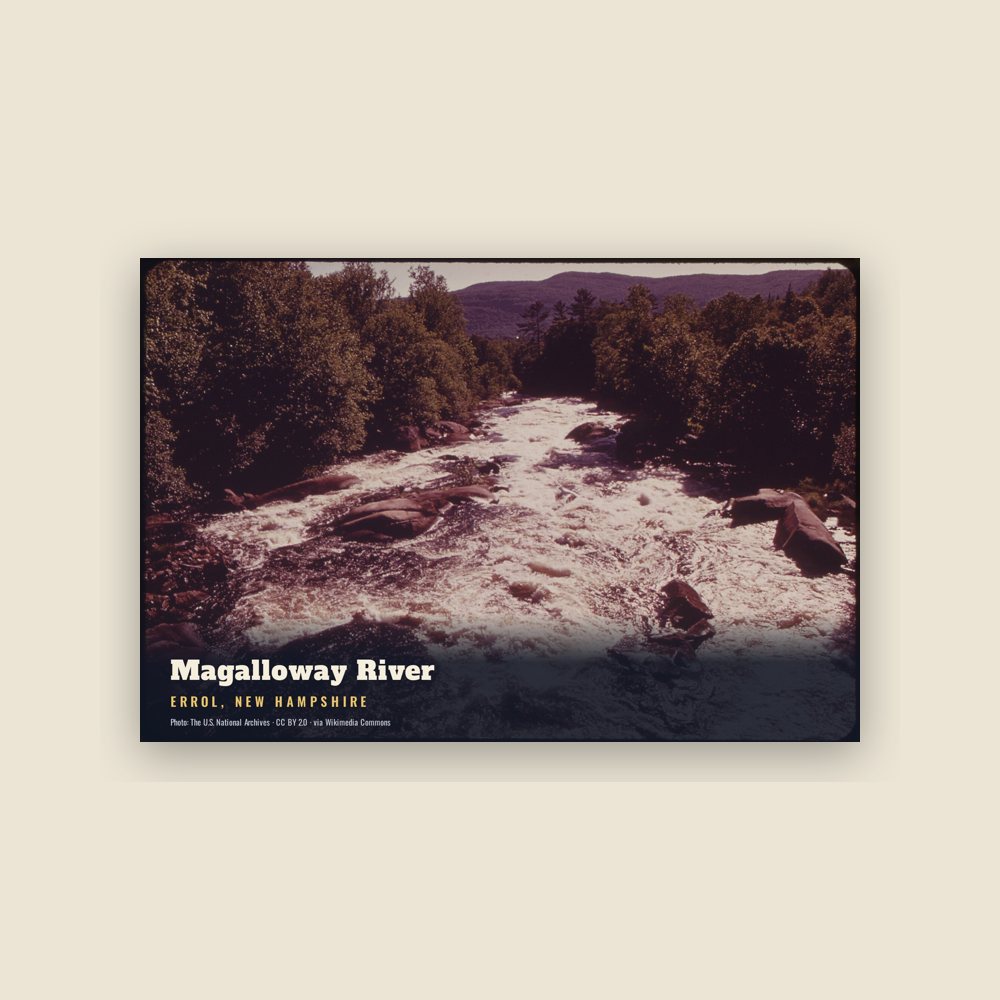
6″×4″ postcard, glossy front
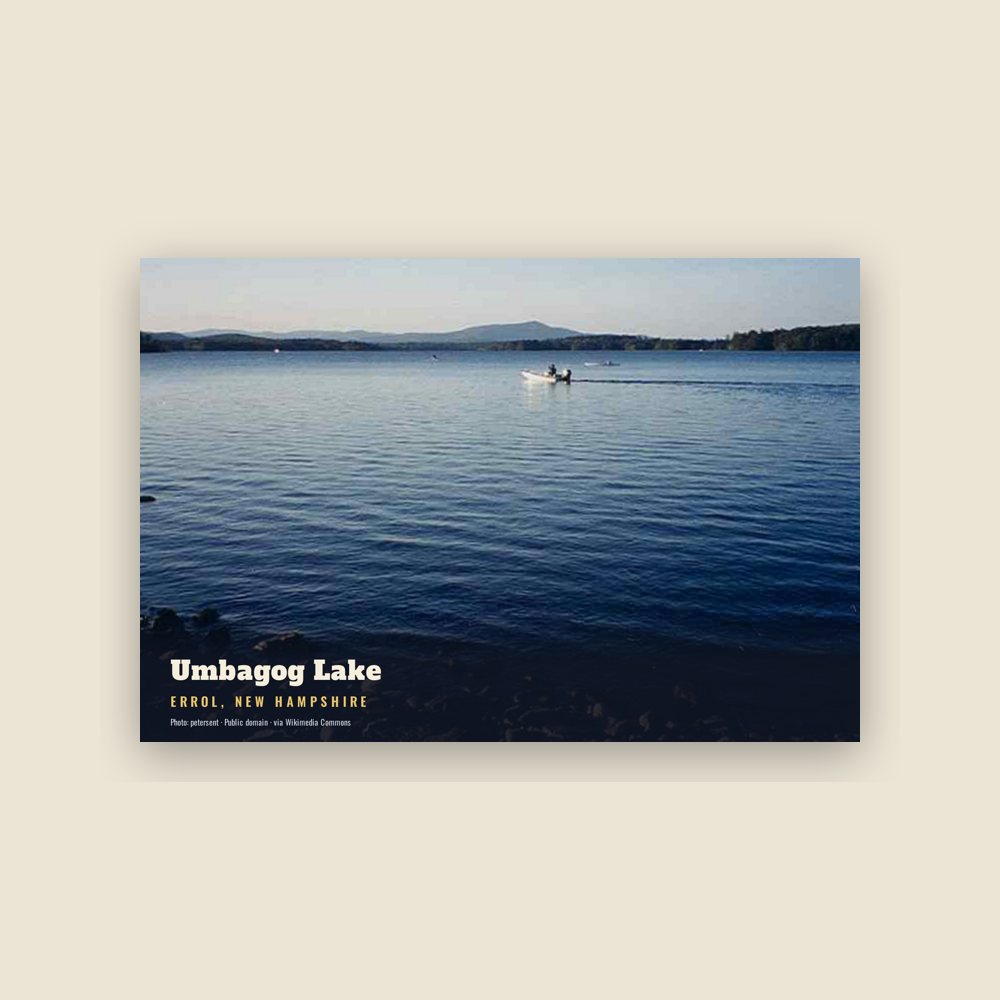
6″×4″ postcard, glossy front
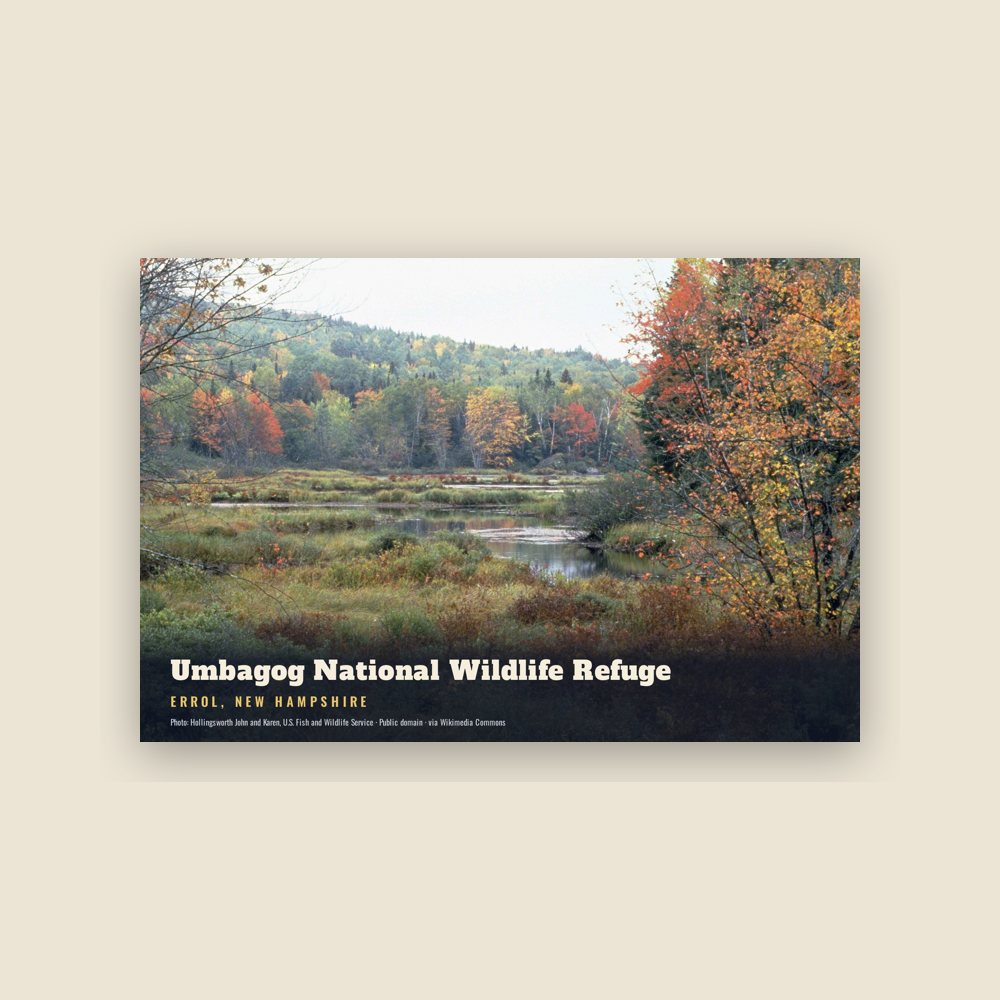
6″×4″ postcard, glossy front
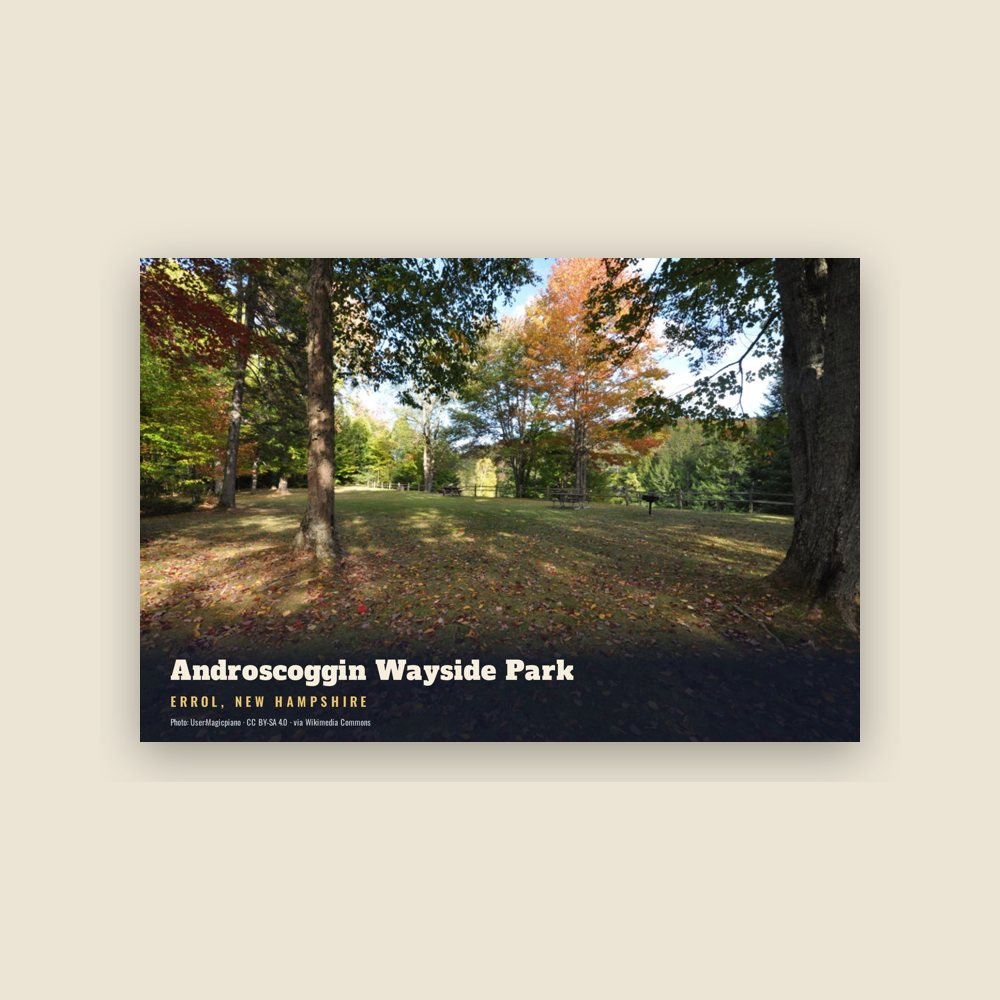
6″×4″ postcard, glossy front
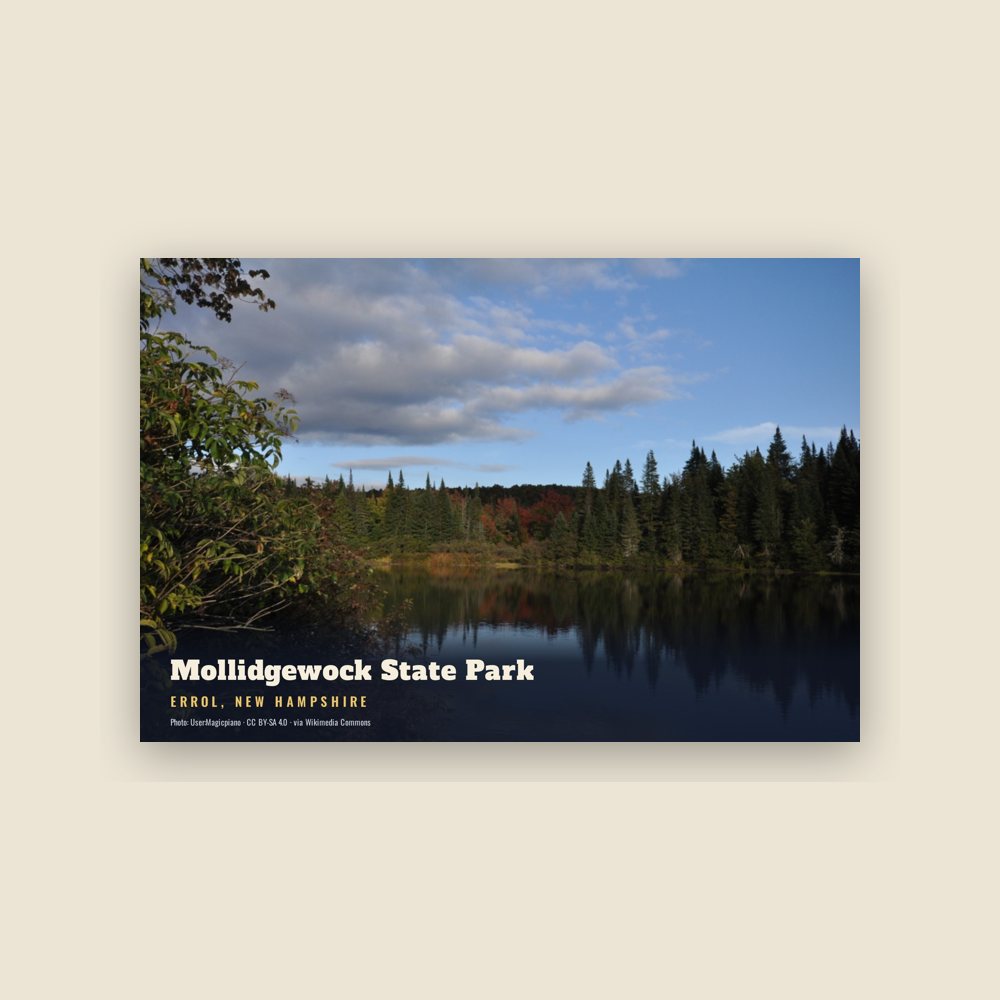
6″×4″ postcard, glossy front
Errol was granted by Governor John Wentworth to Timothy Ruggles and others in 1774, the name taken from Scotland's James Hay, 15th Earl of Erroll. In 1789, proprietors of the Errol grant petitioned the General Court that towns between Conway and Errol be required to pay for "a good connecting road". The legislature approved the measure in 1781, mandating what is today Route 16. A winter trade route to Andover, Maine was built in 1804, connecting Errol to Portland via what is now Route 26. The first settlers arrived at Errol in 1806, and by 1820 the population was 36. It was incorporated in 1836.
Although the soil was considered generally poor, it proved suitable for hay, oats and potatoes. With vast forests, the town's chief occupation was lumbering. By 1859, when the population was 130, the town had two sawmills, one gristmill and one clapboard machine.
Adapted (trimmed) from the Wikipedia article Errol, New Hampshire, revision 1377333441 by its contributors, licensed CC BY-SA 4.0.
We share a part of every Errol sale with local partners, and we'd love to print from your collection. Old photographs, maps and postcards make the best keepsakes.
Partner with us