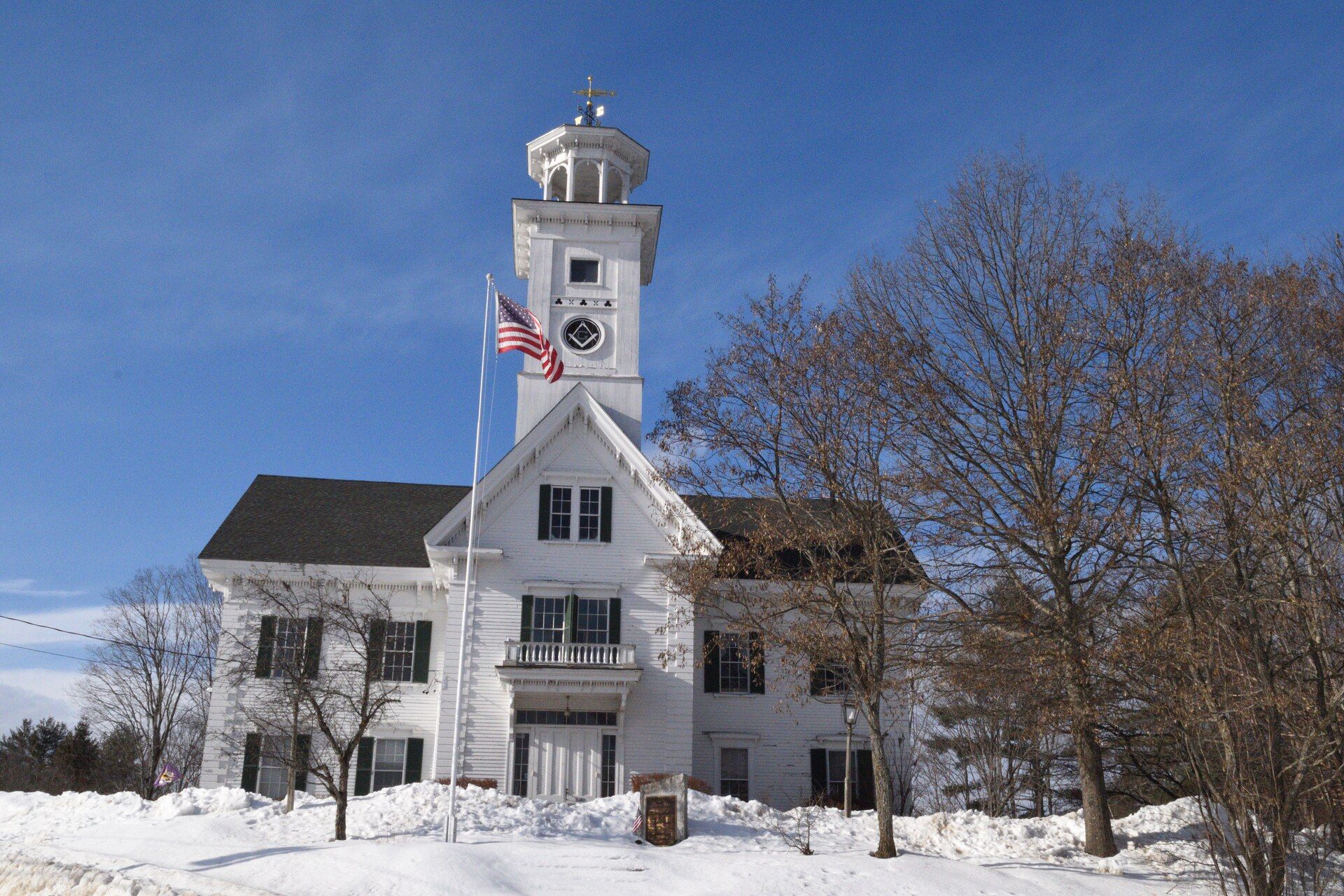
Effingham includes the villages of Effingham Falls, Effingham, Center Effingham, and South Effingham. Landmarks include New England Masonic Charitable Institute. Effingham is the birthplace of Andrew Jackson Bryant, politician and businessman.
Every piece is drawn from Effingham's own map data and historic archives, then printed and shipped from the USA when you order. No two towns look alike.
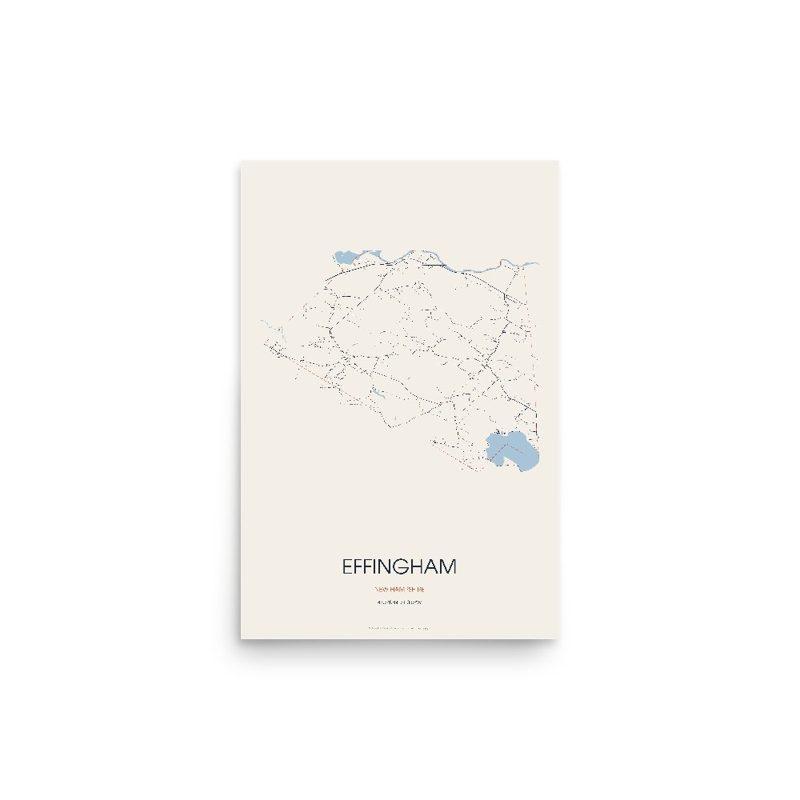
Every road in town, on archival matte paper
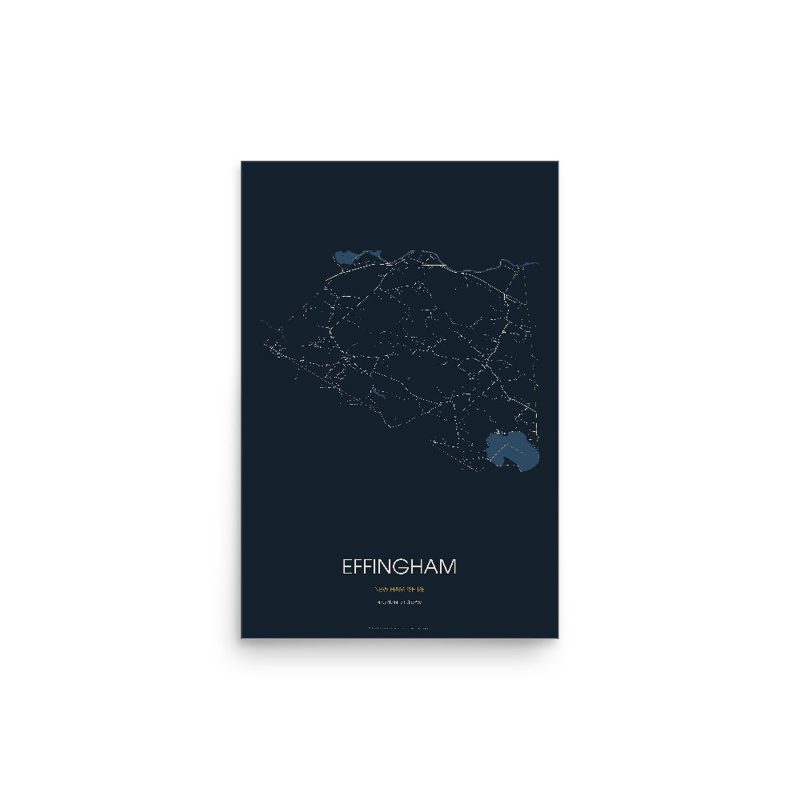
The same map, in navy and silver
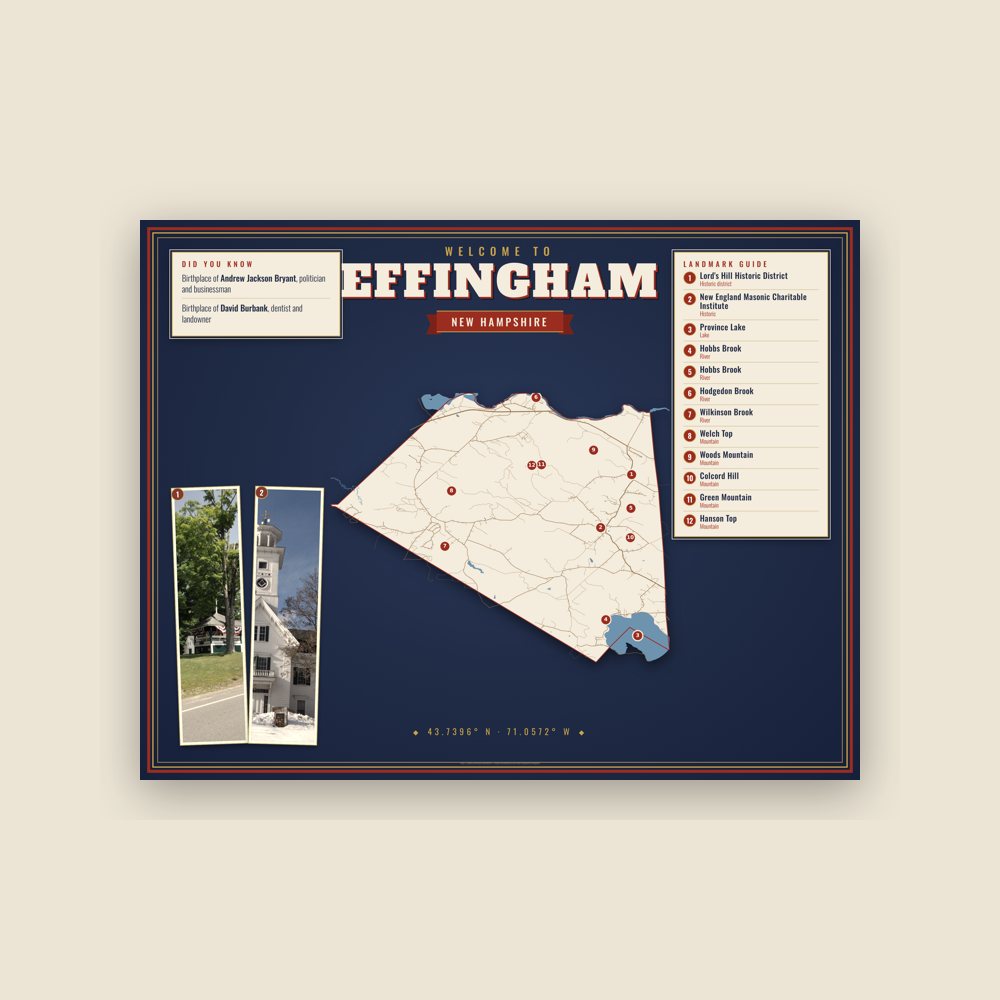
Map of local landmarks, washable fabric
Heavy-blend fleece, street map printed on the back
Soft Bella+Canvas jersey
Glossy ceramic, dishwasher safe
Ceramic keepsake, gold ribbon
Weatherproof, for the front walk
24″×16″, printed coir-look fibers, rubber back
12″×12″ printed wood, ready to hang
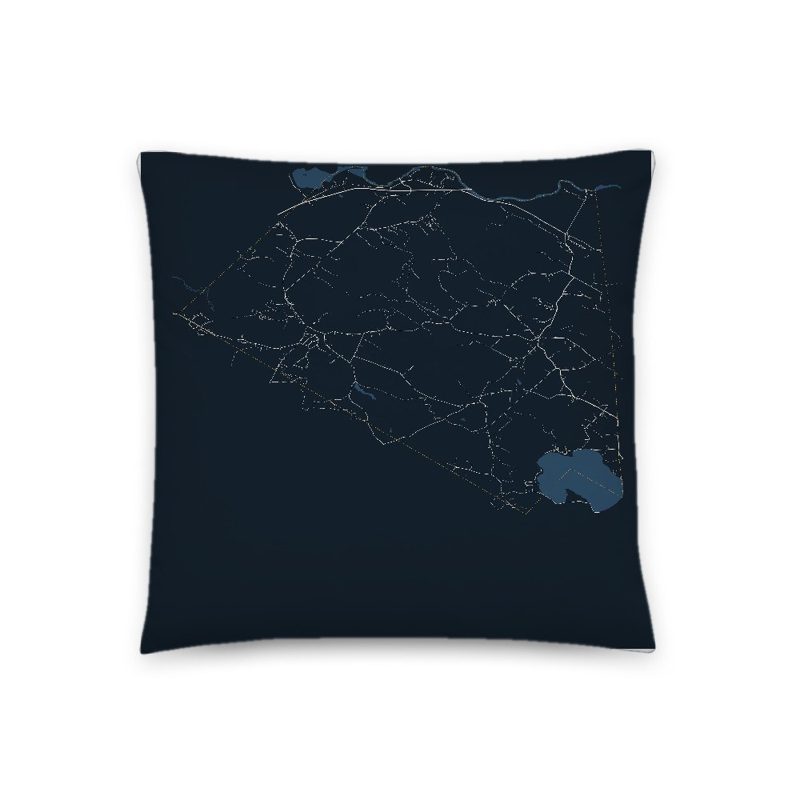
Soft-touch, zip cover
Sturdy all-over-print tote
Glossy top, cork back
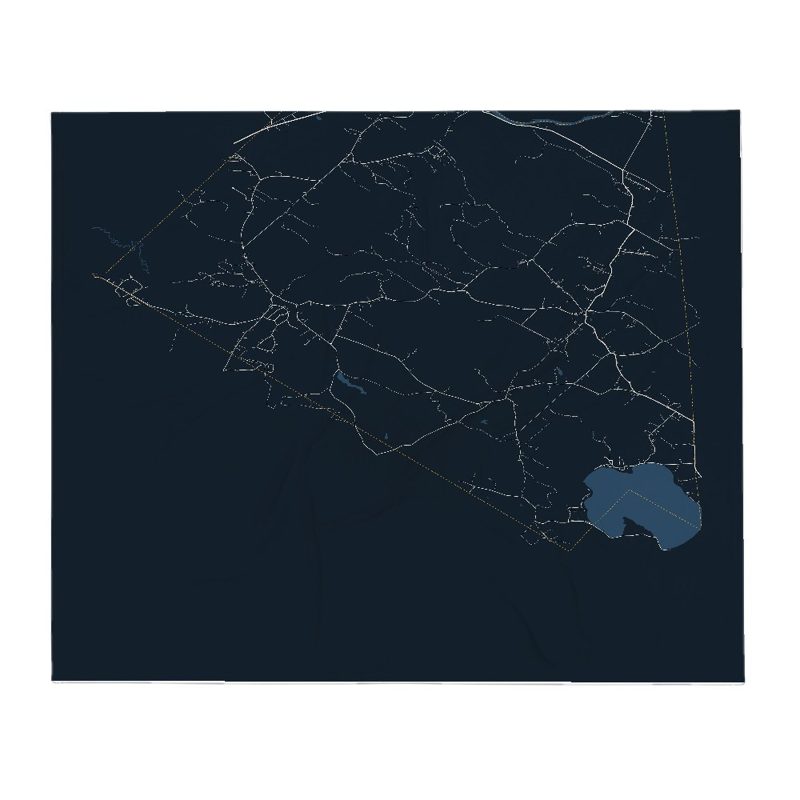
Soft fleece, 50″×60″
20 oz, double-wall stainless
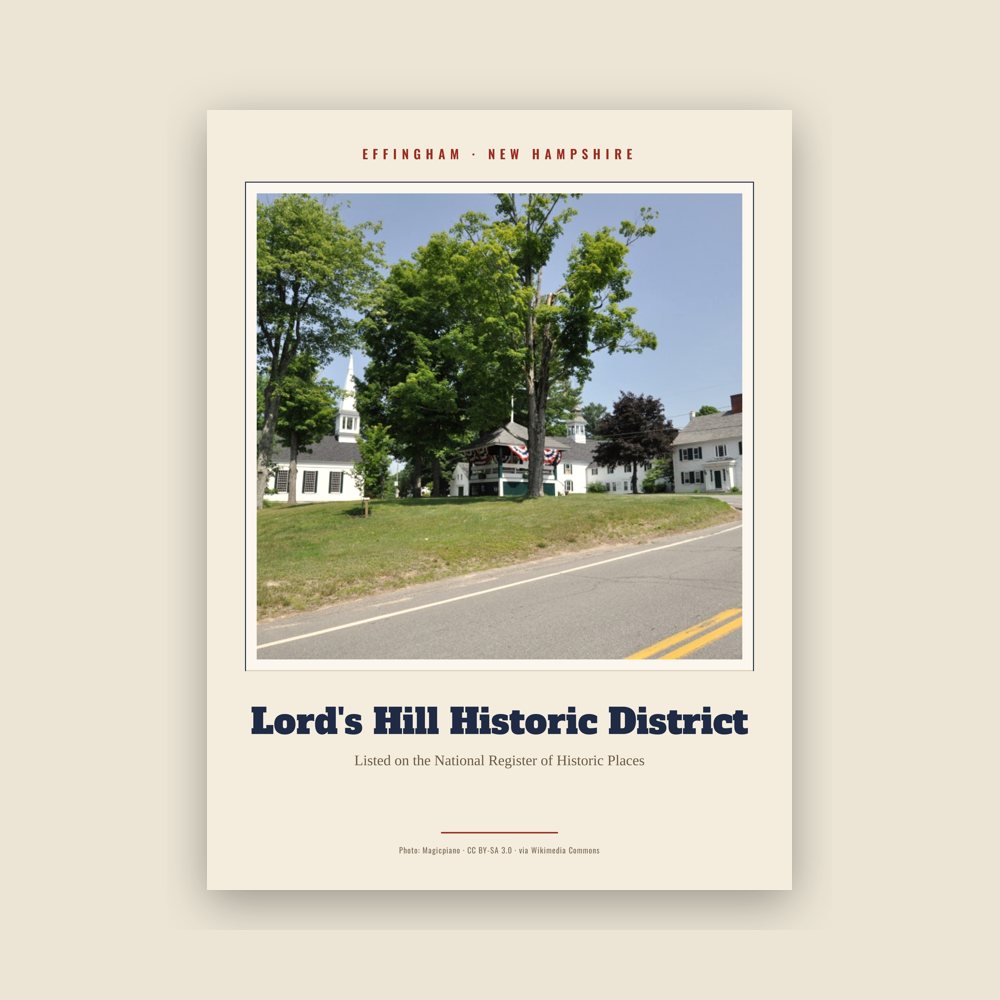
Archival matte print of a local landmark, credited to its photographer
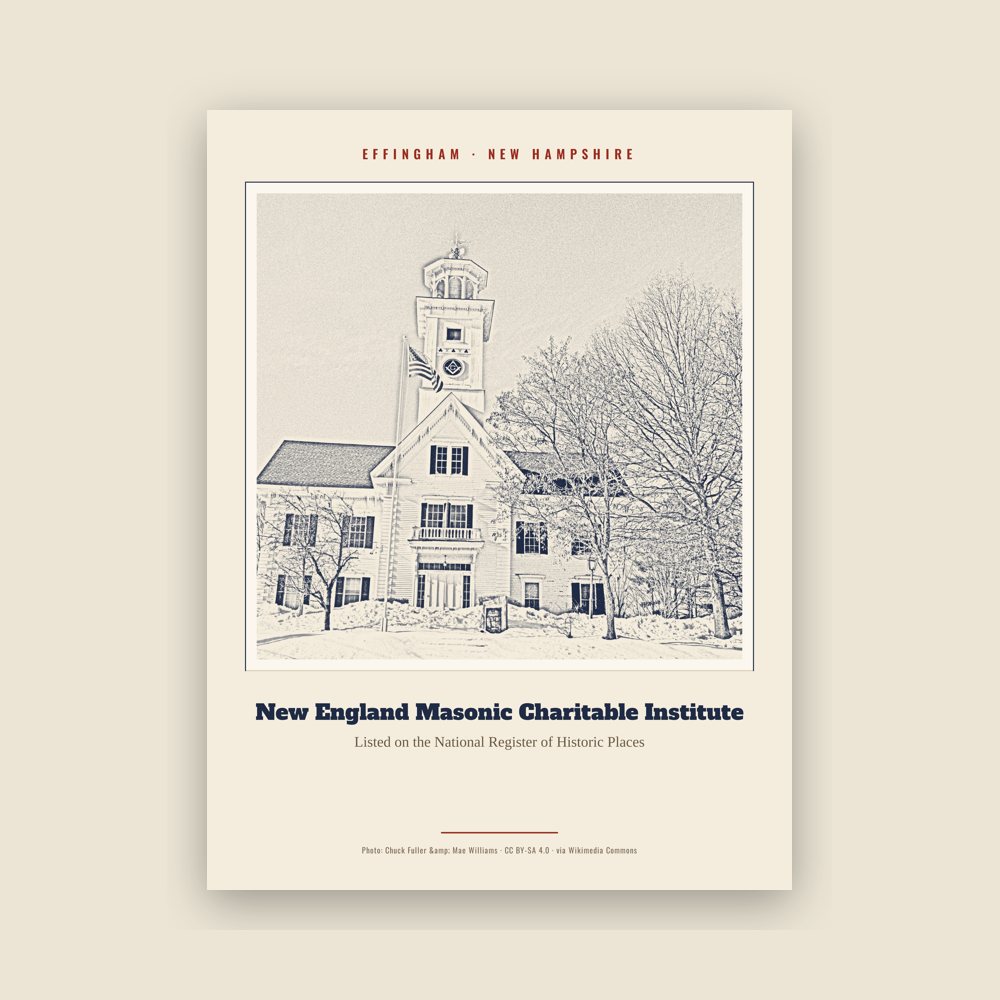
Archival matte print of a local landmark, credited to its photographer
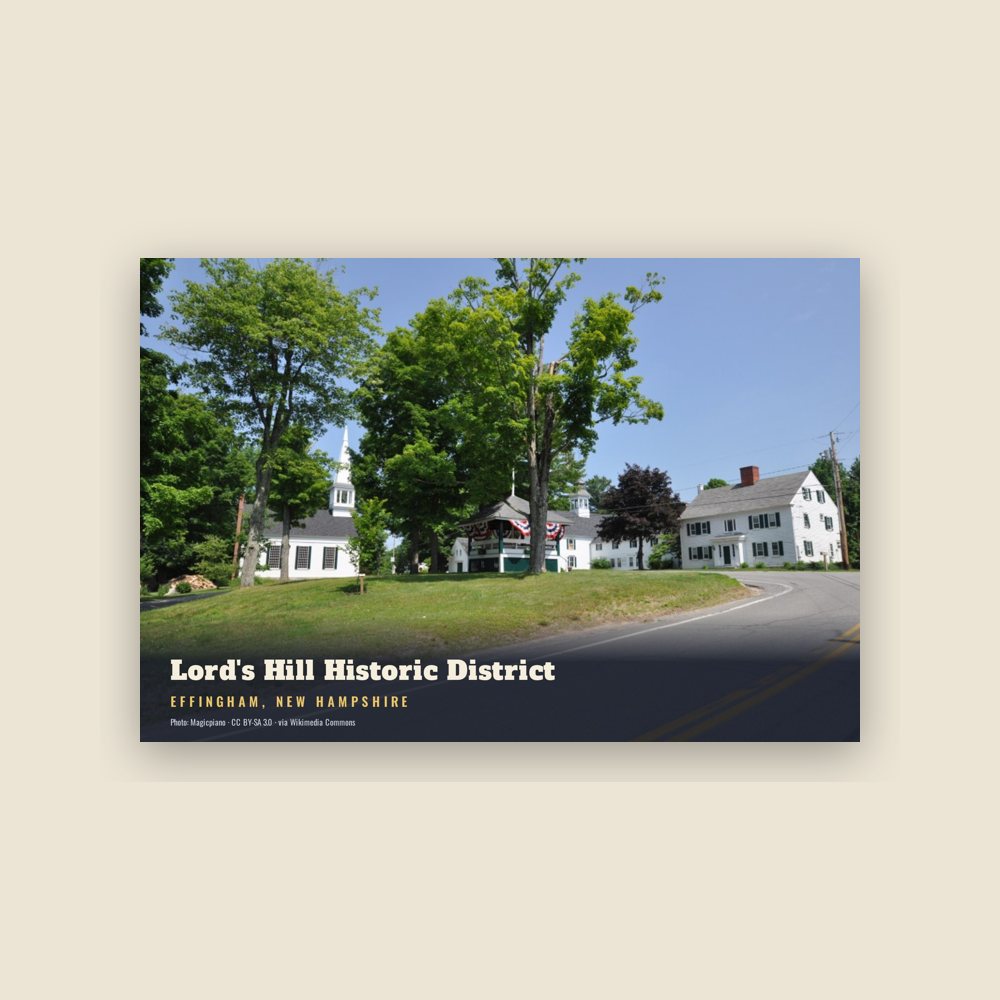
6″×4″ postcard, glossy front
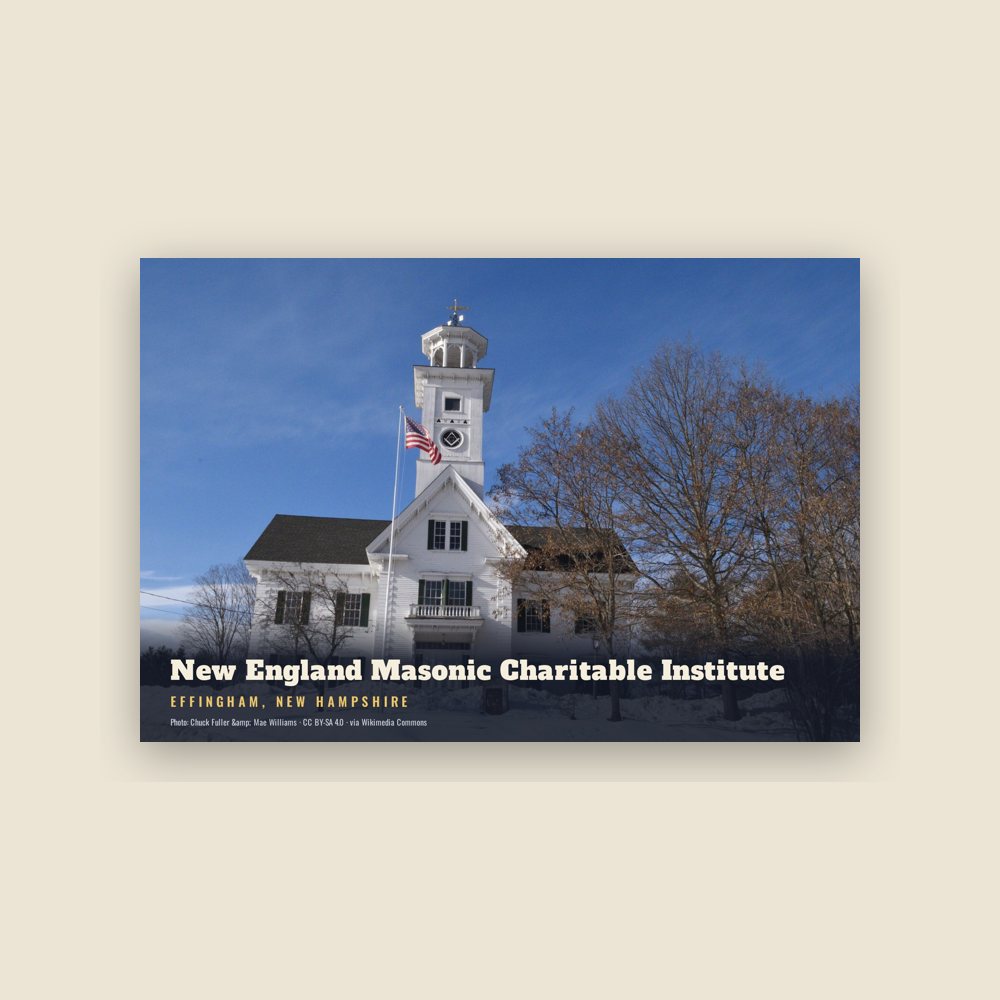
6″×4″ postcard, glossy front
Population 2010: 1,465 → 2020: 1,691
From Wikidata (CC0).
The town was settled by members of the Leavitt family of Hampton, New Hampshire, led by Captain John Leavitt, a soldier whose father, Moses, was a prosperous Hampton tavern keeper. From them the settlement first took the name "Leavitt's Town". In 1749, the land was granted by Governor Benning Wentworth, and he renamed it "Effingham" for the Howard family, who were Earls of Effingham and who were related to the Wentworths by marriage. The town was incorporated in 1778.
North Effingham was set off in 1831 and incorporated as Freedom. By 1859, when the population was 1,252, Effingham Falls had developed into a small mill town, with a woolen factory, five sawmills, three gristmills, and a carriage factory.
Per a New Hampshire historical marker, number 83: Effingham was home to the first normal school in New Hampshire, established in 1830 on the second floor of the Effingham Union Academy building, erected in 1819. James W. Bradbury, later a U.S. senator from Maine, took charge of the school only on condition that it should be for the "instruction and training of teachers". The idea was his own and, at that time, entirely novel.
Adapted (trimmed) from the Wikipedia article Effingham, New Hampshire, revision 1378775200 by its contributors, licensed CC BY-SA 4.0.
We share a part of every Effingham sale with local partners, and we'd love to print from your collection. Old photographs, maps and postcards make the best keepsakes.
Partner with us