Houghton County, Michigan
Street maps, historic prints and keepsakes for 7 Houghton County towns.
The oldest is Houghton, established 1861. The largest by population is Houghton (8,386).
| Town | Established | Population |
|---|---|---|
| Calumet | – | 621 |
| Copper City | – | 187 |
| Hancock | 1863 | 4,501 |
| Houghton | 1861 | 8,386 |
| Lake Linden | – | 1,014 |
| Laurium | 1889 | 1,864 |
| South Range | – | 750 |
About these towns
Calumet: What is now Calumet was settled in 1864, originally under the name of Red Jacket, for a Native American Chief of the Seneca tribe.
Copper City: The village is within Calumet Township. With an area of 0.08 square miles (0.21 km2), it is the second-smallest incorporated municipality by area in the state of Michigan after the nearby village of Ahmeek.
Hancock: Hancock is located within Ojibwa (Chippewa) homelands and ceded-territory established by the Treaty of 1842. The founding of the settlement of Hancock began during the summers of 1847 and 1848, when a small group of prospectors laboring on a rugged hillside (later named Quincy Hill) discovered a sequence of prehistoric Ojibwe copper mining pits, stretching out for 100 feet along…
Houghton: Native Americans mined copper in and around what would later be Houghton thousands of years before European settlement. "French explorers had noted... [its] existence [in the area] as early as the seventeenth century, [and in] 1772 Alexander Henry had prospected for copper on the Ontonagon River near Victoria." Houghton is the largest city in and the county seat of Houghton…
Lake Linden: The village is mostly within Schoolcraft Township, though a tiny portion lies in Torch Lake Township.
Laurium: Until 1895, Laurium was known as "Calumet" (not to be confused with the present nearby town of Calumet, Michigan, which was known as "Red Jacket" until it adopted the name Calumet in 1929).
South Range: South Range was platted in 1902 by the Wheal Kate Mining Company, which operated an unsuccessful copper mine nearby. In 1906 the community tried to incorporate as the town of Stanton, but there was already a Stanton, Michigan, so they incorporated as South Range, because it was at the south end of the Michigan copper range.
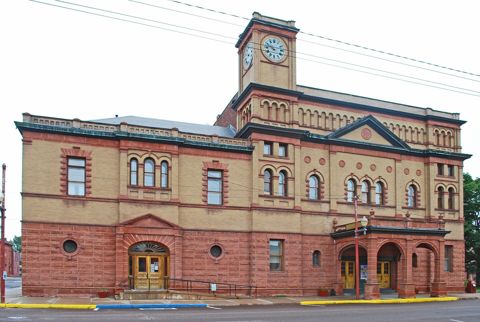 CalumetMichigan
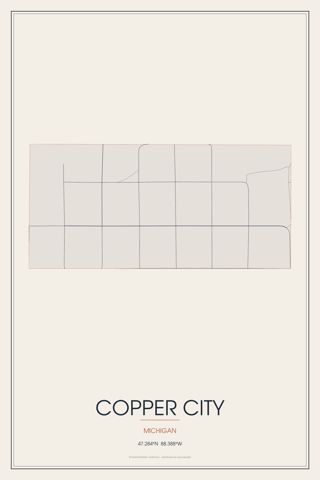 Copper CityMichigan
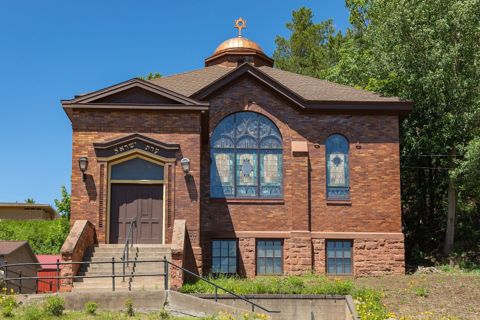 HancockMichigan · Est. 1863
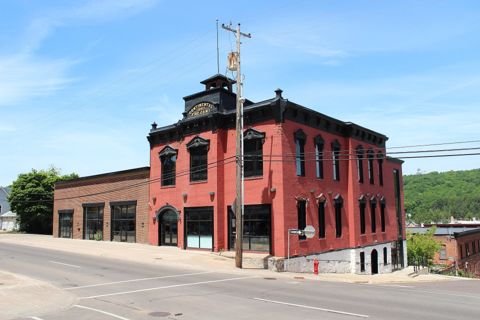 HoughtonMichigan · Est. 1861
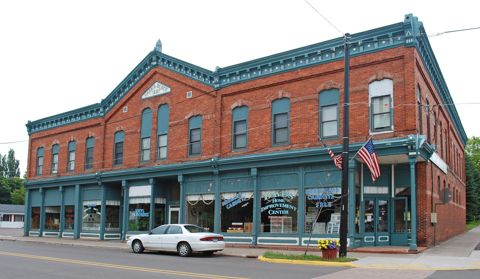 Lake LindenMichigan
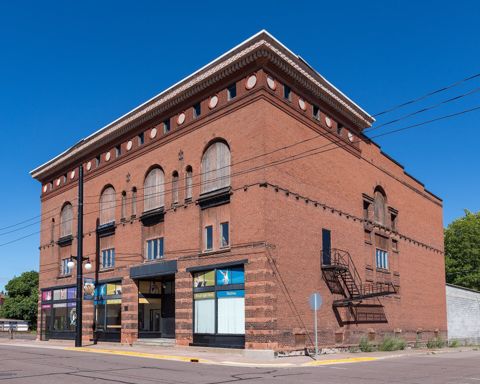 LauriumMichigan · Est. 1889
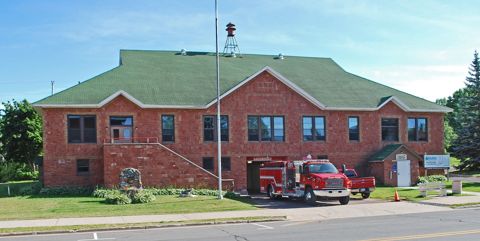 South RangeMichigan
Founding years, populations and town notes come from each town's Wikipedia and Wikidata entries. All Michigan towns.