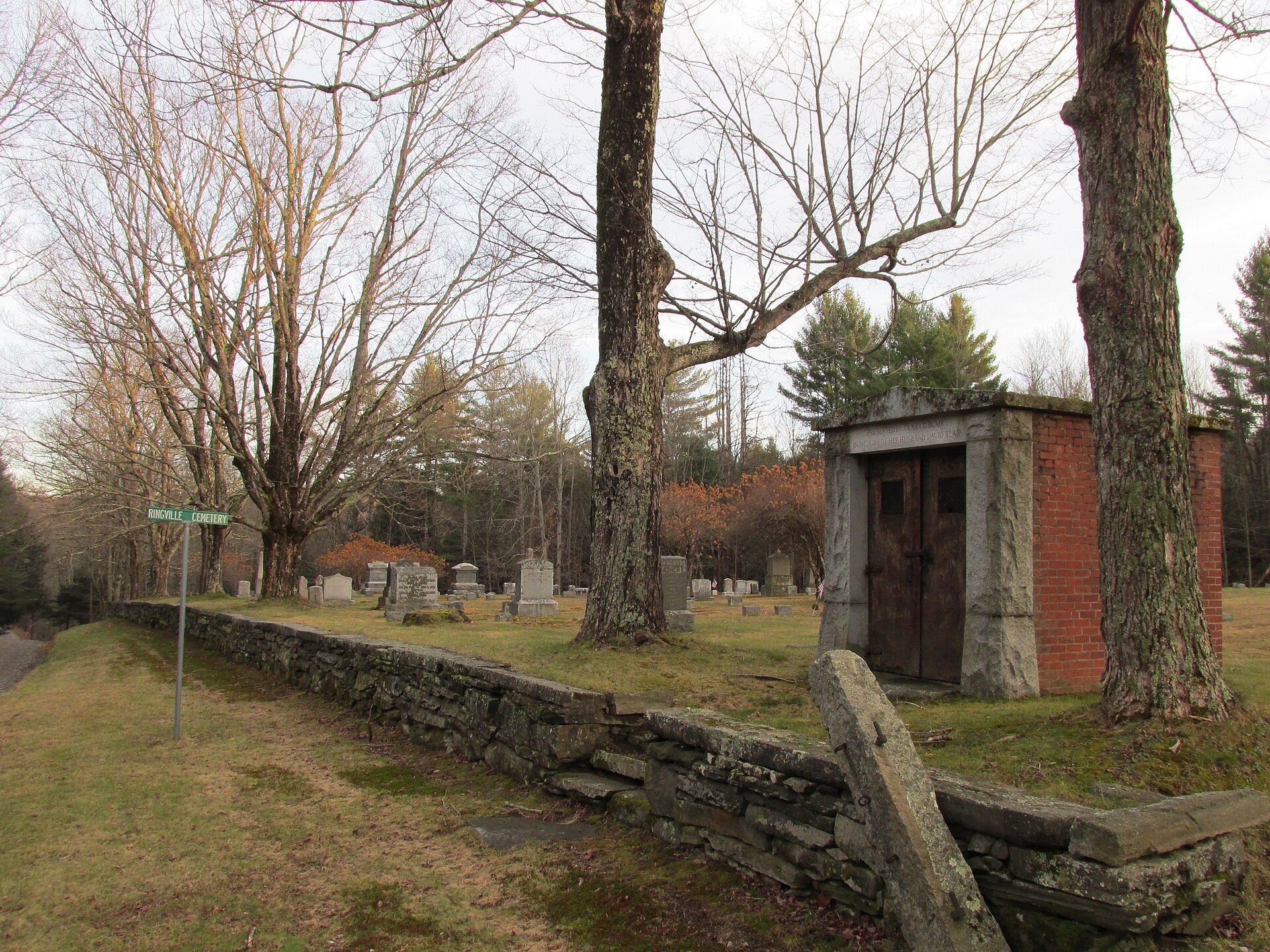
Worthington was first settled in 1764 and was officially incorporated in 1768. Landmarks include Center Cemetery, North Cemetery and Ringville Cemetery. Worthington is the birthplace of Aaron Clark, mayor.
Every piece is drawn from Worthington's own map data and historic archives, then printed and shipped from the USA when you order. No two towns look alike.
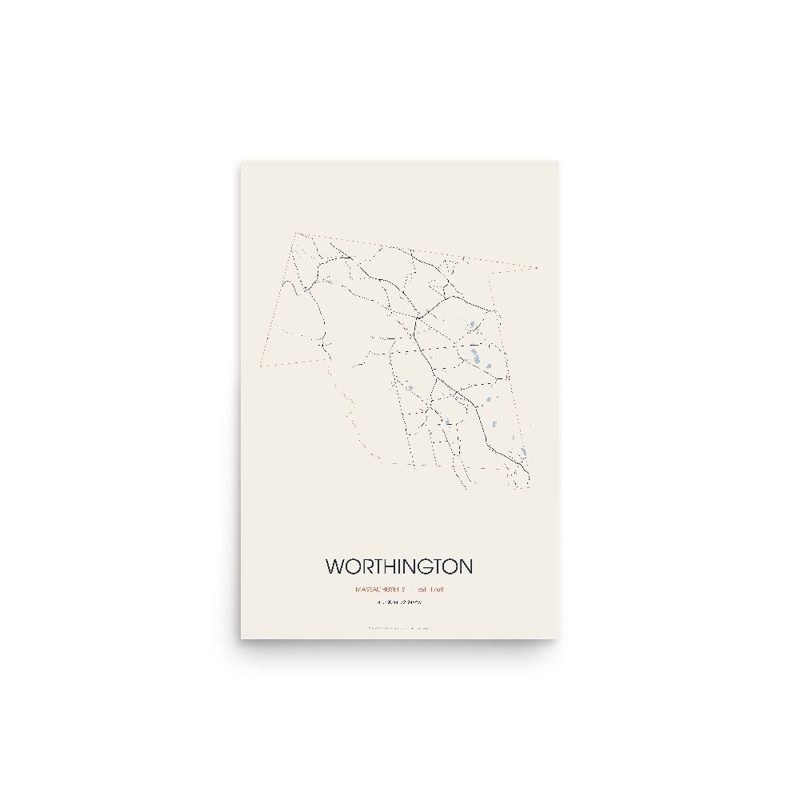
Every road in town, on archival matte paper
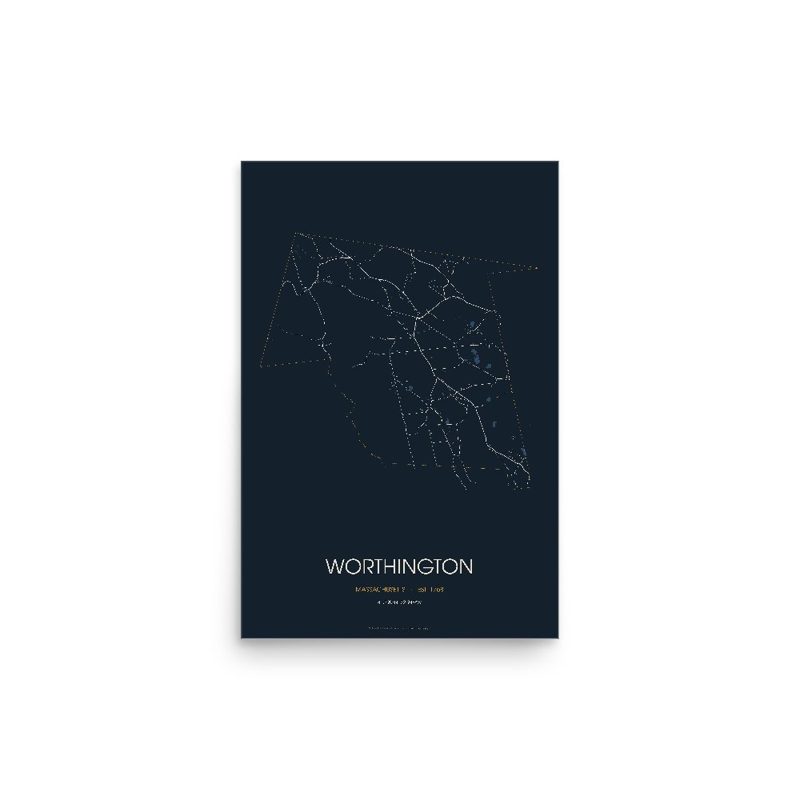
The same map, in navy and silver
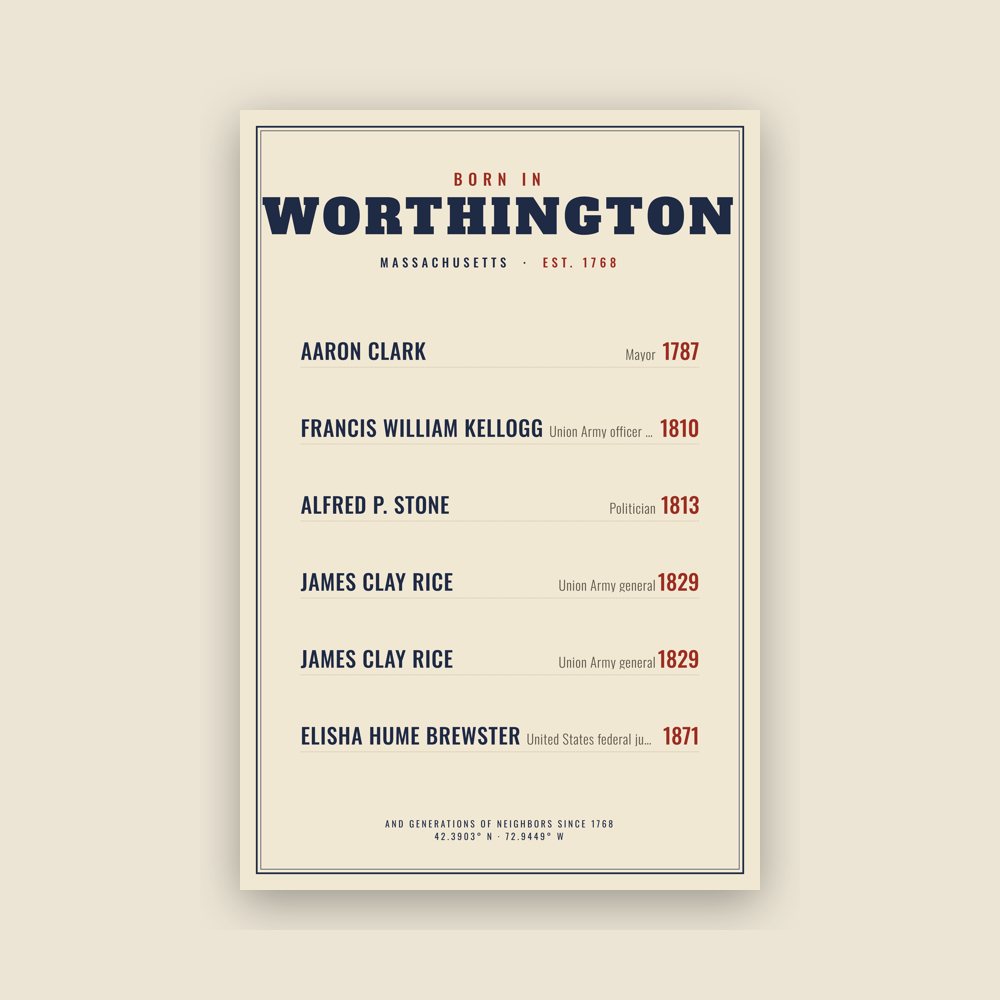
Famous natives, by birth year
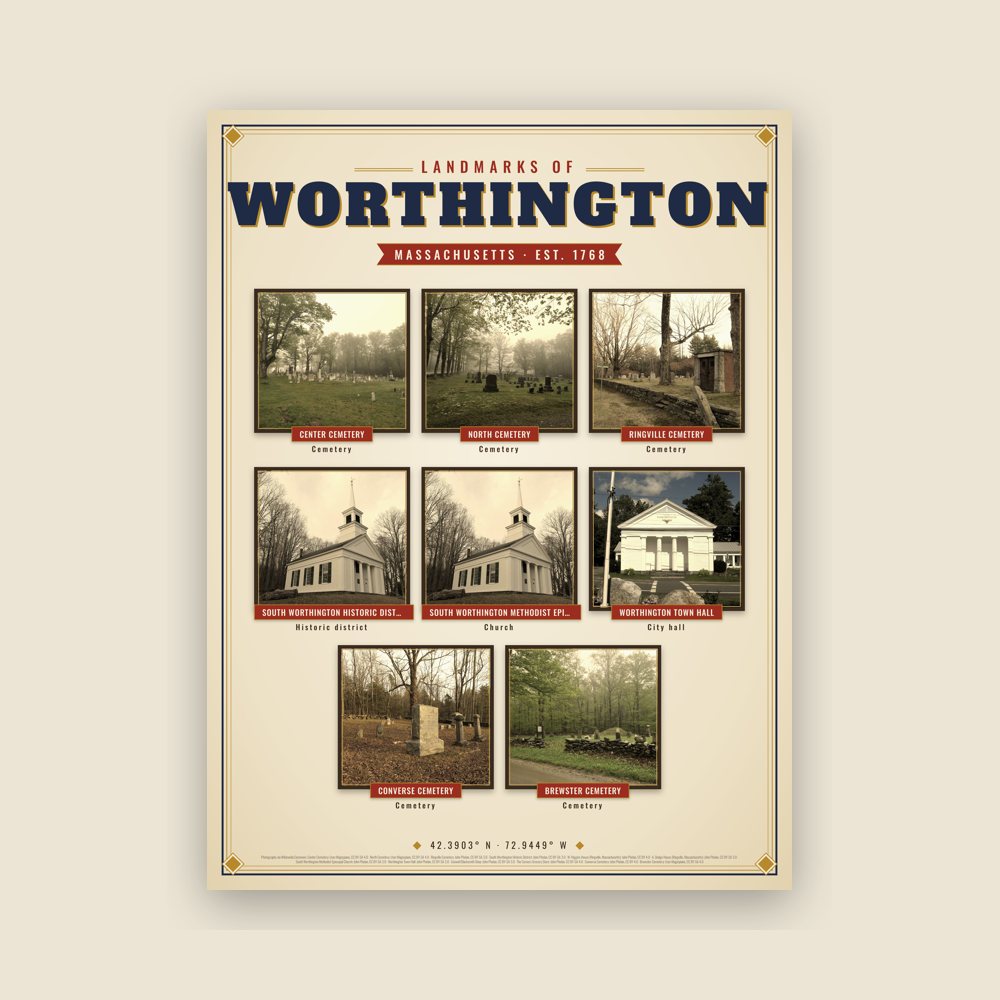
Nine local landmarks, archival matte
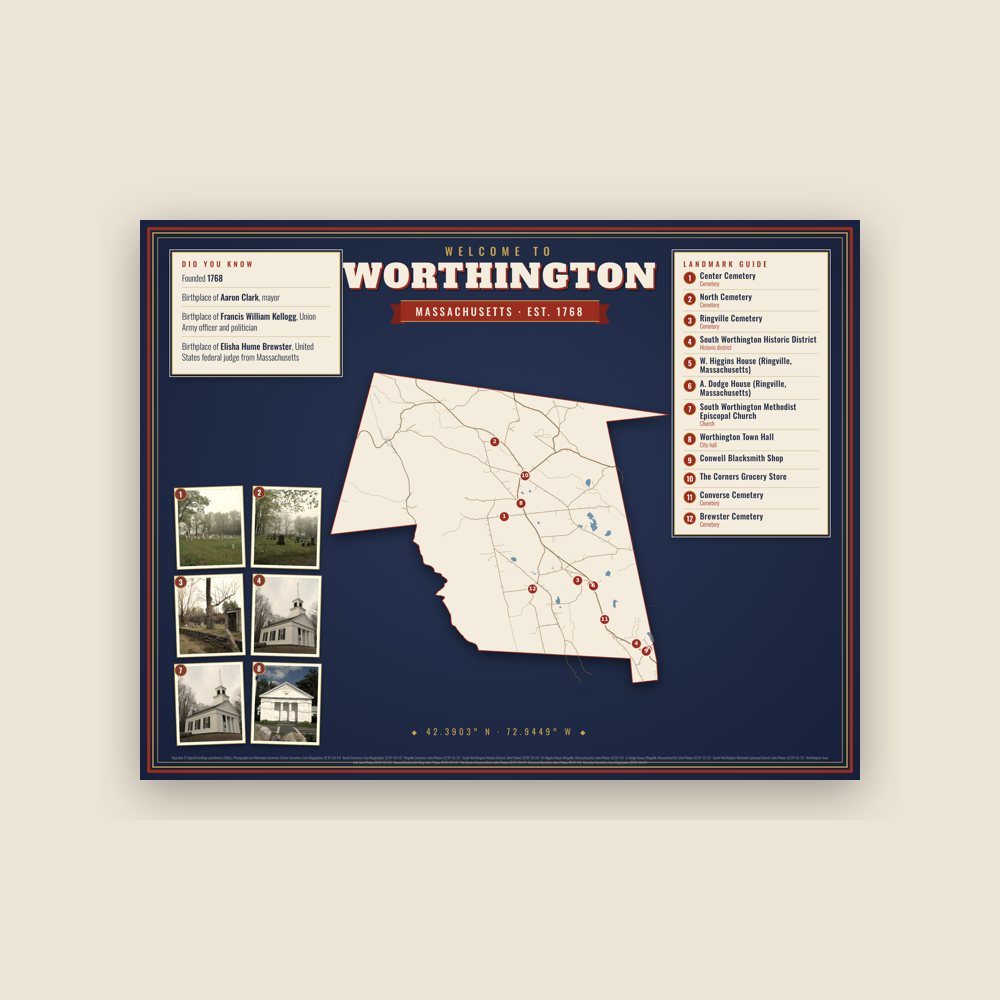
Map of local landmarks, washable fabric
Heavy-blend fleece, street map printed on the back
Soft Bella+Canvas jersey
Glossy ceramic, dishwasher safe
Ceramic keepsake, gold ribbon
Weatherproof, for the front walk
24″×16″, printed coir-look fibers, rubber back
12″×12″ printed wood, ready to hang
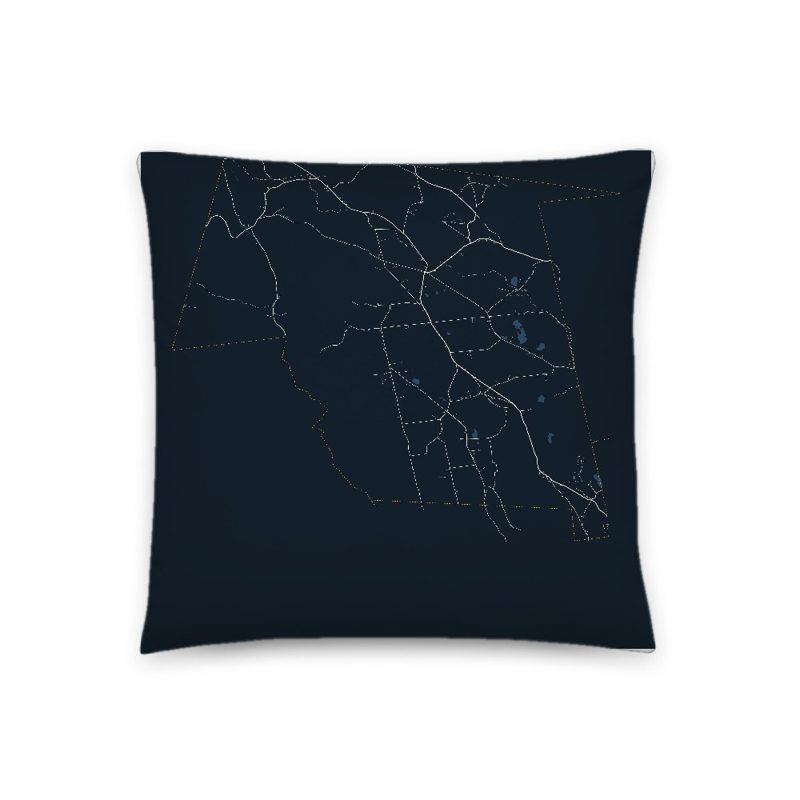
Soft-touch, zip cover
Sturdy all-over-print tote
Glossy top, cork back
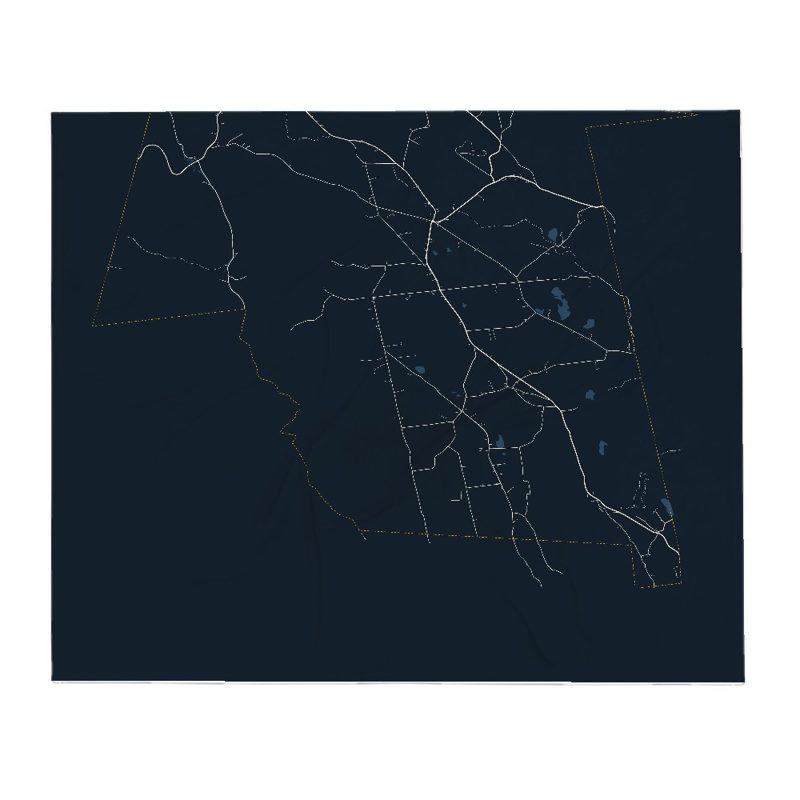
Soft fleece, 50″×60″
20 oz, double-wall stainless
Population 2000: 1,156 → 2010: 1,156 → 2020: 1,193
From Wikidata (CC0).
Worthington was first settled in 1764 and was officially incorporated in 1768. The town's officials had settled for new land after the settling of Northampton in 1654. In the 1760s, the wilderness that became Worthington was largely unpopulated. The 1840s and 1850s saw the arrival of a new form of transportation: railways. An effort to bring a line through Worthington failed. Although a train station was built in Huntington, many Worthington families began selling their farms and moving to western New York State, Ohio and further west in search of cheap land. By the 1860s, Worthington's population had declined to 925. These were years marked by deep conflict and rapid technological change.
The population continued to decline—818 in 1875, 763 in 1885, 569 in 1910—yet in these same decades, many present-day town institutions were established. In 1887, the second Congregational Church burned down. The third and current church, including a steeple, bells, organ, and new stained glass windows, was built on the same site and dedicated in 1888. While the permanent population of farmers and small manufacturers declined steadily, Worthington gradually gained a reputation as a summer resort. A casino on Buffington Hill Road, a hotel, several boarding houses, and many summer homes brought many visitors as well as income to the town. The maple sugaring industry expanded into a commercial enterprise during this period. Worthington's population sagged during the 1930s and 40s, reaching its low point of 363 in 1945. With fewer people, Worthington's one-room schools closed, post offices were consolidated, and The Grange was forced to merge with its neighbors. During the winter of 1931, the Lafayette Inn burned to the ground and was never rebuilt.
During the 1950s and 1960s, the town began to grow again, a reflection of improved roads. In August 1949, a special town meeting appropriated $6,800 to build a new fire house, which was completed the following year. The Palettes and Trowels Club met for the first time in 1950 and became a haven for several Worthington artists. The town's bicentennial celebration in 1968 was held from June 29 to July 6; events included a parade, an antique fair, an exhibit of photographs, a tour of Worthington homes, a play entitled "Bicentennial Quilting Party", and a beard-growing contest. The late 1960s and early 1970s saw more population growth. During the 1980s, the Hilltown Artisans Guild was established.
Adapted (trimmed) from the Wikipedia article Worthington, Massachusetts, revision 1377181701 by its contributors, licensed CC BY-SA 4.0.
We share a part of every Worthington sale with local partners, and we'd love to print from your collection. Old photographs, maps and postcards make the best keepsakes.
Partner with us