
Tyngsborough is 28 miles from Boston along the Route 3 corridor, and located on the New Hampshire state line. Landmarks include Haystack Observatory, Col. Jonathan Tyng House and Tyngsborough Bridge. Tyngsborough is the birthplace of William Adams Richardson, politician.
Every piece is drawn from Tyngsborough's own map data and historic archives, then printed and shipped from the USA when you order. No two towns look alike.
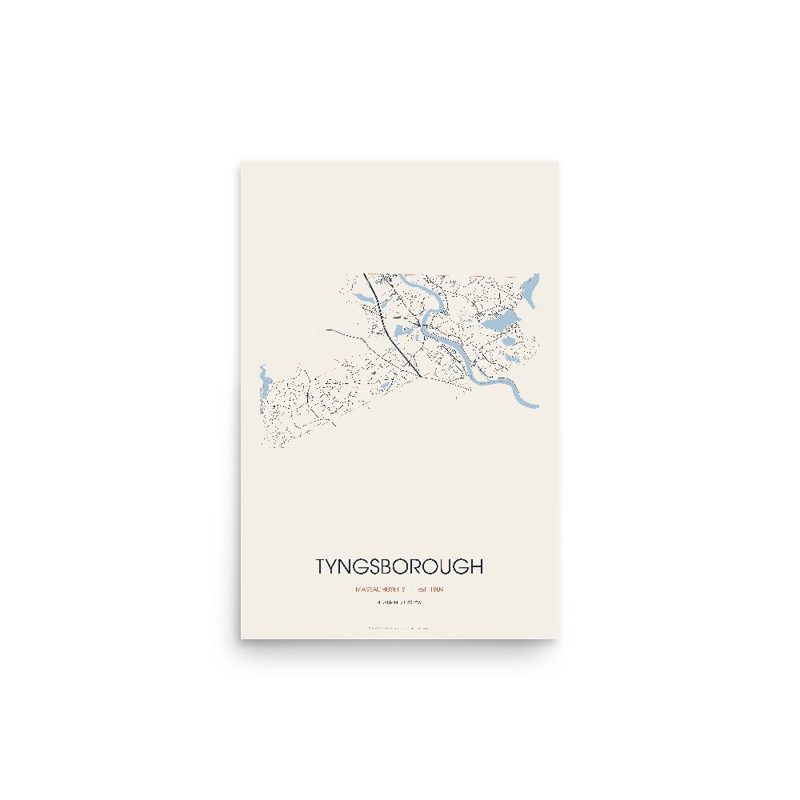
Every road in town, on archival matte paper
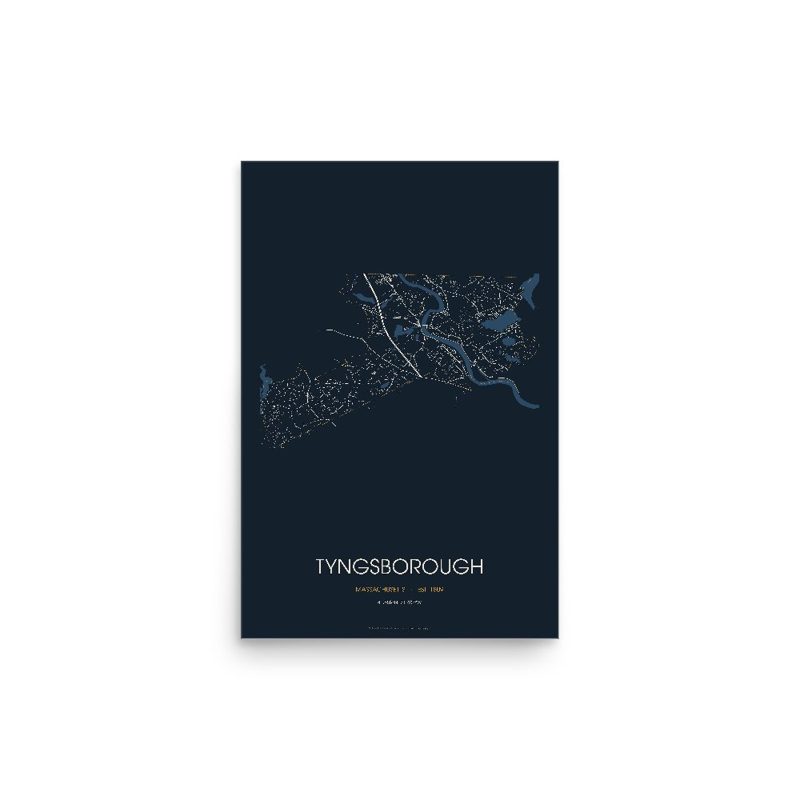
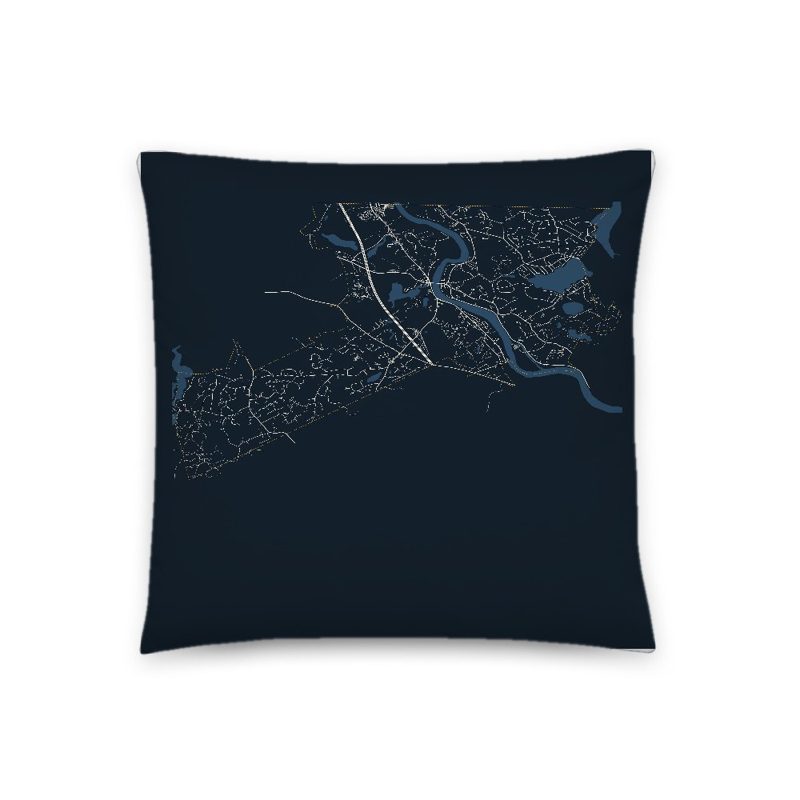
The same map, in navy and silver
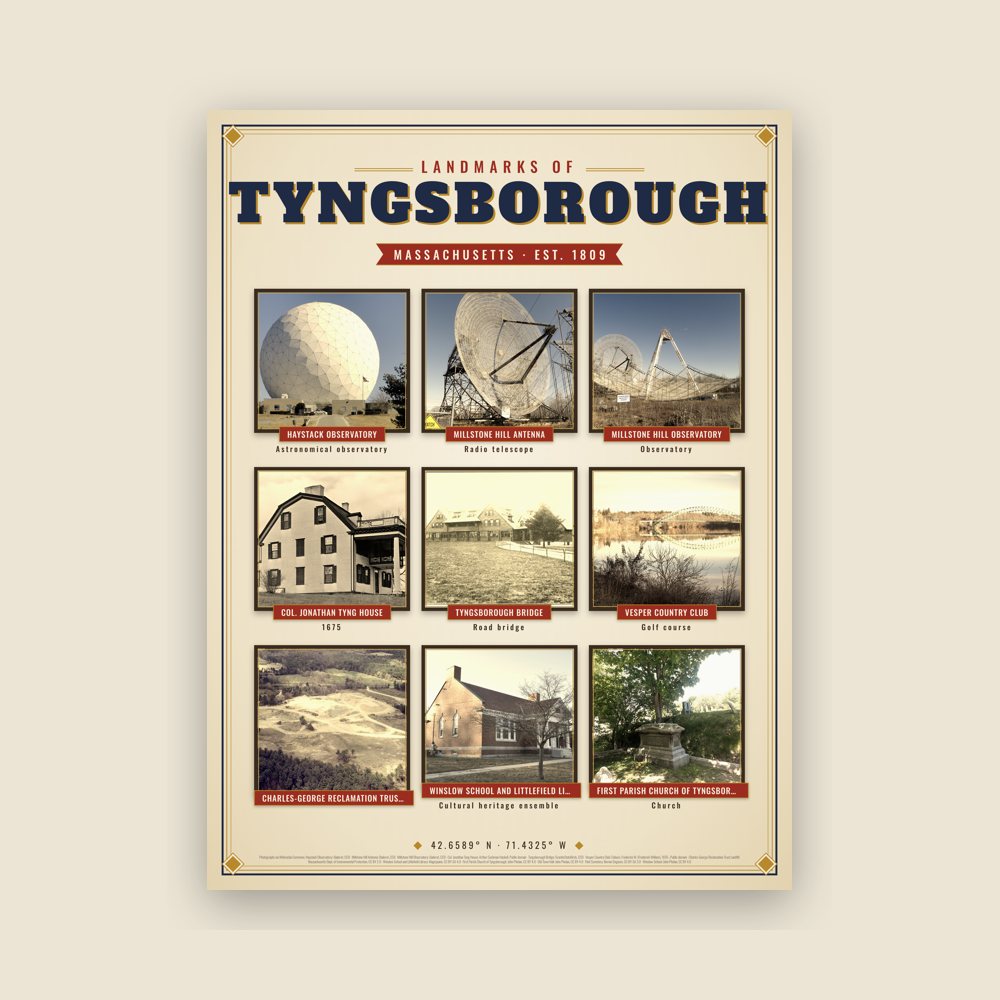
Nine local landmarks, archival matte
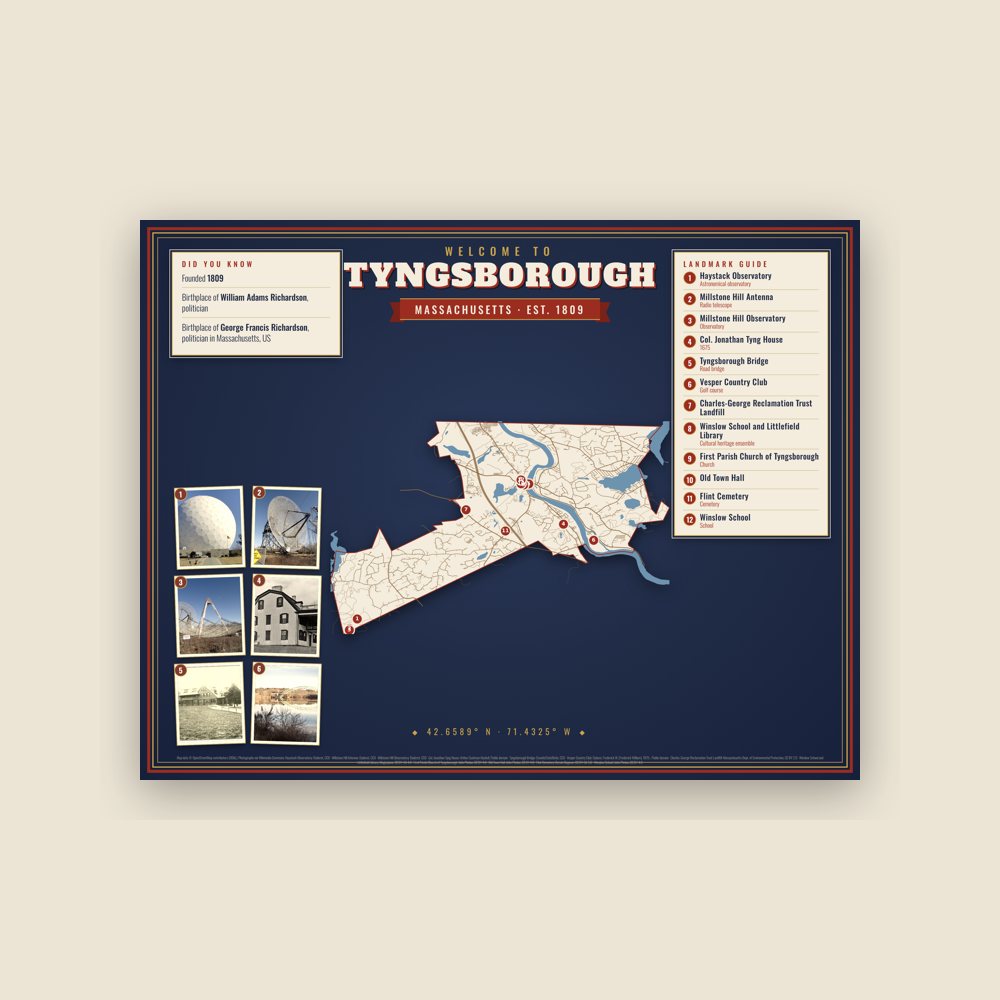
Map of local landmarks, washable fabric
Heavy-blend fleece, street map printed on the back
Soft Bella+Canvas jersey
Glossy ceramic, dishwasher safe
Ceramic keepsake, gold ribbon
Weatherproof, for the front walk
Soft-touch, zip cover
Sturdy all-over-print tote
Glossy top, cork back
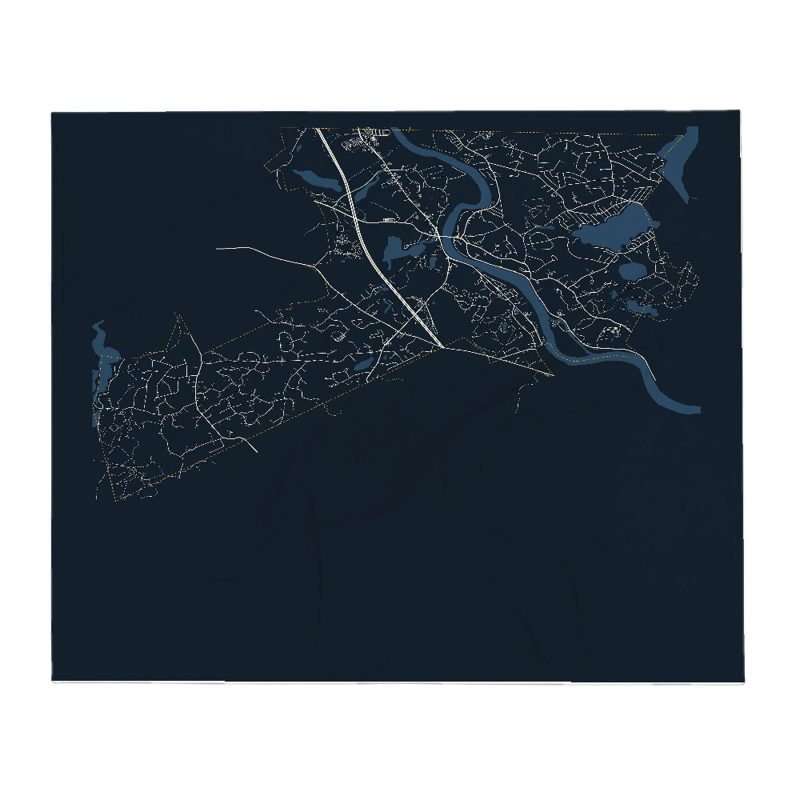
Soft fleece, 50″×60″
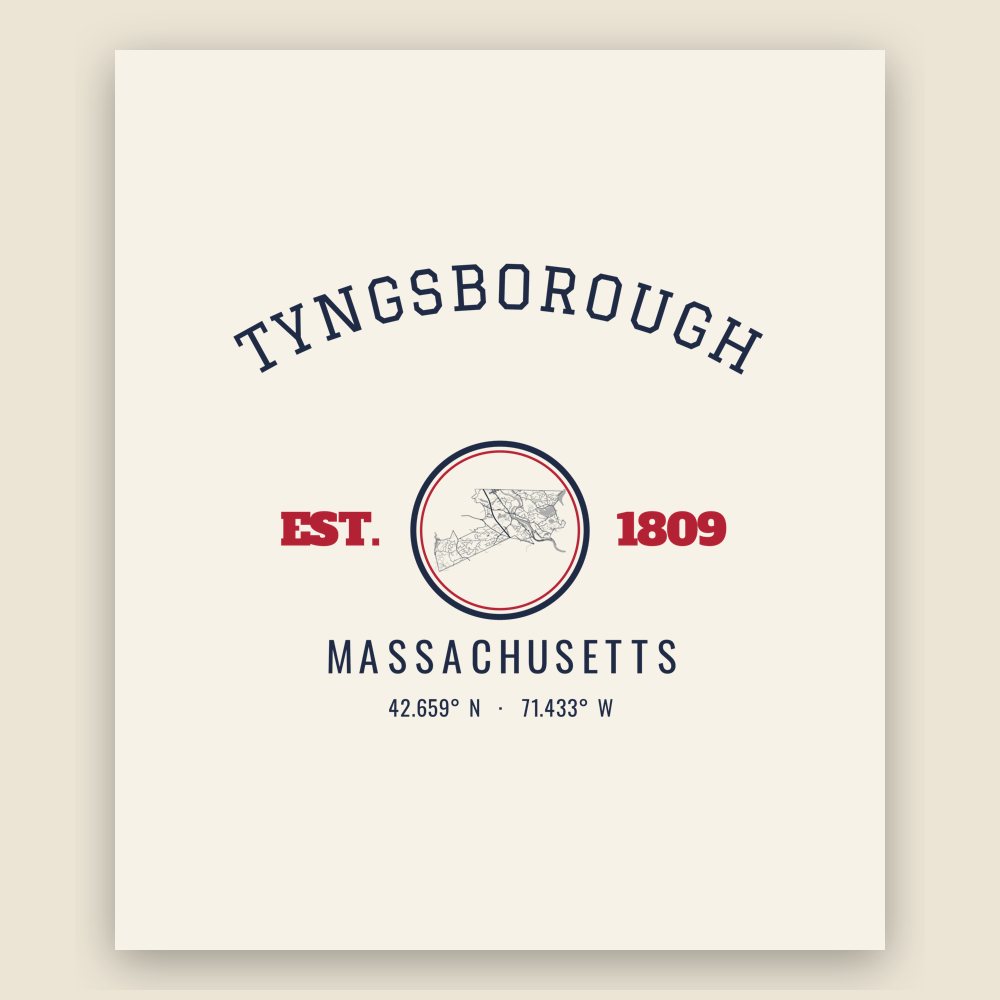
20 oz, double-wall stainless
Population 2010: 11,292 → 2020: 12,380
From Wikidata (CC0).
Tyngsborough was settled in 1661, as part of the massive Dunstable Township. The town of Dunstable, incorporated in 1673, was named after the hometown of pioneer Edward Tyng. However, a relative of his, and the source of the town of Tyngsborough's name, was Colonel Jonathan Tyng, whose home, the Tyng Mansion House, was one of the oldest north of Boston. He settled near the Merrimack in what is now Tyngsborough in 1675. The house stood until the 1970s, when it was destroyed by arson. Early on Tyngsborough residents fought a series of small and bloody skirmishes with local Native American tribes. Evidence of this can be found in several old colonial homes in town that still have emergency passages that were used during these attacks. In 1789, Tyngsborough's parish split from the rest of Dunstable, making Tyngsborough a recognized district. On February 23, 1809, Tyngsborough became a town.
After Tyngsborough was incorporated it became known for its ferries which traveled up and down the Merrimack River, the quarries that produced granite, and several box companies that started in town. As the town developed, Tyngsborough became a vacation community and had a large seasonal resident population even up until the late 1960s. A notable summer resident was actress Nance O'Neil, whose estate became the campus of the Academy of Notre Dame.
Today, Tyngsborough primarily serves as a bedroom community, part of Greater Lowell and the Nashua, New Hampshire, region, in addition to having a relatively short commute to the Boston area. The town is also known for the Tyngsborough Bridge, a green painted, single-arched, steel bridge over the Merrimack River. Constructed in 1931 as a replacement for an earlier wooden planked structure, this bridge is a major river crossing for residents of Massachusetts and New Hampshire alike with 22,300 daily crossings as of 2007.
Adapted (trimmed) from the Wikipedia article Tyngsborough, Massachusetts, revision 1377137285 by its contributors, licensed CC BY-SA 4.0.
We share a part of every Tyngsborough sale with local partners, and we'd love to print from your collection. Old photographs, maps and postcards make the best keepsakes.
Partner with us