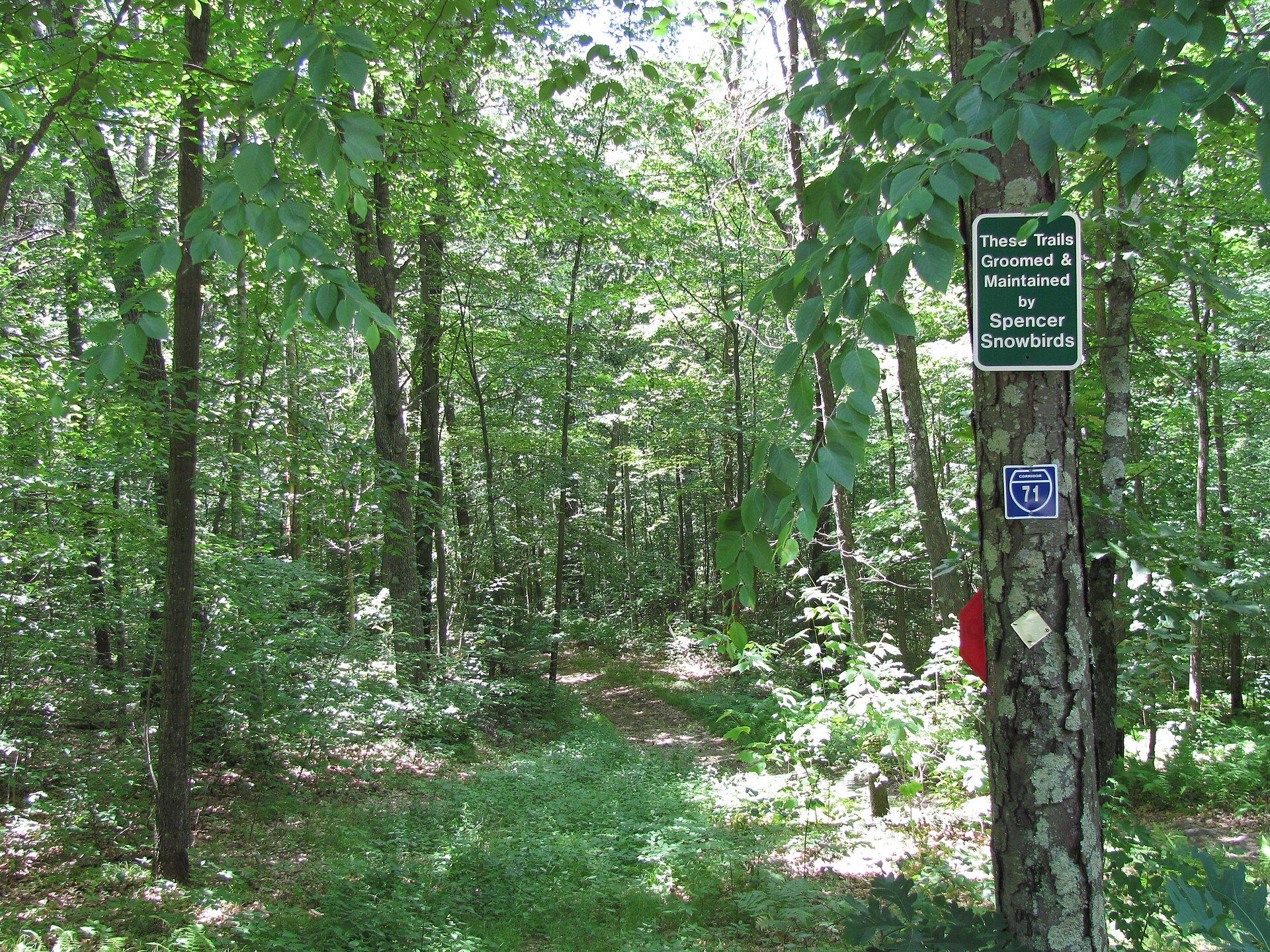
In 1784, Spencer was a major stopping place on the Old Boston Post Road's stage route between Boston and Hartford, and on to New York. Landmarks include Spencer State Forest, Sugden Reservoir and First Congregational Church (Spencer, Massachusetts). Spencer is the birthplace of Elias Howe, inventor.
Every piece is drawn from Spencer's own map data and historic archives, then printed and shipped from the USA when you order. No two towns look alike.
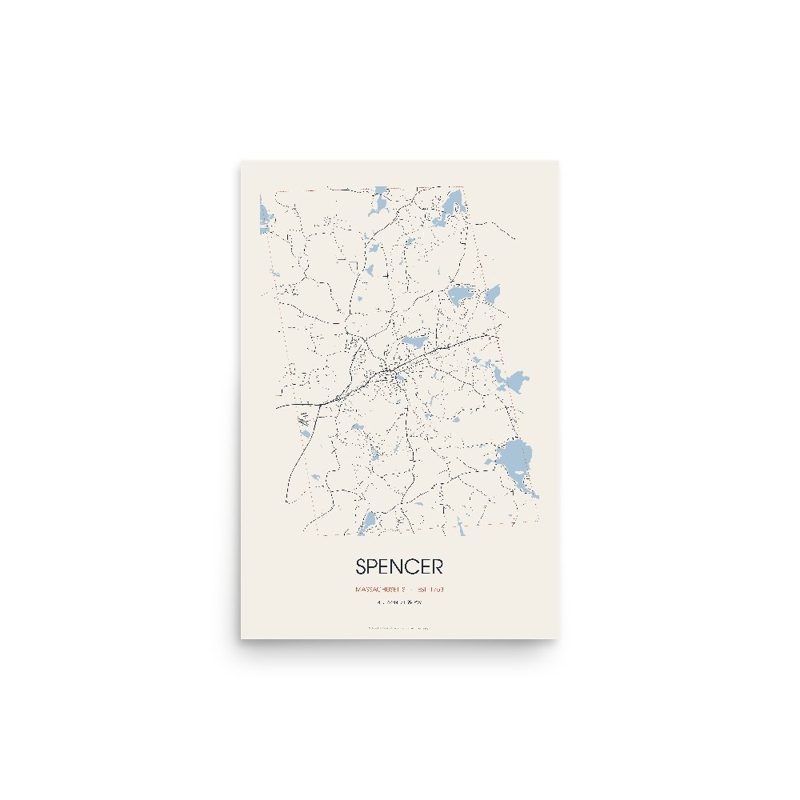
Every road in town, on archival matte paper
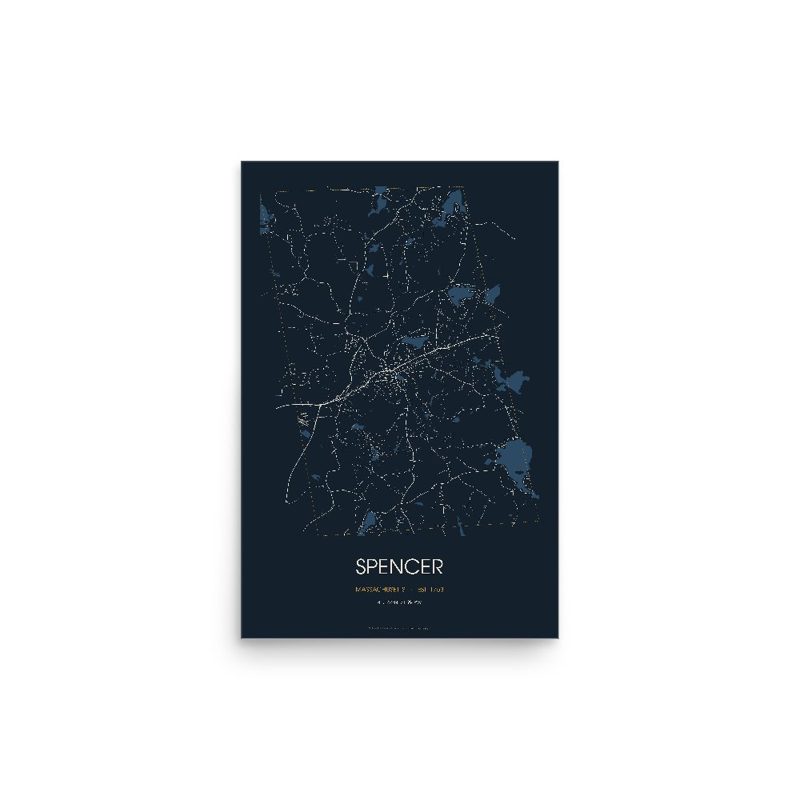
The same map, in navy and silver
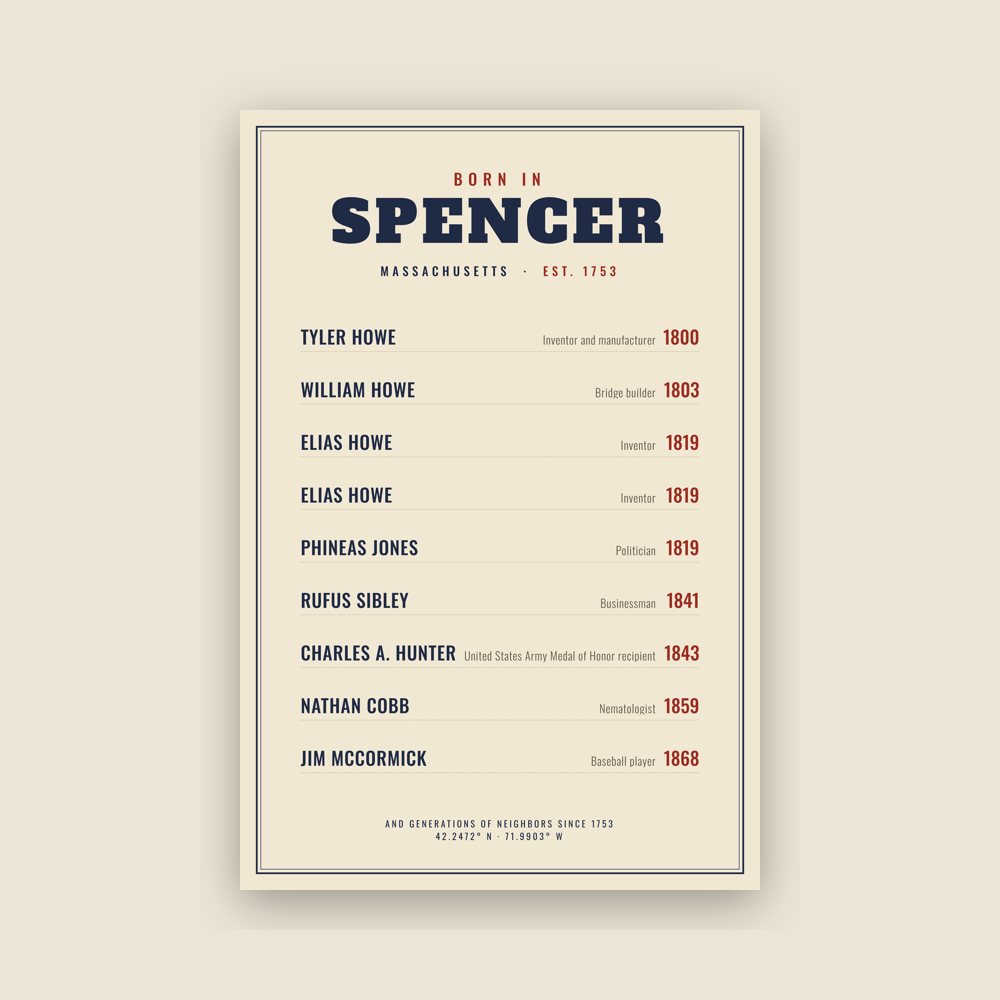
Famous natives, by birth year
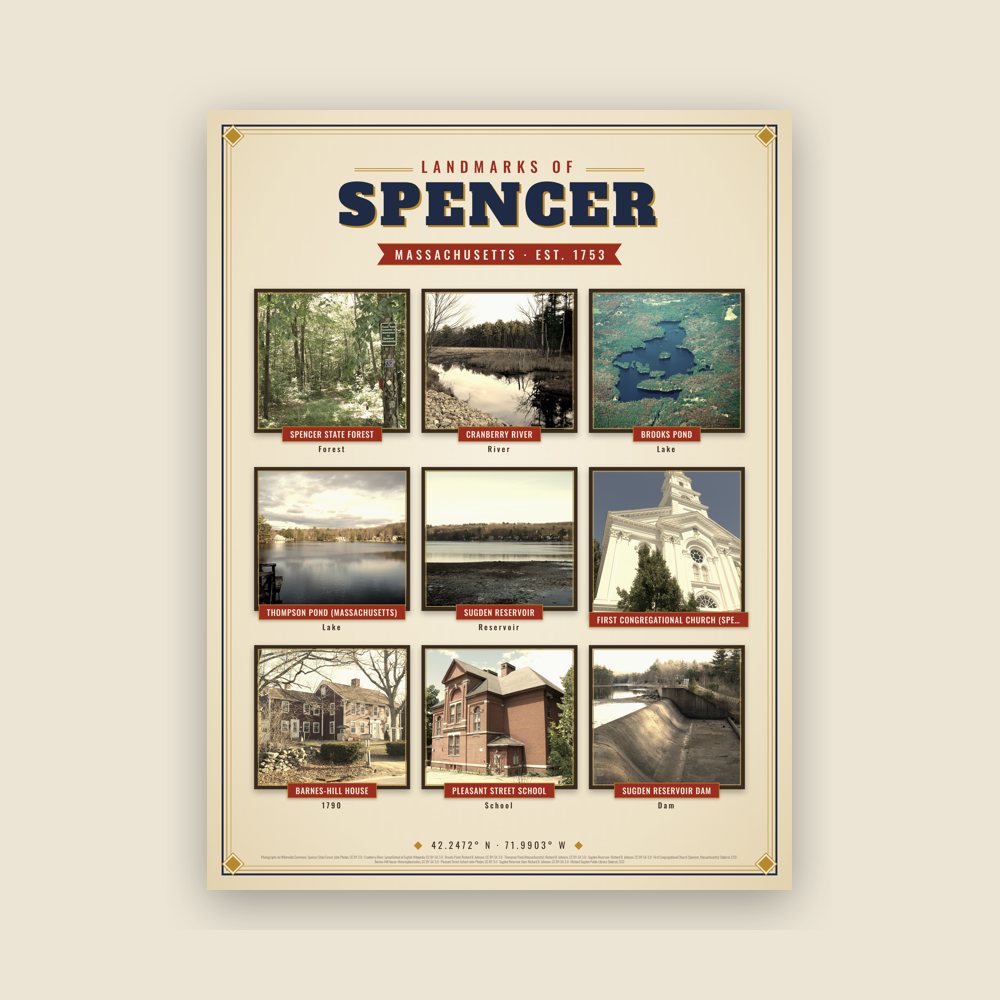
Nine local landmarks, archival matte
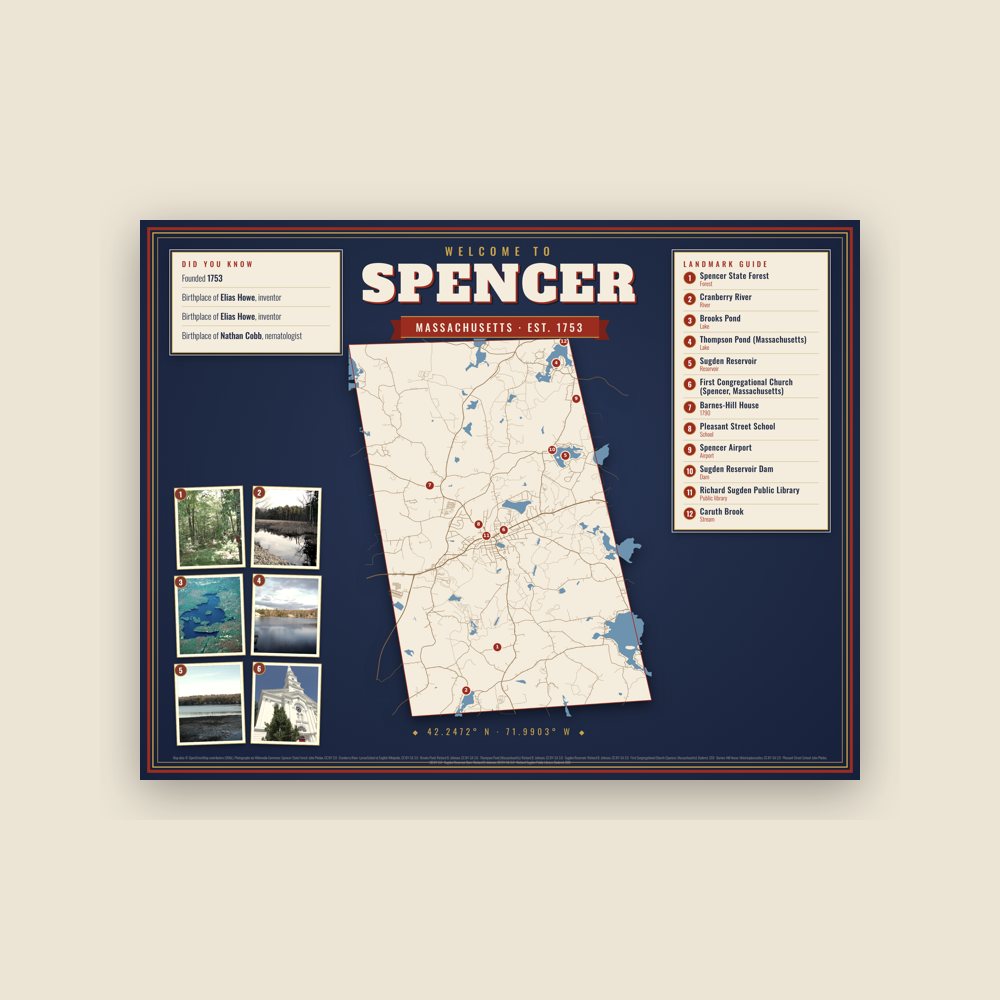
Map of local landmarks, washable fabric
Heavy-blend fleece, street map printed on the back
Soft Bella+Canvas jersey
Glossy ceramic, dishwasher safe
Ceramic keepsake, gold ribbon
Weatherproof, for the front walk
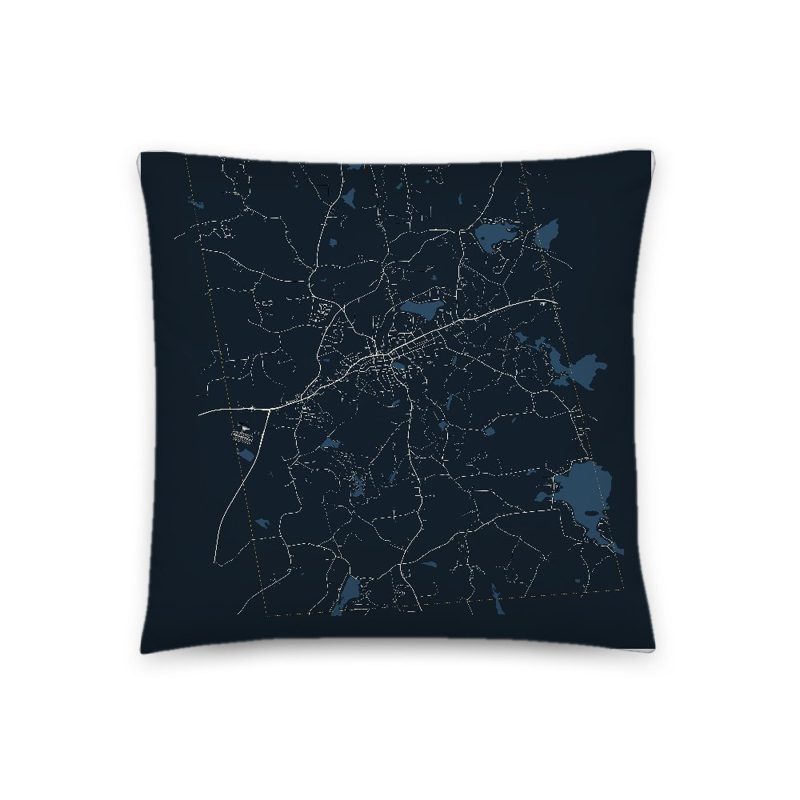
Soft-touch, zip cover

Sturdy all-over-print tote
Glossy top, cork back
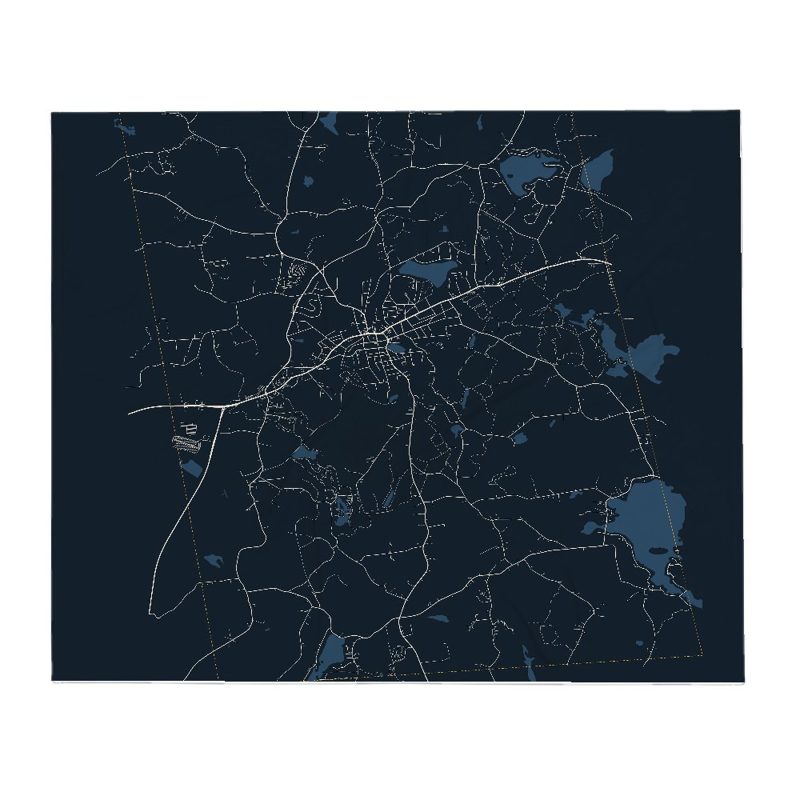
Soft fleece, 50″×60″
20 oz, double-wall stainless
Population 2010: 11,688 → 2020: 11,992
From Wikidata (CC0).
Spencer is located in central Worcester County, twenty minutes west of Worcester via Route 9, and about forty-five east of Springfield via Routes 49, 20, and the Massachusetts Turnpike. It was officially incorporated on April 12, 1753, splitting from the town of Leicester. Spencer was named after the then-acting governor of Massachusetts, Spencer Phips. Spencer was the home of the Howe family of inventors, including Elias Howe, who perfected the lockstitch sewing machine.
In 1784, Spencer was a major stopping place on the Old Boston Post Road's stage route between Boston and Hartford, and on to New York. Passengers changed stages in Spencer, as one coach would come from Boston and connect with one coming north from Hartford. Each stagecoach would turn around and return whence it came. Travelers often stopped for the night at Jenk's Tavern in Spencer, as did General Henry Knox, pushing his cannons through the streets of the town on his way to Boston from Ticonderoga, and George Washington in 1789. Spencer still has colonial-era milestone markers showing the route of the old post road.
When the War of Independence broke out in 1775 it found Spencer ready to take part; fifty-six men under Captain Ebenezer Mason immediately set out to Boston. Many of these men later took part in the Battle of Bunker Hill. A total of 313 Spencer men are known to have served in the Civil War; thirty-two lost their lives in the service of their country.
Spencer's first mill was built in 1740 on the Seven Mile River, the greatest source of waterpower in the town. In 1811, Josiah Green began making shoes, and in 1834 he built a factory. The Prouty family began to make shoes in 1820, and built their factory in 1855. In 1812, Elliot Prouty had begun to "draw" wire in a mill he had built. His business flourished in his family until 1916, when it merged with Wickwire Steel Co. At one time, Spencer had 11 factories and 26 buildings for wire drawing.
In 1839 the town hall was constructed, and eighteen years later, Denny Hall, the town's first high school, was built. In 1888–1889, four prominent citizens (David Prouty, Richard Sugden, Luther Hill and Nathaniel Myrick) presented the town with a new high school, a library, a public park and the Spencer Agricultural Fair Grounds. The Howe family of Spencer did much to make the town famous in the annals of ingenious Americans. William Howe of Spencer developed a wooden truss bridge named for him, and his brother, Tyler Howe, patented a spring bed. Their nephew, Elias Howe, Jr., may well have eclipsed them when he invented the lockstitch sewing machine.
Spencer is home to Saint Joseph's Abbey, a cloistered Roman Catholic monastery of monks of the Cistercian Order of the Strict Observance, popularly known as Trappists. They support the order through their three industries: the Holy Rood Guild, which makes a variety of liturgical garments (vestments) and linens; and Trappist Preserves, jams and jellies sold in retail outlets and at their gift shop in the Porter's Lodge; and Spencer Trappist Ale (the first and only certified Trappist beer made in the U.S.In May 2022, St. Joseph's Abbey ceased beer production and closed Spencer Brewery.
On April 25, 2007, it was discovered early in the morning that there was a malfunction at one of the town's water treatment facilities where a hazardous amount of sodium hydroxide (lye) was released into the town's water supply. The official cause was a malfunction of the system due to operator error, that regulates the amount of lye released. According to local news reports, dozens of people received medical treatment for "burning sensations and skin rashes".
Adapted (trimmed) from the Wikipedia article Spencer, Massachusetts, revision 1374987170 by its contributors, licensed CC BY-SA 4.0.
We share a part of every Spencer sale with local partners, and we'd love to print from your collection. Old photographs, maps and postcards make the best keepsakes.
Partner with us