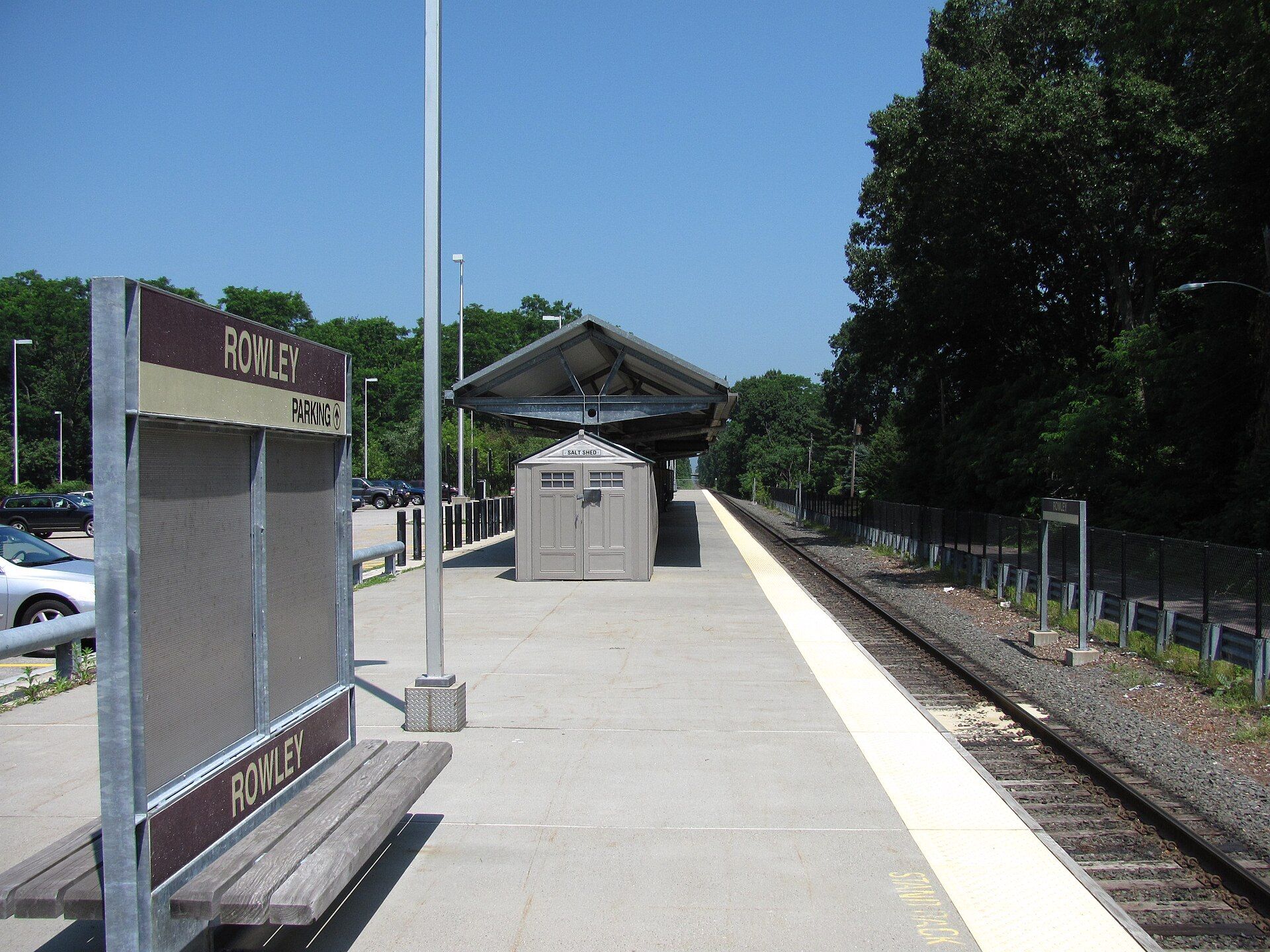
Although the area that would become Rowley was colonized by English settlers starting in 1639, it was not until 1700 that the town would pay Masoconomet's heirs nine pounds for a quitclaim deed. Landmarks include Rowley station, Agawam Diner and Chaplin-Clarke House. Rowley is the birthplace of Jeremiah Nelson, politician.
Every piece is drawn from Rowley's own map data and historic archives, then printed and shipped from the USA when you order. No two towns look alike.
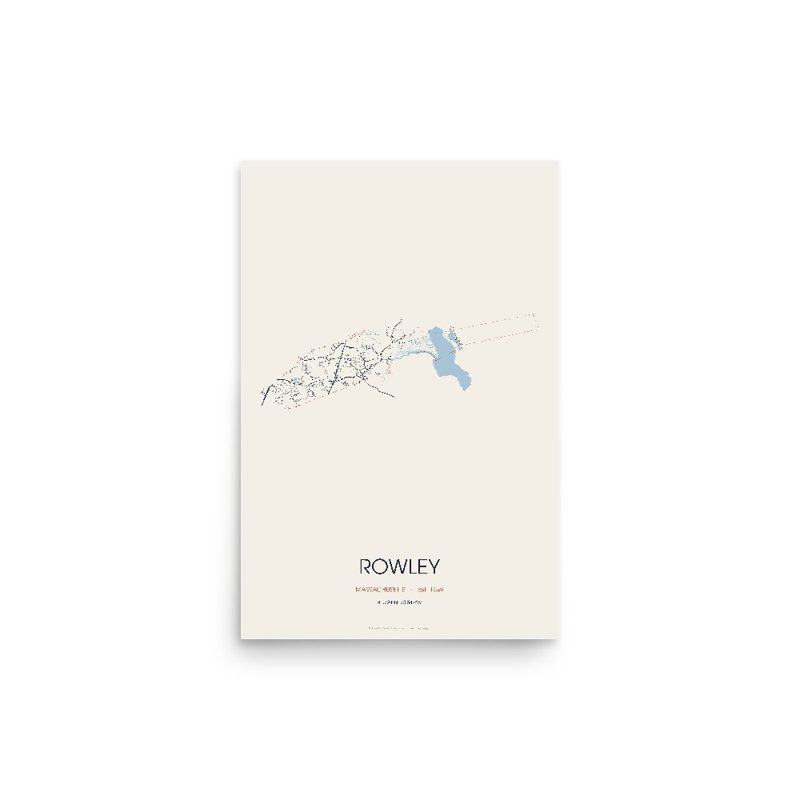
Every road in town, on archival matte paper
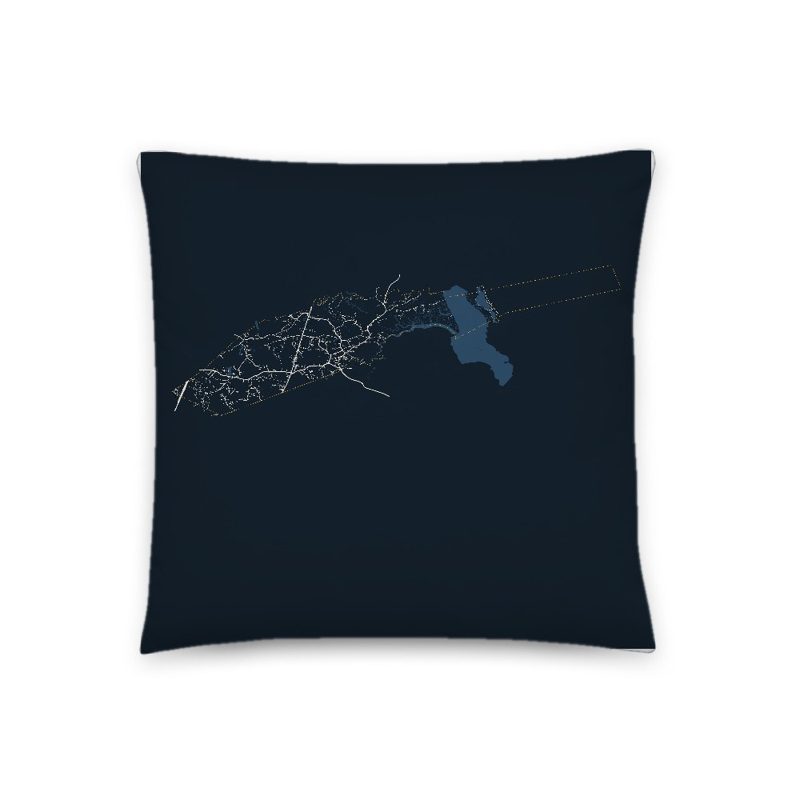
The same map, in navy and silver
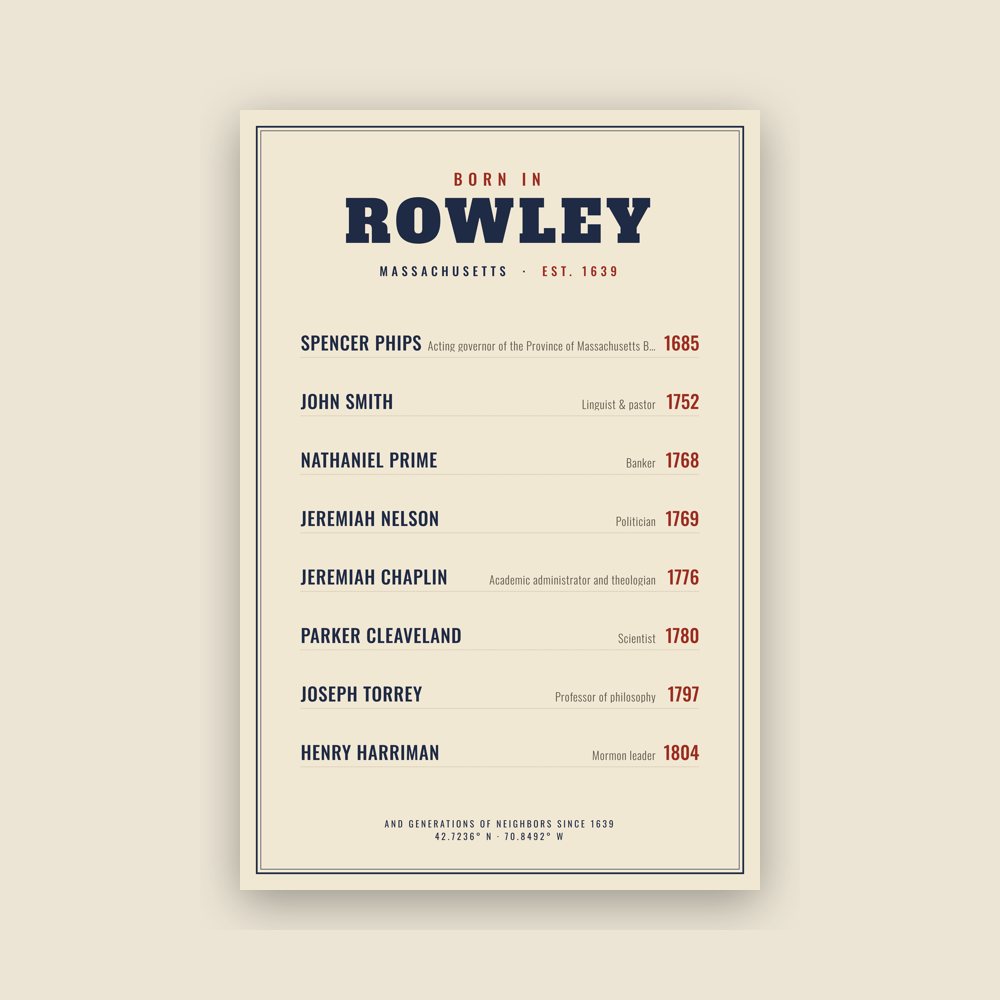
Famous natives, by birth year
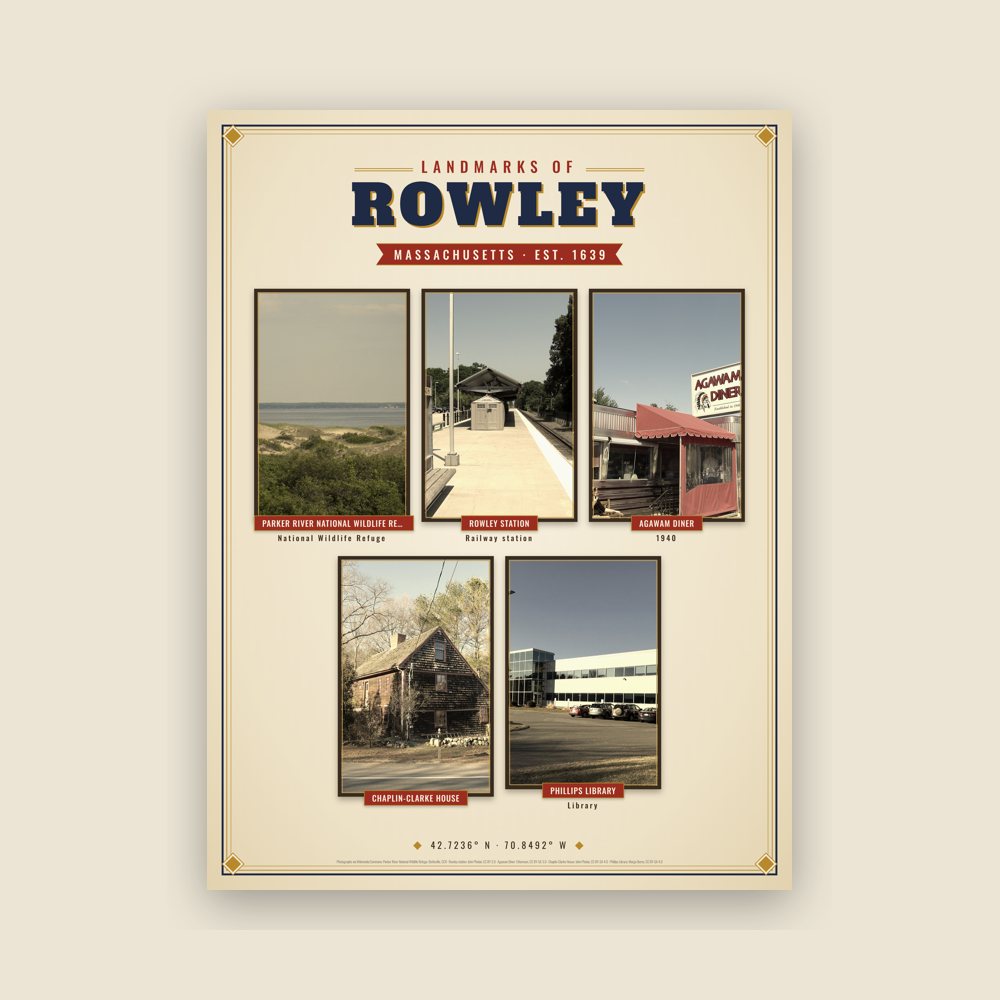
Nine local landmarks, archival matte
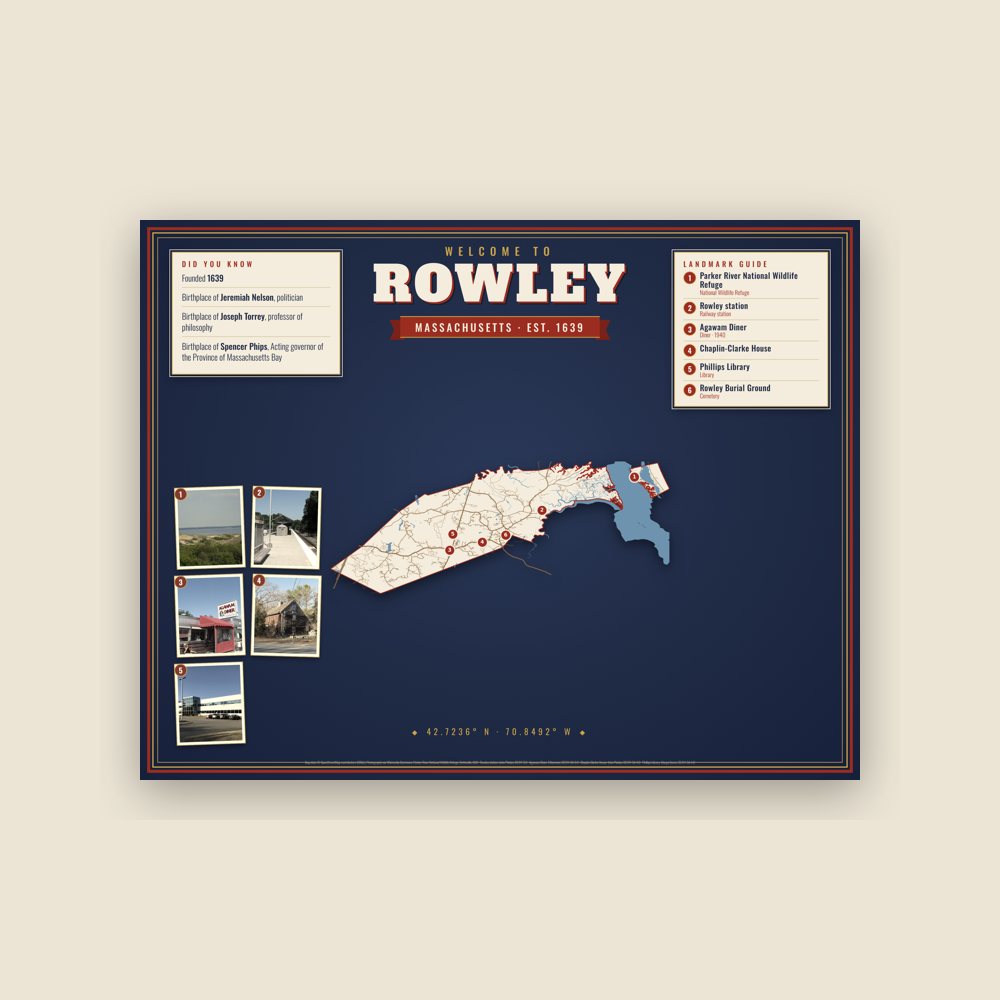
Map of local landmarks, washable fabric
Heavy-blend fleece, street map printed on the back
Soft Bella+Canvas jersey
Glossy ceramic, dishwasher safe
Ceramic keepsake, gold ribbon
Weatherproof, for the front walk
Soft-touch, zip cover
Sturdy all-over-print tote
Glossy top, cork back
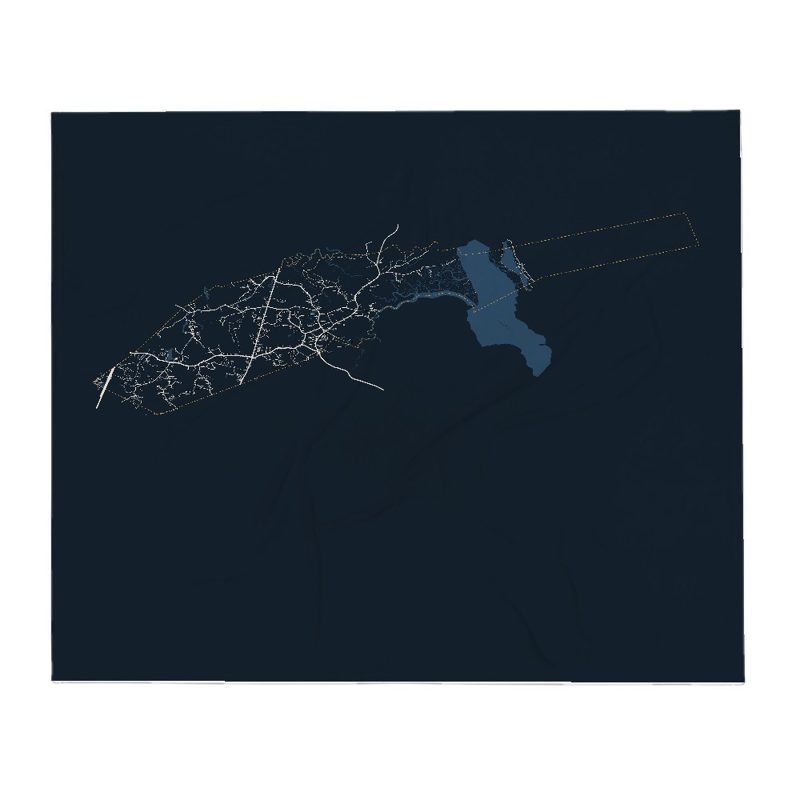
Soft fleece, 50″×60″
20 oz, double-wall stainless
Population 2010: 5,856 → 2020: 6,161
From Wikidata (CC0).
The area was inhabited by the Agawam people under sachem Masconomet. Although the area that would become Rowley was colonized by English settlers starting in 1639, it was not until 1700 that the town would pay Masoconomet's heirs nine pounds for a quitclaim deed.
In spring of 1638 Rowley was originally colonized as a plantation by Reverend Ezekiel Rogers, who had arrived from England on the ship John of London with approximately twenty families. Thomas Tenney was a co-founder of Rowley, Massachusetts, and was part of the group led by Reverend Ezekiel Rogers that settled the town in 1639. He came from Rowley, East Yorkshire, England, with his wife Ann, and was an original settler of the area, which was first known as Rogers Plantation. The John of London also brought over the first printing press in the colonies, which was later brought to Harvard University.
The following fall, on September 4, 1639, the town was incorporated, and included portions of modern-day Byfield, Groveland, Georgetown, and Haverhill. The town was named after Rowley, East Riding of Yorkshire, where Rogers had served as pastor for twenty years before his suspension due to non-conformist Puritan beliefs. Rogers was installed as Rowley's pastor on December 3.
1643 and 1645 saw the construction of a fulling mill and grist mill, respectively. The town became known for its hemp and flax cloth, as well as cotton. In 1642, a keystone arch bridge and a dam were built on the Mill River for the fulling mill, the first such in the colonies. The bridge was the first stone arch bridge in North America, constructed entirely of hand-chiseled granite and contained no mortar. It was rebuilt in the mid-19th century. In 1669, a sawmill was established in town and is still in business today. A wagon factory was built in 1868 by Moses E. Daniels. Later, at the start of the 20th century, the town had a booming shoe industry, as well as successful boat building businesses.
Adapted (trimmed) from the Wikipedia article Rowley, Massachusetts, revision 1377400739 by its contributors, licensed CC BY-SA 4.0.
We share a part of every Rowley sale with local partners, and we'd love to print from your collection. Old photographs, maps and postcards make the best keepsakes.
Partner with us