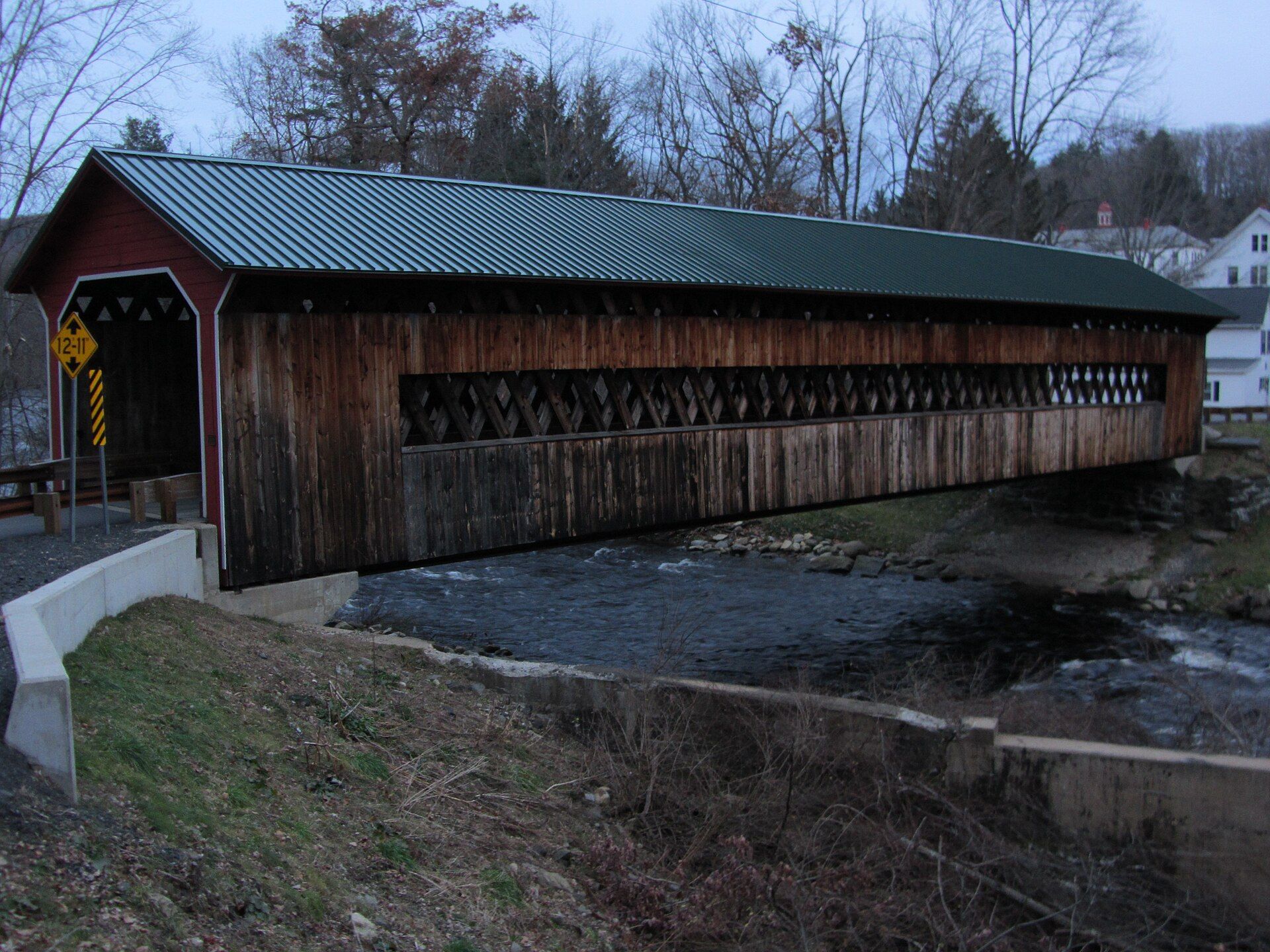
It includes the villages of Hardwick, Gilbertville, Wheelwright and Old Furnace. Landmarks include Ware–Hardwick Covered Bridge, Kensington Park Historic District and Gilbertville Historic District. Hardwick is the birthplace of Tabitha Babbitt, tool maker.
Every piece is drawn from Hardwick's own map data and historic archives, then printed and shipped from the USA when you order. No two towns look alike.
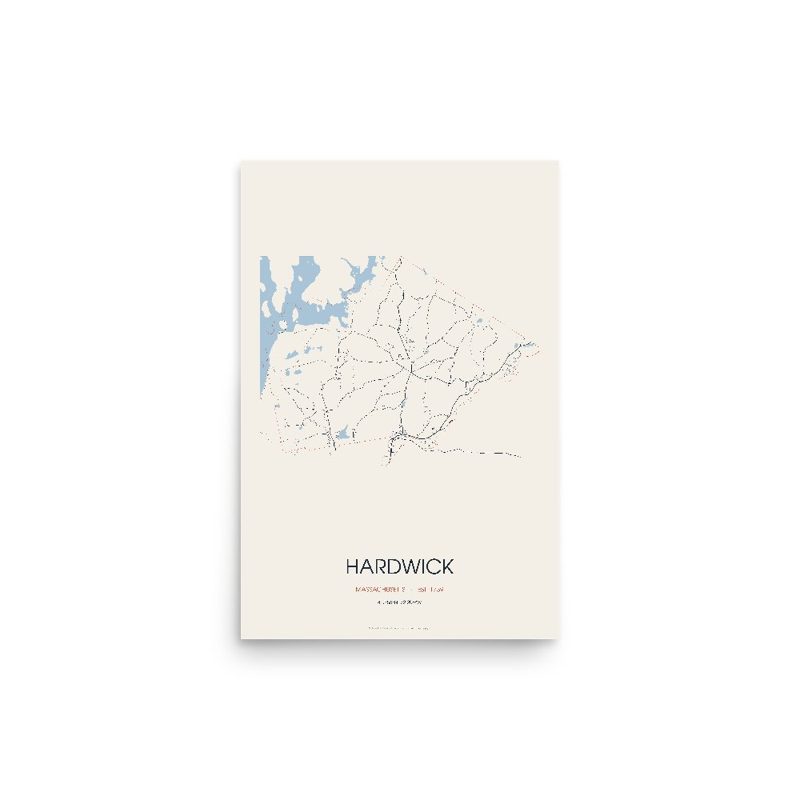
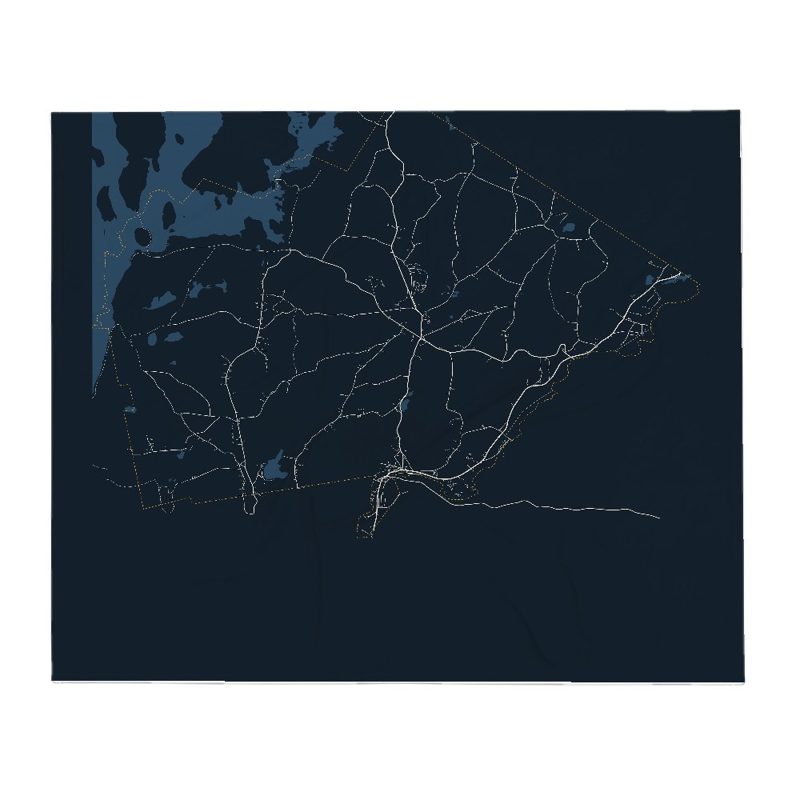
Every road in town, on archival matte paper
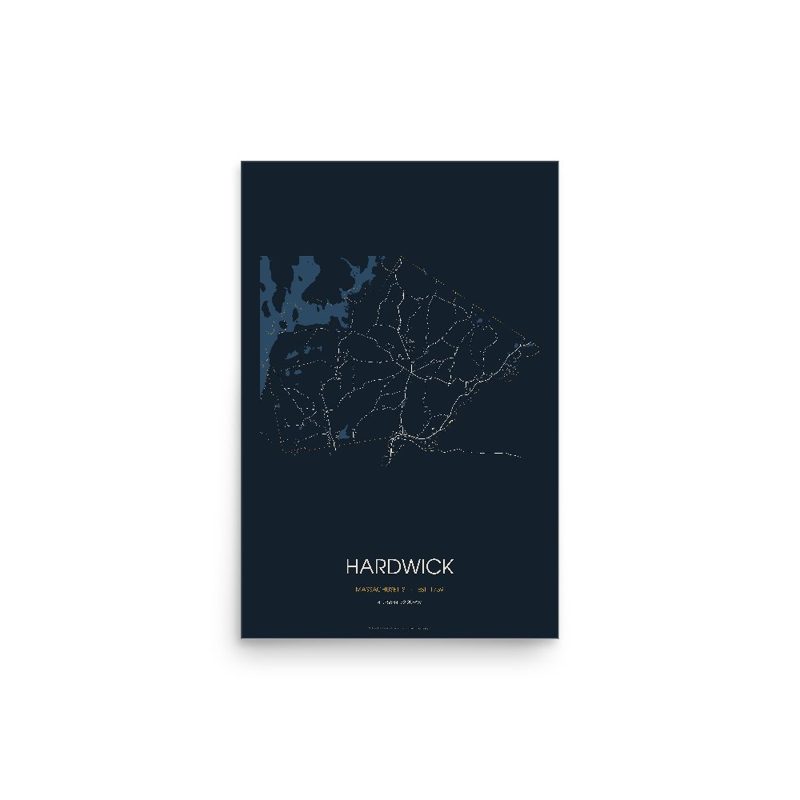
The same map, in navy and silver
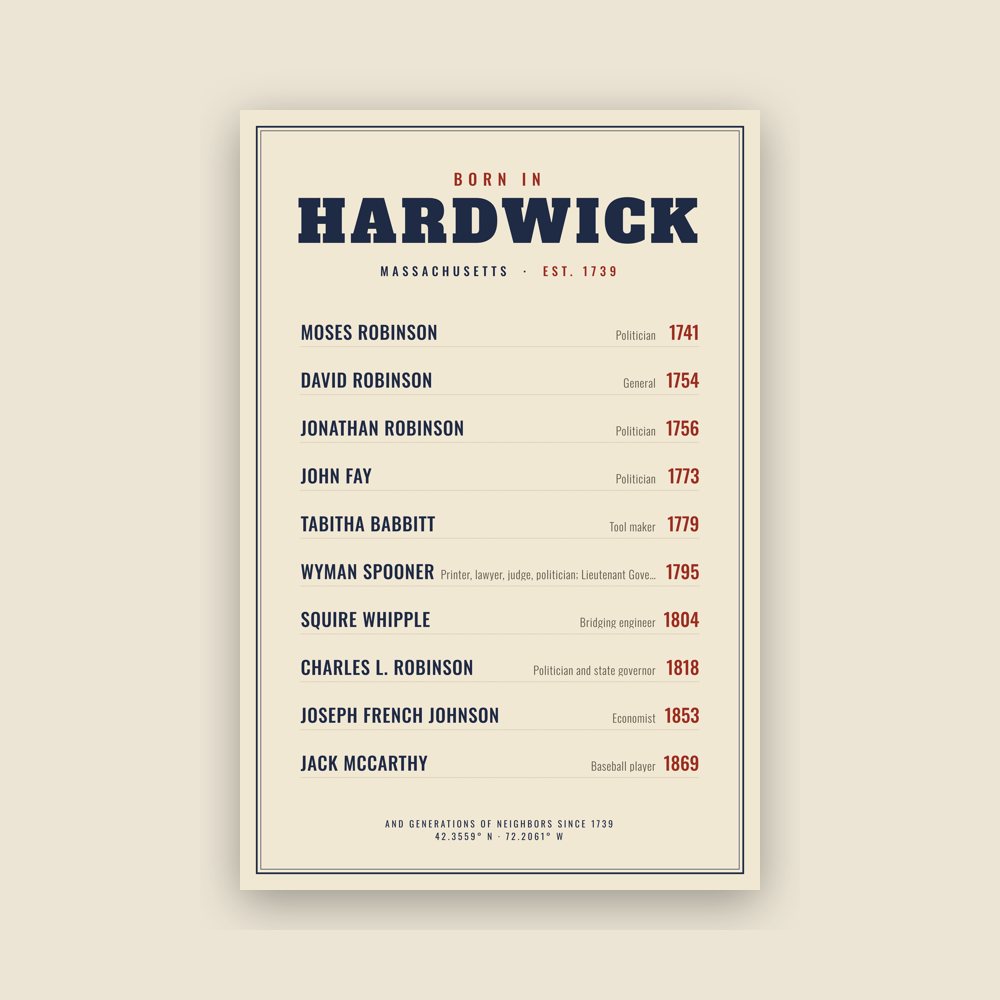
Famous natives, by birth year
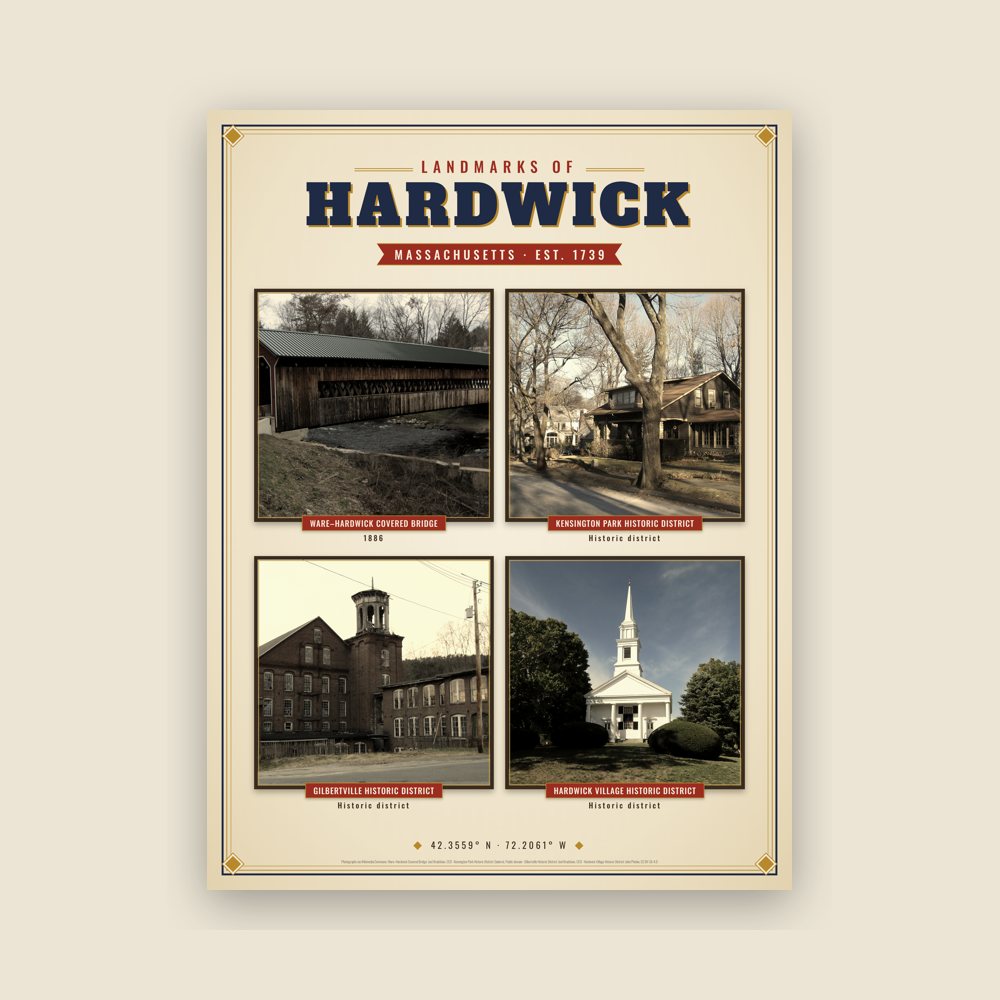
Nine local landmarks, archival matte
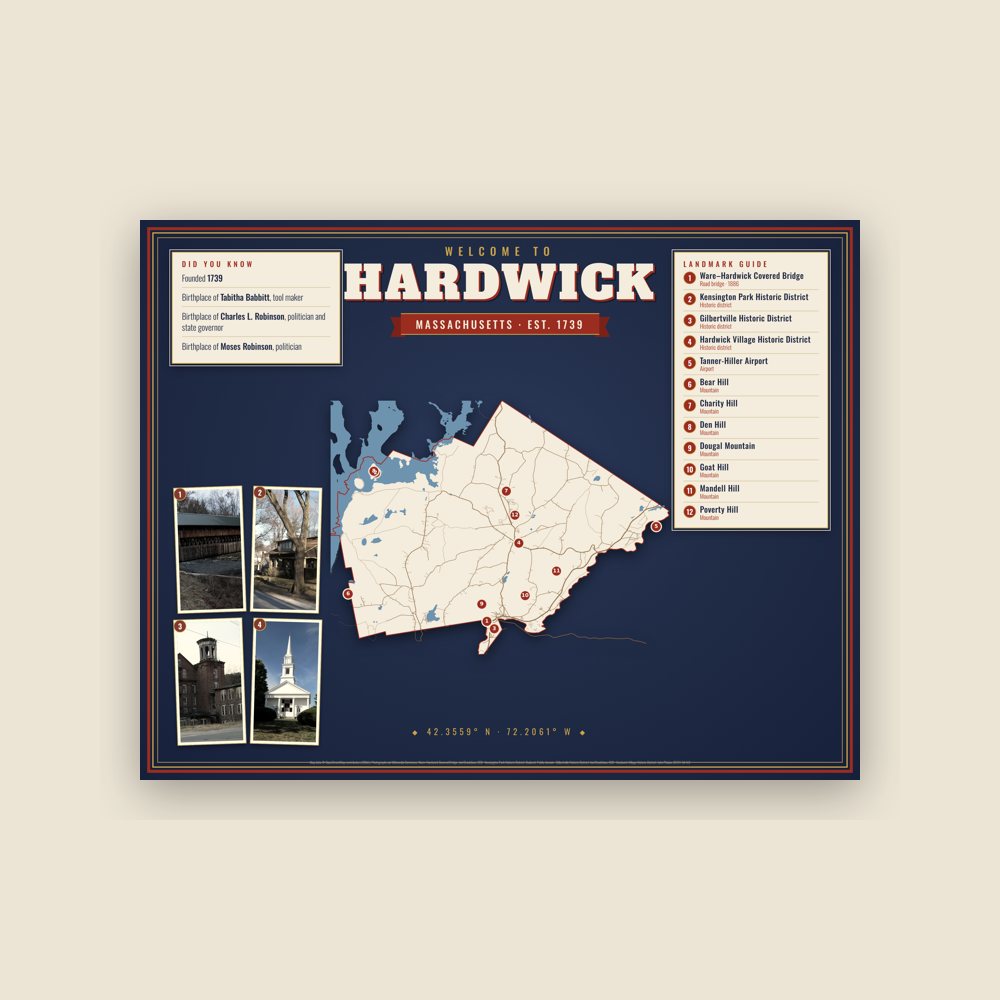
Map of local landmarks, washable fabric
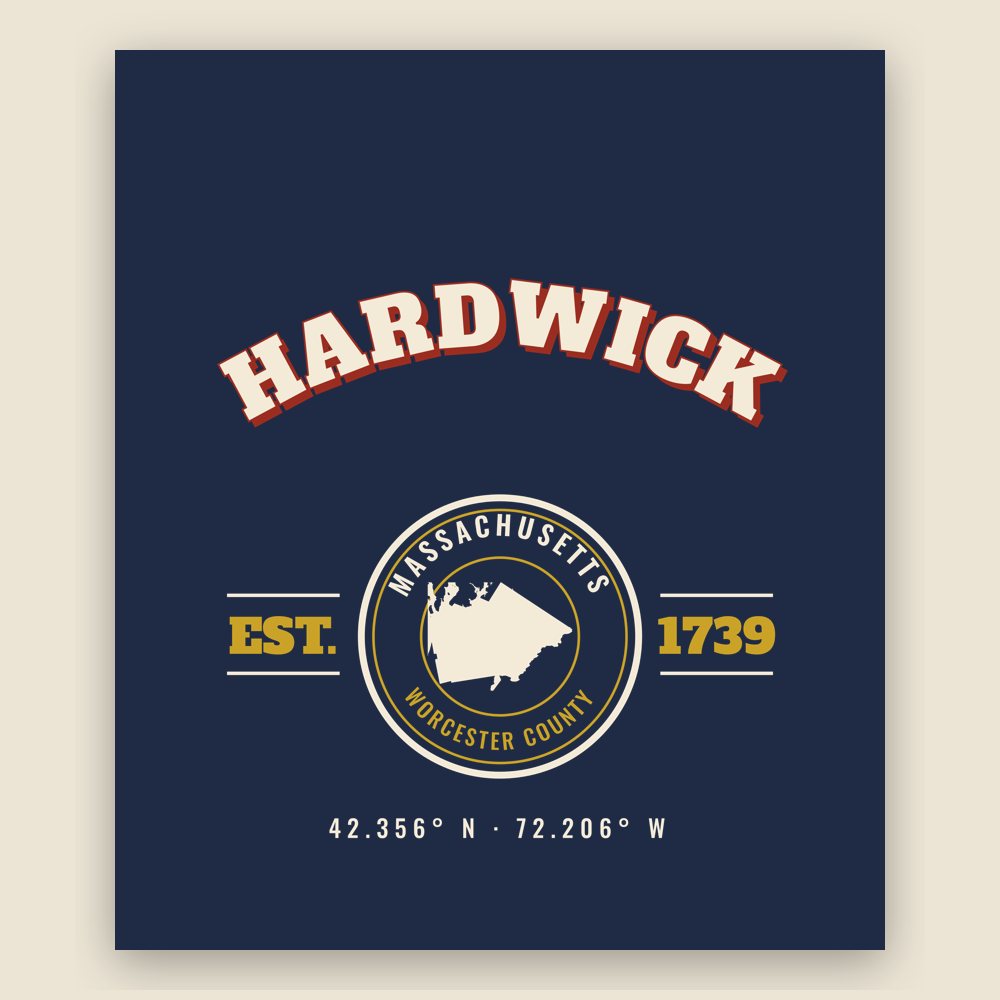
Heavy-blend fleece, street map printed on the back
Soft Bella+Canvas jersey
Glossy ceramic, dishwasher safe
Ceramic keepsake, gold ribbon
Weatherproof, for the front walk
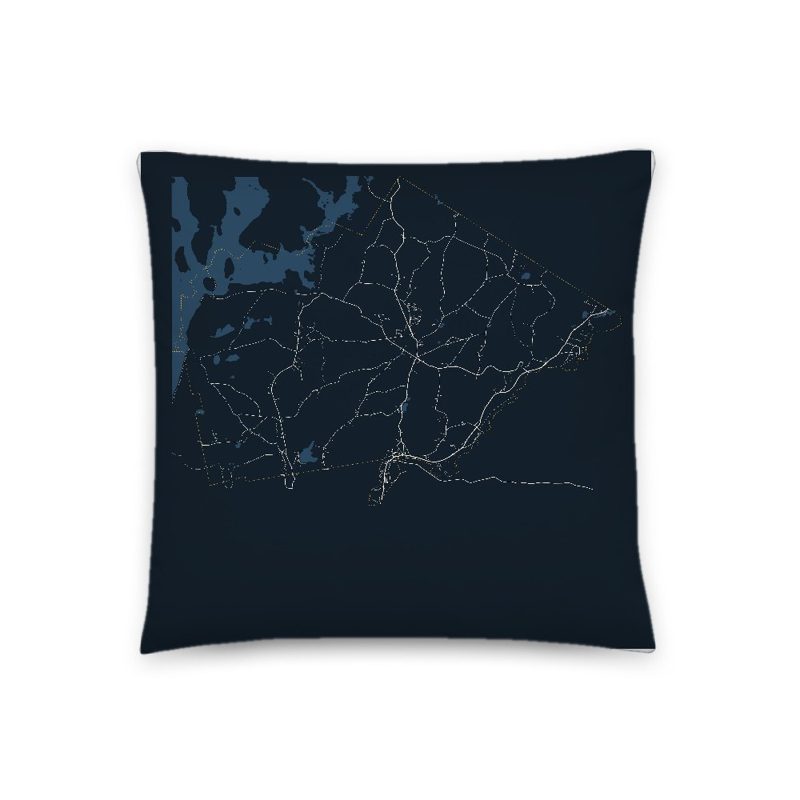
Soft-touch, zip cover
Sturdy all-over-print tote
Glossy top, cork back
Soft fleece, 50″×60″
20 oz, double-wall stainless
Population 2010: 2,990 → 2020: 2,667
From Wikidata (CC0).
On 27 December 1686, Indigenous Nipmuc tribes transferred land rights to a large area (in the area now known as central Massachusetts) to English settlers from Roxbury; this parcel of land was known to Natives as Wombemessock (meaning "place of chestnuts" or "place of small white fruit") in the Loup language. Many Indigenous peoples were being forced eastward after fighting against settlers in King Phillip's War, and settlers took advantage of the relocations to obtain land rights. The settlers from Roxbury; Joshua Lamb, Nathaniel Paige, Andrew Gardiner, Benjamin Gamblin, Benjamin Tucker, John Curtis, Richard Draper, and Samuel Ruggles; "paid £20" (£4,122.86 or $5,508.94 in 2026) for Wombemessock and would also buy parcels of land in what would become Leicester, Massachusetts and Spencer, Massachusetts.
The original settlers and their heirs made repeated attempts to obtain official permission from the Massachusetts General Court to establish an official settlement in Wombemessock, by the early 1700s known as Lambstown after the largest plantation owner, Colonel Joshua Lamb, son of one of the original settlers, Joshua Lamb. This permission was obtained in 1732, with the General Court recognizing Lambstown. The first church building in the area, The First Church of Christ (a Congregationalist church) in Lambstown was built in 1736 and ministered by The Reverend David White.
Lambstown was officially incorporated in 1739 as "Hardwick," named in honor of Philip Yorke, 1st Earl of Hardwicke, an English nobleman.
In a petition to the General Court in 1754, Timothy Ruggles, the member of the Massachusetts House of Representatives for Hardwick, said of the nascent town:"[T]he inhabitants[...] went on said lands in poor and low circumstance, and by means of the exceeding roughness of said lands they are to this day obliged to yearly expend large sums[...] there are not above eighty families in said town, many of which are extremely poor."
In 1762, Ruggles, now a brigadier general of the Massachusetts Militia and one of the leading New England Tories (colonists openly loyal to The Crown), introduced the Hardwick Fair, now the oldest annual fair in the United States. During the late 1800s, Hardwick experienced an expansion of its manufacturing industry, textile and paper mills, both of which left the area by the 1930s. The town has retained its agricultural roots, a long-standing tradition in the region. Hardwick is the home of Eagle Hill School, founded in 1967.
Adapted (trimmed) from the Wikipedia article Hardwick, Massachusetts, revision 1378349380 by its contributors, licensed CC BY-SA 4.0.
We share a part of every Hardwick sale with local partners, and we'd love to print from your collection. Old photographs, maps and postcards make the best keepsakes.
Partner with us