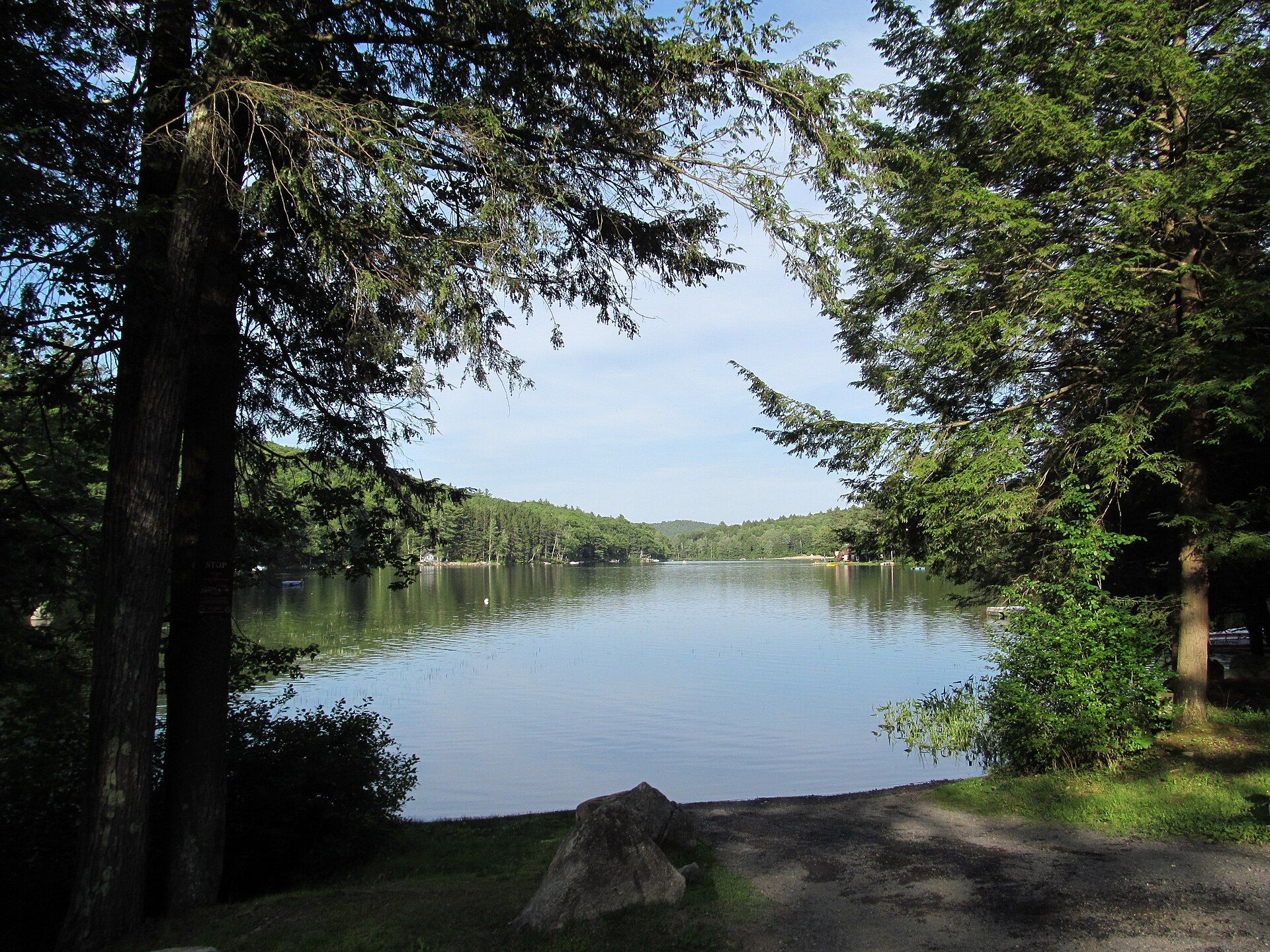
Erving is located along the Mohawk Trail. Landmarks include Erving State Forest, Farley Ledges and French King Bridge. Erving is the birthplace of Nina Browne, librarian and archivist.
Every piece is drawn from Erving's own map data and historic archives, then printed and shipped from the USA when you order. No two towns look alike.
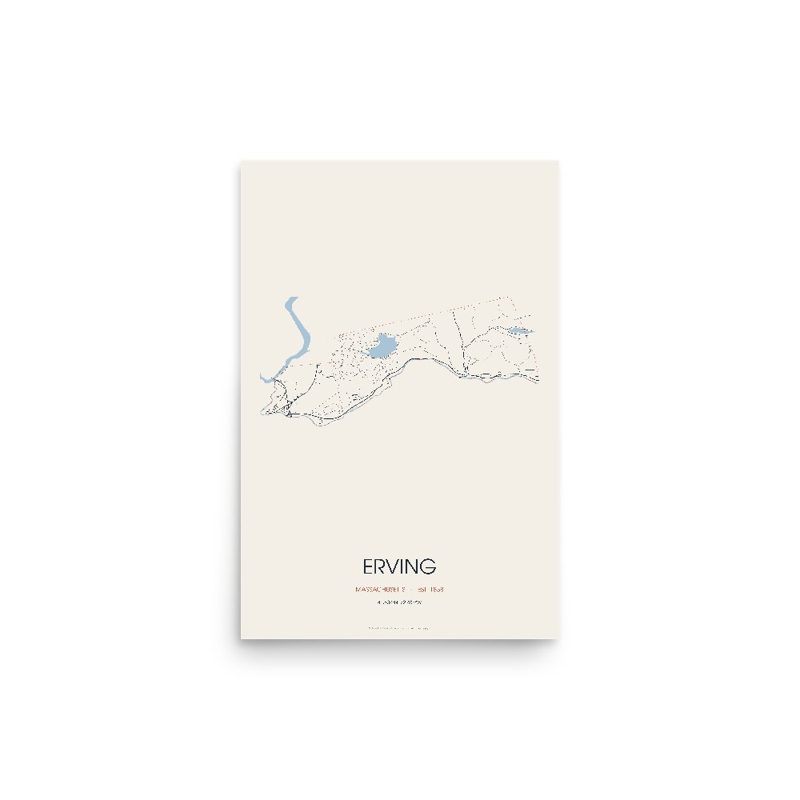
Every road in town, on archival matte paper
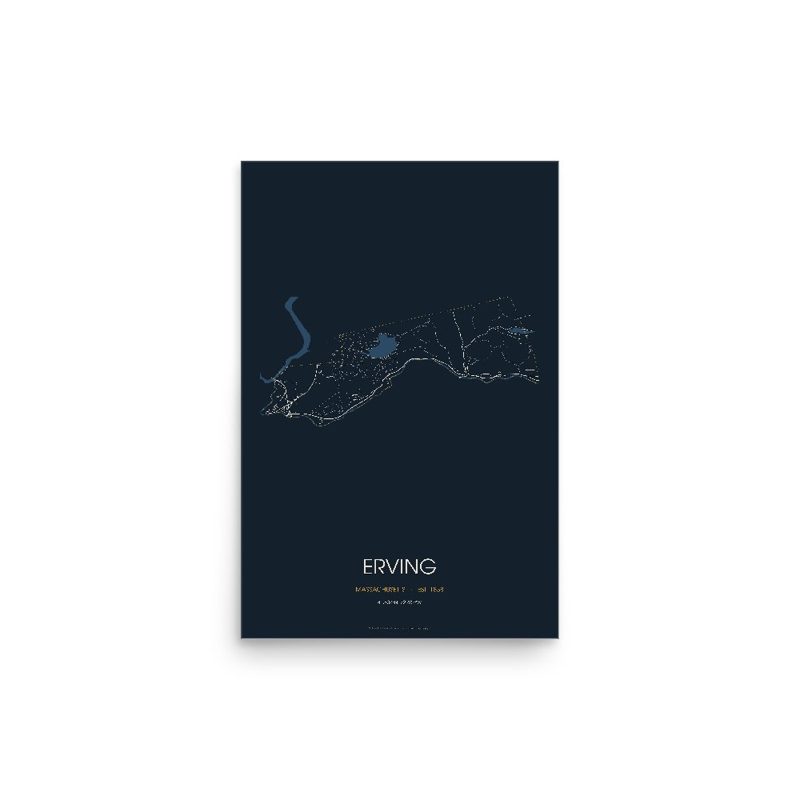
The same map, in navy and silver
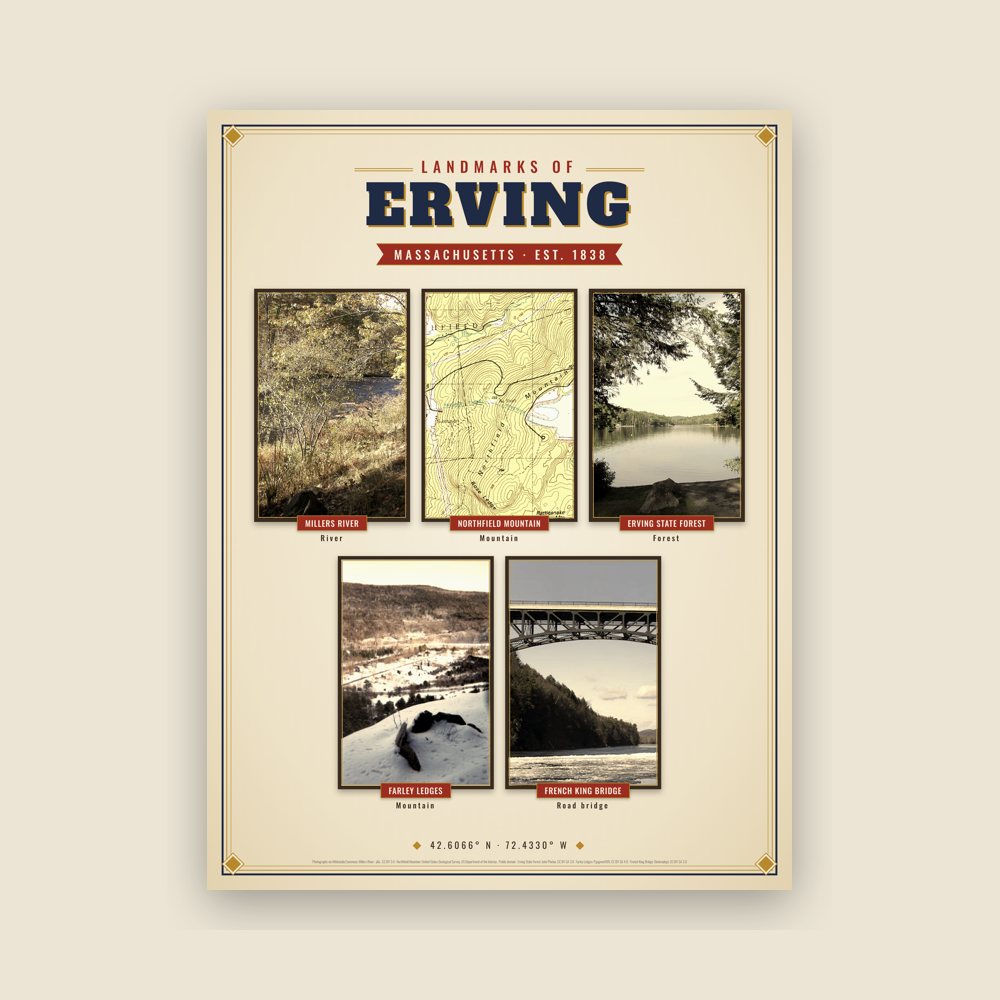
Nine local landmarks, archival matte
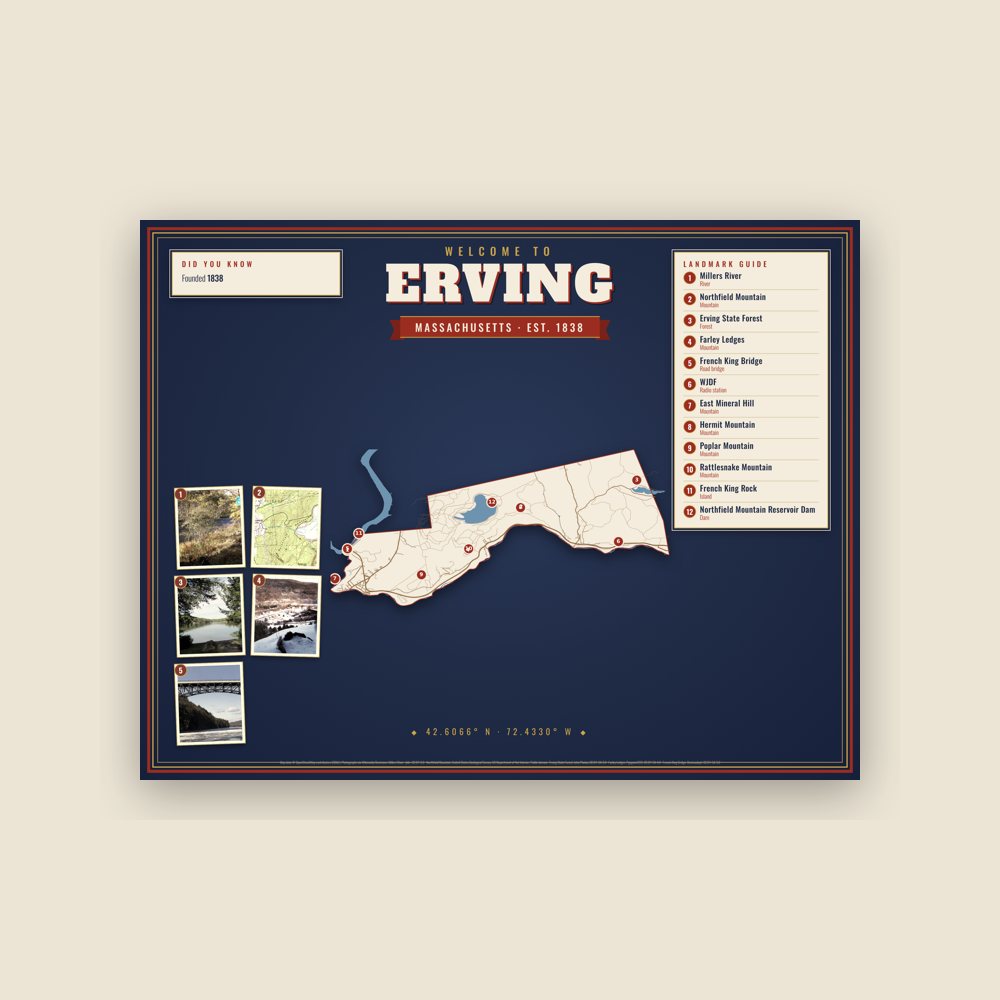
Map of local landmarks, washable fabric
Heavy-blend fleece, street map printed on the back
Soft Bella+Canvas jersey
Glossy ceramic, dishwasher safe
Ceramic keepsake, gold ribbon
Weatherproof, for the front walk
24″×16″, printed coir-look fibers, rubber back
12″×12″ printed wood, ready to hang
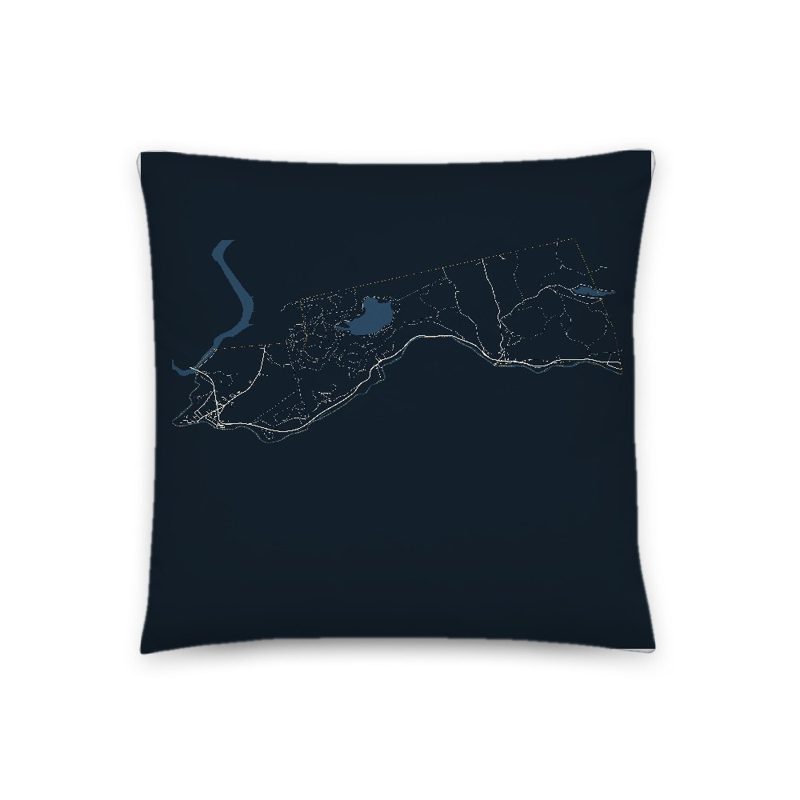
Soft-touch, zip cover
Sturdy all-over-print tote
Glossy top, cork back
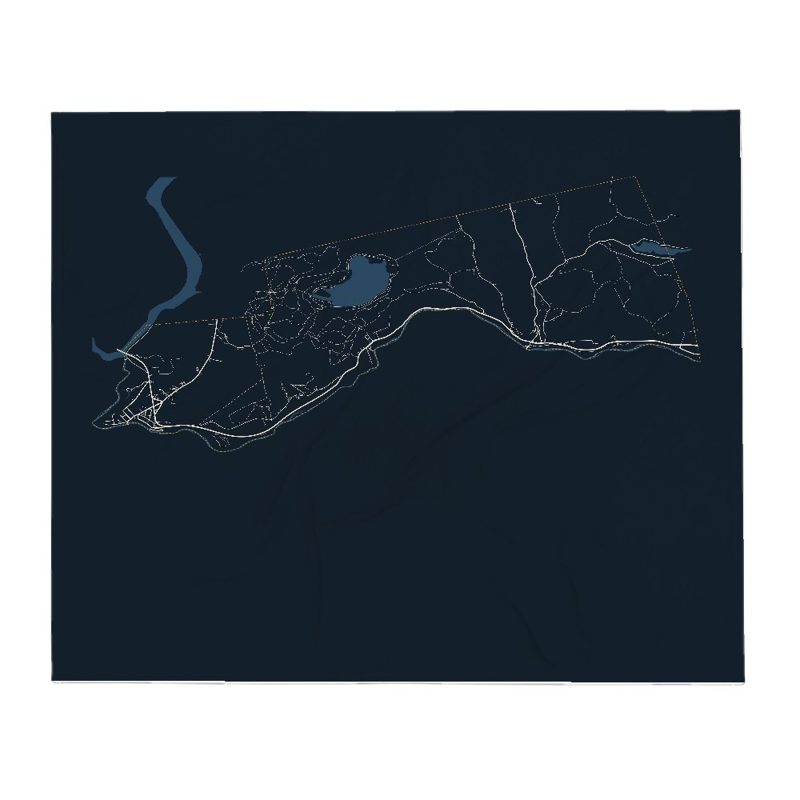
Soft fleece, 50″×60″
20 oz, double-wall stainless
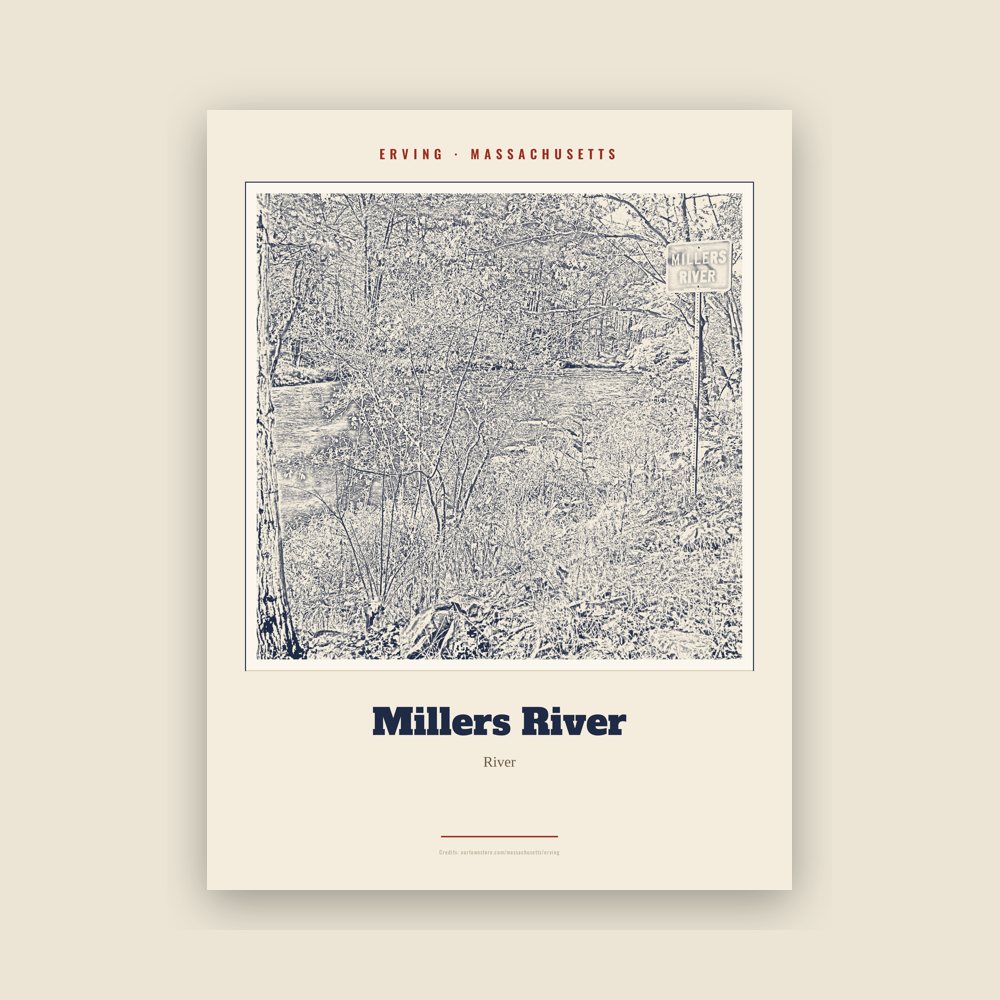
Archival matte print of a local landmark, credited to its photographer
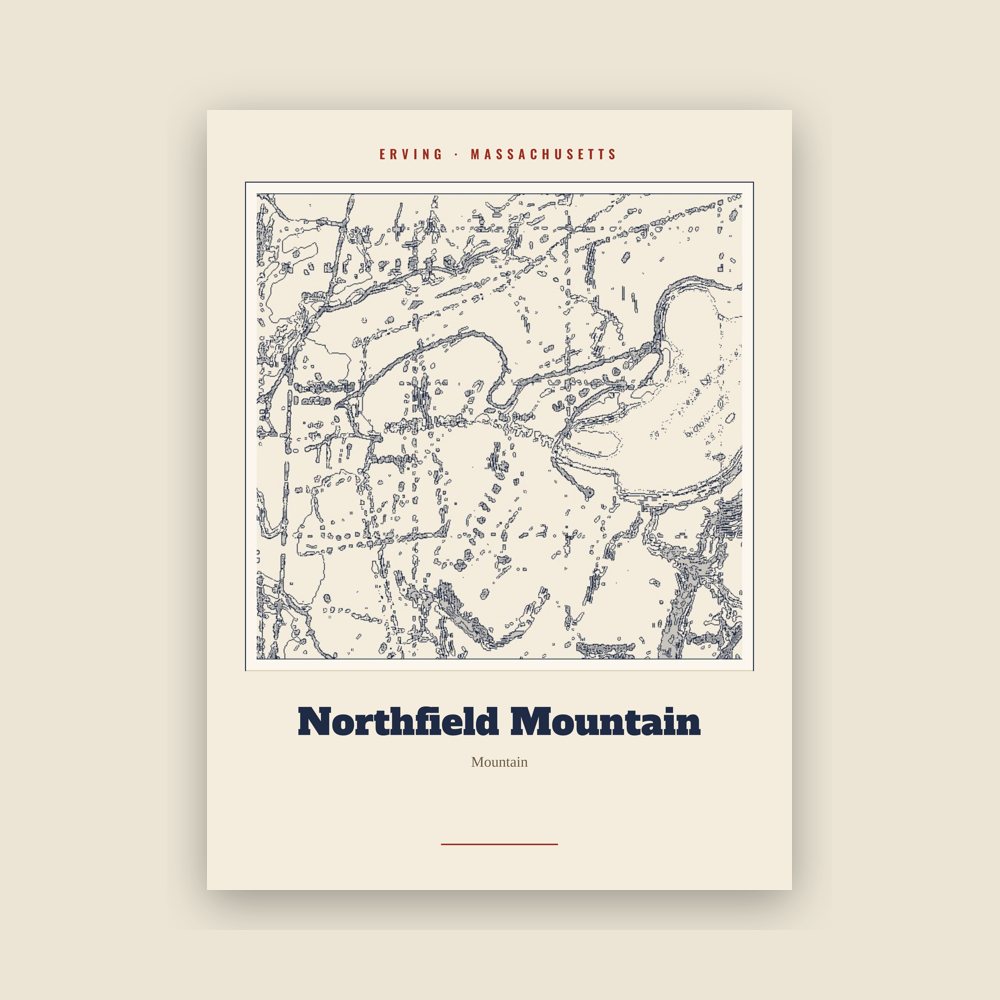
Archival matte print of a local landmark, credited to its photographer
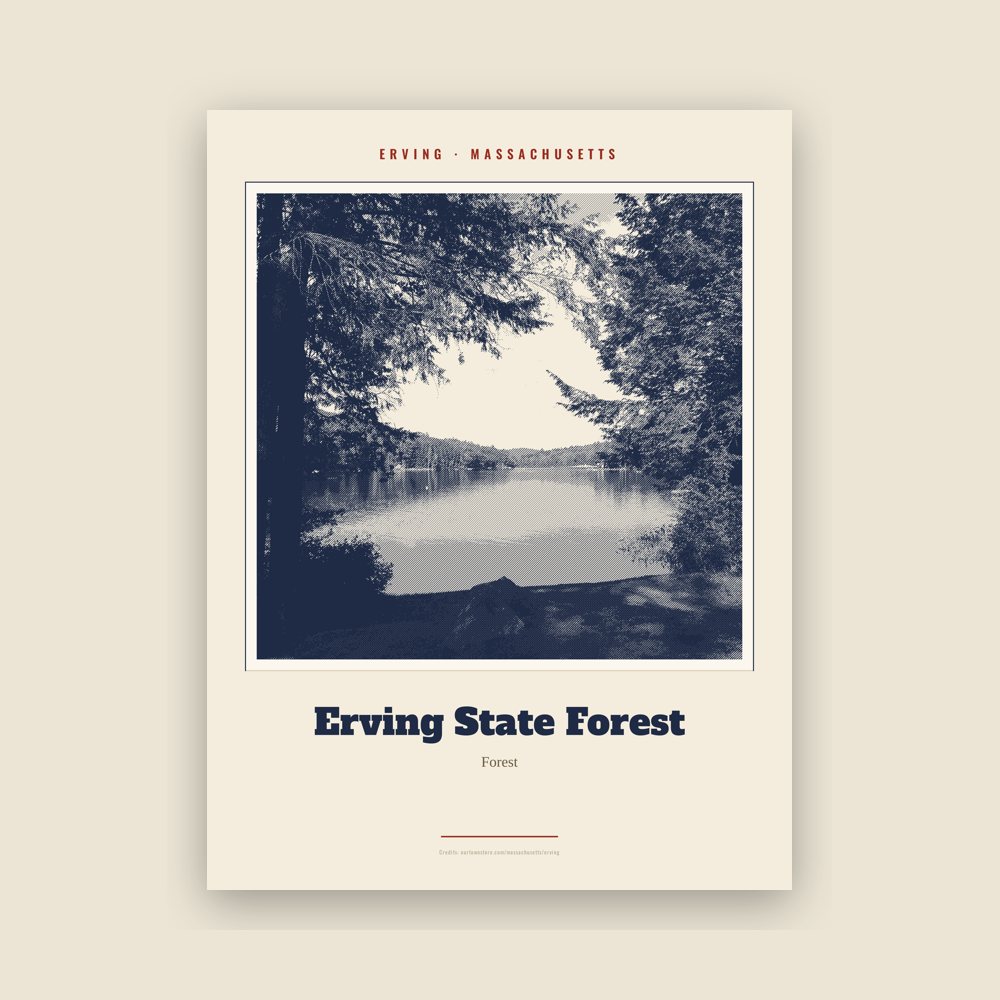
Archival matte print of a local landmark, credited to its photographer

Archival matte print of a local landmark, credited to its photographer
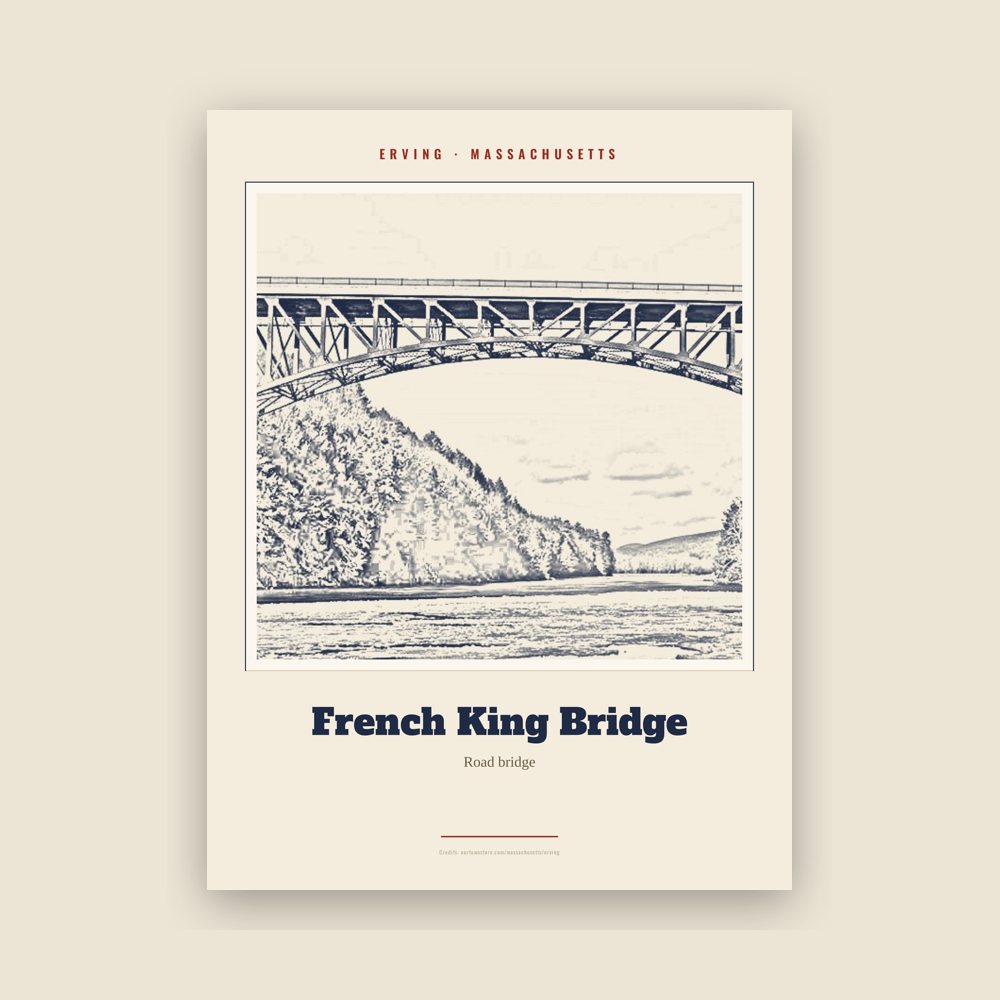
Archival matte print of a local landmark, credited to its photographer
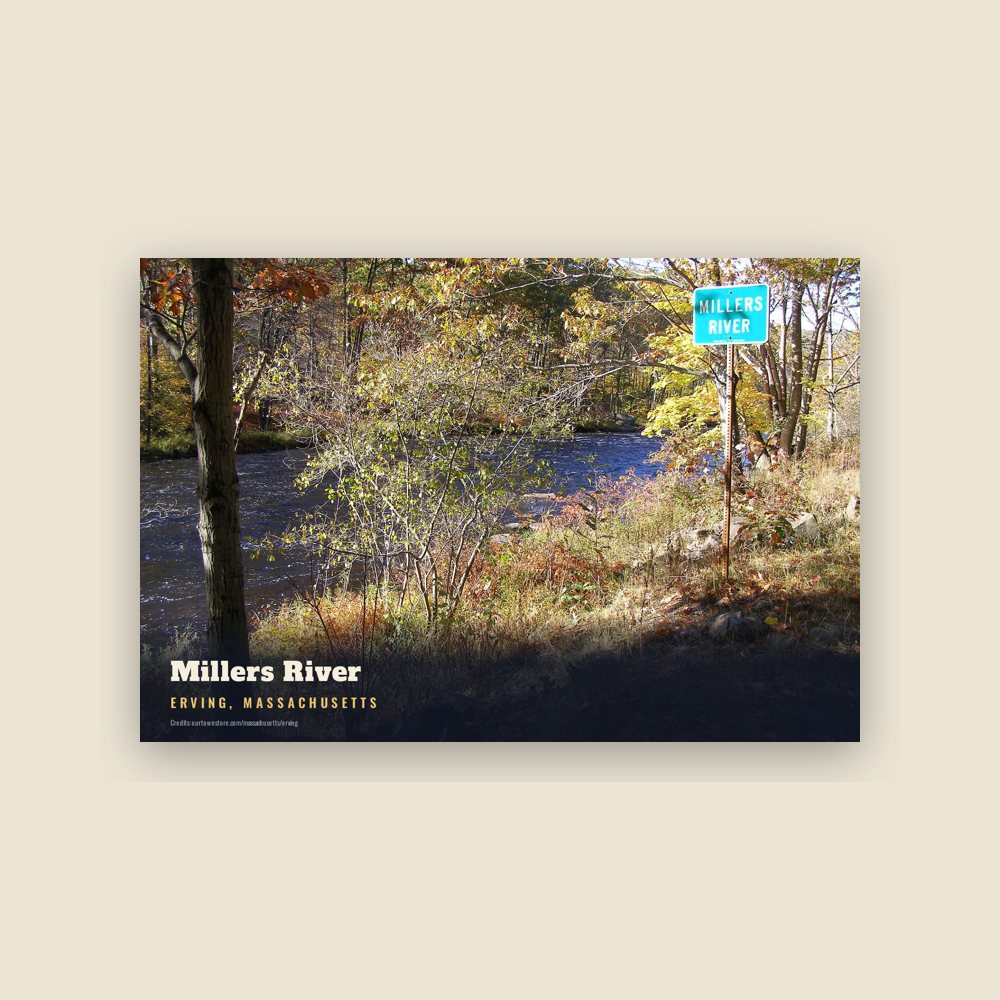
6″×4″ postcard, glossy front
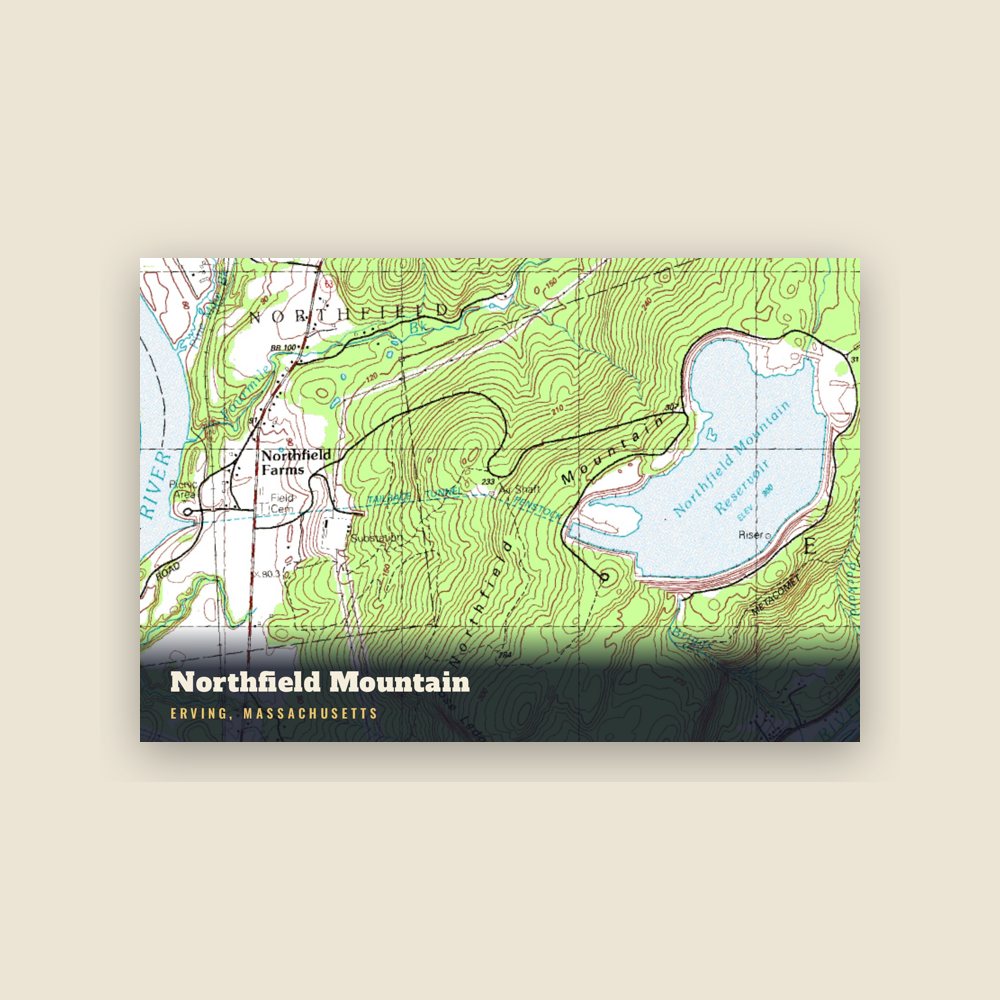
6″×4″ postcard, glossy front
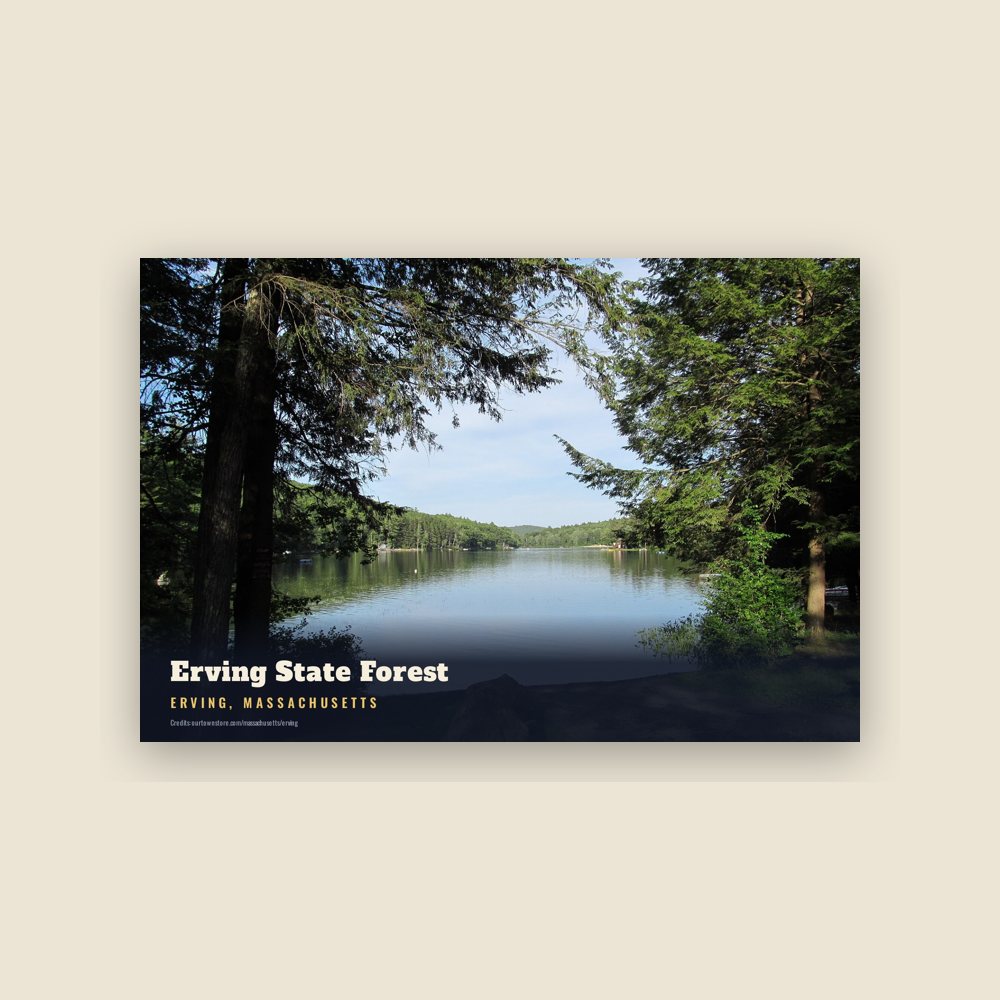
6″×4″ postcard, glossy front
6″×4″ postcard, glossy front
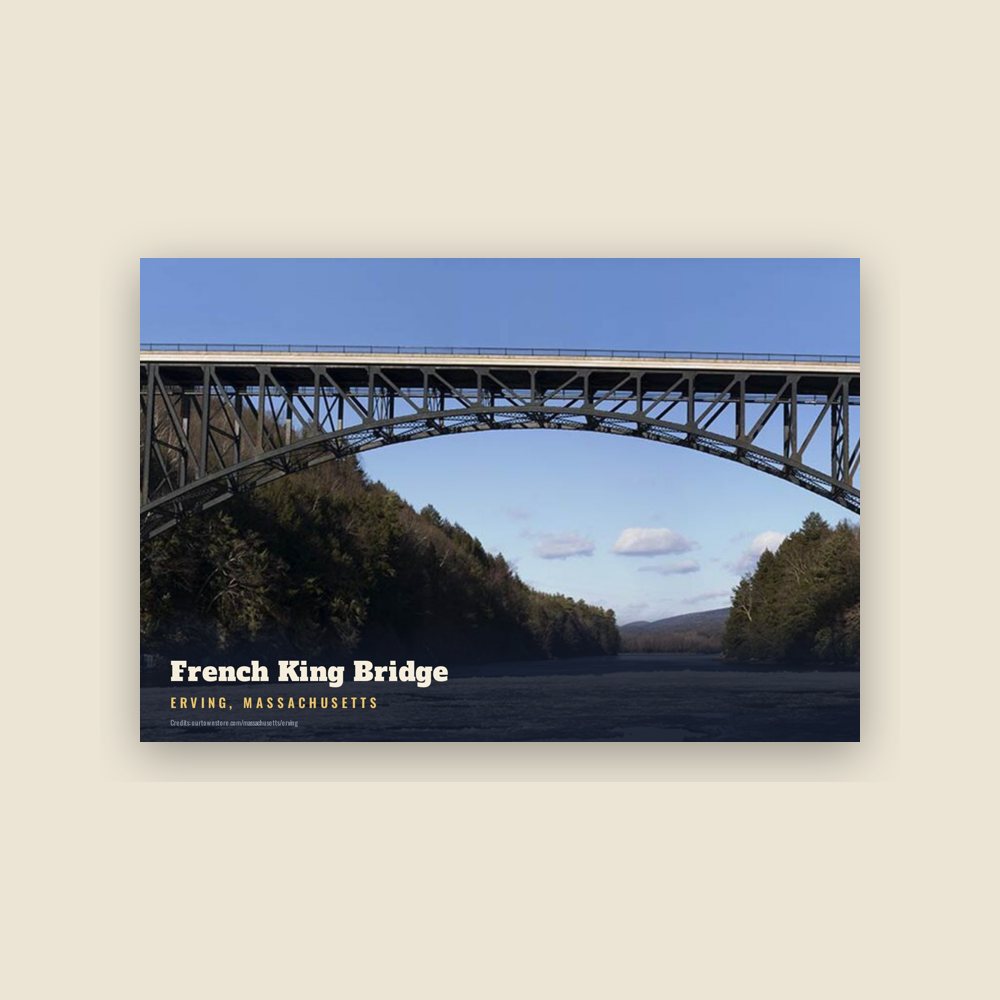
6″×4″ postcard, glossy front
Erving is located along the Mohawk Trail. The area was part of the Pocomtuc Indian Nation, whose villages included Squawkeag in what is now Northfield, and Peskeompscut in what is now Turners Falls. Eventually, most of the native population was displaced and/or sold into slavery as a result of King Philip's War and a series of massacres of local Indian villages.
Subsequently, Erving was first settled by white settlers in 1801 and officially incorporated—it being nearly the last unincorporated land in Massachusetts—in 1838. What is now Erving was once the farm of John Erving, the first colonial in the area. Noted in the 19th century for timber and grazing, the town had seven sawmills, two chair factories, one pail factory, one children's carriage factory, and one bit-brace factory. Large numbers of railroad ties and telegraph poles were cut in the abundant forests here, as many as 1,495,000 in one year.
Today, Erving has a school, a police and fire department, public library, several small stores and restaurants. The biggest employer in town is Erving Industries, a paper mill with history to Holyoke, Massachusetts - 'Paper City era'.
Adapted (trimmed) from the Wikipedia article Erving, Massachusetts, revision 1377333467 by its contributors, licensed CC BY-SA 4.0.
We share a part of every Erving sale with local partners, and we'd love to print from your collection. Old photographs, maps and postcards make the best keepsakes.
Partner with us