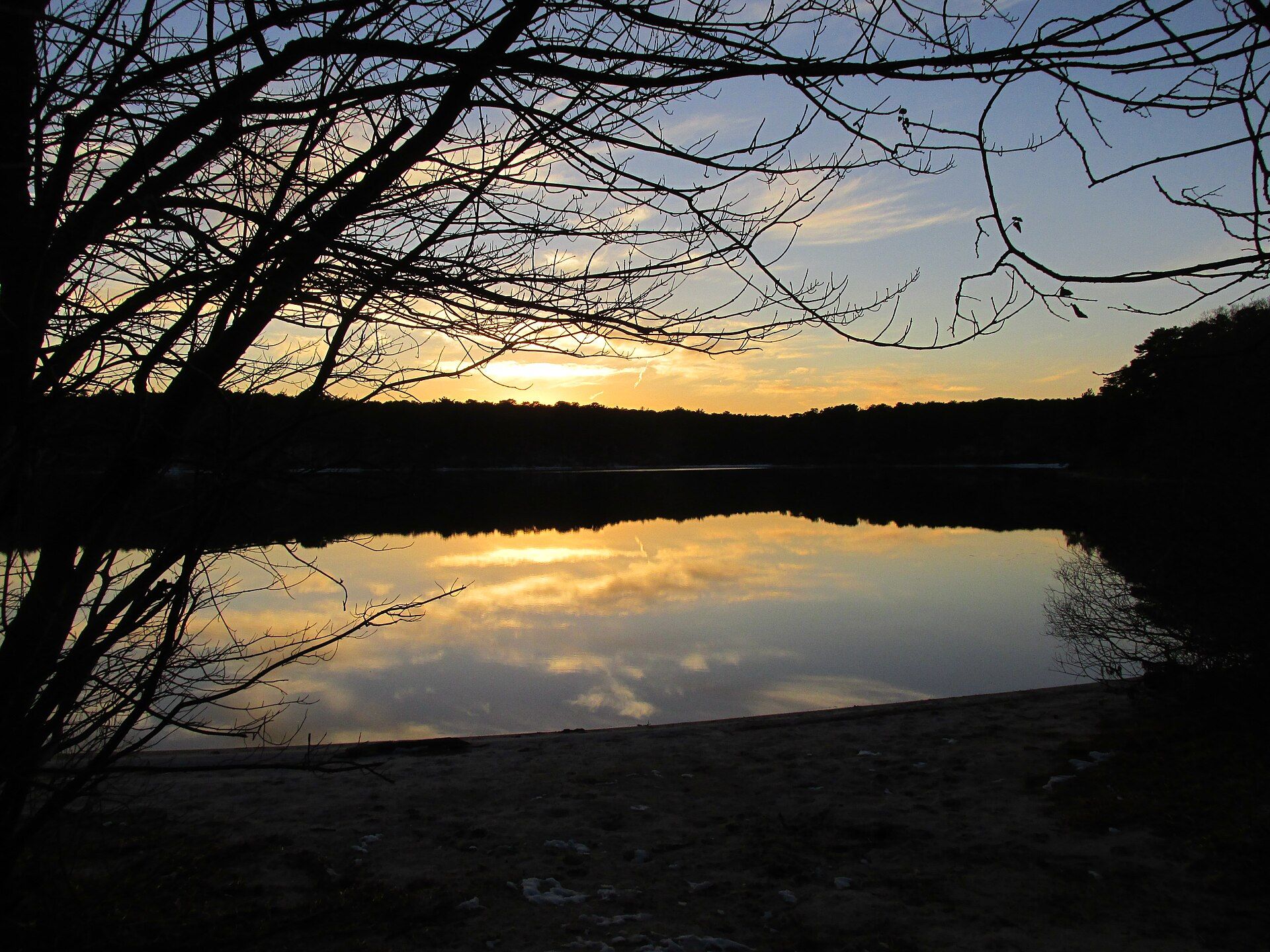
Indigenous settlement in Brewster took place on the north shore of the present-day town, with a Sauguatuckett farming area centered around the contemporary Stony Brook. Landmarks include Nickerson State Park, Dillingham House and Nickerson Mansion. Brewster is the birthplace of Joseph C. Lincoln, novelist, short story writer, poet.
Every piece is drawn from Brewster's own map data and historic archives, then printed and shipped from the USA when you order. No two towns look alike.
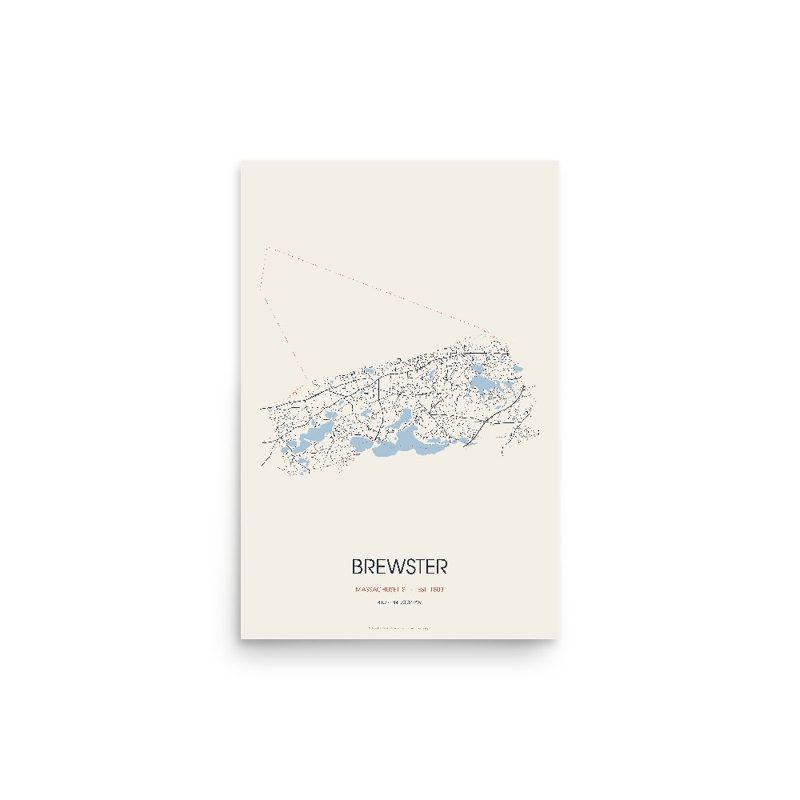
Every road in town, on archival matte paper
The same map, in navy and silver
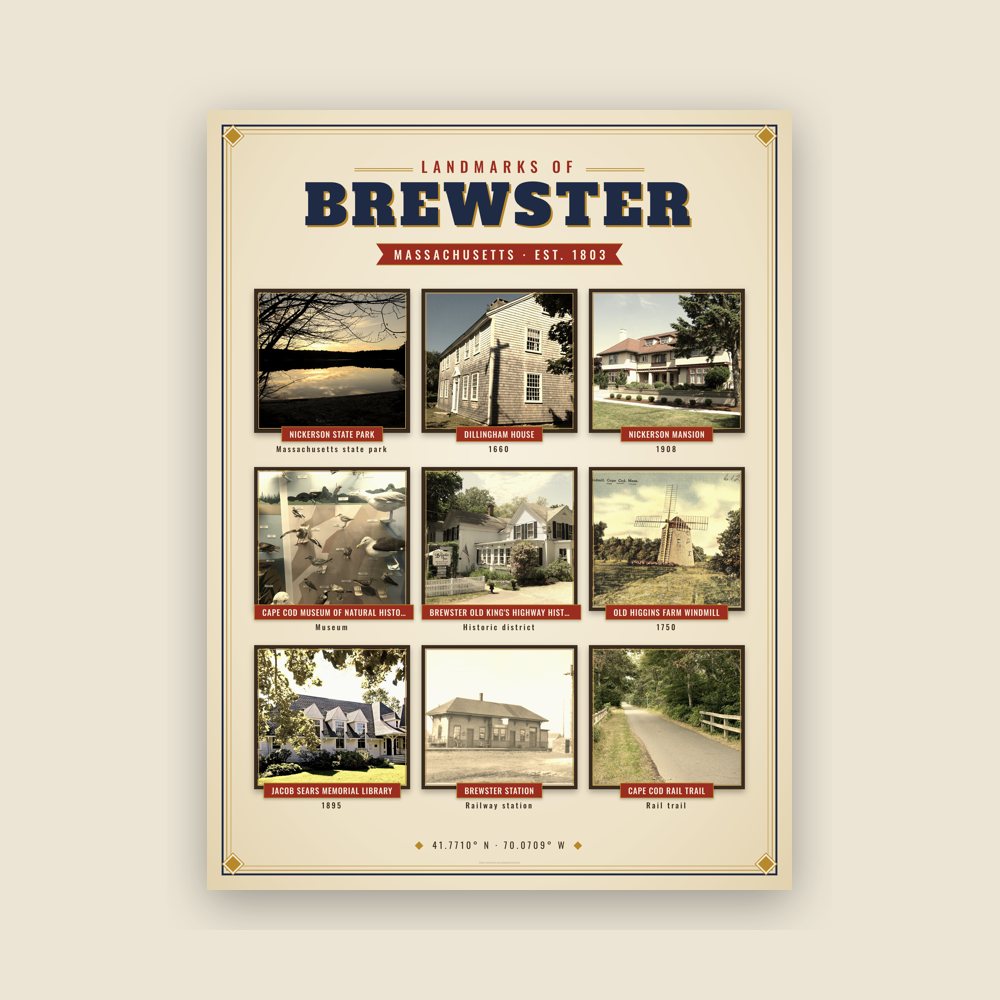
Nine local landmarks, archival matte
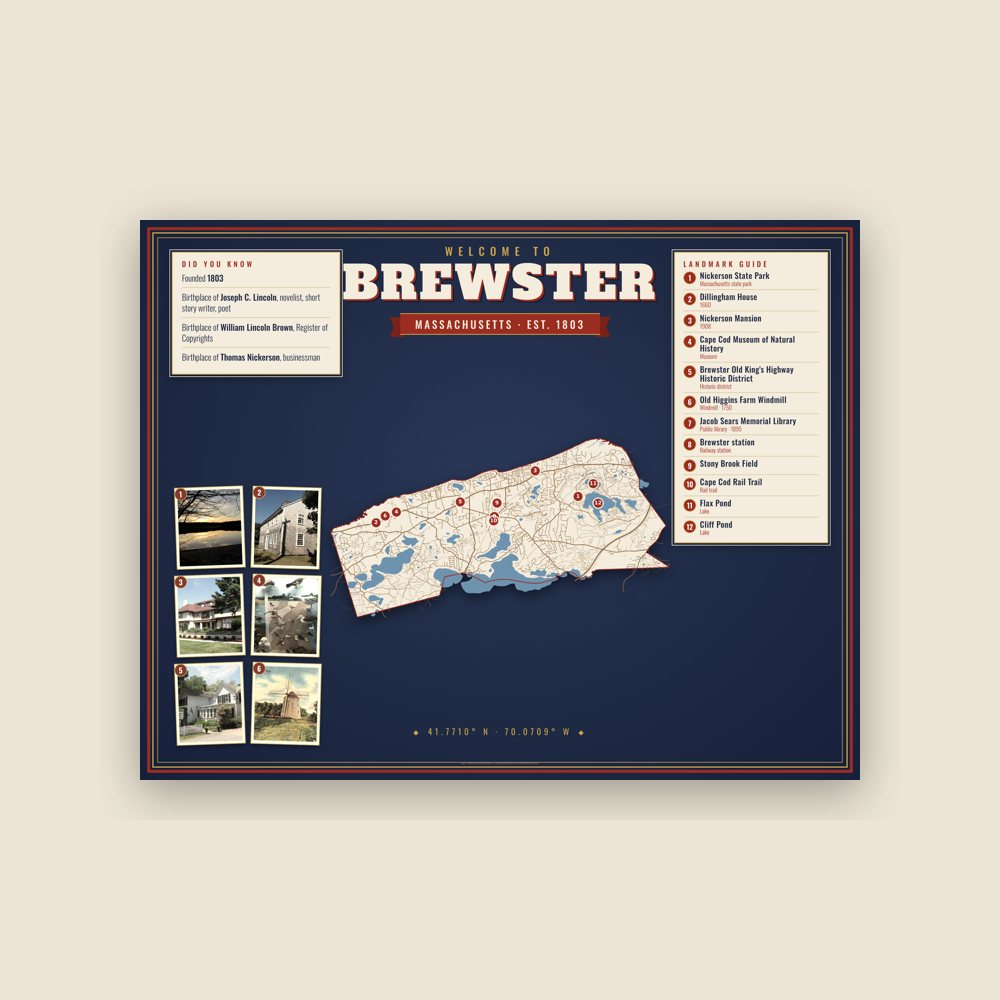
Map of local landmarks, washable fabric
Heavy-blend fleece, street map printed on the back
Soft Bella+Canvas jersey
Glossy ceramic, dishwasher safe
Ceramic keepsake, gold ribbon
Weatherproof, for the front walk
24″×16″, printed coir-look fibers, rubber back
12″×12″ printed wood, ready to hang
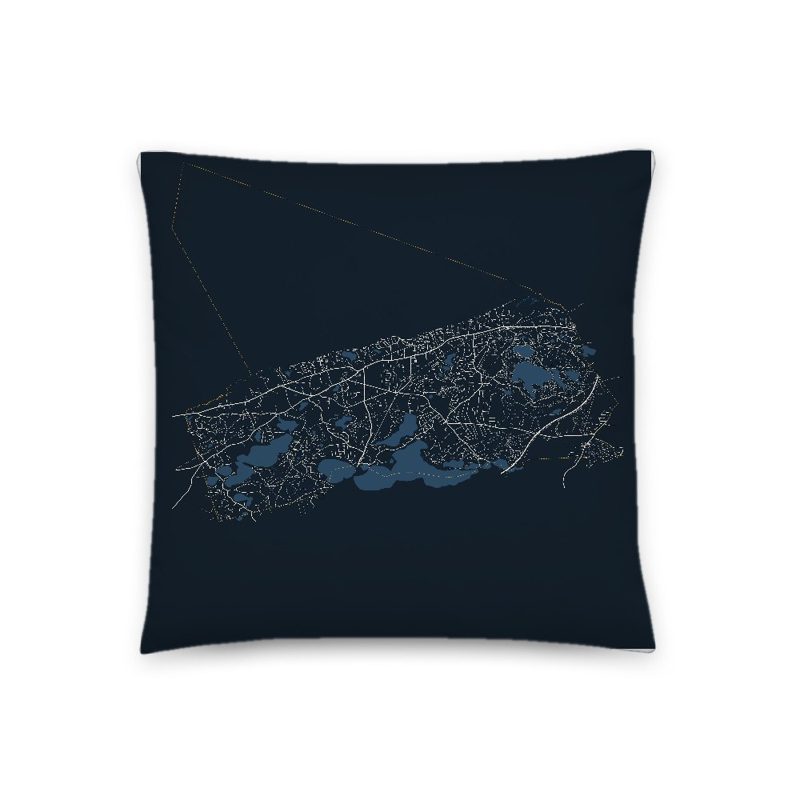
Soft-touch, zip cover
Sturdy all-over-print tote
Glossy top, cork back
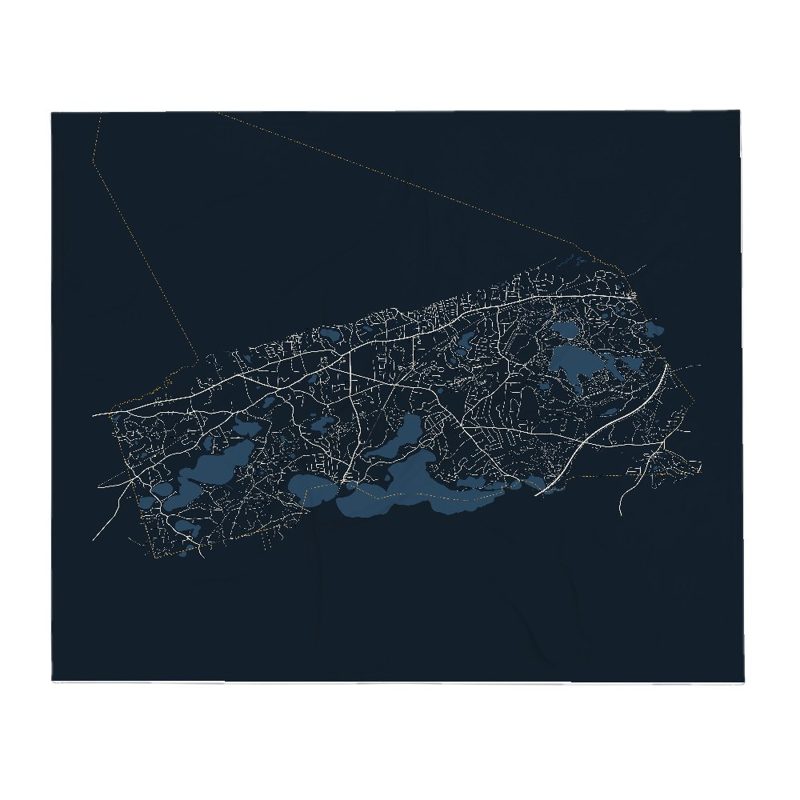
Soft fleece, 50″×60″
20 oz, double-wall stainless
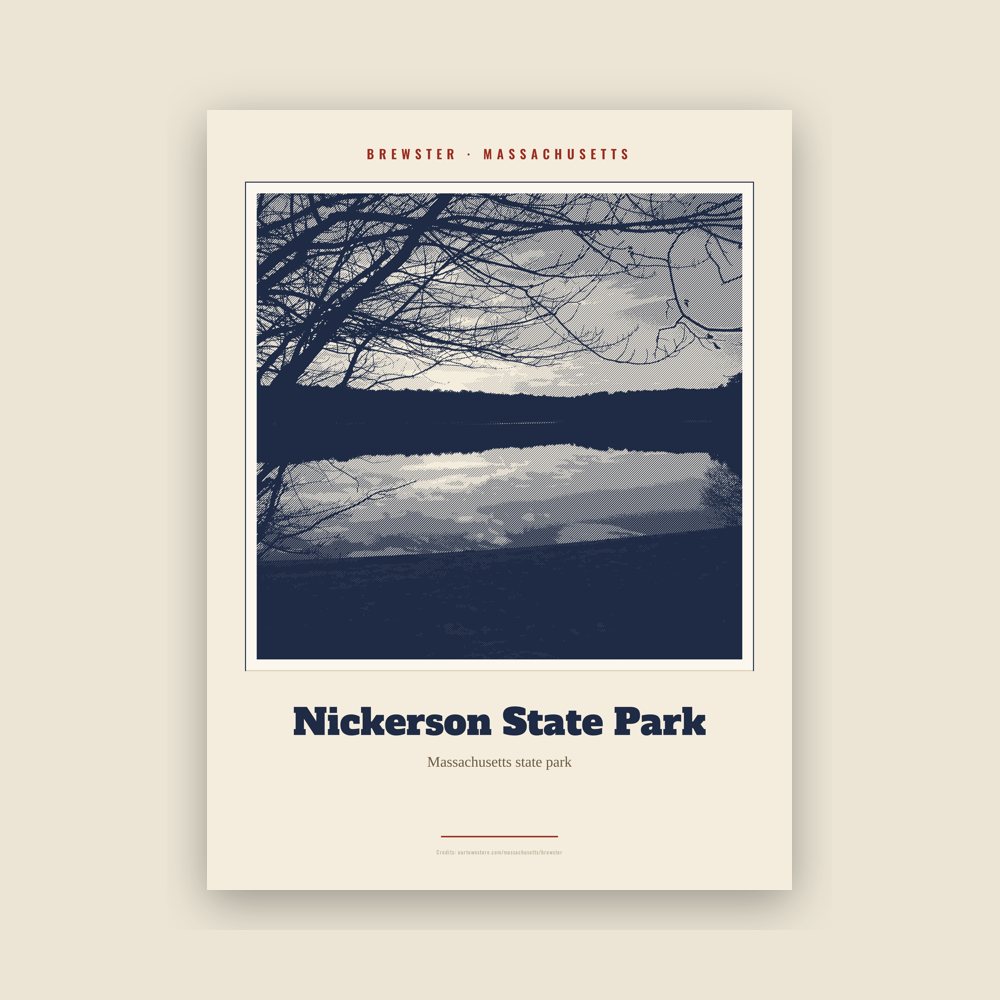
Archival matte print of a local landmark, credited to its photographer
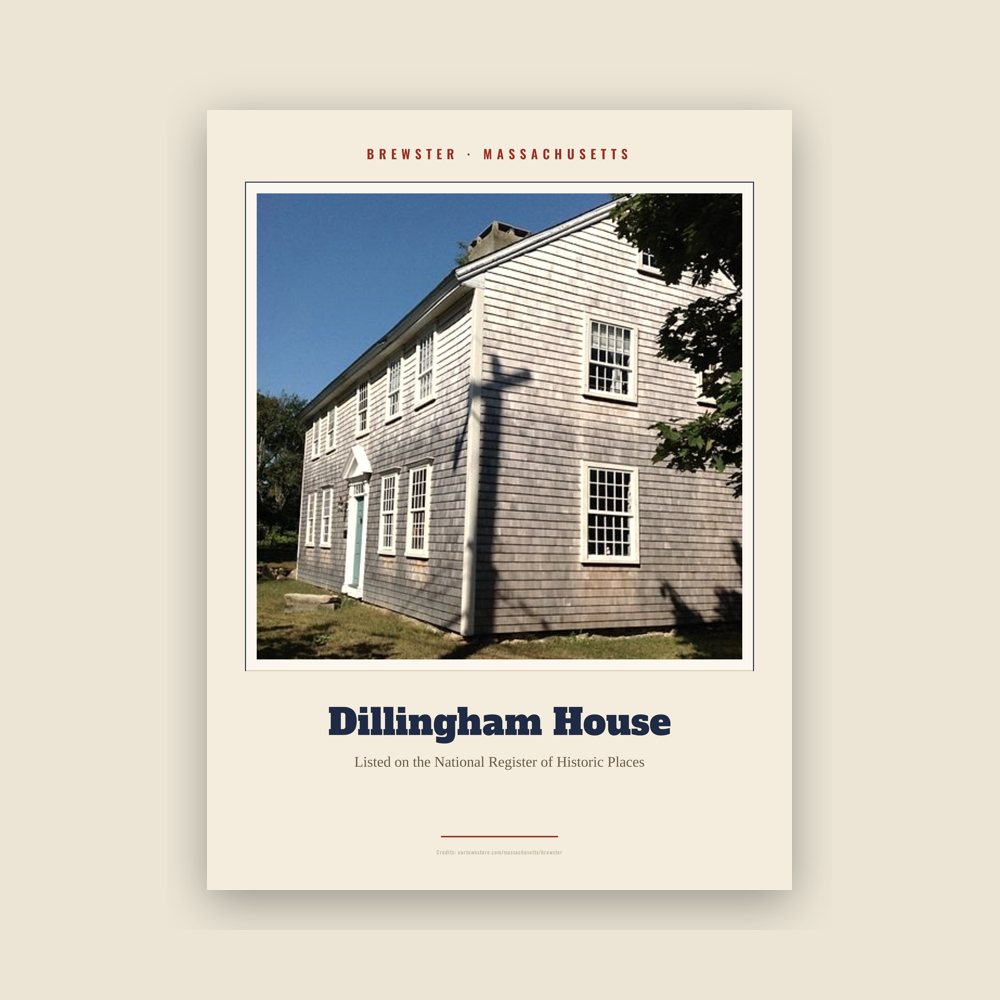
Archival matte print of a local landmark, credited to its photographer
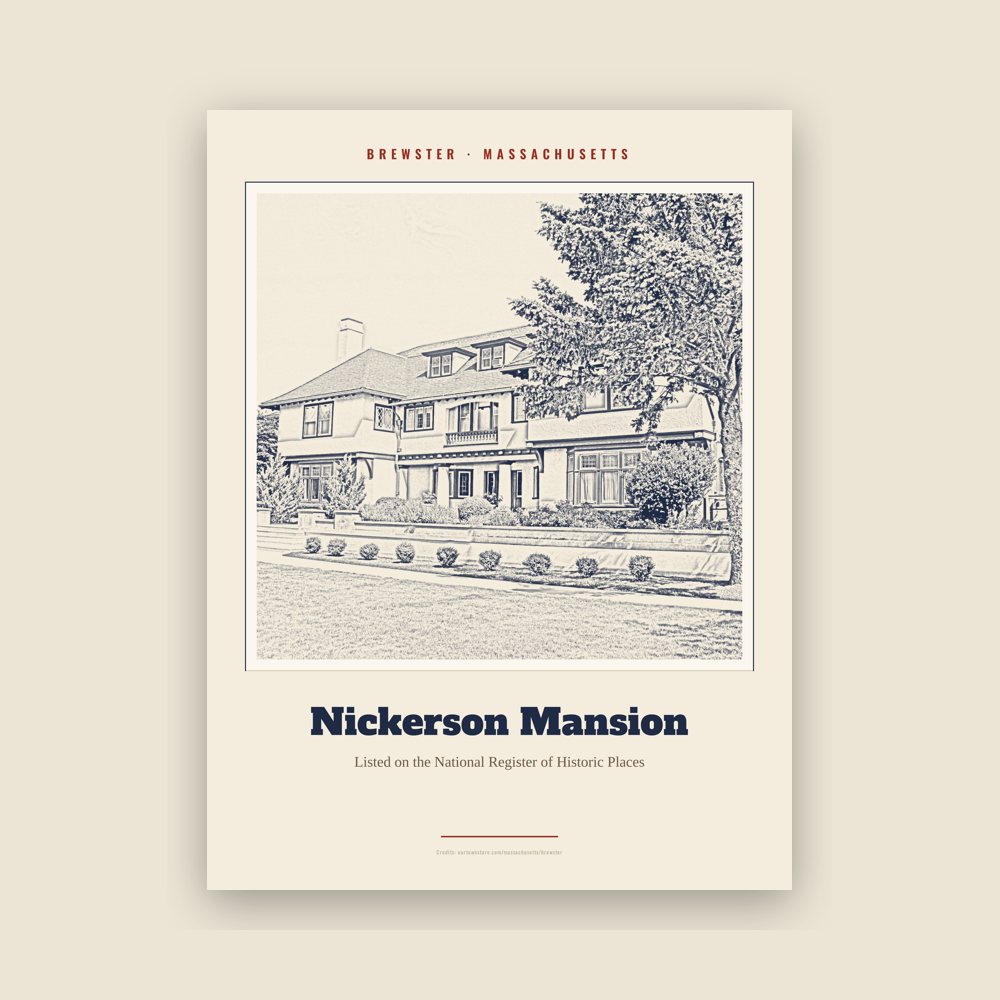
Archival matte print of a local landmark, credited to its photographer
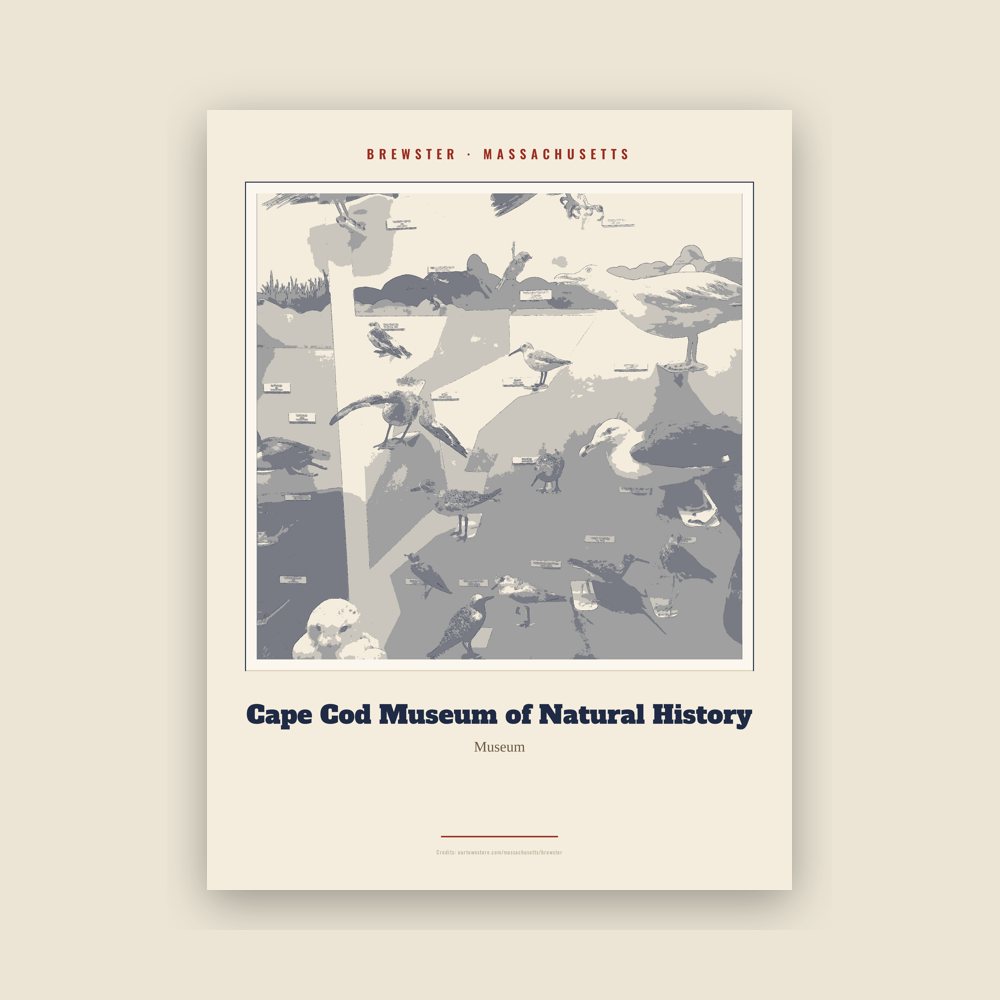
Archival matte print of a local landmark, credited to its photographer
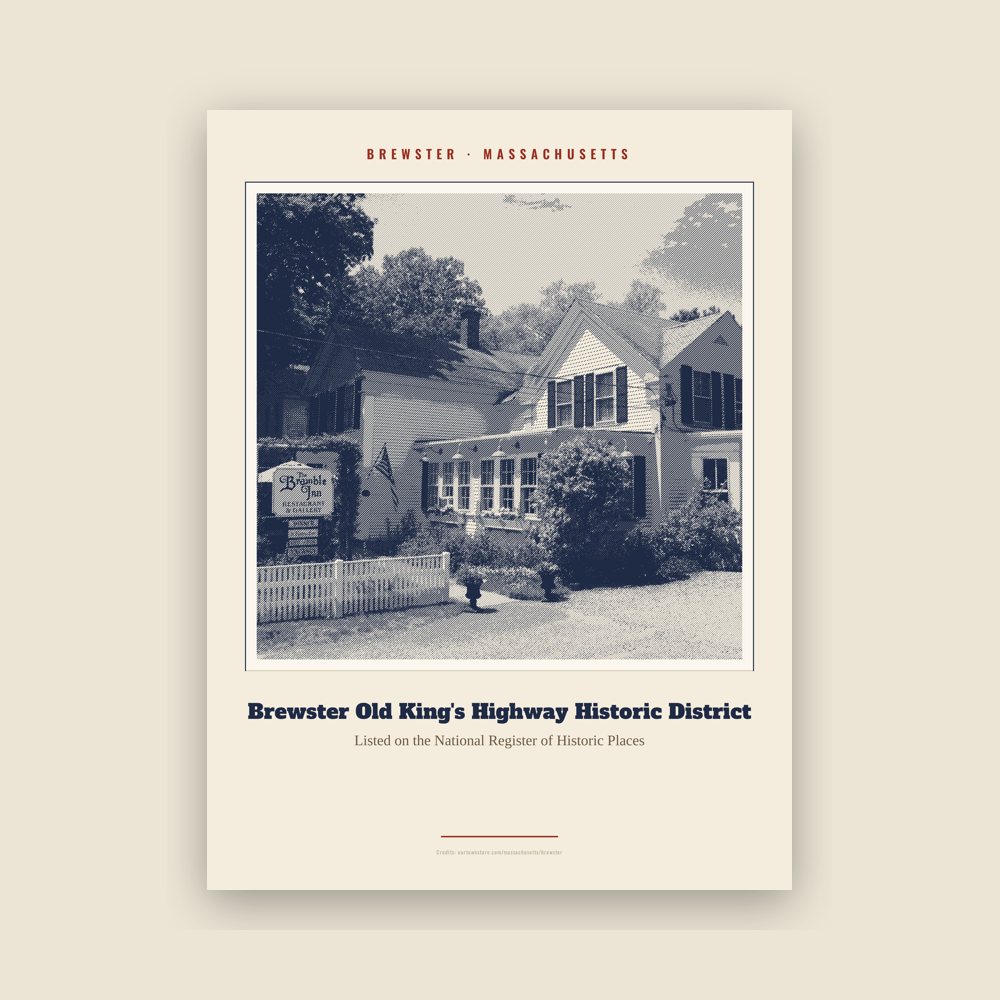
Archival matte print of a local landmark, credited to its photographer
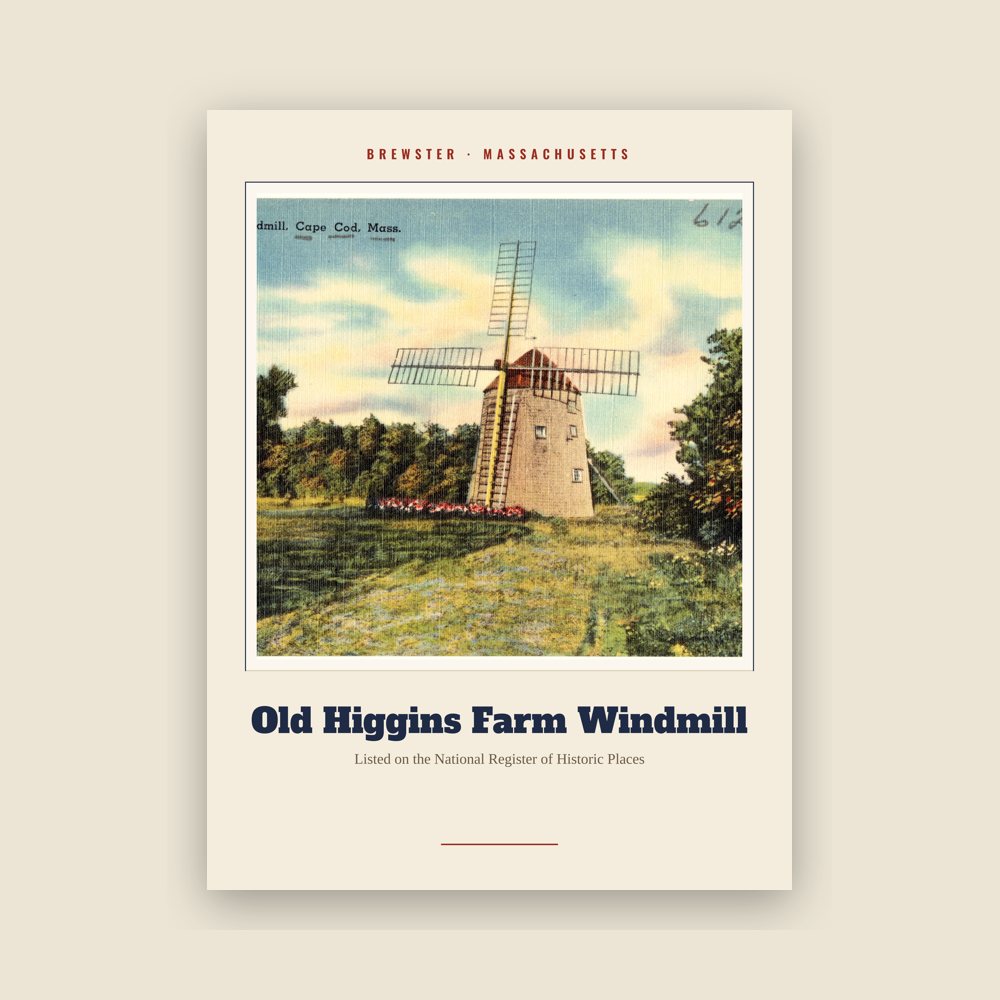
Archival matte print of a local landmark, credited to its photographer
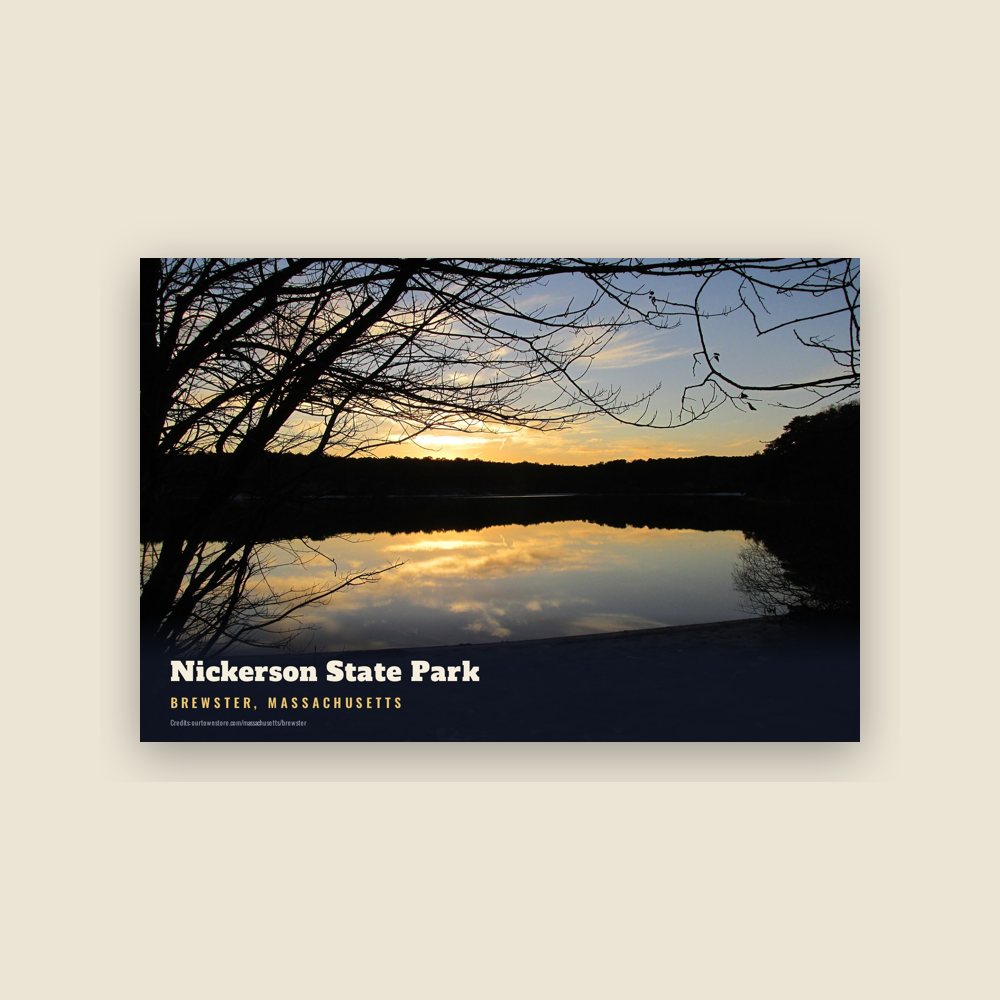
6″×4″ postcard, glossy front
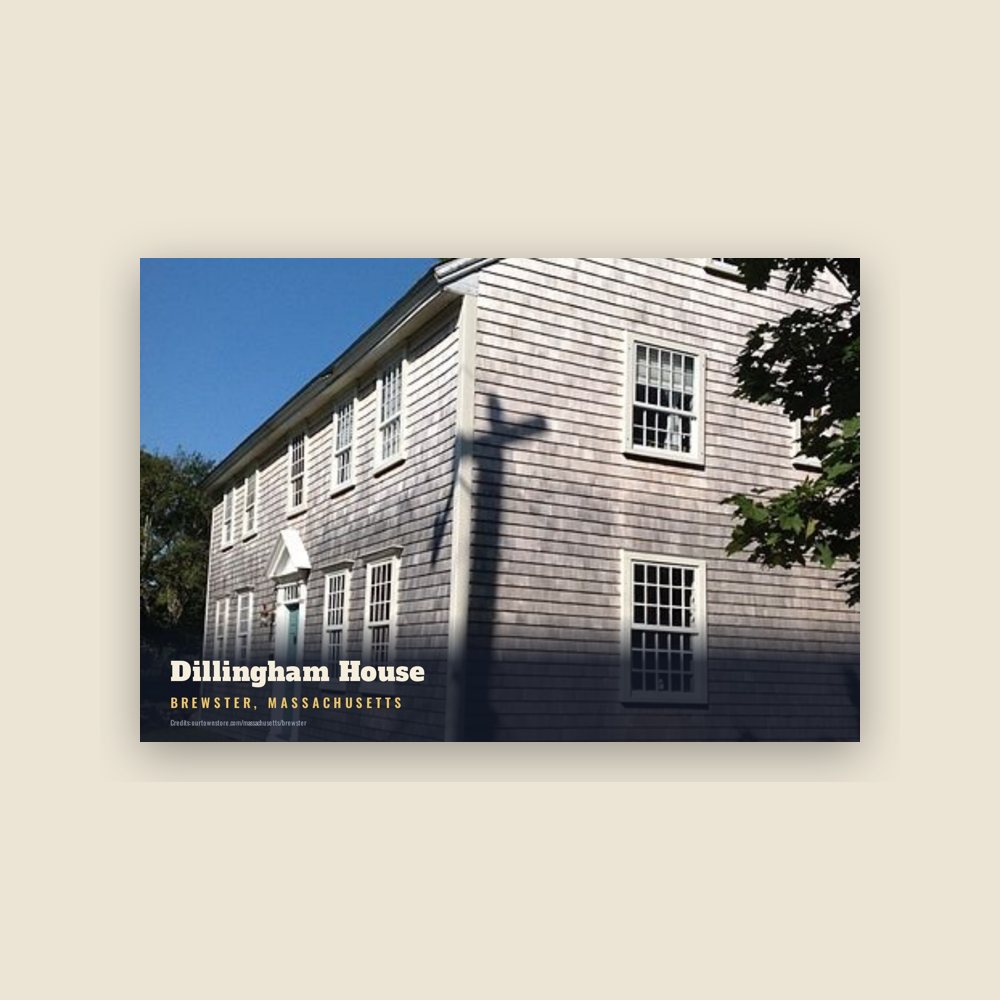
6″×4″ postcard, glossy front
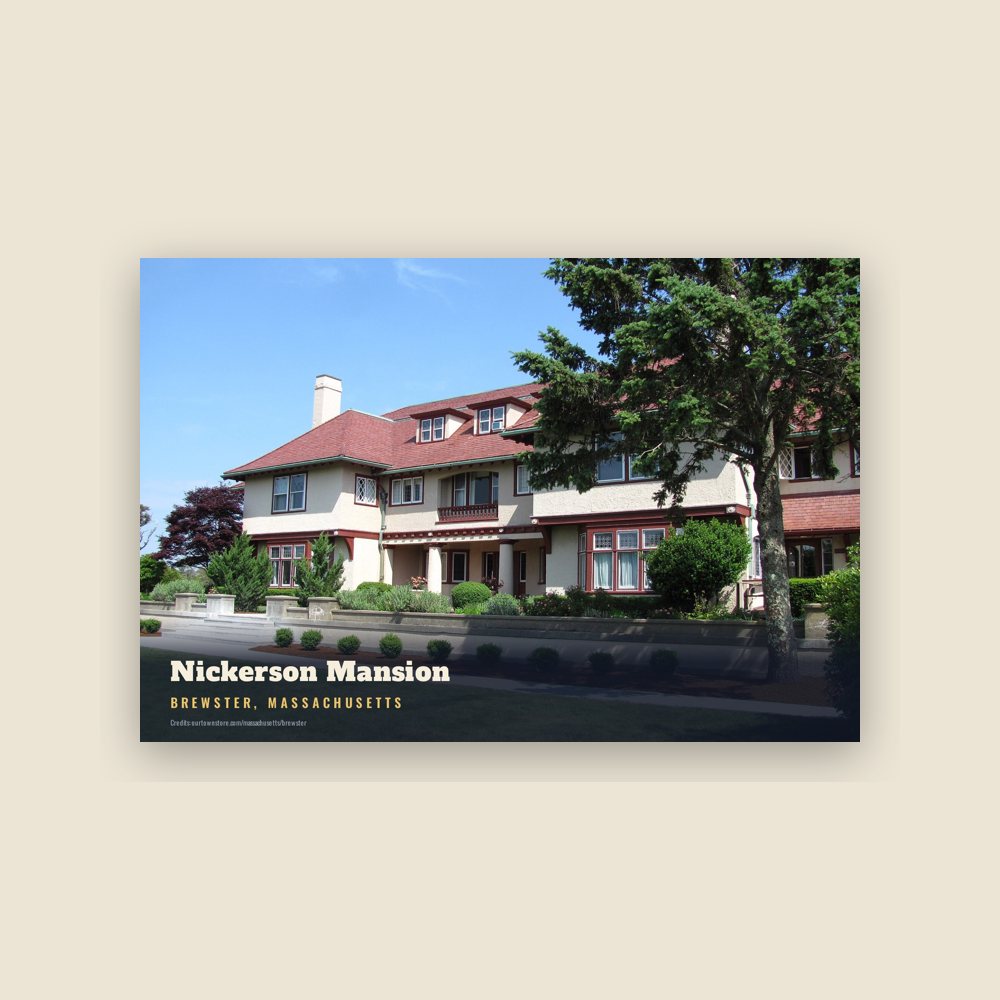
6″×4″ postcard, glossy front
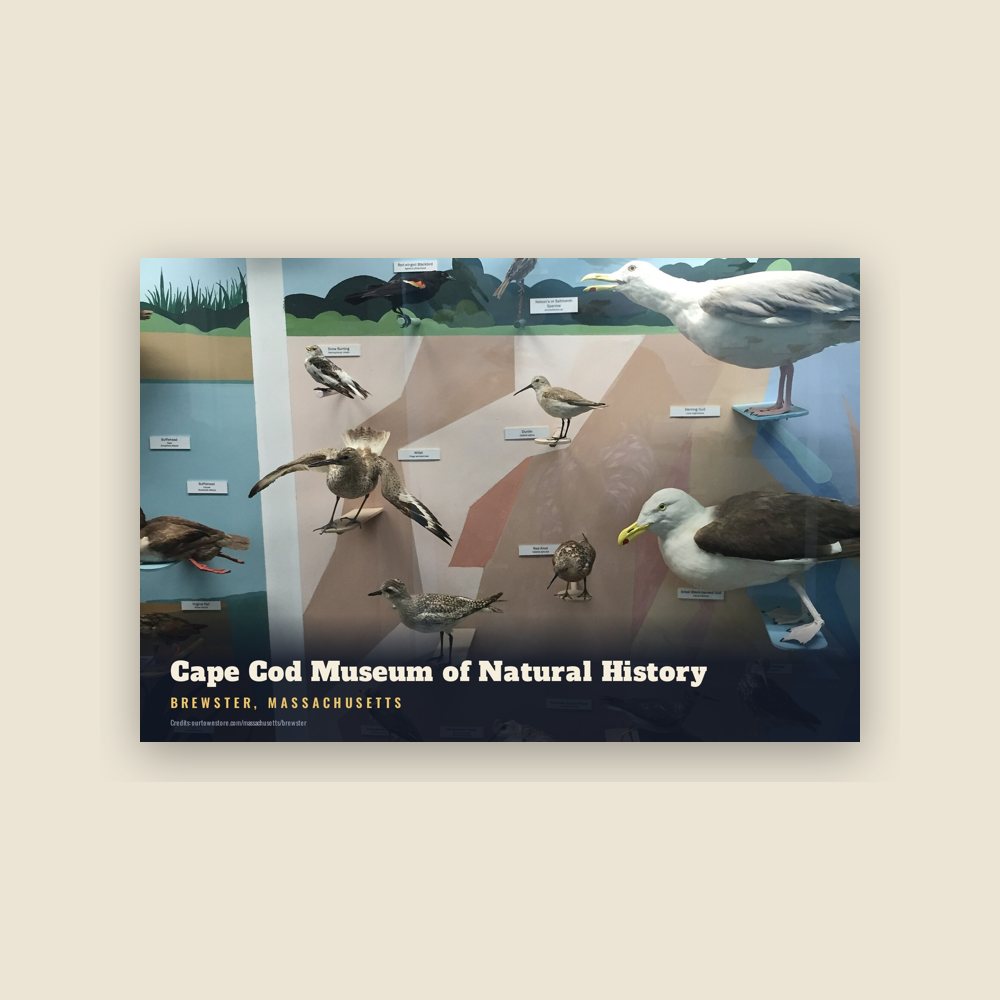
6″×4″ postcard, glossy front
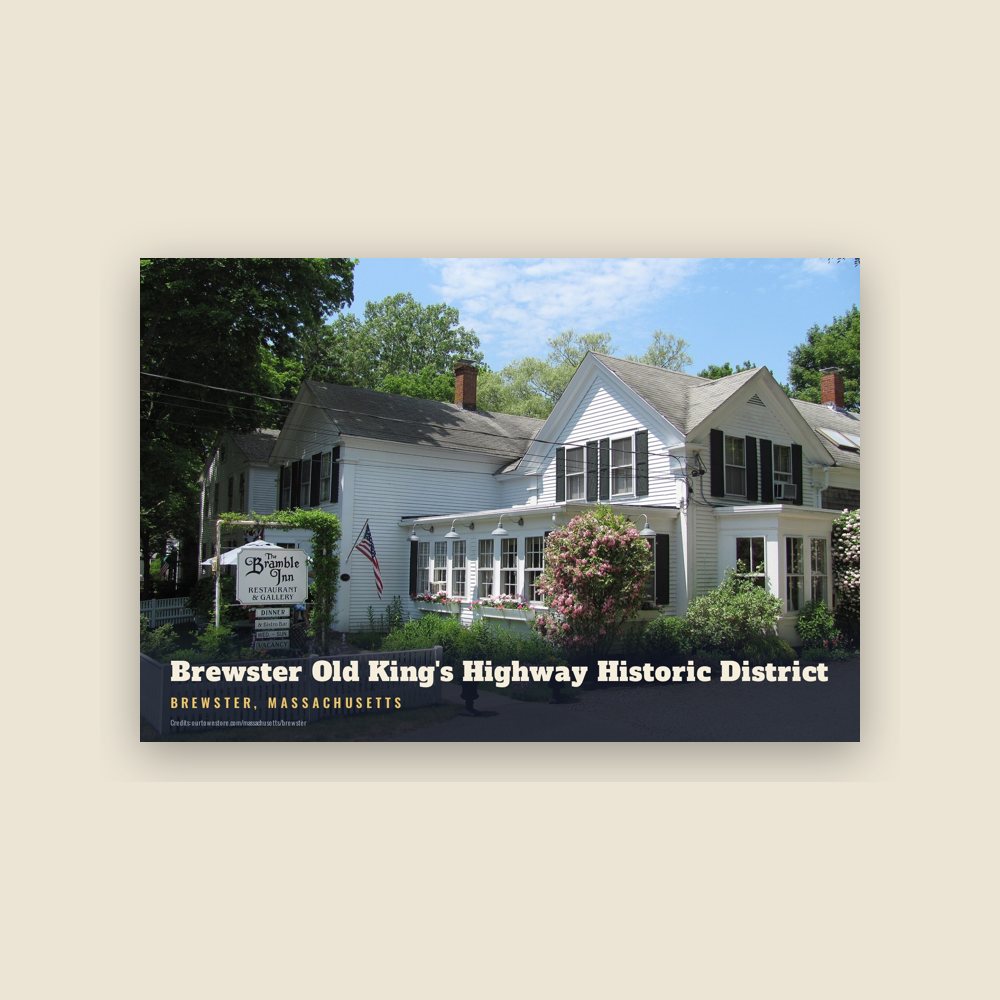
6″×4″ postcard, glossy front
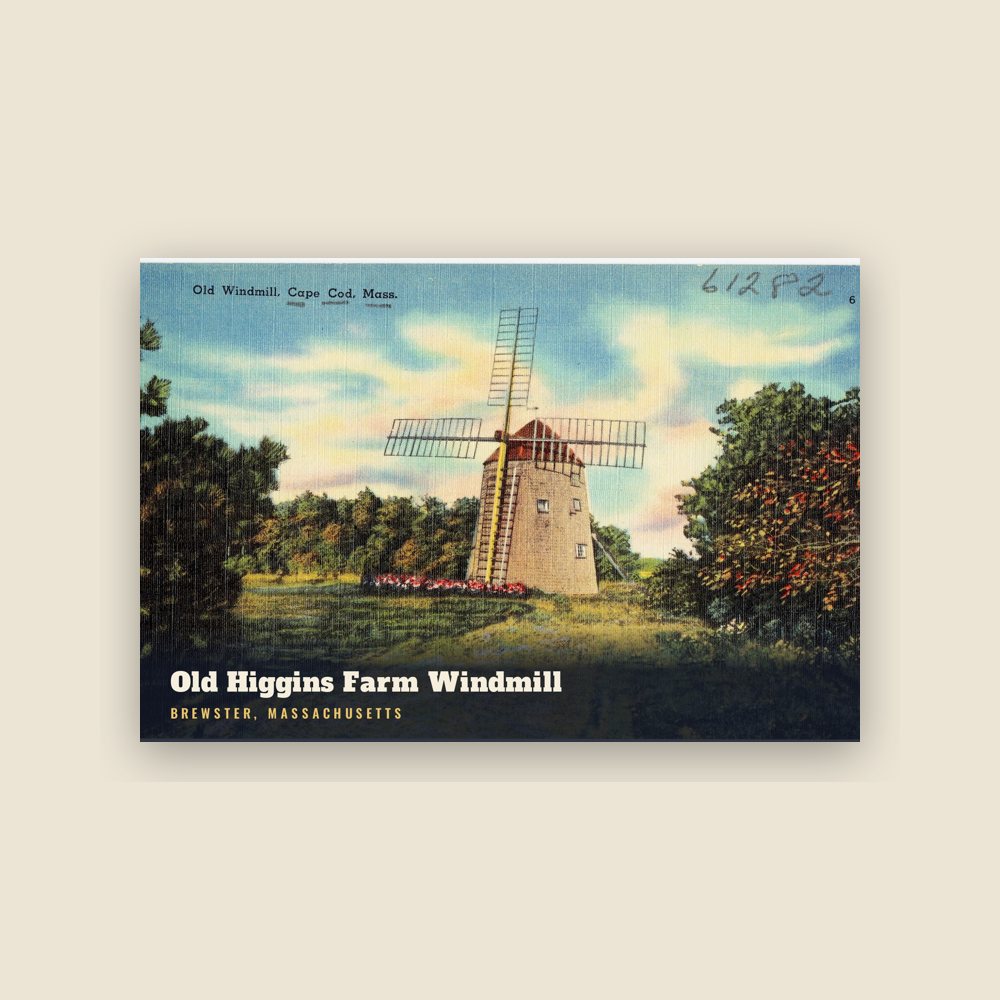
6″×4″ postcard, glossy front
Population 1850: 1,525 → 2000: 10,094 → 2010: 9,820 → 2020: 10,318
From Wikidata (CC0).
Indigenous settlement in Brewster took place on the north shore of the present-day town, with a Sauguatuckett farming area centered around the contemporary Stony Brook. Individual accounts subdivide the indigenous tribes of pre-contact Cape Cod, but any historians and researches today use the unifying term Nauset. Somewhere around 1,200 indigenous people populated Outer Cape Cod prior to 1617 pandemics, with this number reduced to 500 by 1621. The first permanent colonial settlement in Brewster centered around the Stony Brook area, part of the "Old Comers" or "Purchasers" grant of 1641. The land that now makes up Brewster was purchased in 1653 from Wano and his son Sachemas, leaders of the local Sauguatuckett. By this period, the Sauguatuckett held significant quantities of corn, beans, and squash which were at times for sale to English settlers. Brewster was first officially settled in 1656 as a northeastern parish of the town of Harwich. However, at the turn of the eighteenth century, there were only seventeen known male settlers in what is now Brewster.
Brewster's first settlers came from Sandwich, Plymouth, and Eastham, as well as many arriving directly from England. Throughout the 1700s, there were interspersed agricultural settlements throughout the area now known as Brewster. The Stony Brook gristmill remains as a testament to the early manufacturing activity at this site. In 1709, a public house and store existed, with a congregational church and meeting house first organized in 1700. By 1750, there were around 190 settlers living in the Brewster environs. The remaining indigenous population in Brewster consolidated around the southwestern corner of the town. Settlers and indigenous people alike utilized the abundant cornfields, as well as the natural resources of Cape Cod Bay. Substantial amounts of herring, or alewife, were, and continue to be, found in the Stony Brook area.
Brewster was officially incorporated as its own town in 1803 when the less wealthy citizens of Harwich were upset that the town's institutions were all concentrated on Brewster's Main Street, now Route 6A, including the town hall and churches. Brewster was named in honor of Elder William Brewster, the first religious leader of the Pilgrims at Plymouth Colony.
By this period, roughly 75% of town inhabitants were involved in shipping and maritime trades. Brewster captains invested an estimated $250,000 on merchant vessels, and a large saltworks was present on the shoreline of Cape Cod Bay during this period. In 1865, Brewster maintained 56 farms, the highest of any town on the Lower Cape aside from Orleans. At this time, Brewster also had the third highest number of cranberry bogs on the Cape, following Harwich and Dennis. Architecturally, Brewster blossomed during this period, with wealthy sea captains and commercial titans constructing Italianate, Greek Revival, and Second Empire homes. The most emblematic structure of this period is Albert Crosby's 1888 Crosby Mansion, located on Crosby Lane.
Adapted (trimmed) from the Wikipedia article Brewster, Massachusetts, revision 1377125782 by its contributors, licensed CC BY-SA 4.0.
We share a part of every Brewster sale with local partners, and we'd love to print from your collection. Old photographs, maps and postcards make the best keepsakes.
Partner with us